 thesilkroadtoday
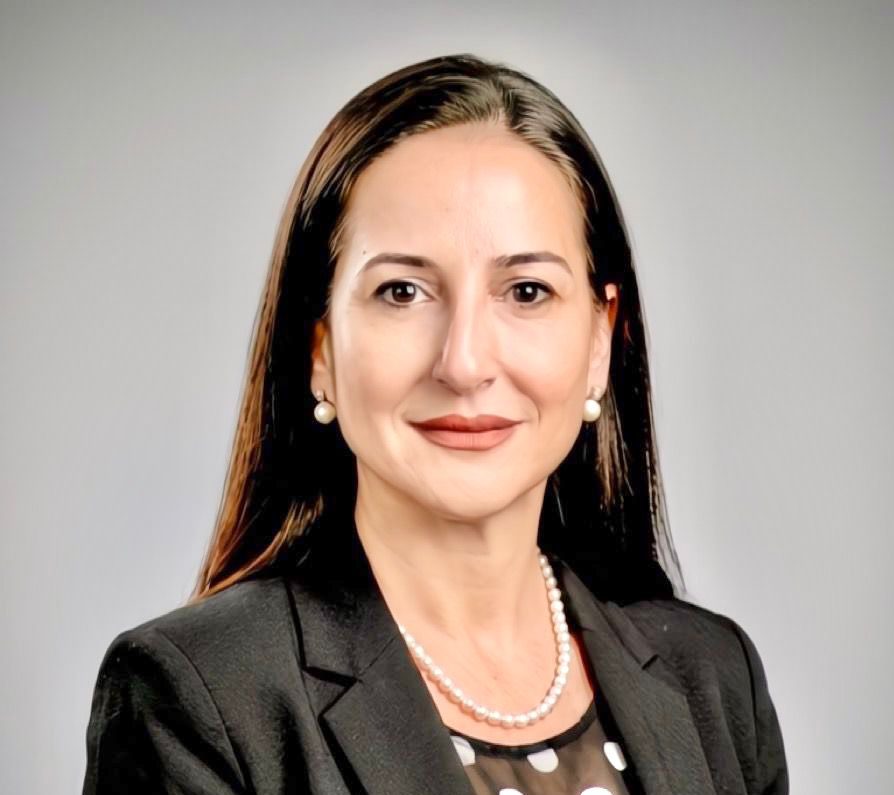
Dr. Hussein Bassir
My journey into the world of ancient Egyptian civilization began in the autumn of 1990, when I joined the Faculty of Archaeology at Cairo University. It was the beginning of a new chapter in my life, although I could not have imagined where that journey would eventually lead. I was driven by a deep fascination with ancient Egyptian history and a genuine desire to uncover the secrets of its civilization and understand the people who created it.
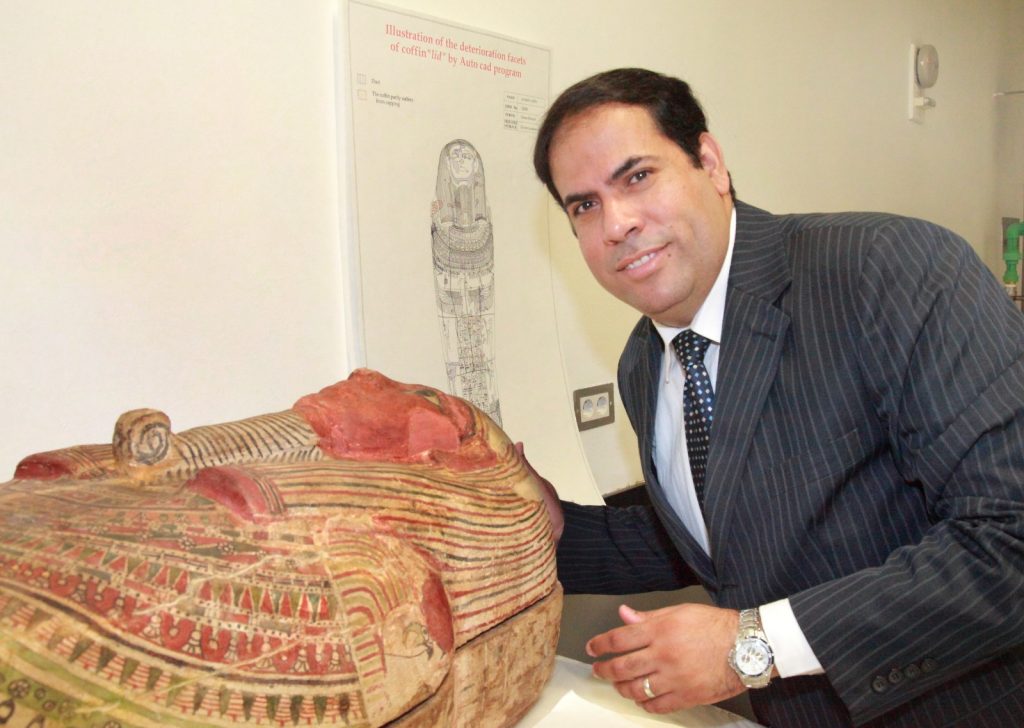
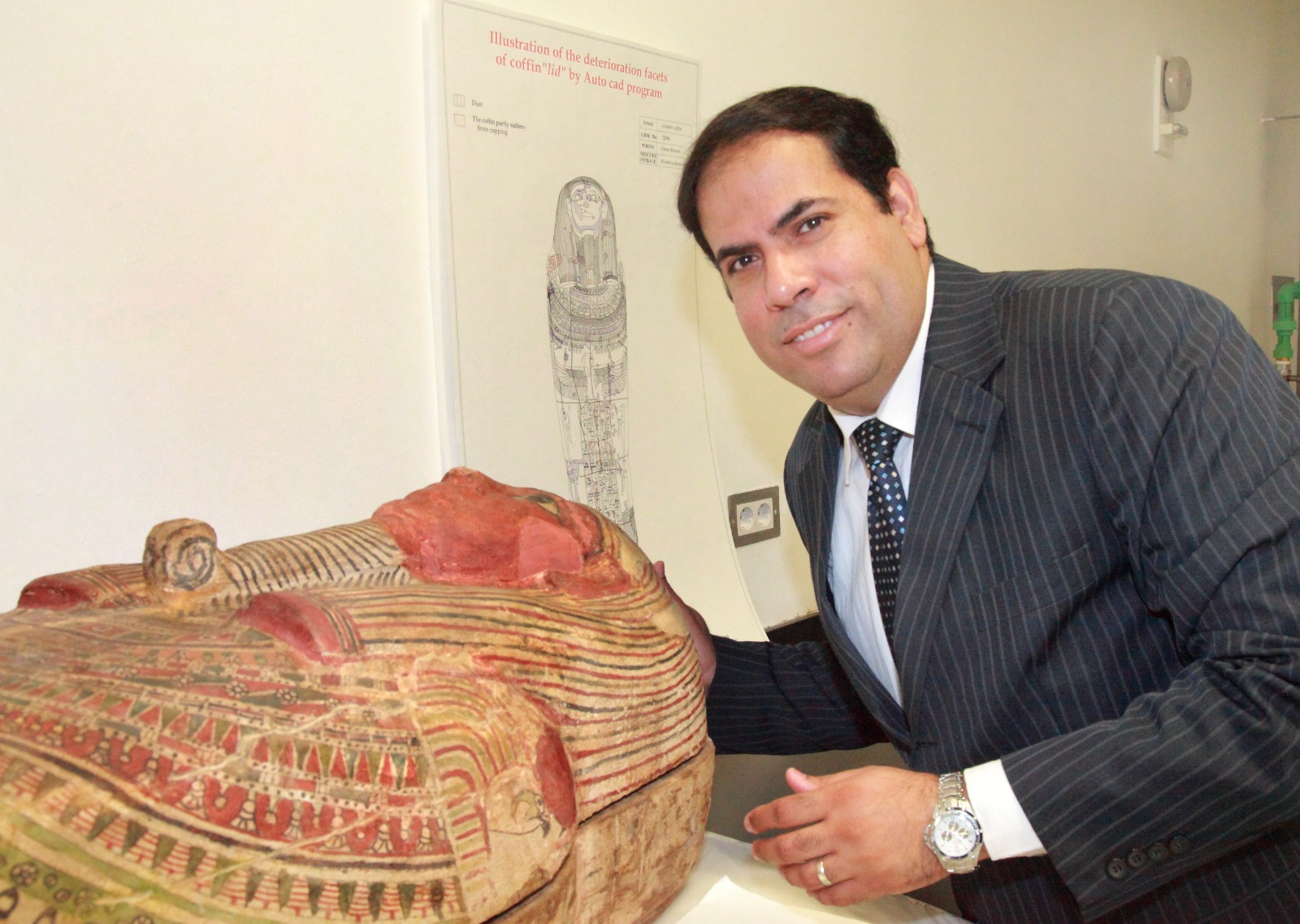
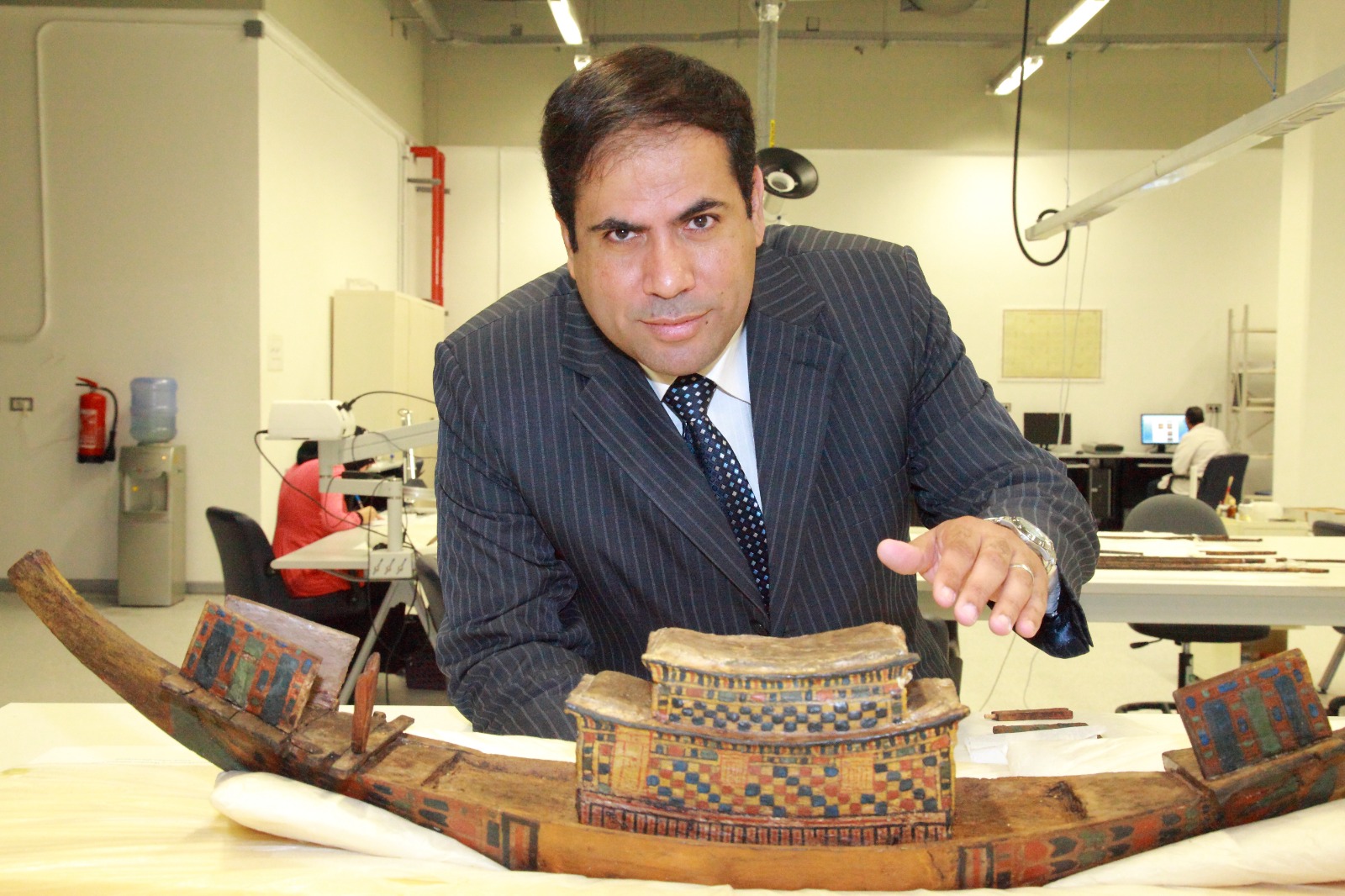
During my university years, my relationship with archaeology grew into something far greater than an academic interest. Ancient Egyptian civilization was no longer simply a collection of kings, pyramids, temples, and tombs. It became a complete human world, one that deserved to be explored, questioned, and understood. After graduating from Cairo University’s Faculty of Archaeology in 1994, I began my professional career as an Egyptologist. The Giza Pyramids area was among my first important professional assignments, where I worked under the guidance of my mentor, the internationally renowned Egyptian Egyptologist Dr. Zahi Hawass.
Those early years provided invaluable opportunities for archaeological fieldwork and excavation. I participated in archaeological work at Giza, Saqqara, and the Bahariya Oasis in Egypt’s Western Desert. At Saqqara, I took part in excavations in the necropolis of King Teti of the Sixth Dynasty, including discoveries associated with the pyramids of Queens Iput and Khuit, the wives of King Teti.
My work in the Bahariya Oasis was another formative experience. Working in the desert brought me closer to the realities of archaeological exploration and taught me the importance of patience, precision, perseverance, and the ability to recognize the significance of seemingly minor archaeological evidence that may eventually lead to major discoveries.
My academic ambitions, however, extended beyond fieldwork. I wanted to pursue a deeper scholarly understanding of ancient Egyptian civilization and become familiar with the latest research methods in Egyptology and the archaeology and history of the ancient Near East. With the support of a scholarship obtained through Dr. Zahi Hawass, I traveled to the United States to pursue graduate studies at the prestigious Johns Hopkins University in Baltimore, Maryland.
My years at Johns Hopkins were among the most important experiences of my life. I earned my master’s degree in 2004 and my PhD in 2009 in Near Eastern Studies, specializing in Egyptology. The university provided an exceptional opportunity to deepen my knowledge of ancient Egyptian history and archaeology, engage with modern research methodologies, and work within an international academic environment that brought together scholars from diverse disciplines and cultural backgrounds.
Those years were not simply about earning academic degrees. They were an intellectual and personal journey that broadened my horizons and encouraged me to reconsider fundamental questions about civilization, history, and humanity. I learned that a true scholar must never be confined by the boundaries of a single discipline and that knowledge grows through dialogue, openness, and continuous research.
Throughout my academic career, I have had the opportunity to teach and lecture at several distinguished international institutions, including Johns Hopkins University, the University of Arizona, and Sorbonne University (Paris IV). I am also a permanent member of the German Archaeological Institute in Cairo. My academic activities have included participation in numerous international conferences, research projects, and scholarly events in Egypt and abroad.
Following my return to Egypt, I continued my work with the Supreme Council of Antiquities, assuming various archaeological, academic, and administrative responsibilities. One of the most significant milestones in my professional career was serving as General Supervisor of the Grand Egyptian Museum from 2011 to 2013. I deeply value this experience because it allowed me to contribute to one of the most ambitious cultural and civilizational projects in modern Egyptian history.

For me, the Grand Egyptian Museum represents far more than the construction of a new museum. It is Egypt’s cultural message to the world and a testament to the country’s ability to present its extraordinary heritage in a manner worthy of its historical and civilizational achievements.
Another important chapter in my career has been my work as Director of the Museum of Antiquities at the Bibliotheca Alexandrina. This position brought together many of my professional interests: archaeology, knowledge, culture, research, and public engagement. A museum within a library is not merely a place for displaying antiquities; it is a space for dialogue between the past and the present, and between cultural heritage and contemporary knowledge.
At the Bibliotheca Alexandrina, I have sought to strengthen the museum’s role as a scientific, cultural, and educational institution, presenting its diverse archaeological collections to Egyptian and international audiences while connecting individual objects with their broader historical and cultural contexts. I have also been involved in developing research initiatives, exhibitions, educational programs, and partnerships with museums, universities, and cultural institutions around the world.
Throughout this journey, my intellectual interests have extended beyond the traditional boundaries of Egyptology. I have increasingly explored history, philosophy, literature, fiction, and broader questions concerning human existence. I firmly believe that archaeology is, at its heart, the study of humanity. An archaeological object is never merely a silent stone or artifact; it is a testimony to human intelligence, emotions, beliefs, ambitions, and creative abilities.
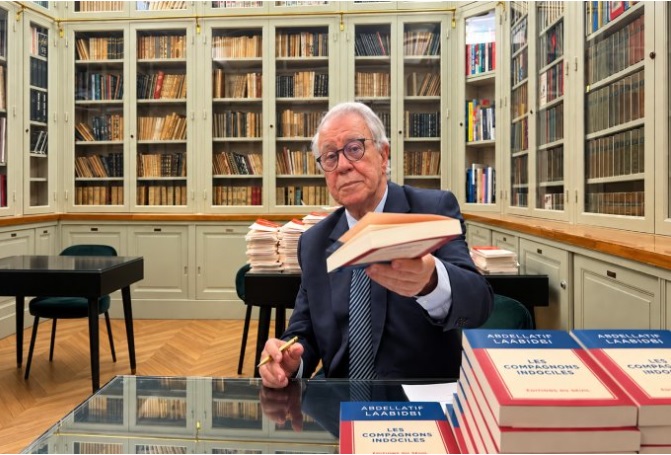
Writing has consequently become an essential part of my intellectual identity. I write about ancient Egyptian history and civilization, while exploring subjects related to humanity, religion, philosophy, culture, and literature. My ambition is to present historical and scholarly knowledge in a style that combines accuracy, accessibility, intellectual depth, and literary enjoyment, reaching specialists, general readers, and younger generations alike.
I believe that writing carries a responsibility toward readers. They deserve the best a writer can offer. My guiding principle is therefore simple: Readers come first. I strive to make every new work different, offering fresh ideas, reliable information, and a human perspective expressed through an authentic literary voice.
My journey began at Cairo University’s Faculty of Archaeology, continued through archaeological sites in Giza, Saqqara, and the Bahariya Oasis, and expanded into the lecture halls and research environment of Johns Hopkins University. It has since taken me to leading academic and cultural institutions in Egypt and around the world.
Throughout these experiences, one fundamental question has continued to inspire me: Who was the human being? How did people live, think, believe, dream, and create? What did they leave behind? And how did humanity develop civilizations that continue to shape the world’s imagination thousands of years later?
I do not regard Egypt merely as a subject of academic study or a civilization in which I happen to specialize. Egypt is an entire world to which I belong, and which I continuously seek to understand and introduce to international audiences. The deeper I explore ancient Egypt, the more convinced I become that understanding its civilization requires understanding the human experience itself, and that understanding humanity begins with knowledge, freedom, research, and reflection.
More than three decades after beginning this journey, I still consider myself at its beginning. I remain an Egyptian Egyptologist, archaeologist, writer, novelist, and intellectual, seeking to bring science and literature together, connect the past with the present, and build bridges between Egypt and the world.
Above all, I remain faithful to the passion that first inspired me: discovering humanity through the extraordinary civilization of ancient Egypt.