 thesilkroadtoday
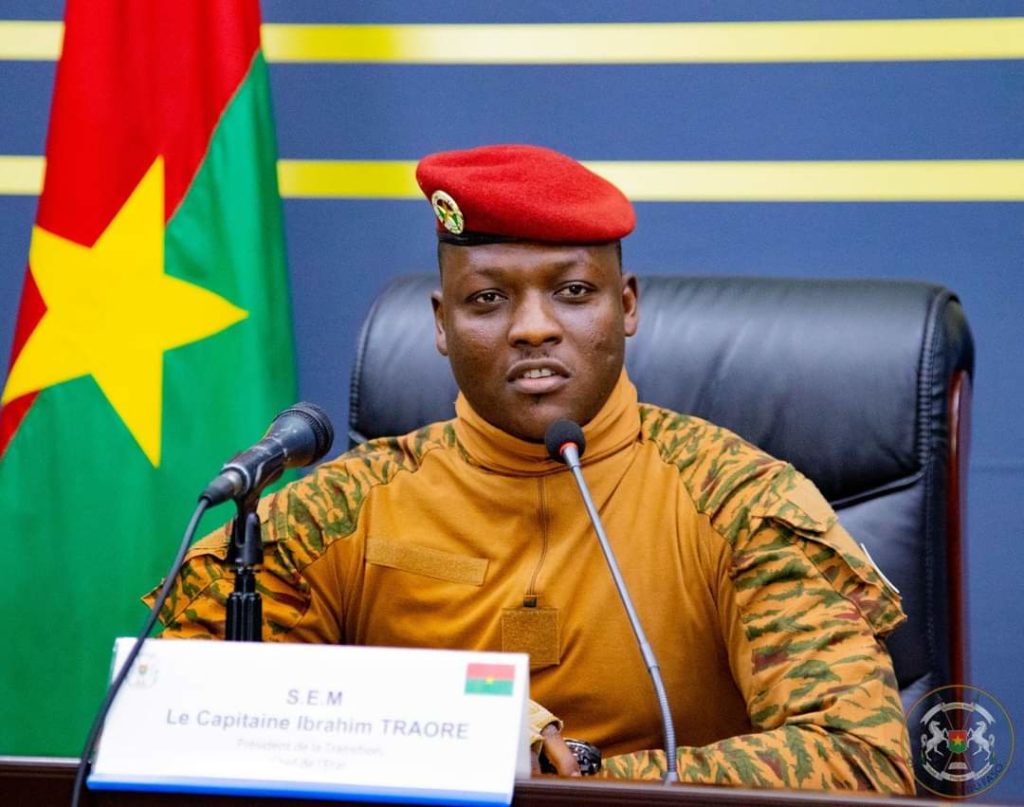
Burkina Faso’s leader, Ibrahim Traoré, has changed. He has become more confident. The military fatigues he wears are no longer earth-toned, but an immaculate white. No longer the young captain so few knew before the coup of 30 September 2022, he is now the world’s youngest president. Although he has no legitimacy other than that bestowed by weapons, he demands deference. The early days of his reign, when ‘IB’ – as he is known to his countrymen – told anyone who would listen that he had no intention of staying in power, are long gone. Three years later, he is still managing the country’s day-to-day affairs – a task that he promised, at the time, to ‘expedite’. No longer talking about leaving his position, let alone organizing elections, Traoré has firmly installed his junta and imposed his authority. From the very first weeks, we realized that he was a great manipulator. He told everyone what they wanted to hear.
He was in no better position than anyone else. The coup against Lieutenant Colonel Damiba [who was in power before him] was fomented by several captains, including him. As he is a man of strong character, he volunteered to take responsibility and won the day. Originally
from Bondokuy, in the agricultural west of the country, Traoré is a man of the bush, frank and direct, who joined the army after earning a degree in geology from the University of Ouagadougou. He passed through the Georges Namoano military academy in Burkina Faso, where, according to some military sources, he did not take kindly to the harshness of his instructors. Disgusted by what he had seen during operations, he despised the hierarchy, in which superior officers sat in air-conditioned headquarters while their men were slaughtered by jihadists amid general indifference. Many senior officers don’t understand him and have nothing but contempt for him. He pays them backwell. His revenge is scathing.
Traoré is aware of the distrust within the army. He’s been in a bad position since the beginning, and he still hasn’t managed to find the right position. In the days that followed this attempted coup, Traoré took drastic measures. Security was stepped up, armored vehicles were deployed, and traffic was banned at night. He shut himself away, becoming ever more paranoid. He regularly changes his place of residence.
He relies essentially on the captains with whom he overthrew Damiba, He also gives direct orders to the commanders of the 25 rapid intervention battalions, the units he set up. Traoré undertook a massive reorganization of his military and security apparatus to ensure it is fully committed to his cause. Aside from creating the rapid intervention battalions, he recruited 50,000 Volunteers for the Defence of the Homeland, civilian auxiliaries to the army, and bolstered the State Security Directorate.
He also took control of bodies he considered hostile, such as the National Gendarmerie and the Special Forces. Recently, he announced the creation of a Special Rapid Intervention Brigade, an elite unit tasked with fighting terrorism, participating in special operations, and protecting institutions. They have set up a kind of security bubble with concentric circles around IB to protect him. The Russians are present at his side, but not too close or too visible, because many officers do not accept that foreign forces should be at the heart of their institutions in this way.
Unsurprisingly, the propaganda machine is in full swing – with the invaluable support of Russian experts. State-owned media has been transformed into a mouthpiece for the authorities, while foreign media outlets have been suspended or banned. Traoré’s vociferous supporters fill social media platforms with fake news on a daily basis and take to the streets to defend their leader.
This self declared President is not as secure as he would like to appear. He will never surrender. It’s bound to end badly. There are those who like him because of his criticisms of the west and moves to make Burkina faso less dependent on them. His moves to help Burkina Faso develop its industry sector, become less dependent and should be used as an example to all African leaders. Is he good for Burkina Faso and good for Africa or will this end in disaster.