 thesilkroadtoday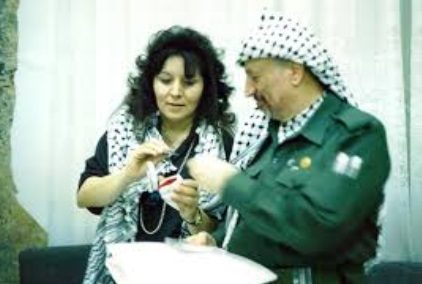
A title which is full of meaning, significant and suggestive, that transports the reader to many detailed horizons and leads to confusion as to how to handle it, how to start, and how to digest the ingeniousness of the concept, as well as how to read between the lines. Further, the reader delves deep into the sea of experimentation and complies with comparing the concatenated and distinctive text, prototyped in a unique language which we may consider to be the language of its writer.
There are many indications laden with the spirit of characters, portrayed by acknowledged points, authenticated by a child’s meekness, the sweetness of the intellectual, and the will of the free thinker who does not kowtow in the presence of the immortal, eternal, holy, and sacred — the homeland.
It is an experiment profound in conscience, an outcry of text, and a reinforced concatenation in the voyage of time, commencing at the whimper of birth and ending upon the demise of the symbol of the nation, the great leader, the martyr Yasser Arafat.
Dr. Awwad has embodied her human, philanthropic, literary, and political experimentation in a book entitled The Eidetic Memory of the Opulence of Narcissism. The style of the book is simple and captivating. The reader will pause for a long time and will rotate in spacious horizons and feature innovations laden by the author through selective terminology and texts. That effort is the outcome of a long and unique experiment she has undertaken through the years of her maturity, to document in fascinating words the voyage of human existence and human genesis, inextricably tied to a country seeking independence, a fighting man, a father of wide culture, and a leader and symbolic figure who, during his lifetime, formed the Palestinian revolution — the cornerstone of the voyage of the Palestinian presence on both national and international levels. Dr. Awwad has utilized her pen to transport him on the absolute wings of love and affiliation permanentium.
Dr. Hanan has also drawn a spectacular sui generis portrait of her father, endowed with wide culture and profound vision. He was benevolent in allowing her to join internationally renowned universities, granting her the freedom through which she could make an inroad into the world equipped with confidence.
Through this eidetic memory, we see that Dr. Hanan is the spoiled icon of the Palestinian leadership. Abu Jihad accorded her his absolute confidence, as did the leader Yasser Arafat. She was his cherished child and represented him in international official circles. He continued to care for her until his final days.
She was in close touch with Palestinian leaderships of diverse attitudes. She bore the message of Fatah and the message of Palestine, roaming far and wide with honesty and commitment.
She emitted her words with special feeling for the Herculean Palestinian revolution and its great men, bestowing upon them the qualities of angels.
Regarding her revolutionary relationship, she carried out her duties and political message by representing Palestine and the President in important international circles and meetings of heads of state.
She described Iraq and her participation in the Al-Mirbad Festival, her first meeting with President Arafat in Kuwait, as well as Tunis and her first visit there with President Arafat, followed by visits to Arab leaders in his company. She also participated in important political and cultural programs undertaken across the Arab world and beyond.
She portrayed the return of President Arafat, the Palestinian cadre, and the building of the state with special innovation.
Dr. Hanan excelled in the coinage of texts laden with wrath and yearning while describing the Palestinian case during the siege and the period of hardship endured by President Arafat and the Palestinian people. From the totality of his virtues, she composed a complete portrait of a man of singular capabilities, ending with a painful farewell journey.
She concluded her book with an important philosophical endpoint, summarizing the meaning of philosophic creativity,
from the ego to the profundity of Narcissus which shaped her personality in the delineation of the dramatic experimentation, to draw with her pen and the …
Her pen has overflowed with a concise text which does not entail any doubt and is unbearable to decipher. It constitutes the glowing spiritual philosophy in a rolling pin of existence, whose core of discussion is existence itself, moving toward an abyssal vision and a faraway horizon, laying its shade on altitudes of struggle, politics, and other important aspects of our revolutionary history.
She started by dedicating the book to all ambiances of Palestine and to the eternally holy sanctum, through a spiritual outlook mellowed with conscience.
In her introduction, she unleashed the rein of the concept and the personalities in a recorded and portrayed brownie point to a time that has not yet arrived.
In her first words, a question crops up about the personalities and their recorded and portrayed credit, in an imaginative attitude of special quality in delineation.
In the last word, she halts to portray the minute of birth, which is rarely described, and which lies beyond our wakefulness to be truly drawn in a philosophical vision and unconsulted instances.
The author starts by describing episodes of her life in the city of Jerusalem, where she was born and grew up, and from which her pen was launched with the ink of the spirit, describing her childhood and heroism, and her first trips exploring its entrances, walls, and schools.
She then portrayed the war of the year 1967 and meticulously described the battles with symbolic and innovative metaphors. She then related the incidents that followed, from the War of Attrition to the War of 1973.
She also described her childhood in Jerusalem and her exploratory trips, which she annotated with remarkable liveliness, as well as her time in Tulkarm and her relationship with her grandfather, the popular poet known as Salem Al Qus.
She then launched into her educational stages in the city of Jerusalem, and from there excelled in her description as she continued her higher education in Arab and international universities, studying at Oxford University, McGill University, Al-Azhar University, Beirut University, the University of Ann Arbor, and other universities.
She also dexterously featured the experience of imprisonment in an austere method, for which she deserves recognition.
On the other hand, among the matters she hovered over is the experimentation of innovation and the promulgation of the word from Jerusalem to the world.
Of the artist, the portrayal of the elevation of yearning toward the absolute, kowtowing homeland.
And the word at the beginning, in genesis, is the formation of Palestine.
The author paused in her memories upon the departure of the Palestinian leader, the martyr Yasser Arafat. The pen ceased, and time stopped through the voyage of eternity.
Because she hovered on the wings of dignity, hope, and triumph, and on the voyage of absolute perambulation toward justice and liberty, she also made a supplicated, silent stop at the agony emanating from the extremely painful final farewell.
In conclusion, Dr. Awwad wanted this book to be, ipsissimis verbis, a recorded text of the embellishment of the revolution and its eternal leaders. Furthermore, it is the route of struggle and sacrifice, which requires nothing but descriptive innovation, the elevation of the spirit, and sublime words.