 thesilkroadtoday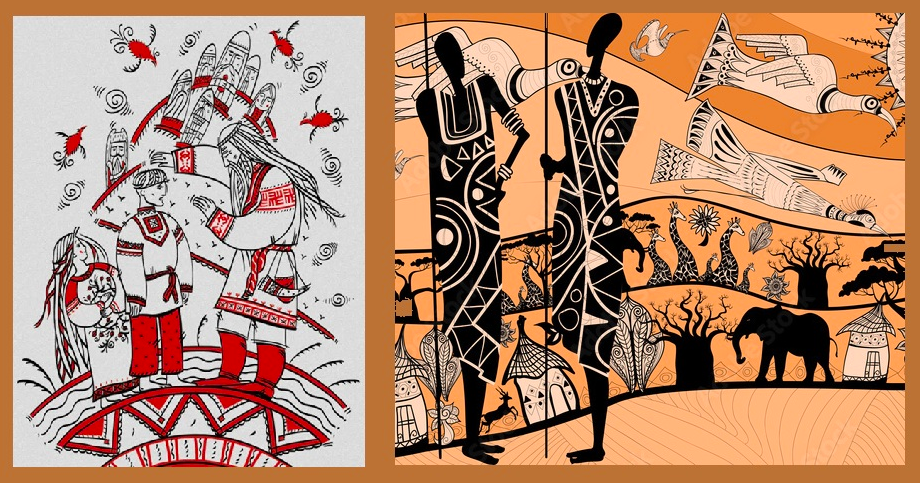
The task of preserving and comprehending the diversity of the world’s languages is becoming increasingly urgent. This calls for a return to primary sources, to those cultural and historical layers that ensure the continuity of meanings, customs, and spiritual patterns. For this reason, the launch of an international project dedicated to the Decade of the Languages of the Peoples of the World naturally begins with an appeal to folklore as the authentic foundation of every cultural tradition.
Folklore reveals itself as a form of the people’s spiritual life in its original integrity. Within it is manifested the deep structure of collective reflection on existence—a way of appropriating reality expressed through stable motifs, rituals, words, and images. Every element of folklore bears the imprint of popular experience accumulated over many generations, reinforcing the value orientations of human communication.
Through oral narratives, ritual practices, chants, legends, and parables, the rootedness of the human being in an unbroken chain of events becomes apparent. Here lies the point at which individual experience merges with the experience of the community. Folklore preserves the inseparable unity of form and content: ritual action and verbal expression, images and semantic structures interact organically, creating the architecture of collective memory.
The development strategy of the pilot project “Russia–Ghana” is defined by the aspiration toward a comprehensive and indivisible consideration of all historical stages through which the creative self-realization of humanity unfolds.
Folklore tradition emerges as the primary phase, marked by inner wholeness.
Attention then turns to the earliest written practices—chronicles, religious texts, and ancient literature—where the transition from oral transmission of meaning to its fixation in a system of signs takes place.
Writing continues the work of folklore: it consolidates norms and worldviews, gives them a stable form, and expands the sphere of their dissemination. Folk tales and rituals gain expressive power in chronicles, hagiographies, and religious narratives, leading to the formation of new typologies of speech and modes of thinking.
Within the framework of the project, the next stage involves the study of classical texts, in which literary genres, canons, and traditions of professional authorship take shape. Here, systems of motifs, artistic images, and concepts—harmonized within the space of written culture—begin to play a formative role. A hierarchy emerges that is capable of reflecting both individual thought and collective experience, ensuring the continuity of literary tradition with the primordial rhythms of folkloric speech.
Contemporary literature, included in the scope of analysis, does not interrupt this movement but develops it further. A complex interaction unfolds between the search for new forms and the internal logic of preserving cultural heritage. Tradition and innovation meet; historically established images encounter new semantic configurations.
The digital era, incorporated into the overarching concept of the project, reveals new horizons of creative development. The tools offered by electronic platforms, interactive technologies, multimedia formats, and networked communication create possibilities not only for the transmission but also for the hybridization of meanings. The field of dialogue expands, giving rise to a new form of linguistic existence—dynamic, multilayered, capable of reaching a wide audience and generating new modes of collaborative creativity.
Through engagement with folklore, writing, classical texts, modern literature, and digital forms, a gradual ascent toward a holistic understanding of linguistic and cultural diversity is achieved. The project launched today seeks to explore the origins and tensions of the universe of human creativity. Processes of comparison and analysis encompass the experiences of Russia and Ghana—states with unique histories and distinctive cultural systems, yet possessing points of convergence that allow unity to be discerned within diversity.
Folklore, serving as the first foundation, becomes the initial point of orientation. Through it emerges the general contour of human culture—with all its internal contradictions and harmonies, with its striving for self-preservation and renewal. Understanding folklore as a field of inseparable interaction between word, ritual, and worldview enables reflection on the spiritual rootedness of language, on language as a repository of tradition, memory, and anticipation of the future.
The Decade of the Languages of the Peoples of the World acquires a spiritual framework when each stage preserves its inner connection—historical, semantic, and axiological. A return to origins does not confine consciousness to the past; rather, it enables new responses to contemporary challenges and affirms, amid changing conditions, the resilience of tradition and its readiness for a living, continuous dialogue of cultures.
Thus the project’s path is formed: from rootedness in folklore to the expansion of horizons
in writing, classical heritage, contemporary, and digital culture. Within this movement, the capacity of language to unite peoples and epochs, to preserve human experience, and to construct a vertical axis of meaning in our shared world is revealed.
Margarita Al