 thesilkroadtoday
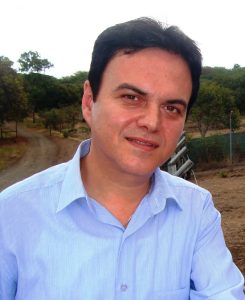
Dimitris P. Kraniotis is a distinguished Greek poet, doctor of literature, and medical professional whose work has transcended linguistic and cultural boundaries. As the President of CIESART Greece and an advocate for peace through poetry, his contributions to literature have been recognized worldwide. With eleven poetry books published in multiple languages and translations of his work available in 36 languages, Kraniotis has firmly established his voice in the global literary community. In this interview, he delves into the profound influence of Ancient Greek education, the intriguing connection between poetry and medicine, and his role as an ambassador for peace. His insights reflect a deep understanding of both the human condition and the transformative power of words.
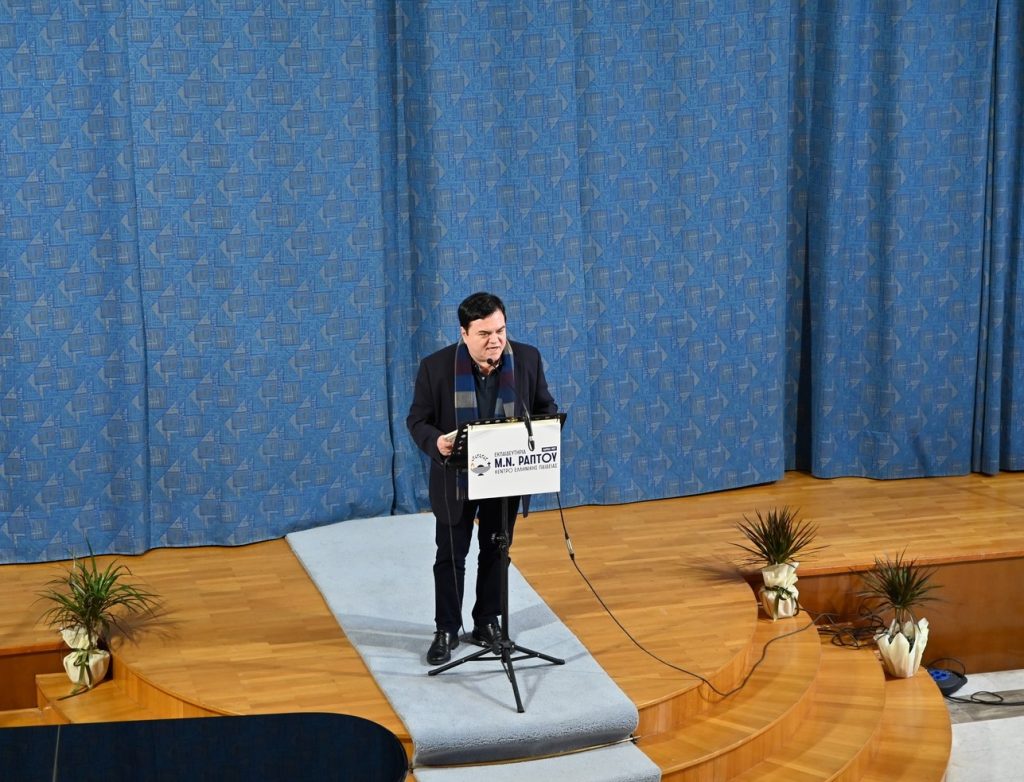
Interview with Dimitris P. Kraniotis
DiStefano Chiesa
Mar 6, 2025
1) As regards early Education, are you aware of the huge Ancient Greek contribution to our present society?
Kraniotis: Yes, absolutely! Ancient Greek civilization had a profound impact on early education, and many of their ideas and contributions still resonate in today’s educational systems. The Greeks were pioneers in the development of philosophy, logic, mathematics, and rhetoric, all of which influenced the foundation of modern education. Greek philosophers, especially Socrates, Plato, and Aristotle, made significant contributions to educational theory. Aristotle advanced the study of rhetoric, which became a cornerstone of Western education, particularly in fields like law, politics, and communication. Ancient Greek philosophy remains a central part of educational curricula today, and many of their ideas about ethics, logic, and politics continue to guide contemporary education.
2) As an affirmed Doctor, is it possible to find a link between Poetry and Medicine?
Kraniotis: Yes, there is a fascinating and rich connection between poetry and medicine. Both poetry and medicine are deeply concerned with the human condition. Poetry often explores the emotional, psychological, and existential experiences of life, while medicine is fundamentally concerned with human health and healing. There is also a therapeutic quality to both fields. In medicine, healing often extends beyond physical treatment to emotional and psychological care. Similarly, poetry offers catharsis and a sense of connection. Both doctors and poets must possess a deep sense of empathy and understanding to connect authentically with people.
3) You wrote 11 books and received lots of translations, in a huge variety of foreign languages: which are the most relevant?
Kraniotis: I consider all my books and translations equally relevant. I have authored 11 poetry books in 7 languages, published in Greece and abroad, and my poetry has been translated into 36 languages. This diversity suggests that my poetry resonates with readers across different cultures.
4) What is your international role in “CIESART”?
Kraniotis: I am the President of CIESART Greece and Vice President of the World Advisory Council of the International Chamber of Writers & Artists (CIESART) based in Spain.
5) What about your activities in Italy?
Kraniotis: I have been honored by several Italian institutions, becoming an Academician at various prestigious academies. My book “Foglie vocali” [“Leaves Vowels”] was published in Italy and received the International Academic Award for Contemporary Literature “Lucius Annaeus Seneca” in 2023.
6) Do you feel close to Italian Culture?
Kraniotis: I indeed feel a sense of closeness to Italian culture, considering the deep historical, cultural, and geographical ties between Greece and Italy. The shared Mediterranean heritage, classical literature, philosophy, and artistic connections all contribute to this affinity.
7) What is your Commitment to Peace, as Ambassador?
Kraniotis: My commitment to peace as an ambassador is rooted in the idea that words and art have the power to transform hearts and minds. As an ambassador for peace, I use poetry as a tool for fostering understanding, empathy, and dialogue between people, cultures, and nations. I participate in public readings, discussions, and cultural exchanges that encourage peaceful discourse.
8) Finally: A Poem about Peace
This is my poem with the title: “Ode to the Peace Hero”
You were born once
For a thousand revolutions
You died once
With a thousand resurrections
You enlightened eternal ideals
Into chests full of dreams
You blew poets’ words
Into harmonious winds
You got hurt by faceless wounds
And slapped injustices
You fought for freedom
And won for peace
The Silk Road Today’s Readers can find the Italian source here
Biography of Dimitris P. Kraniotis [Greece]
Dimitris P. Kraniotis was born in 1966 in Larissa, Greece. He studied Medicine at the Aristotle University of Thessaloniki and holds a Master of Science in Medicine from the University of Thessaly. He is the author of 11 poetry books and has been awarded numerous international accolades. His poetry has been translated into 36 languages and published globally. He serves as the President of the World Poets Society (WPS), Director of the Mediterranean Poetry Festival, and Chairman of the Writers for Peace Committee of PEN Greece, among other roles.