 thesilkroadtoday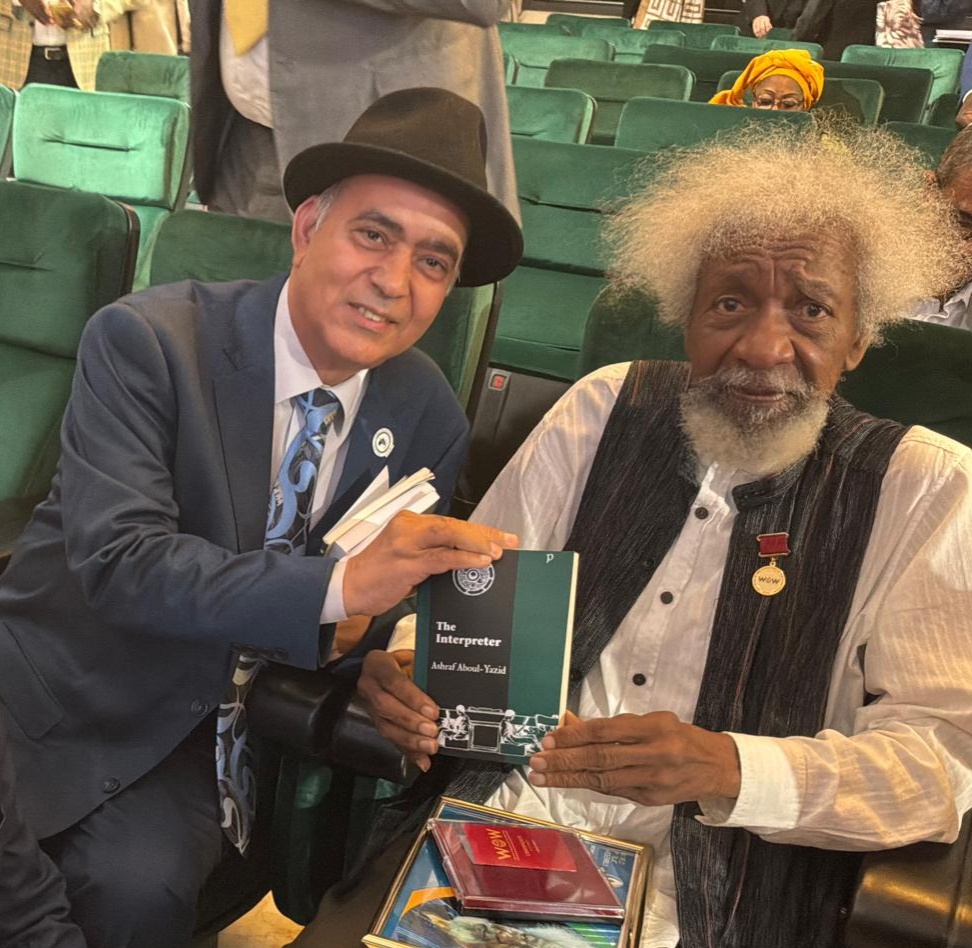
By Ashraf Aboul-Yazid
I first heard the name Wole Soyinka forty-one years ago, while completing my military service in the Research and Translation Department at a military facility in Egypt. One of the officers serving there was pursuing a diploma in translation at the American University in Cairo, and his professor had assigned him a literary text by the celebrated Nigerian writer. Thus, almost by chance, Soyinka’s name entered my world through the quiet corridors of military life and the demanding discipline of translation.
Only a few months later, I completed my military service, and the literary world celebrated Soyinka’s award of the Nobel Prize in Literature. Forty years ago, we each received our respective certificates, unaware that our separate journeys might one day bring us face to face. Soyinka was already a prominent voice in African literature, while I was still discovering the many paths through which literature would shape my life.
Yet our story did not end with that distant first encounter.
Years later, I received the Manhae Prize for Literature in 2014 and discovered another unexpected connection: Soyinka had received the same prize in the literature category in 2005. The prize’s distinguished history also includes Nelson Mandela and Shirin Ebadi, honoured in the field of peace. Once again, our names had entered the same constellation of literary recognition, although our paths had yet to cross in person.
Soyinka was also present, in a different way, during my work on The Other, a television programme I presented on Kuwait Television, featuring conversations with sixty international figures. In the episodes devoted to the Nobel Prize, I included excerpts from recorded interviews with Soyinka. His powerful theatrical voice and deep, resonant tones brought his presence into my programme long before I would meet him in person.
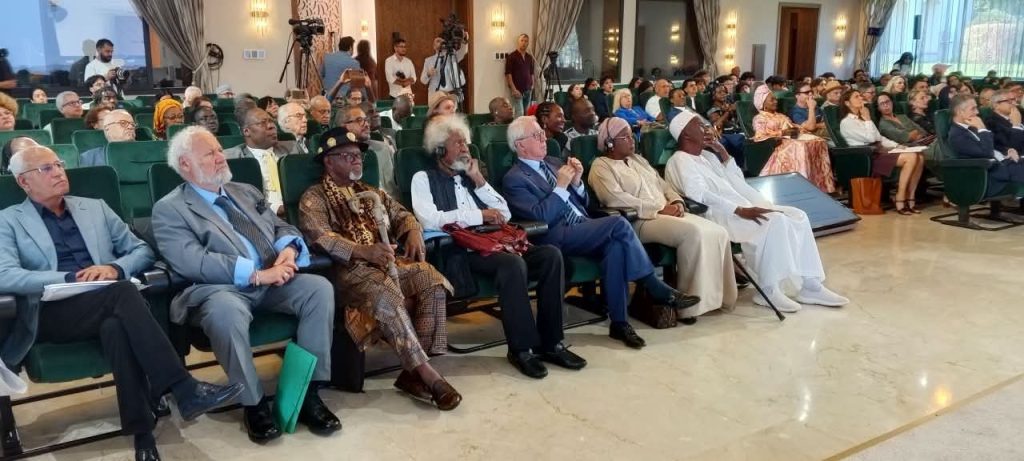
Then came Rabat, a city celebrating its designation as UNESCO World Book Capital, where the Royal Academy of Morocco marked the establishment of the House of Book Worlds. Amid this celebration of books, ideas, and the enduring power of literature, another coincidence awaited me: the occasion also coincided with the fortieth anniversary of Soyinka’s Nobel Prize in Literature.
Another distinction has brought our names together, this time the medal of the World Organization of Writers (WOW). Yet the coincidence carries a delightful twist: I received the medal in Abuja two years ago, preceding our great master, whose own award was announced in Moscow last month and who has been honoured with it today.
Thus, another chapter has been added to the thread of literary coincidences that connects us. We have received the same distinction, though at different moments along our journeys. There is something wonderfully poetic about this reversal of roles: the student who first heard his master’s name forty-one years ago has continued along the winding paths of literature, only to find himself once again sharing the same circle of recognition with him—having arrived a small step ahead, yet never presuming to precede him in his stature in the literary imagination.
I had come to meet the author of The Interpreters, Wole Soyinka’s celebrated novel. And I was carrying my own novel, The Interpreter.
Two writers, two novels, and one word connecting their literary worlds: the interpreter.
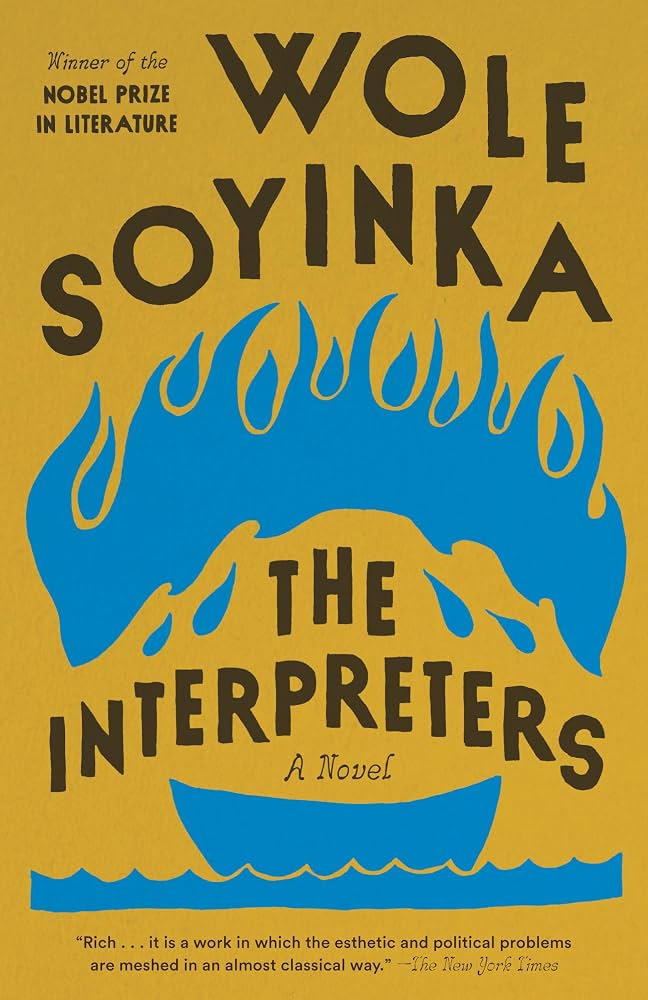
The resemblance between our titles was striking, but the deeper connection lay in the questions that literature allows us to explore. Rooted in the social and political realities of post-colonial Africa, Soyinka’s The Interpreters examines the tensions between language, identity, and power, as well as the search for authentic self-expression. Its characters inhabit a world in which meanings are contested, cultural expectations collide, and individuals struggle to understand a society undergoing profound transformation.
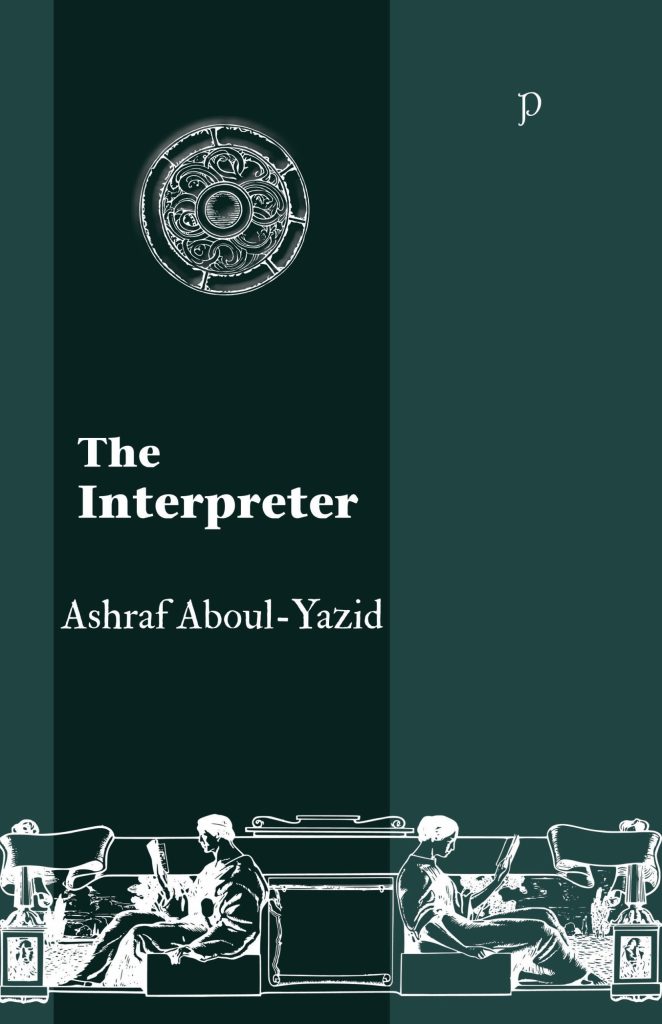
My own novel, The Interpreter, published in English by Penprints in Kolkata, India, approaches the human condition from a different landscape. Through the experiences of twenty-eight characters from diverse nationalities and cultural backgrounds, the novel explores memory, loss, love, trauma, and the fragile boundaries between truth and interpretation. At its heart stands Fawaz, whose journey becomes a struggle to reclaim personal freedom amid grief and the judgments of others.
Yet the figure of the interpreter in both literary worlds invites us to look beyond the apparent meaning of words. Translation is never merely the transfer of language from one tongue to another. It is also a negotiation between memories, a confrontation between identities, and an attempt to understand another human being across the distances that history, society, and experience have placed between us.
Soyinka and I arrived at this shared word through different generations, experiences, and literary traditions. His novel reflects the complexities of an African society in transition, while mine brings together the individual destinies of people living beyond their homelands, creating a broader human landscape marked by suffering and resilience. Neither title diminishes the distinctiveness of its author’s literary vision. Rather, their unexpected resemblance opens a window onto the enduring questions that literature carries from one culture to another.
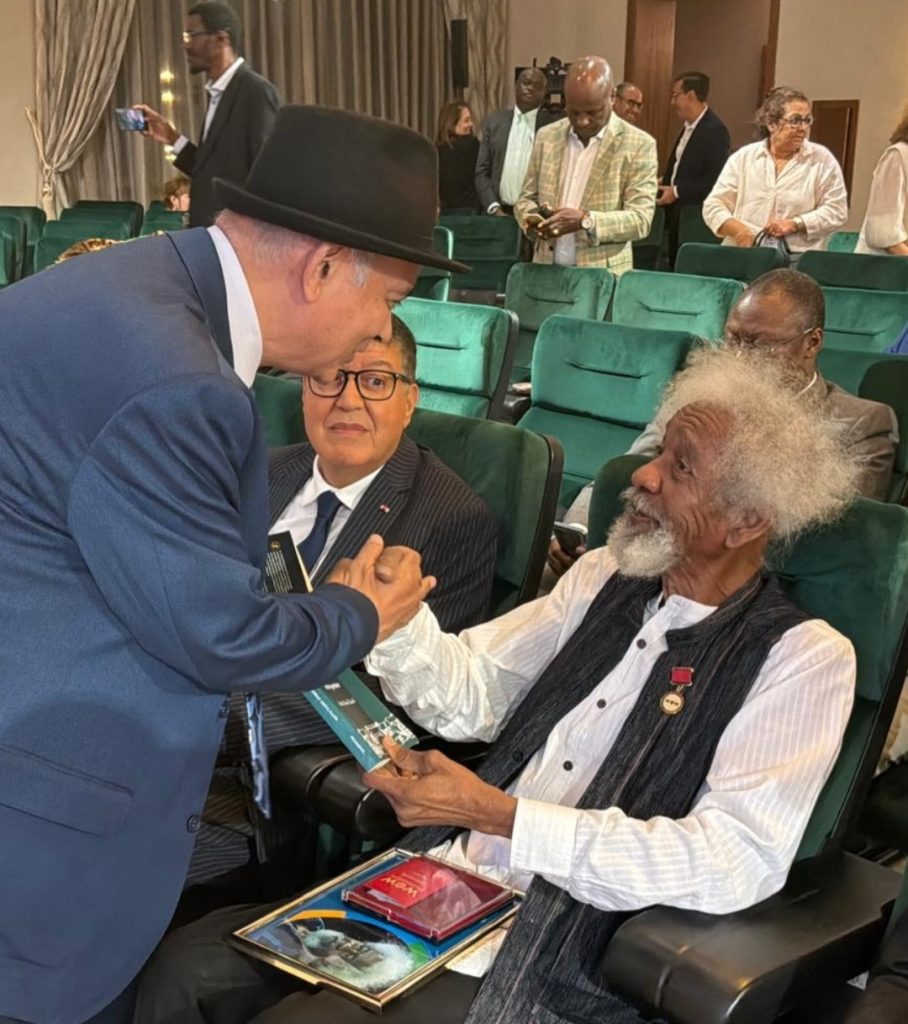
When I presented Soyinka with a copy of my novel, I felt that our meeting had completed a circle that began four decades earlier. The name I had first encountered during my military service had become that of a Nobel laureate; a literary prize had revealed an unexpected connection; and now, in Rabat, our books had come together in a literary dialogue even before their authors could fully pursue their own.
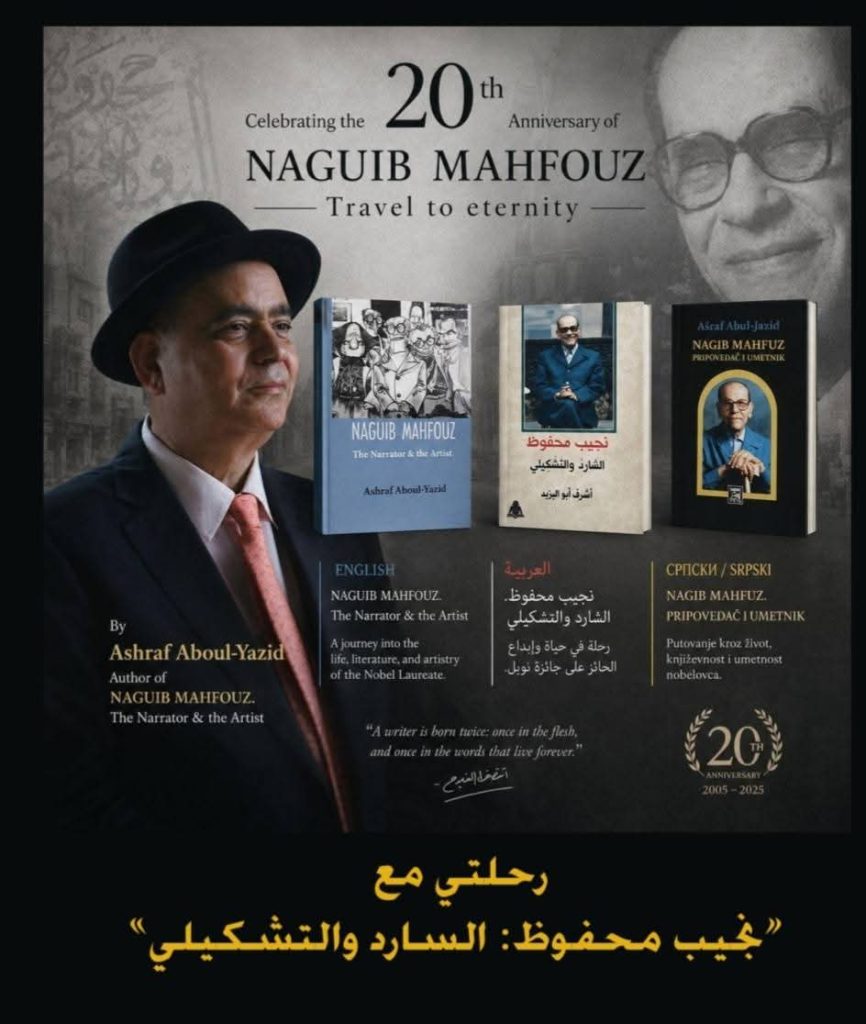
There was another subject I wanted to discuss with him: Naguib Mahfouz, the Egyptian novelist and Nobel laureate of 1988, whose literary world I had explored in my book Naguib Mahfouz: The Narrator and the Artist. I had presented a paper on Mahfouz, drawing on the ideas I developed in my book, and Soyinka kept a copy of my lecture. That moment added another thread to our encounter, connecting Nigerian and Egyptian literary traditions through a shared appreciation of one of the most influential novelists in Arabic literature.
Looking back on these encounters, I find it difficult to regard them as mere coincidences. They resemble scattered pages from a literary manuscript whose meaning becomes clear only when they are brought together: the first hearing of a name, the announcement of a Nobel Prize, an unexpected connection revealed through a shared literary award, and finally, the exchange of two novels bearing strikingly similar titles.
Perhaps this is one of literature’s most beautiful gifts: it allows lives to enter into dialogue across time and distance, sometimes long before the people themselves meet. It builds bridges between languages, cultures, and generations, reminding us that different journeys can lead us towards remarkably similar questions.
In Rabat, I presented my novel The Interpreter to Wole Soyinka, the author of The Interpreters. I offered him my book, but the moment gave me something less tangible and perhaps more enduring in return: the realisation that a literary connection had been quietly taking shape for forty-one years.
Sometimes, the deepest interpretations are not written in dictionaries. They are written by time itself.