 thesilkroadtoday
The Train Paintings of Artist Abdel Razek Okasha:
A Call to Folk Heritage and Its Stories
By Adnan Bashir Muayniq
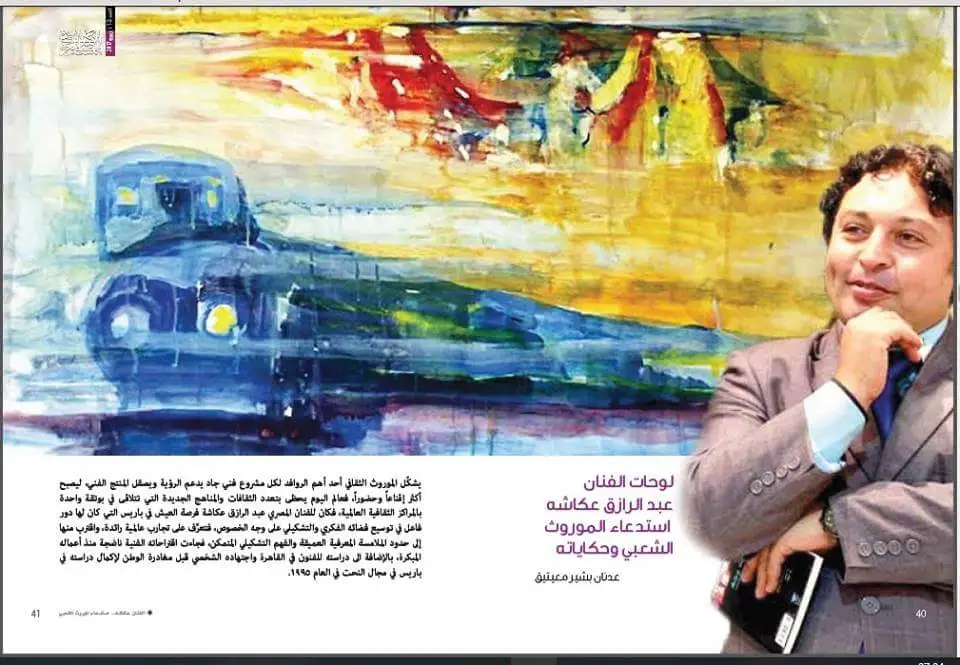
Folk heritage serves as one of the most important pillars for any artistic project. It provides vision and facilitates artistic success, making it richer and more prominent. Today’s artist must integrate new approaches that blend in one frame with global cultural centers. The Egyptian artist Abdel Razek Okasha had the opportunity to live in Paris, a city that played a role in expanding his intellectual and artistic space. He drew inspiration from pioneering life experiences while remaining closely connected to the depth of Arab aesthetics and a profound understanding of the philosophy of visual art. His successful artistic journey was shaped by his studies in Cairo and his personal efforts before leaving his homeland to pursue research in Paris in 1995.
The Train Journey
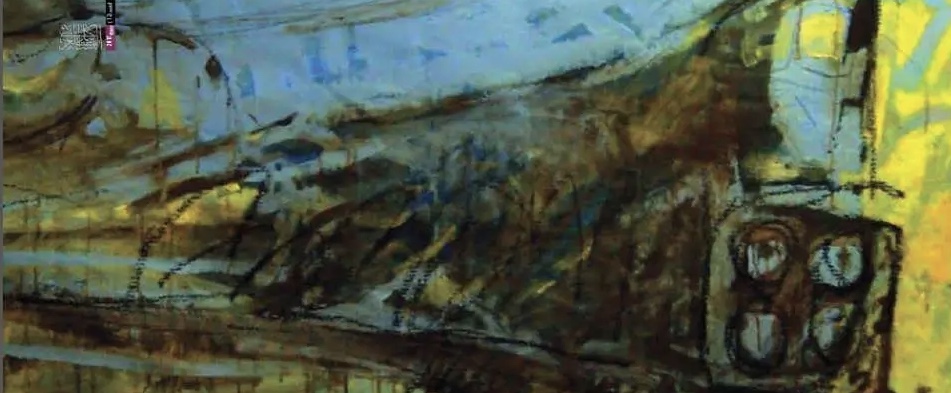
The train represents a symbolic journey of life, reflecting the cycle of movement, waiting, departure, and return. It is a space of intersections, where people of various backgrounds gather, sharing moments of contemplation, observation, and dialogue. The railway stations are not merely locations of transit but serve as a metaphor for experiences, emotions, and transformations.
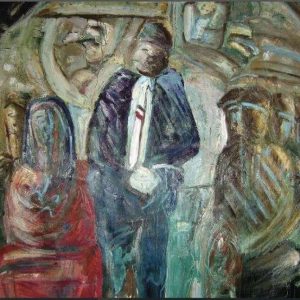
Okasha’s paintings capture this journey, presenting it as a visual narrative. His brushwork and color palette evoke nostalgia, merging memories with dreamlike elements. The blurred figures and expressive lines convey the energy of motion while preserving an air of mystery that allows viewers to connect personally with the scenes. His technique, influenced by his studies and artistic exposure in France, brings together realism and abstraction, allowing for a multi-layered interpretation of his work.
The Aesthetics of His Style
Okasha adopts an artistic approach rooted in deep symbolism. His compositions include elements of folk stories, everyday life, and collective memory. His use of bold colors and textured strokes reinforces the dynamism of his subjects, especially in works depicting trains and passengers. He blends the structured order of railway tracks with the spontaneous nature of human interaction, creating a compelling contrast.
Through his work, Okasha bridges the past and present, tradition and modernity. His paintings serve as an invitation to reflect on our own journeys—both literal and metaphorical. The train becomes more than just a means of transportation; it transforms into a space for introspection, fleeting connections, and the passage of time.
Conclusion
Okasha’s visual narratives embody the beauty of folk tales and the depth of human experience. His artistic legacy offers a window into the universal themes of movement, belonging, and transformation, all while paying homage to his cultural roots. His train-themed works remind us that every journey, whether on canvas or in life, carries stories waiting to be told.