كاو شويه: سندعم فلسطين عالميًا عبر قراءات شعرية في 28 و29 يونيو

أكد الشاعر والكاتب الصيني كاو شويه، المنسق الآسيوي في اللجنة التنسيقية القارية لحركة الشعر العالمية (WPM)، دعم بلاده الثابت للسلام في فلسطين، مشيرًا إلى أن الشعر سيكون وسيلة عالمية للتضامن معها.

وفي اجتماع اللجنة المنعقد أمس، أعلن كاو شويه: “سندعم فلسطين عالميًا من خلال قراءات شعرية تُقام يومي 28 و29 يونيو.”

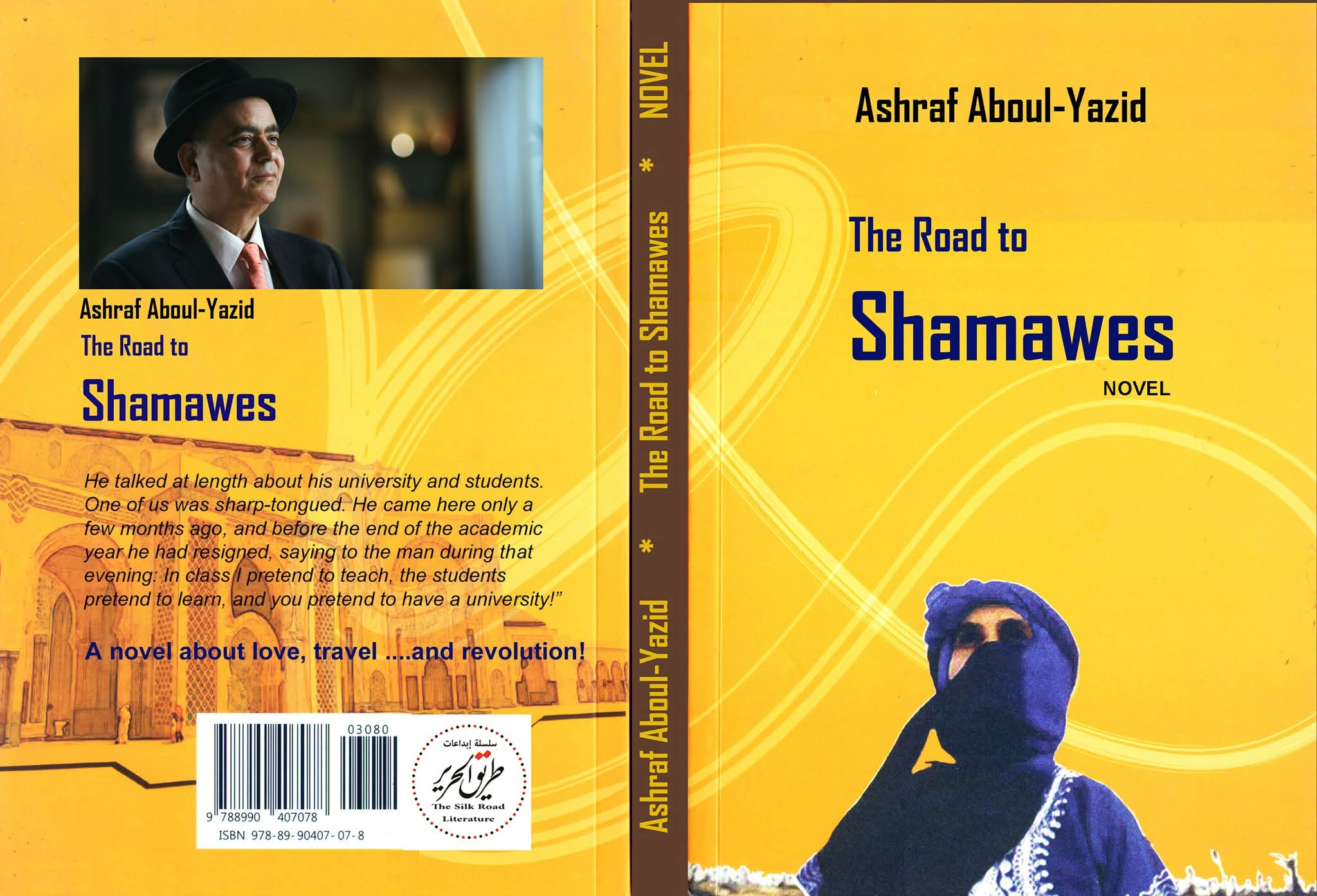
وأوضح أنه، بسبب تنظيمه لـمهرجان طريق الحرير الدولي الخامس للشعر في دبي خلال هذين اليومين، لن يتمكن من تنظيم فعالية قرائية واقعية في الصين، لكنه قام بخطوة بديلة فاعلة؛ إذ نظم مشاركة 18 شاعرًا صينيًا سجلوا قراءاتهم الشعرية بالفيديو وأرسلوها إلى حركة الشعر العالمية. وقد تُرجمت جميع القصائد إلى اللغة الإنجليزية.

وأضاف كاو شويه:
“في هذين اليومين، سأقوم بنشر هذه الفيديوهات عبر وسائل الإعلام الصينية والدولية، كما سأعيد نشر فيديوهات المشاركين من دول أخرى دعمًا لفلسطين.”

وقد أعلنت حركة الشعر العالمية (World Poetry Movement)، على لسان منسقها العام ومؤسسها الشاعر الكولومبي فرناندو ريندون، عن مشاركة 74 قصيدة مصورة ضمن حملة “الحراك الشعري العالمي من أجل غزة”، في تعبير شعري وإنساني تضامني واسع النطاق يضم مشاركات من 52 دولة حول العالم.

تتوزع هذه المشاركات الشعرية على قارات العالم الخمس، لتشمل 12 دولة من إفريقيا، و17 من آسيا، و16 من أمريكا، و5 من أوروبا، بالإضافة إلى بلدين من أوقيانوسيا. وتأتي هذه المساهمات ضمن مبادرة عالمية تتبناها الحركة من أجل دعم القضية الفلسطينية، وخصوصًا أهالي غزة، من خلال الكلمة الحرة والصوت الشعري.

من أبرز الدول المشاركة: فلسطين، مصر، تونس، المغرب، الجزائر، السودان، نيجيريا، الهند، العراق، إيران، الصين (15 مشاركة)، الولايات المتحدة، كوبا، الأرجنتين، المكسيك، البرتغال، واليونان. كما برزت مشاركات من جزر نائية مثل موريشيوس، جزر سانت لوسيا، مونتسرات، وجزر كاليدونيا الجديدة، ما يعكس الامتداد الجغرافي الواسع لهذه المبادرة.

وأكد الشاعر فرناندو ريندون أن هذه الحملة ليست مجرد حدث ثقافي، بل هي صرخة إنسانية تتجاوز الحدود، وتجمع أصوات الشعراء من مختلف الخلفيات والثقافات، في موقف موحد ضد الظلم الواقع على الشعب الفلسطيني، وبخاصة في غزة التي تواجه واحدة من أقسى المآسي الإنسانية في العصر الحديث.

وتمثل هذه القصائد المصورة أرشيفًا فنيًا وشهادات حية على التضامن العالمي مع غزة، في مبادرة توثق التفاعل الإنساني العابر للغات، حيث يجتمع الشعر ليكون جسرًا بين الشعوب، ورسالة مقاومة بالكلمة في وجه العنف والتهميش.


Related Posts

Pokhrelian Stanzas: A Paradigm Shift in the Poetry World 

  By Santosh Kumar Pokharel   pokharel.santosh@gmail.com How the Knot Was Tied  As an instant poet, I had long dreamed of introducing a poetry structure that could express a poet’s say clearly in a compact stanza with brevity. I wanted to bring something morphosemantically new into the craft. While creating a new poem, I found that a short stanza of three lines could carry a full message—and I was certain this three-liner should not imitate the haiku in any way. I began with a syllabic pattern of 1-2-1, rhyming the last line with the first. The structure looked good. This style was first named #pokhreliknots. I then extended the poem to 1-2-3-2-1 in the same manner, and kept going until I reached a twenty-five-line stanza, nominating the longer forms Vingtet and Vint-e-Cinque. The rule everywhere remained unchanged—the first and last lines mirrored each other in rhyme. This was the first triangular structure to begin from a monosyllabic line and stretch to twenty, then twenty-five lines. During composition, I discovered that repeating the central line produced a peculiar resonance across the whole stanza. I adopted this as the Morphosemantic Trapezium, with patterns such as 1-2-3-3-2-1, 1-2-3-4-4-3-2-1, and 1-2-3-4-5-5-4-3-2-1. The fundamental rule of mirroring first and last lines was now firmly in place. Then came an opportunity to present a workshop for the master’s degree students of Tribhuvan University. There I felt the need for stanzas flexible enough to carry a poet’s entire say while keeping the rhyming rule unaltered. I began forming shorter stanzas for poems and lyrics—starting from polysyllabic counts and ending each stanza on the same rhyme as its opener. It was at this stage, when the polysyllabic opener came into use, that the form became known as Pokhrelian Stanzas. These shorter stanzas looked even more aesthetic and meaningful, which led me to name the complete form Pokhrelian Stanzas: Morphosemantic Triangulum and Morphosemantic Trapezium. I was overwhelmed with joy when beautiful lyrics and poems with grave meanings could emerge from this structure. Today, poets across continents are practicing this style. The Architecture of the Knot  What began as a three-line experiment grew into a complete architecture. The Pokhrelian Stanza rests on a single, unalterable principle: the first and last lines of every stanza mirror each other in rhyme. Upon this foundation, the form unfolds in two complementary movements. The first is the Morphosemantic Triangulum—the triangular stanza that begins with a monosyllabic line, expands syllabically to an apex, and contracts back to a monosyllabic line rhyming with the opening one. From the briefest Trimetric Knot or Trentet (1-2-1) to the Pentametric Knot or Pentet (1-2-3-2-1), the Heptametric Knot or Heptet (1-2-3-4-3-2-1), and onward to the extended Vingtet and Vint-e-Cinque, each stanza forms a visual and rhythmic triangle whose central line marks the summit of the thought. The expansion and contraction of syllables is not decorative; it is morphosemantic—the shape of the stanza carries the shape of the meaning. The second is the Morphosemantic Trapezium, born from the discovery that repeating the central line produces a peculiar resonance, an echo that deepens the stanza’s emotional and semantic field. Here the pattern becomes Quadret (1-2-2-3), Hexametric Knot or Hexet (1-2-3-3-2-1), Octet (1-2-3-4-4-3-2-1), and so on. The mirrored rhyme of first and last lines remains inviolate, but the doubled centre gives the poem a lingering, reflective quality—the knot tightened twice. As the form travelled from the page to the workshop, a further need arose: stanzas flexible enough to carry a poet’s entire say while preserving the rhyming rule. Thus emerged the polysyllabic stanzas—shorter and more numerous, beginning not with a monosyllable but with a longer line, and closing each stanza on the same rhyme as its opener. Patterns such as 3-4-5-5-4-3 and 5-6-7-8-8-7-6-5 allowed lyrics and longer poems to breathe without surrendering the form’s discipline. These shorter stanzas proved, if anything, even more aesthetic and meaningful—compact yet complete, rhymed yet free. Together, the Triangulum and the Trapezium, the monosyllabic and the polysyllabic, constitute the Pokhrelian Stanzas. Unlike haiku, which seeks brevity without rhyme, the Pokhreli Knot is confined and rhymed—a deliberate advance over modern blank verse and the loosely worded short poem. It offers the poet a structure at once strict and spacious, capable of wit, grief, love, and meditation within the same mirrored frame. Starting from the three-liner and extending to twenty-five-line stanzas, the Pokhrelian Stanzas render an unparalleled contribution to the morphology of poetry building. The Pokhrelian Sonnets and Beyond  At the furthest reach of the Trapezium so far lies the Pokhrelian Sonnet, a fourteen-line stanza following the pattern 1-2-3-4-5-6-7-7-6-5-4-3-2-1. This is the morphosemantic trapezium in its most extended form: the syllables climb from one to seven across seven lines, pause at the doubled seventh line—the apex where the resonance deepens—and then descend symmetrically to a monosyllabic close that rhymes with the opening word. The ascent gathers; the doubled centre holds; the descent releases. Meaning is carried as much by the architecture as by any single line. Sonnet Knot (1-2-3-4-5-6-7-7-6-5-4-3-2-1) Morphosemantic Trapezium March 30, 2024. Nepal. Naive Love’s boon From yonder Shall happen soon As liable, who should Give them the silver spoon My eyes are there for her Issues shall not me deter If love’s perfect and pure…

Soyinka at 40: Three Nobel Laureates Celebrate the Opening of the House of the Worlds of the Book 

By Bill F. Ndi, President of the Pan African Writers Association (PAWA), Director of International Programs and Professor of Modern Languages, Communication, and Philosophy at Tuskegee University, Alabama, USA.  Your Excellency, Permanent Secretary of the Academy of the Kingdom of Morocco, Professor Abdeljalil Lahjomri, Distinguished Nobel Laureates: Professor Wole Soyinka, Professor JMG Le Clézio, and Professor Michel Kodjo Boko, Your Excellencies Ministers of Government and Members of the Diplomatic Corp, Eminent Members of this notable body, esteemed writers, scholars, readers, publishers, and friends of literature from across Africa and the world, I bring you greetings from Tuskegee University, and on behalf of General Mark A. Brown who, last year, in this same venue, addressed this esteemed body. I, also, bring you greetings from the office of the President of The Pan African Writers Association. Today, we stand at the intersection of memory and destiny. We gather to celebrate two remarkable milestones: the fortieth anniversary of the historic Nobel Prize in Literature awarded to Wole Soyinka, the first Black African laureate in literature, whose achievement in 1986 affirmed the rightful place of African voices in the universal republic of letters; and the opening of the World House of Books, a new home for humanity’s stories, knowledge, imagination, and collective memory. Forty years ago, the recognition bestowed upon Wole Soyinka was not merely a personal triumph. It was a victory for Africa’s storytellers, poets, playwrights, intellectual traditions, and creative spirit. His Nobel Prize opened doors for generations of African writers and demonstrated to the world that African experiences, philosophies, histories, and dreams belong not at the margins, but at the very heart of global literature. As we celebrate this legacy, we are equally honored to pay tribute to Jean-Marie Gustave Le Clézio, recipient of the 2008 Nobel Prize in Literature. A writer of extraordinary depth and sensitivity, Le Clézio has spent his literary life exploring themes of migration, cultural encounters, human dignity, memory, and the enduring relationship between people and place. His works have consistently championed the voices of those often overlooked by history and have reminded us that literature serves as a bridge between cultures and civilizations. Through his profound humanism and openness to the diversity of the world’s cultures, he has enriched global literature and advanced the values of dialogue, understanding, and respect that unite humanity. As we celebrate the enduring legacy of Wole Soyinka, forty years after his historic Nobel Prize in Literature, and honor the distinguished writer J. M. G. Le Clézio, we also pay tribute to a man whose life’s work reminds us that knowledge is not only a pursuit of truth, but a service to humanity. The man alluded to is Professor Michel Kodjo Boko, a distinguished African scholar whose life’s work has combined scientific excellence, public service, and a profound commitment to humanity. Through his contributions to climate science and sustainable development, Professor Boko has helped deepen our understanding of one of the defining challenges of our age: climate change and its consequences for peace, security, and human well-being. Professor Boko stands as a testament to the power of ideas. If Wole Soyinka reminds us of the liberating force of literature, and J. M. G. Le Clézio of the universal reach of the human imagination, Michel Kodjo Boko reminds us that science, too, is an act of hope, a bridge between knowledge and responsibility, between understanding and action. Yet our gathering today is not only about honoring past achievements. It is about embracing a responsibility to the future. The opening of the World House of Books is therefore both timely and profound. A house of books is more than a building. It is a sanctuary of knowledge, a meeting place of civilizations, a repository of memory, and a bridge between generations. It symbolizes the conviction that books remain among humanity’s most powerful instruments for education, peace, cultural understanding, and social transformation. As we reflect on these historic milestones, let us move beyond celebration to commitment. Let every government invest boldly in libraries, literacy, publishing, translation, and the arts. Let educational institutions place books at the center of learning and intellectual development. Let publishers create opportunities for emerging voices. Let cultural organizations preserve literary heritage while supporting innovation. Let parents raise readers, and let communities nurture the culture of reading. The greatest tribute we can pay to Wole Soyinka, to Jean-Marie Gustave Le Clézio, and to all those whose words have illuminated our world, is not praise alone. It is to ensure that no child is denied access to books, no language is deprived of its written legacy, no library stands empty, and no worthy story remains untold. Today, I call upon Africa and the international community to launch a new literary renaissance: to build libraries where there are none, to strengthen publishing industries where they struggle, to translate works across cultures and languages, to preserve indigenous knowledge, and to make reading a continental movement and a global priority. To the young writers of Africa and the world, I offer a simple message: write courageously. Tell your stories with honesty, imagination, and conviction. Challenge injustice. Preserve memory. Celebrate diversity. Inspire hope. The future of literature belongs to voices that are authentic, fearless, and committed to truth. Let the World House of Books become not merely a monument, but a movement: A movement for knowledge over ignorance. A movement for culture over division. A movement for dialogue over prejudice. A movement for books over barriers. And a movement for the enduring power of the written word to transform humanity. On behalf of the Pan African Writers Association, I invite the world to join us in this mission: Read. Write. Publish. Preserve. Inspire. The next Nobel laureate is already among us. The next great African story is waiting to be told. And through the World House of Books, may future generations discover the shared humanity that unites us all. Long live African literature. Long live the culture of reading. Long live the power of books to transform the world.…

اترك تعليقاً

لن يتم نشر عنوان بريدك الإلكتروني. الحقول الإلزامية مشار إليها بـ *