 thesilkroadtoday

From May 30 to June 1, three creative records were set in Almaty and the surrounding region. These achievements were organized by the World Organization of Writers (WOW) and the Assembly of the Peoples of Eurasia and Africa. All records were officially registered by Anpar Al-Mukhametov, a representative of the Book of World Records.

Literary Olympus at Medeo
Mountains are often seen as places of snow, ice, and physical challenges — and also as places of inspiration and poetic ascent. All these elements converged in the Small Almaty Gorge of the Zailiyskiy Alatau, home to the legendary Medeo Ice Rink, built during the Soviet era at an altitude of 1,691 meters. This iconic stadium, once dubbed the world’s highest-altitude winter sports complex, boasts an artificial ice field spanning 10.5 thousand square meters. Its pure mountain water contributed to record-breaking speed skating achievements, earning it the title “Record Factory” with 320 world records set between 1952 and 1988.
On May 30, 2025, the Medeo Dam — standing 150 meters high just above the rink — became the site of a new kind of record: a poetic ascent. A leaderboard was installed on the stairway of the dam for the “Highest Poetic Climb”. The feat involved climbing 842 steps to reach an altitude of 1,733 meters above sea level.
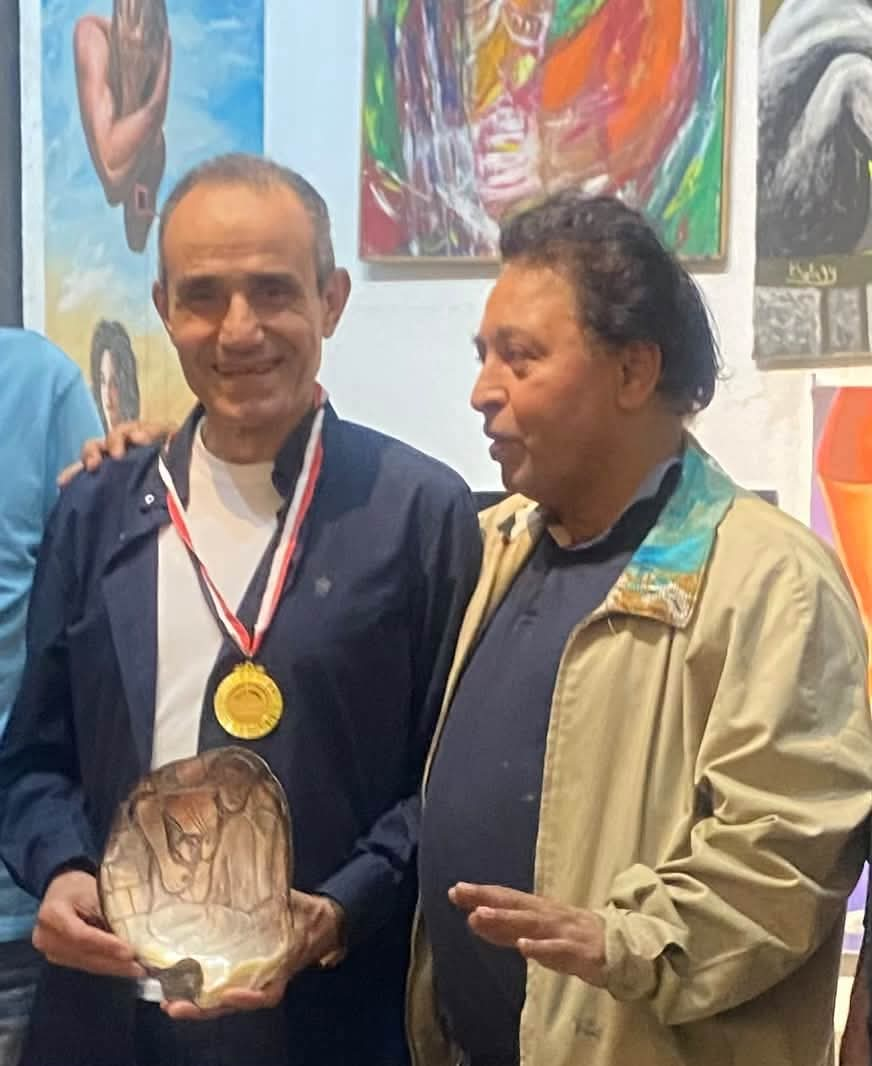
The climb was led by Margarita Al (Russia), president of the World Organization of Writers, and Vlada Koroleva (France), a travel blogger. They were accompanied by ten laureates of the WOW Award: Konstantin Kodrov-Chelintsev (Russia), Olzhas Suleimenov (Kazakhstan), Varis Klchisi (Azerbaijan), Tugrul Tayol (Turkey), Ashraf Aoul-Yazid(Ashraf Dali) (Egypt), Wale Okodiran (Nigeria/Ghana), Alexandra Ochirova (Russia), Adil Koozam (UAE), Danilo Hoso Urtejo (Nicaragua) and Mamta Sagar (India)
At ten designated platforms along the climb, Margarita Al and Vlada Koroleva read excerpts from the participants’ literary works. This symbolic ascent turned into a poetic journey through global literature.
Reflecting on the experience, one participant remarked:
“Climbing with Margarita and Vlada while hearing the verses of masterful writers from around the world felt like traveling across the continents. I didn’t want the stairs to end — that’s how captivating the journey was. After all, it unfolded in the Northern Tien Shan, where Joseph Brodsky once wandered. Perhaps it was here that he conceived the line: ‘The honeycombs of a glacier in a spiral half a world.’”
Rhymes of the World’s Peoples
On May 31, another record was set in the stunning Charyn Canyon — particularly in its most iconic section, the Valley of Castles, in the Almaty region. This natural wonder, with its ancient rock formations, became the stage for the “Highest Children’s Poetry Climb” — 342 steps to a height of 1,733 meters.
The event was held in honor of Children’s Day. At the summit, with a breathtaking view of snow-capped peaks, young participants recited poems in Kazakh, Russian, French, English, Spanish, and Chinese. Among the young record-setters were Rodisi Alipenko (Kazakhstan, age 7), Kushnyta Santaigie (Kazakhstan, age 15), Bila Korolata Garsin (France, age 8) and Stepan Korolev Garkin (France)
“These records are not ordinary,” said Margarita Al, representing both the Book of World Records and the WOW initiative.
“We’ve developed a new approach that aligns with Guinness standards but emphasizes humanitarian and cultural values through literature and language. This is what makes these records both unique and meaningful.”
Poetry among the Rocks of Tethys
In a side gorge of the Valley of Castles, a natural amphitheater became the setting for another milestone. For the first time, a poetry concert featuring works in multiple world languages was held in this geological relic of the ancient Tethys Ocean.
The recital featured Margarita Al, as well as Kazakh poets Zov Ro-Pitva and O’Les. A new poetic record was set here as well — this time in a truly unique location that echoed with the voices of poets from across the globe.
Children’s Records: A Lesson for Adults

The third record returned to the Medeo Dam — this time celebrating the power of children’s voices and imagination. The stairway was portrayed as a metaphor for life’s journey, with its earliest steps being the most vital.
The record was overseen by an independent expert representing the Kazakh newspapers “Komsomolskaya Pravda Kazakhstan” and “Arguments and Facts Kazakhstan”, and witnessed by hundreds of tourists. The children’s poetic expressions, climbing toward the sky, served as a reminder:
“We must not surrender our future to digital automation or let machines replace the authentic, imaginative expressions of the next generation.”
Poems about childhood and the natural elements of the mountains gave hope that today’s youth can ascend — not just physically, but also metaphorically — toward new horizons and deeper meanings.

Oleg Belov
Photos by the author