
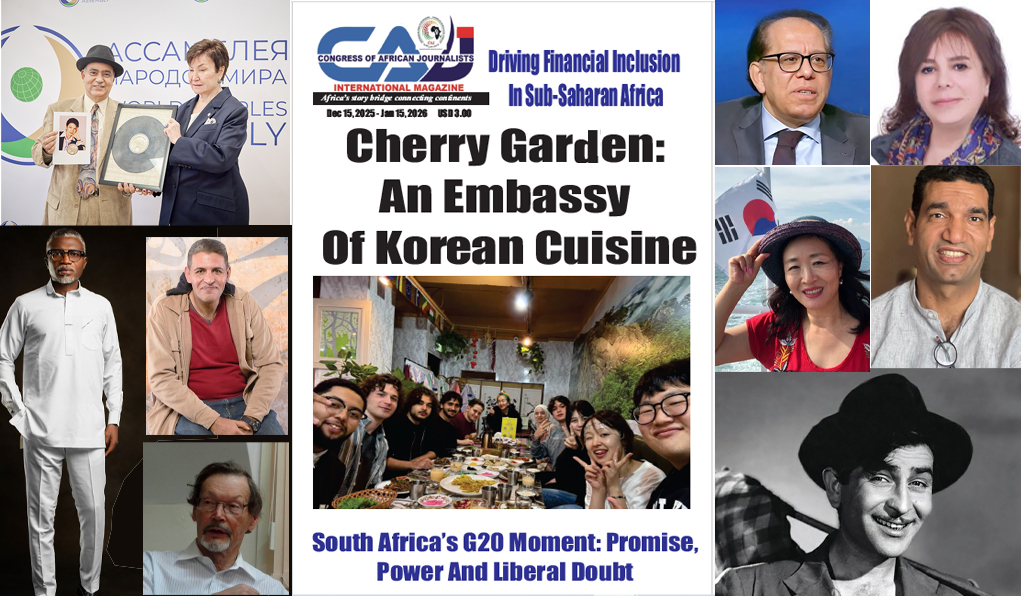
As 2025 draws to a close, CAJ International Magazine stands once again at the crossroads of cultures, ideas, and human stories—those threads that weave the vast tapestry of our shared world. This December issue brings together voices from Asia, Europe, the Middle East, and Africa, reminding us that journalism is, above all, a vessel for understanding.
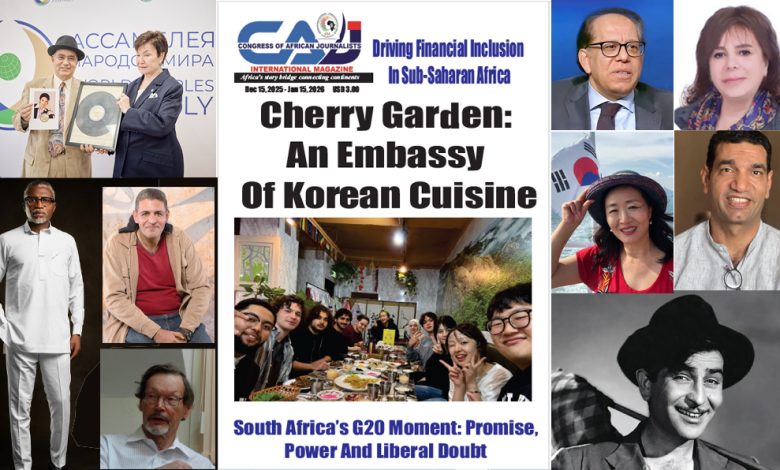
We open with a journey—culinary, cultural, and deeply human. Cherry Garden, the Korean restaurant led by writer-traveler Lee Yeon-sil, offers far more than the pleasure of a meal. It embodies a universal philosophy: the table as a meeting place of civilizations. Through her inclusive approach to food—vegan, halal, or traditional Korean—Cherry proves that hospitality can be diplomacy, and cuisine can be a form of peaceful dialogue. In a world that often fractures along lines of identity and belief, Cherry Garden invites us to gather, to listen, and to share.
From the warmth of a dining table, we move to the harsh cold of the Caucasus in Jan, Rassem Rachdi’s historical novel reviewed by Dr. Eman Bikai. In this work, the Circassian struggle against imperial conquest is told not merely as a narrative of war but as an archive of memory. The novel reminds us that literature often becomes the refuge of wounded nations; it carries the weight of names, battles, and lost homelands. Through Jan’s tragedy, the reader confronts the timeless question of how small peoples defend their dignity against overwhelming force.
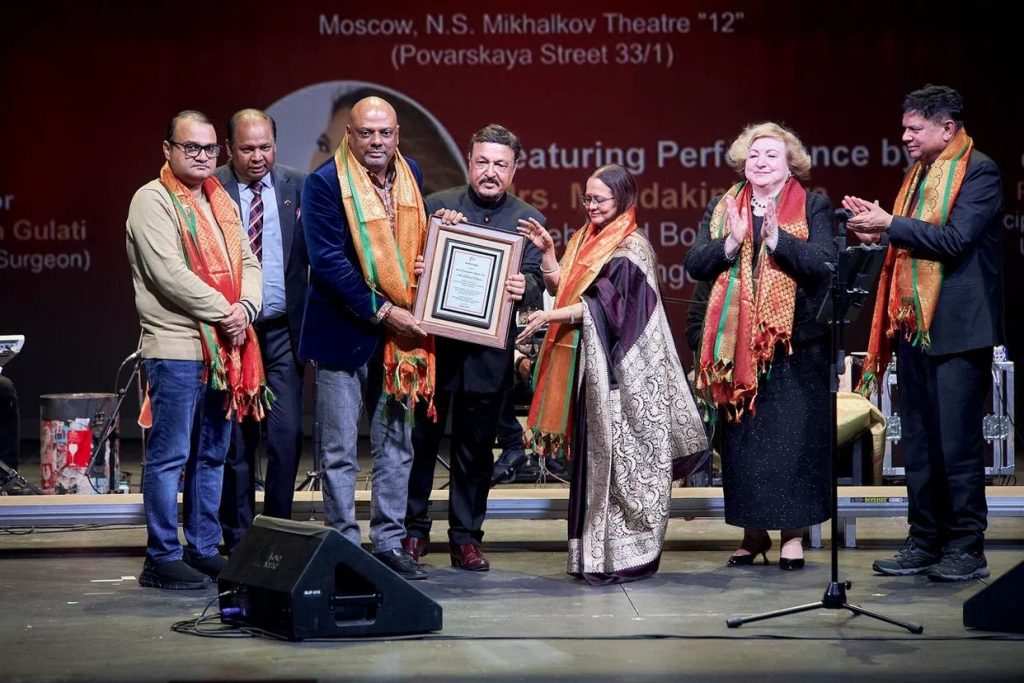
This month also marks an international celebration. Dr. Alexandra Vasilievna Ochirova—philosopher, poet, academician, and UNESCO Goodwill Ambassador—has been named Silk Road Literature Person of the Year 2025. Her lifelong dedication to intercultural dialogue symbolizes the very essence of the Silk Road: bridges of thought, not barriers; shared beauty, not division. As Dr. Ashraf Aboul-Yazid recounts, honoring her is a tribute to the power of art in healing the fractured world.
 This month also marks an international celebration. Dr. Alexandra Vasilievna Ochirova—philosopher, poet, academician, and UNESCO Goodwill Ambassador—has been named Silk Road Literature Person of the Year 2025. Her lifelong dedication to intercultural dialogue symbolizes the very essence of the Silk Road: bridges of thought, not barriers; shared beauty, not division. As Dr. Ashraf Aboul-Yazid recounts, honoring her is a tribute to the power of art in healing the fractured world.
China’s innovation-driven growth and expanding openness are reshaping global prosperity, especially across the Global South. In this interview, Dr. Diaa Helmy explains how China’s development model, its partnership with Egypt, and its commitment to shared progress are creating new economic opportunities and strengthening pathways for international cooperation.
Cinema lovers are treated to Olga Khvastunova’s homage to Raj Kapoor on the 100th anniversary of his birth. Few foreign artists left as deep an imprint on Soviet cultural memory as Kapoor did. His films—bursting with music, justice, and hope—were not just entertainment; they were testimonies to optimism in difficult times. Even today, they remind us that art can unite nations more effectively than politics.
Meanwhile, contemporary Egypt looks forward in Dabaa Awaits the Light. Ahmed Saeed Tantawi revisits the nation’s long, winding relationship with nuclear energy, describing the Dabaa Nuclear Plant as “a new page” in Egypt’s book of the future. Here, energy becomes a metaphor for destiny—how nations choose their own light.

In literature section, Ahmed Amer’s Unconvincing Reasons for Solitude is a haunting journey through a fractured inner world where words vanish, memories wound, and grief reshapes existence. Through the narrator’s wandering mind—haunted by his mother’s death, daily alienation, and silent battles—the story unravels the quiet despair of a man losing connection with himself. Yet in one final outcry, the reclaimed word “homeland” becomes both an awakening and a fragile reclaiming of voice.
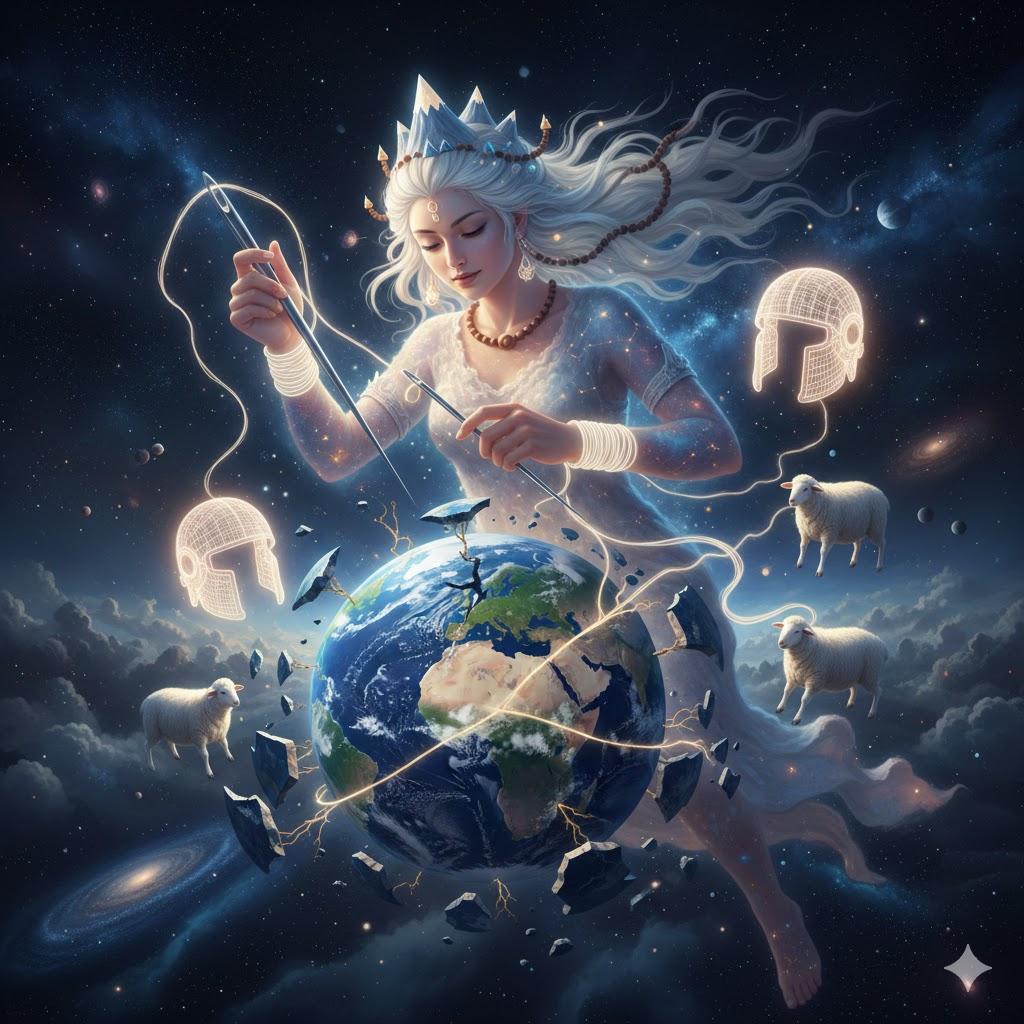
And the life inseparable from it.
Finally, our global lens widens with reflections on the future of humanity by V. Klykov, who warns of ecological and moral catastrophe if humanity continues its destructive path. This is balanced by Dela Ahiawor’s optimistic report on the rise of digital financial inclusion in Sub-Saharan Africa—a transformation capable of lifting millions out of exclusion and driving progress toward the SDGs.
Across all these pieces, one truth resonates: the future will belong to those who create, connect, and care. As we step into 2026, CAJ renews its commitment to telling the stories that move humanity forward.