Trending News:Everything Fucked, Everything Golden: On Cao Bo’s C·BThree Sisters, One Gun: Cao Shui’s The Three Wild Yak Sisters Gioia Lomasti’s Ode to Odina – A Poem in Rhyme Celebrates the Unconditional Love of Companion AnimalsAn Eternal Bond (Poetry)“Red Before Any Red”: A Three-Day Seminar Exploring Pure Feeling, Perception, and RealityThe Literary Biography of Dr. Ashraf Aboul-Yazidالأم التي لا تستطيع الموت | قصة قصيرة من أذربيجانمقاطع بوخريل: بيان من أجل الشعر المقطعي المكثّفمبادرة ثقافية إيطالية تحتفي بالإبداع وتفتح أبوابها للأدب والفنونThe Chains We Forge: A Novel of Freedom and Betrayalدار الناشر … إصدارات جديدة بين النثر والشعرلا أعلم متى ينام الليل يا أبيلن أحيدَ عن جُبران«الحلقة الذهبية» الجديدة للجنوب: جمعية شعوب العالم تبحث إطلاق مسار سياحي بين روسيا وأبخازياالملكة المصرية نفرتيتي والنساء السوفيتياتEgyptian Queen Nefertiti and Soviet Womenقيود نصنعها بأيدينا (رواية من كينيا)لكل شعب حكاية يرويهاحين جاء أدب العالم إلى رام اللهWole Soyinka in PalestineBabacar NDIAYE Appointed Ambassador of International Writers’ Group “Together for the Letters” in Senegalالعالم الروحي والطقوس الجنائزية في مصر القديمةNO REVOLUTION OR RENAISSANCE WITHOUT WRITERS «ألوان الحياة».. صحر أنور ترصد فلسفة الوجود وتفاصيل الإنسان في كتاب جديدDr. Ashraf Aboul-Yazid Explores Africa’s Cultural Renaissance, Pan-Africanism, and the Future of African Identity on African HourWorld Peoples Assembly to Present Its Activities and Development Plans at Shanghai Cooperation Organisation Secretariat in Beijingعالَمُ الكونعبد الرازق عكاشة.. الذاكرة الإنسانية ودورها فى البناء التشكيلي.. ” ناس من شارعنا”أدونيس وعلي أحمد سعيد إسبرحين تتكلم الثقافة بلغة الثقة: إرث تشايكوفسكي يعبر إلى الشرق الأوسطCultural Synergy Over Rivalry: The Legacy of Tchaikovsky and the “Walking Family Museum” at the First World Public Summit in Amman EgyptThe Silk Road Literature Series and World Peoples Assembly Sign Strategic Cooperation Agreement in Ammanالناقدة والروائية سماح خليفة: امرأة وجدت في الأدب مساحة لفهم العالم ومساءلتهالفن والثقافة والإبداع: إصدار الخريف المنتظر لعام 2026 من «100 مشروع إبداعي – الفن في الواجهة»سحر زمان تستضيف لقاءً أدبياً خاصاً حول مذكرات الكاتبة الفلسطينية حنان عواد بترجمة أشرف أبو اليزيدSahar Zaman Hosts a Special Literary Encounter on Palestinian Writer Hanan Awwad’s Memoirs, Translated by Ashraf Aboul-YazidАлександра Очирова представляет книгу «Русский космизм: Память» на трёх языкахألكسندرا أوتشيروفا تقدم كتاب «الكونية الروسية: الذاكرة» بثلاث لغاتAlexandra Ochirova Presents Russian Cosmism: Memory in Three LanguagesLoving You at the Speed of a Snail Travelling Around the WorldBenjiman Blue: The Streets Between WorldsLA GAONESA: Poems of Life, Love and Longingد. حنان عواد تتسلم الميدالية الذهبية وعضوية منظمة كتاب العالم في ختام الجلسة الأدبية للقمة العربية في عمّانمقال أدبي | السير في صحبة الجنياتالرجل الذي نسي أنه يموتالثقافة جسر بين الشعوب: قمة عمّان تناقش الذاكرة التاريخية والحوار الحضاري For an African Literary Sovereignty Open to the Worldالخيالات الأفريقية والعالمية تحتفي بها الرباطThe Pokhrelian Stanzas: A Manifesto for Compact Syllabic Verse في حب تونس … حوار المشاهد والشواهد الشاعر والسهوب والإنسان: قراءة نقدية في العالم الشعري لأولوغبيك يسداوليتوفA Journey Beyond Earth: Meeting Russian Cosmonaut Oleg Skripochka in Ammanقادة الدبلوماسية الشعبية يعرضون مشروعاتهم في القمة العالمية للشعوبالتراث الروحي بوصفه فضاءً للحوار محور نقاش في القمة العالمية للشعوب: العالم العربيسلاف … نهر على سفردكتور عبد الحليم نور الدين.. حين يصبح الإنسان أثرًا لا يمحوه الزمنمجلة «سُلاف» الثقافية اليمنية تحتفي بمرور عامين على انطلاقتهاالموسوعة السعودية للسينما: عناوين لافتة في مساحة متفرّدة АЛЕКСАНДРА ОЧИРОВА: ЧЕЛОВЕК ДОЛЖЕН УМЕТЬ ЗАЩИЩАТЬ СВОИ ЦЕННОСТИALEXANDRA OCHIROVA: A PERSON MUST BE ABLE TO DEFEND THEIR VALUESألكسندرا أوتشيروفا: يجب على الإنسان أن يكون قادراً على الدفاع عن قيمهA Look at Alfred Nyagaka Nyamwange’s Collection of BooksDance in Silence, Poem by Anwar Rahimالشاعرة القطرية سعاد الكواري تشيد بمبادرة «100 مؤلف، 100 كتاب»From Russia to Humanity: Alexandra Ochirova’s Russian Cosmism: Memory Brings Author, Translator and Intellectual Dialogue Together in Ammanحوار مع جويا لوماستي: العقل المدبر وراء مشروع 100 مؤلف. 100 كتابInterview with Gioia Lomasti: The Mind Behind 100 Libri d’Autoreآية دغنوج في حضرة الموجيCommemorative Anthology Honouring Dashdorg Natsagdorj Presented to Mongolia’s Iconic PoetsWorld Peoples Assembly Scientific and Expert Council Brings Global Initiatives to the Arab World: From Vision to Joint Programs and ProjectsPublic Diplomacy in Action: International Leaders Explore the Path from Dialogue to Sustainable Partnerships in AmmanThe Arab World: Bridging Heritage and the Future – International Leaders to Explore New Horizons of Cooperation at the First World Public Summit in AmmanAmman Hosts the Official Opening of the First World Public Summit: Dialogue, Cultural Heritage and Partnership for a Common FutureLiterature and the Future Human Being: World Organization of Writers Hosts International Literary Salon in Amman“Russian Cosmism. Memory”: Alexandra Ochirova Presents Her Multilingual Book at the First World Public Summit in AmmanPublic Diplomacy Leaders Present International Initiatives at the First World Public Summit in Ammanالمنظمات غير الحكومية والعمل التطوعي والخيري: تعزيز المجتمع المدني والتنمية المجتمعية في العالم العربيNGOs, Volunteering and Charity: Strengthening Civil Society and Community Development Across the Arab Worldمن المعرفة إلى العمل: المنتدى الدولي للشباب في عمّان يدفع نحو جيل جديد من التعاون العالميFrom Knowledge to Action: International Youth Forum in Amman to Advance a New Generation of Global Cooperationالأرض المقدسة والعالم العربي: التراث الروحي جسرٌ للحوار والسلامThe Holy Land and the Arab World: Spiritual Heritage as a Bridge for Dialogue and PeaceThe Skull of LiteratureLeonid Selemenev Discovers Remarkable Artistic Works During Visit to the Likhachev Centerالشاعر السعودي رائد الجشي يمثل الشعر العربي في معرض «وفرة الخريف.. هبة الحب» بمدينة شنغهاي الصينيةالفن يجمع النساء : 115 فنانة من 115 دولة يلتقين في دبيART CONNECTS WOMEN 2026: 115 Women Artists from 115 Countries Come Together in DubaiNepalese Writers Keshab Sigdel and Dr. Ram Dayal Rakesh to Receive Prestigious SAARC–FOSWAL Literary Awards in New Delhiزارع البطيخ … رسالة العمل وتبعاتهNO KEYS THERE: Cairo as an Absurd Theatre of Love, Satire, and Hidden Truths«أخطر فيلسوف سياسي في الغرب»«زعتر وميرمية».. مهرجان فلسطيني في القاهرة يحتفي بالهوية والثقافة والفنونCook for World: Bringing AI Technology to Life with a Touch of ‘Beautiful Heart’Cuba Opens Its Doors to the World’s Writersالفنانة التشكيلية منة طارق: الرسوم ليست مجرد زينة للنص
Trending News:Everything Fucked, Everything Golden: On Cao Bo’s C·BThree Sisters, One Gun: Cao Shui’s The Three Wild Yak Sisters Gioia Lomasti’s Ode to Odina – A Poem in Rhyme Celebrates the Unconditional Love of Companion AnimalsAn Eternal Bond (Poetry)“Red Before Any Red”: A Three-Day Seminar Exploring Pure Feeling, Perception, and RealityThe Literary Biography of Dr. Ashraf Aboul-Yazidالأم التي لا تستطيع الموت | قصة قصيرة من أذربيجانمقاطع بوخريل: بيان من أجل الشعر المقطعي المكثّفمبادرة ثقافية إيطالية تحتفي بالإبداع وتفتح أبوابها للأدب والفنونThe Chains We Forge: A Novel of Freedom and Betrayalدار الناشر … إصدارات جديدة بين النثر والشعرلا أعلم متى ينام الليل يا أبيلن أحيدَ عن جُبران«الحلقة الذهبية» الجديدة للجنوب: جمعية شعوب العالم تبحث إطلاق مسار سياحي بين روسيا وأبخازياالملكة المصرية نفرتيتي والنساء السوفيتياتEgyptian Queen Nefertiti and Soviet Womenقيود نصنعها بأيدينا (رواية من كينيا)لكل شعب حكاية يرويهاحين جاء أدب العالم إلى رام اللهWole Soyinka in PalestineBabacar NDIAYE Appointed Ambassador of International Writers’ Group “Together for the Letters” in Senegalالعالم الروحي والطقوس الجنائزية في مصر القديمةNO REVOLUTION OR RENAISSANCE WITHOUT WRITERS «ألوان الحياة».. صحر أنور ترصد فلسفة الوجود وتفاصيل الإنسان في كتاب جديدDr. Ashraf Aboul-Yazid Explores Africa’s Cultural Renaissance, Pan-Africanism, and the Future of African Identity on African HourWorld Peoples Assembly to Present Its Activities and Development Plans at Shanghai Cooperation Organisation Secretariat in Beijingعالَمُ الكونعبد الرازق عكاشة.. الذاكرة الإنسانية ودورها فى البناء التشكيلي.. ” ناس من شارعنا”أدونيس وعلي أحمد سعيد إسبرحين تتكلم الثقافة بلغة الثقة: إرث تشايكوفسكي يعبر إلى الشرق الأوسطCultural Synergy Over Rivalry: The Legacy of Tchaikovsky and the “Walking Family Museum” at the First World Public Summit in Amman EgyptThe Silk Road Literature Series and World Peoples Assembly Sign Strategic Cooperation Agreement in Ammanالناقدة والروائية سماح خليفة: امرأة وجدت في الأدب مساحة لفهم العالم ومساءلتهالفن والثقافة والإبداع: إصدار الخريف المنتظر لعام 2026 من «100 مشروع إبداعي – الفن في الواجهة»سحر زمان تستضيف لقاءً أدبياً خاصاً حول مذكرات الكاتبة الفلسطينية حنان عواد بترجمة أشرف أبو اليزيدSahar Zaman Hosts a Special Literary Encounter on Palestinian Writer Hanan Awwad’s Memoirs, Translated by Ashraf Aboul-YazidАлександра Очирова представляет книгу «Русский космизм: Память» на трёх языкахألكسندرا أوتشيروفا تقدم كتاب «الكونية الروسية: الذاكرة» بثلاث لغاتAlexandra Ochirova Presents Russian Cosmism: Memory in Three LanguagesLoving You at the Speed of a Snail Travelling Around the WorldBenjiman Blue: The Streets Between WorldsLA GAONESA: Poems of Life, Love and Longingد. حنان عواد تتسلم الميدالية الذهبية وعضوية منظمة كتاب العالم في ختام الجلسة الأدبية للقمة العربية في عمّانمقال أدبي | السير في صحبة الجنياتالرجل الذي نسي أنه يموتالثقافة جسر بين الشعوب: قمة عمّان تناقش الذاكرة التاريخية والحوار الحضاري For an African Literary Sovereignty Open to the Worldالخيالات الأفريقية والعالمية تحتفي بها الرباطThe Pokhrelian Stanzas: A Manifesto for Compact Syllabic Verse في حب تونس … حوار المشاهد والشواهد الشاعر والسهوب والإنسان: قراءة نقدية في العالم الشعري لأولوغبيك يسداوليتوفA Journey Beyond Earth: Meeting Russian Cosmonaut Oleg Skripochka in Ammanقادة الدبلوماسية الشعبية يعرضون مشروعاتهم في القمة العالمية للشعوبالتراث الروحي بوصفه فضاءً للحوار محور نقاش في القمة العالمية للشعوب: العالم العربيسلاف … نهر على سفردكتور عبد الحليم نور الدين.. حين يصبح الإنسان أثرًا لا يمحوه الزمنمجلة «سُلاف» الثقافية اليمنية تحتفي بمرور عامين على انطلاقتهاالموسوعة السعودية للسينما: عناوين لافتة في مساحة متفرّدة АЛЕКСАНДРА ОЧИРОВА: ЧЕЛОВЕК ДОЛЖЕН УМЕТЬ ЗАЩИЩАТЬ СВОИ ЦЕННОСТИALEXANDRA OCHIROVA: A PERSON MUST BE ABLE TO DEFEND THEIR VALUESألكسندرا أوتشيروفا: يجب على الإنسان أن يكون قادراً على الدفاع عن قيمهA Look at Alfred Nyagaka Nyamwange’s Collection of BooksDance in Silence, Poem by Anwar Rahimالشاعرة القطرية سعاد الكواري تشيد بمبادرة «100 مؤلف، 100 كتاب»From Russia to Humanity: Alexandra Ochirova’s Russian Cosmism: Memory Brings Author, Translator and Intellectual Dialogue Together in Ammanحوار مع جويا لوماستي: العقل المدبر وراء مشروع 100 مؤلف. 100 كتابInterview with Gioia Lomasti: The Mind Behind 100 Libri d’Autoreآية دغنوج في حضرة الموجيCommemorative Anthology Honouring Dashdorg Natsagdorj Presented to Mongolia’s Iconic PoetsWorld Peoples Assembly Scientific and Expert Council Brings Global Initiatives to the Arab World: From Vision to Joint Programs and ProjectsPublic Diplomacy in Action: International Leaders Explore the Path from Dialogue to Sustainable Partnerships in AmmanThe Arab World: Bridging Heritage and the Future – International Leaders to Explore New Horizons of Cooperation at the First World Public Summit in AmmanAmman Hosts the Official Opening of the First World Public Summit: Dialogue, Cultural Heritage and Partnership for a Common FutureLiterature and the Future Human Being: World Organization of Writers Hosts International Literary Salon in Amman“Russian Cosmism. Memory”: Alexandra Ochirova Presents Her Multilingual Book at the First World Public Summit in AmmanPublic Diplomacy Leaders Present International Initiatives at the First World Public Summit in Ammanالمنظمات غير الحكومية والعمل التطوعي والخيري: تعزيز المجتمع المدني والتنمية المجتمعية في العالم العربيNGOs, Volunteering and Charity: Strengthening Civil Society and Community Development Across the Arab Worldمن المعرفة إلى العمل: المنتدى الدولي للشباب في عمّان يدفع نحو جيل جديد من التعاون العالميFrom Knowledge to Action: International Youth Forum in Amman to Advance a New Generation of Global Cooperationالأرض المقدسة والعالم العربي: التراث الروحي جسرٌ للحوار والسلامThe Holy Land and the Arab World: Spiritual Heritage as a Bridge for Dialogue and PeaceThe Skull of LiteratureLeonid Selemenev Discovers Remarkable Artistic Works During Visit to the Likhachev Centerالشاعر السعودي رائد الجشي يمثل الشعر العربي في معرض «وفرة الخريف.. هبة الحب» بمدينة شنغهاي الصينيةالفن يجمع النساء : 115 فنانة من 115 دولة يلتقين في دبيART CONNECTS WOMEN 2026: 115 Women Artists from 115 Countries Come Together in DubaiNepalese Writers Keshab Sigdel and Dr. Ram Dayal Rakesh to Receive Prestigious SAARC–FOSWAL Literary Awards in New Delhiزارع البطيخ … رسالة العمل وتبعاتهNO KEYS THERE: Cairo as an Absurd Theatre of Love, Satire, and Hidden Truths«أخطر فيلسوف سياسي في الغرب»«زعتر وميرمية».. مهرجان فلسطيني في القاهرة يحتفي بالهوية والثقافة والفنونCook for World: Bringing AI Technology to Life with a Touch of ‘Beautiful Heart’Cuba Opens Its Doors to the World’s Writersالفنانة التشكيلية منة طارق: الرسوم ليست مجرد زينة للنص
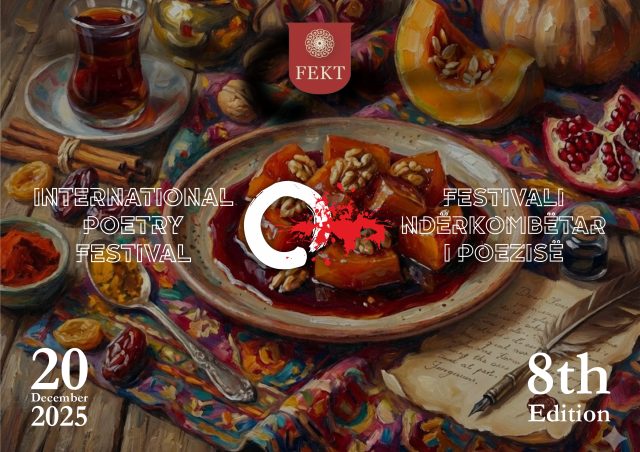
Kosovo is preparing next week to host the International Poetry Festival 2025, a prominent cultural event expected to bring together poets, translators, and critics from around the world, reaffirming poetry’s status as a human bridge that transcends borders and languages. The festival is anticipated to create a vibrant space for cultural dialogue and creative exchange among participants from Europe, Asia, Africa, and the Arab world.
The festival’s activities will be spread over several days and will include multilingual poetry evenings, where poems will be recited in their original languages, accompanied by translations that enable local and international audiences to engage with the texts and appreciate their aesthetic and intellectual dimensions. In addition, intellectual seminars and panel discussions will be held, addressing issues of contemporary poetry, the role of the poet in a turbulent world, and the importance of translation in conveying poetic experiences across cultures.
The festival will place special emphasis on youth participation, organizing a number of poetry-writing workshops and open meetings with guest poets. These activities aim to encourage emerging talents and strengthen the relationship of younger generations with poetry as a tool for free expression and the building of awareness. Wide participation is expected from university students and literature enthusiasts.
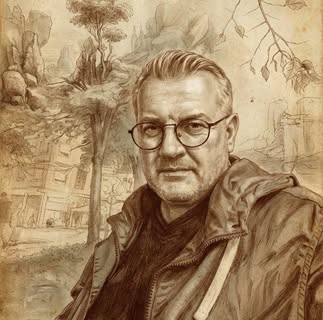
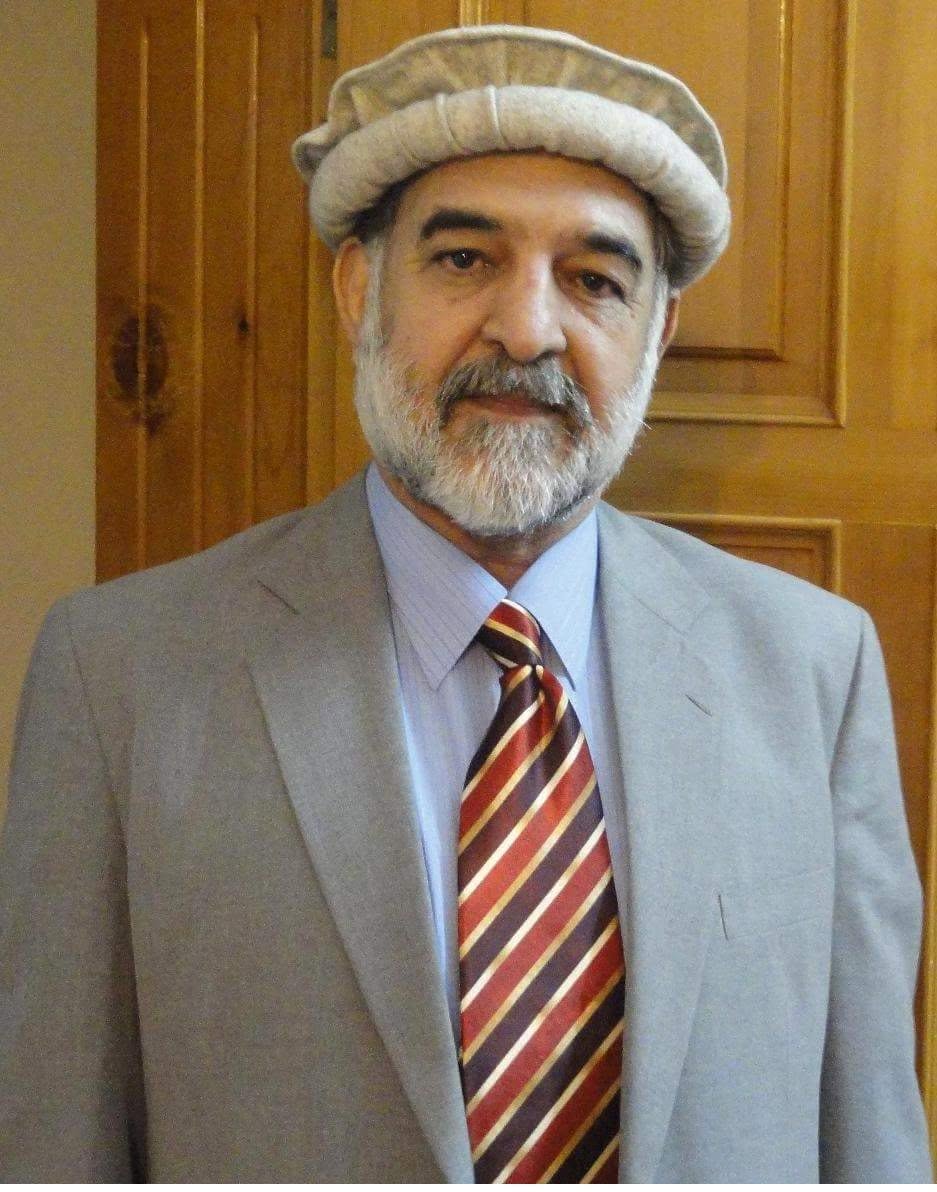
الشاعر فخر الدين شيخو
The Director of the International Poetry Festival Fahredin Shehu, affirmed that “the festival celebrates poetry and poets from different countries around the world, fostering a dialogue among diverse cultures, just as it creates a dialogue between poetry, painting, and music.”
He pointed to the importance of poetry in bringing together the scattered fragments of the world, emphasizing that poetry has the power to transcend borders. Shehu added that “the festival celebrates beautiful words, creativity, friendship, love, and aesthetic and human values. It represents a form of cultural exchange, where poets from diverse cultural backgrounds meet within the festival space hosted by Rahovec, the City of Grapes.”
The festival will also witness the honoring of poetic and cultural figures who have contributed to enriching the global literary scene, in recognition of their creative achievements and their role in fostering dialogue among peoples. This recognition comes as part of the festival’s vision of celebrating influential poetic experiences and linking creative accomplishment with human responsibility.
The organizers of the International Poetry Festival – Kosovo 2025 emphasize that this edition seeks to establish Kosovo as an international cultural platform and an annual hub for poets from diverse backgrounds, sending a clear message that poetry is capable of creating spaces for understanding and peace. The festival is expected to conclude with a collective poetry evening reflecting the spirit of diversity and convergence, affirming that the poetic word will continue to unite the world around the values of beauty, freedom, and humanity.
Guests of this 8th edition:
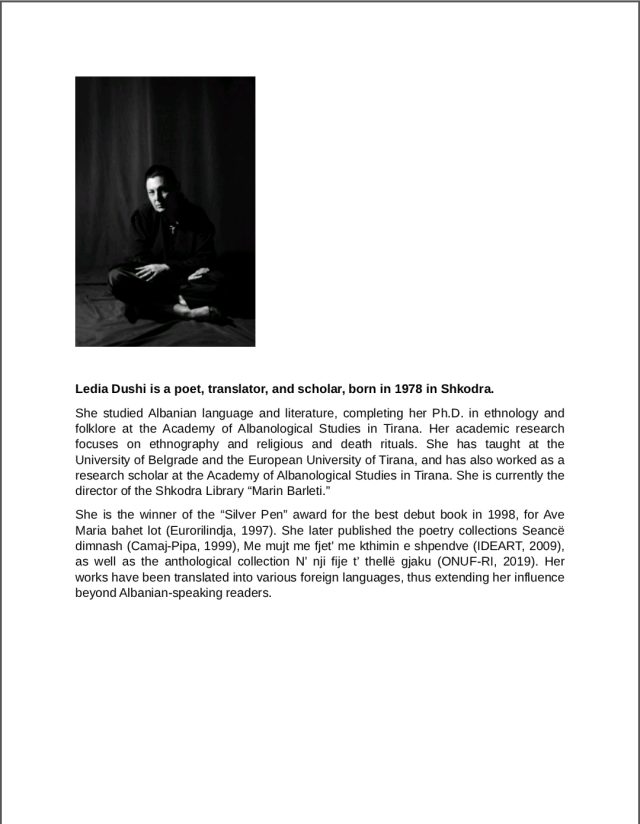
Ledia Dushi
Albanian poet, translator, and scholar with a PhD in ethnology and folklore. Award-winning author of several poetry collections, widely translated. Former university lecturer and researcher, she currently directs the Marin Barleti Library in Shkodra, bridging poetry, scholarship, and cultural memory.
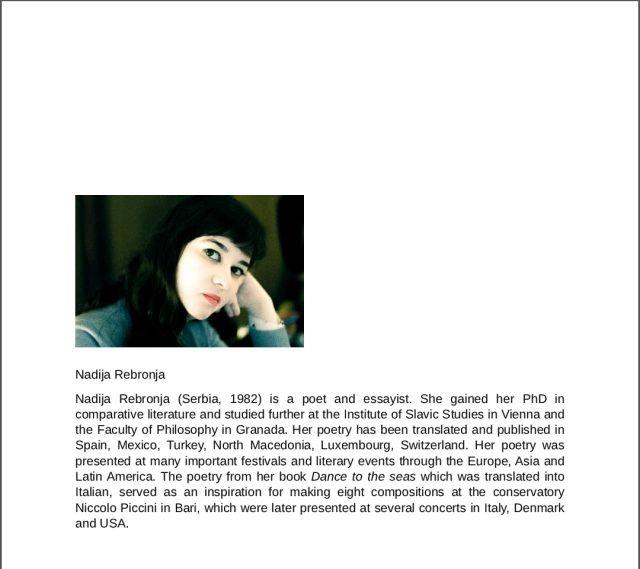
Nadija Rebronja
Serbian poet and essayist with a PhD in comparative literature. Her internationally translated poetry appears across Europe, Asia, and Latin America. Her book Dance to the Seas inspired musical compositions performed internationally, highlighting her cross-disciplinary poetic influence.
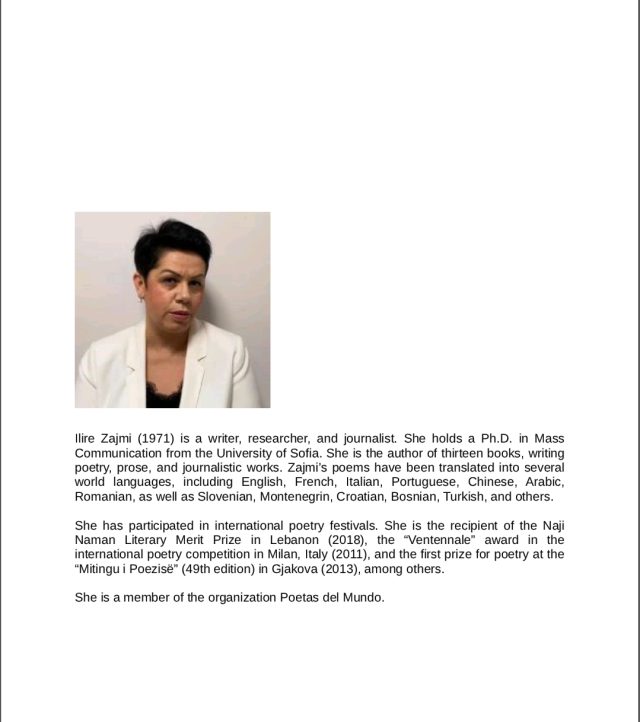
Ilire Zajmi
Writer, researcher, and journalist from Kosovo with a PhD in Mass Communication. Author of thirteen books across poetry and prose, translated into many languages. An award-winning poet, she actively participates in international festivals and is a member of Poetas del Mundo.
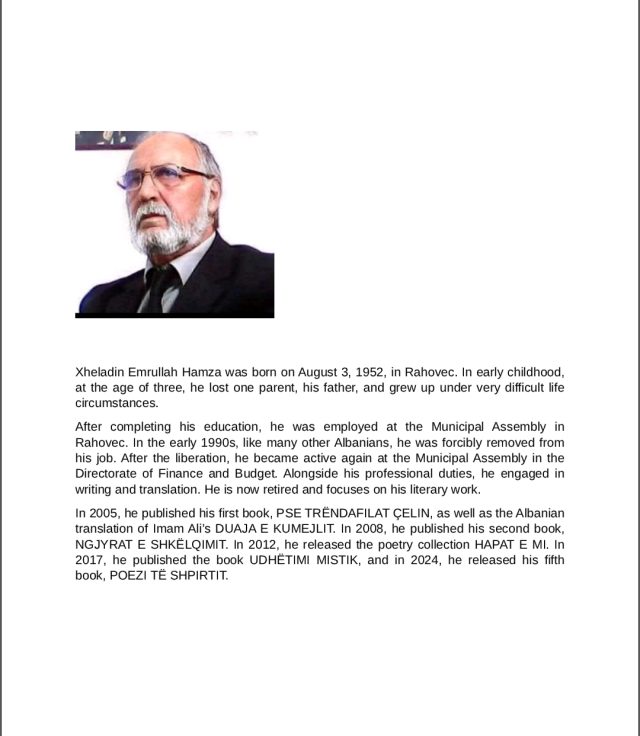
Xheladin Emrullah Hamza
Kosovar poet, translator, and former municipal official whose life was shaped by hardship and resilience. Author of five poetry books and notable translations, he now devotes his retirement to literature, exploring spirituality, memory, and personal experience through verse.
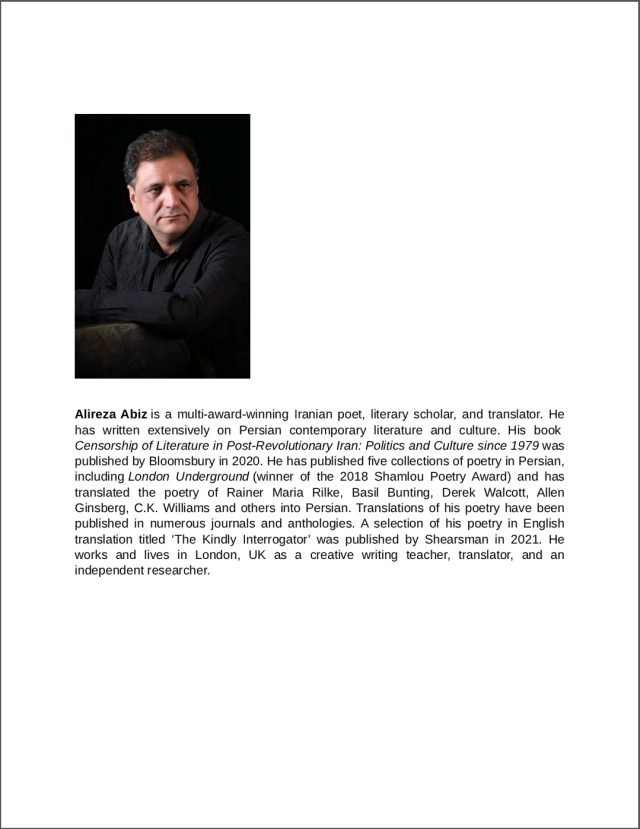
Alireza Abiz
Iranian poet, literary scholar, and translator based in London. Author of award-winning Persian poetry collections and major studies on censorship in Iran. His work is widely translated, and he bridges Persian and world poetry through teaching, translation, and criticism.
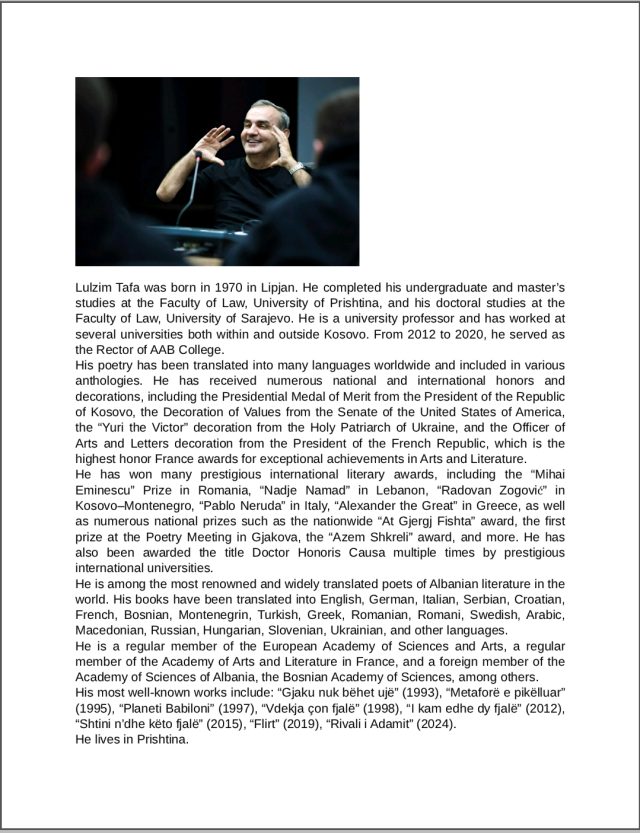
Lulzim Tafa
One of the most renowned Albanian poets worldwide, also a legal scholar and university professor. Widely translated and highly decorated internationally, his influential poetry addresses history, ethics, and humanity, earning him major global awards and academic honors.
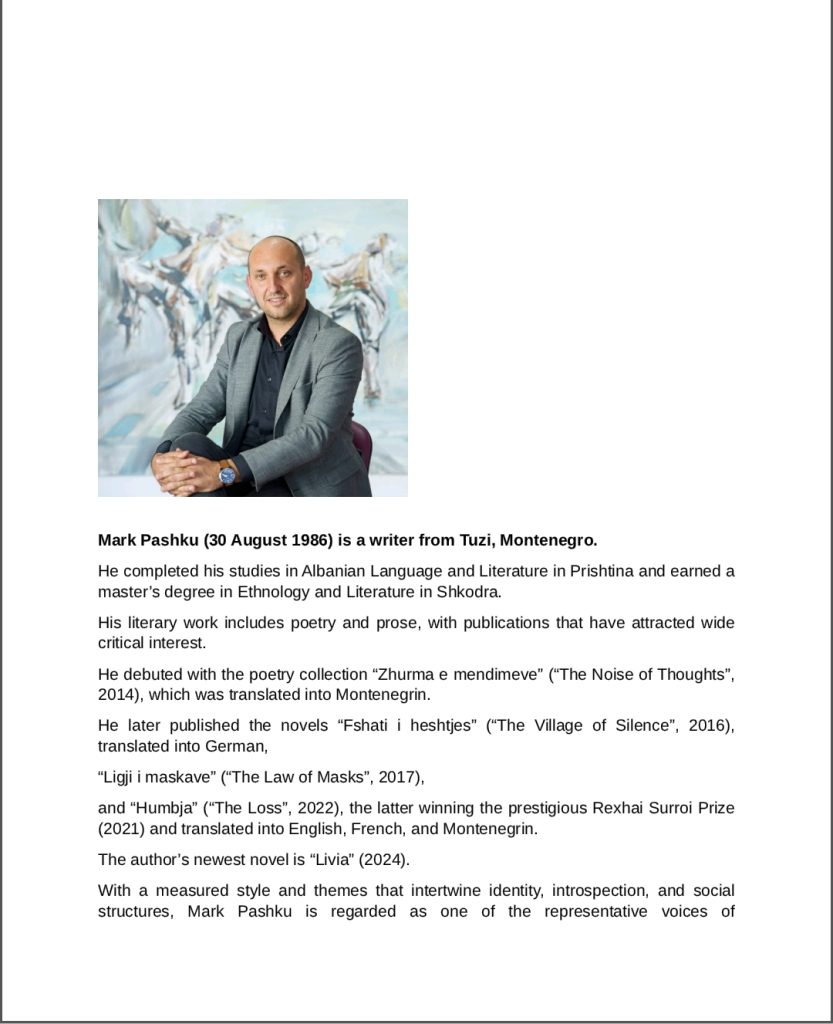
Mark Pashku
Writer from Montenegro whose work spans poetry and novels. Educated in Albanian literature and ethnology, he is known for introspective narratives on identity and society. His award-winning novels are translated into major European languages.
Tobias Burghardt
German poet, essayist, and translator, co-founder of EDITION DELTA. Widely translated and internationally awarded, he is recognized for promoting world poetry through writing, publishing, and translation, including the prestigious Antonio de Ferraris International Poetry Award.
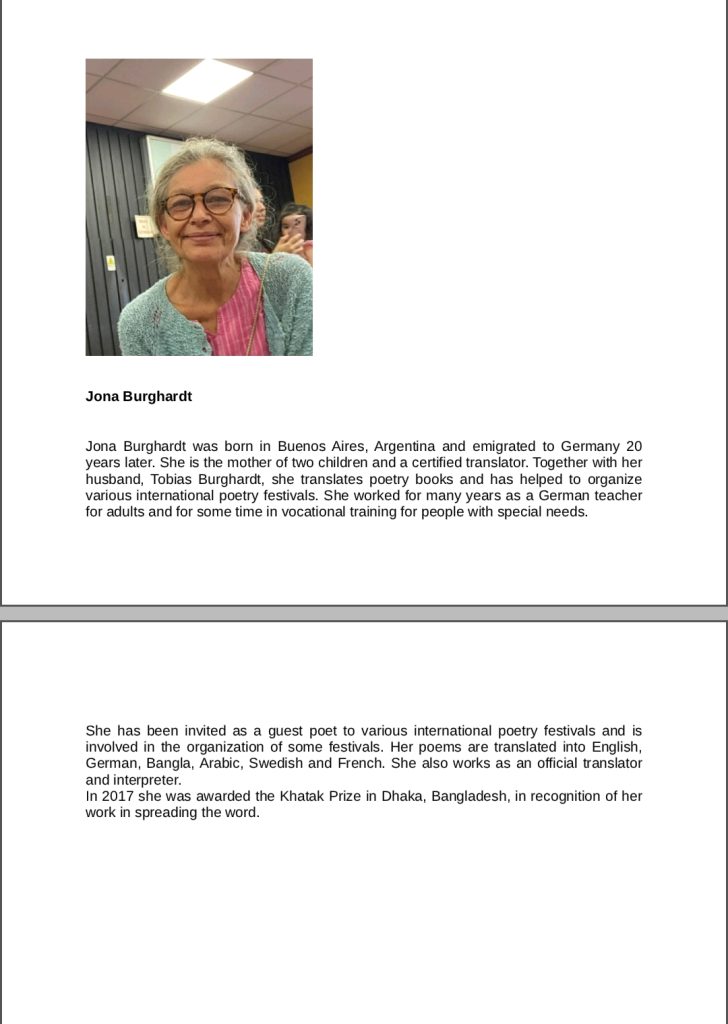
Jona Burghardt
Argentinian-born poet, translator, and cultural organizer based in Germany. A multilingual writer whose poetry is widely translated, she is active in international festivals and literary exchange, and a recipient of the Khatak Prize for cultural contribution.
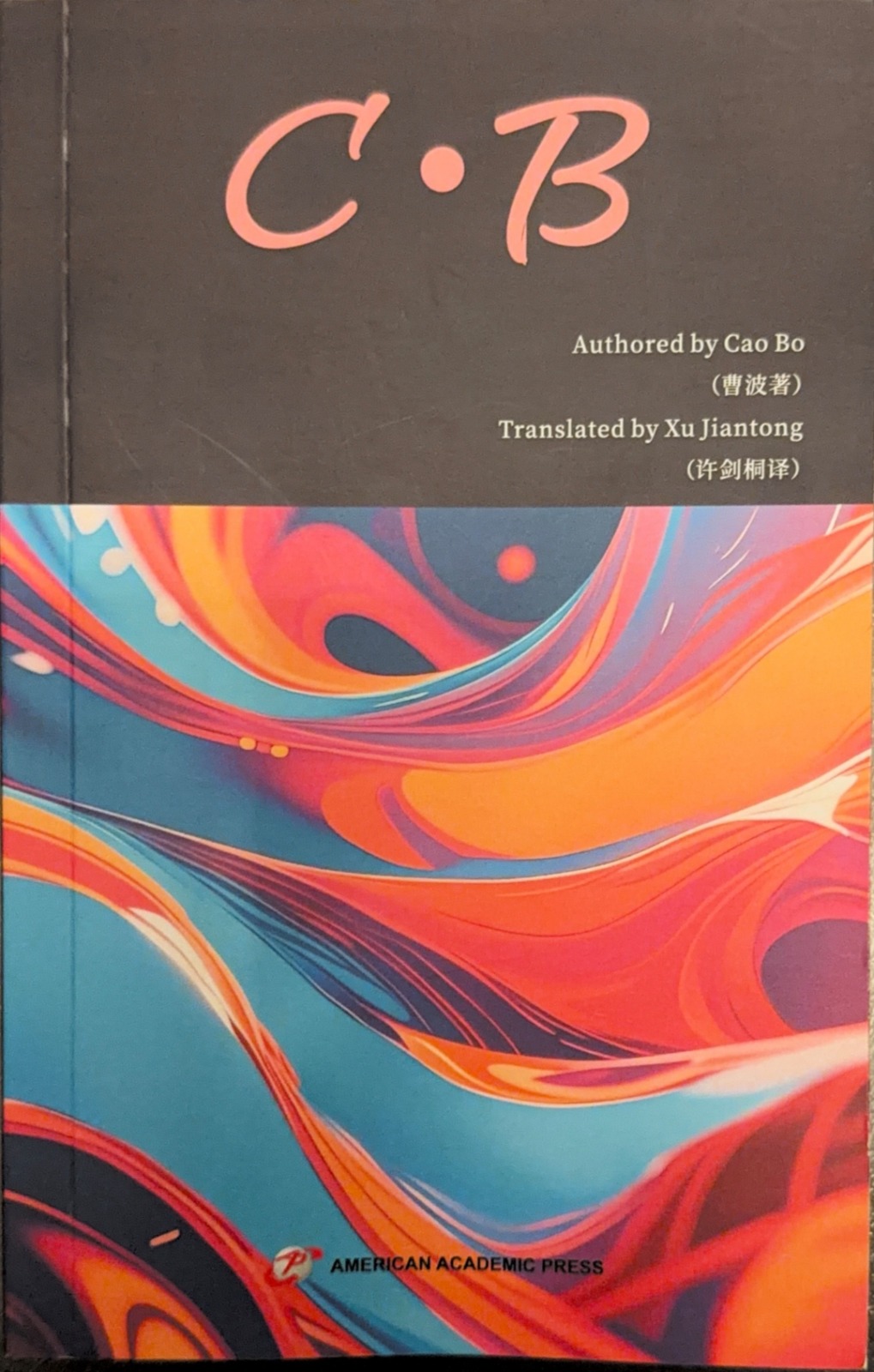
Three Sisters, One Gun: Cao Shui’s The Three Wild Yak Sisters
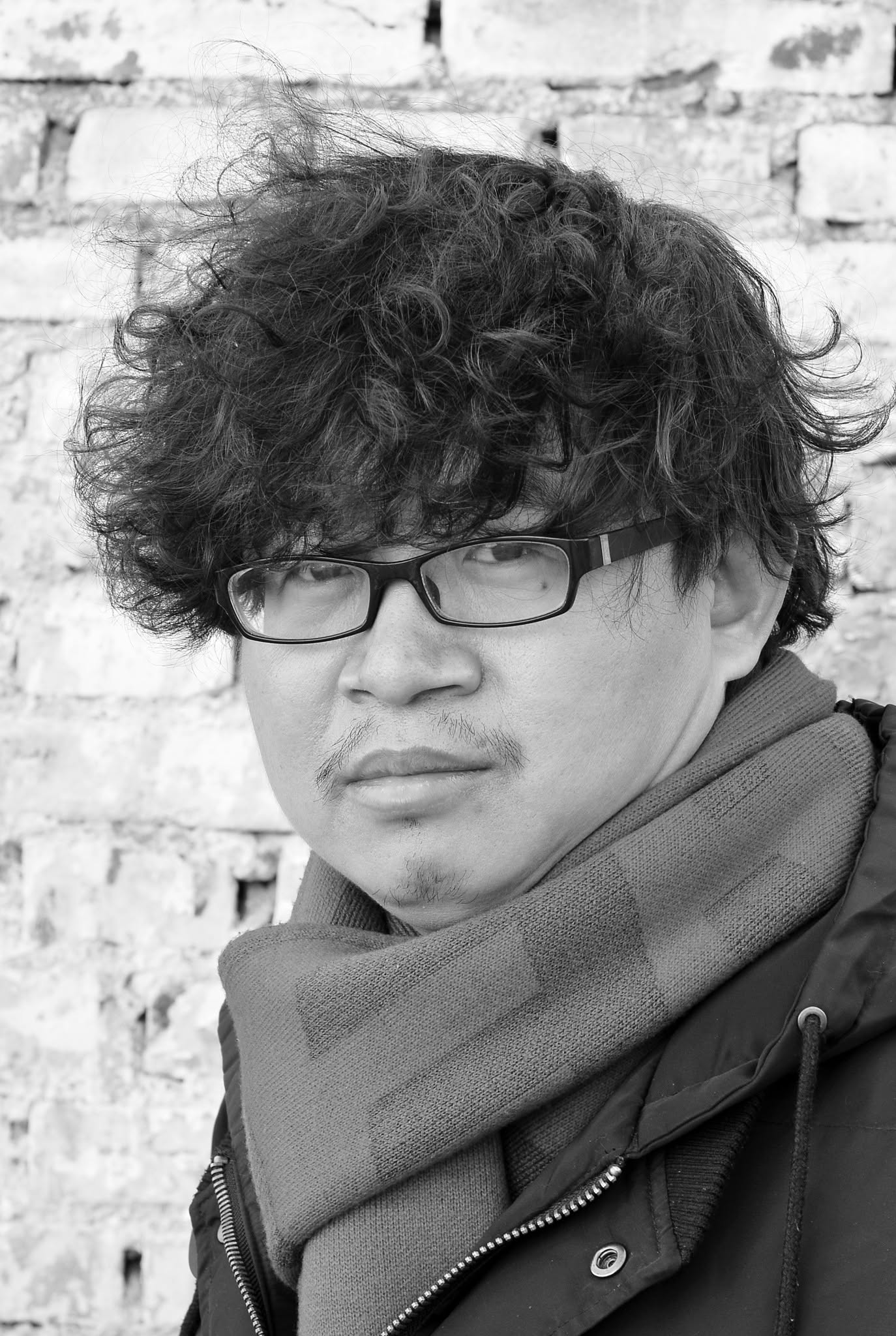
The Three Wild Yak Sisters By Cao Shui Translated by Fiori Picco Cao Shei’s The Three Wild Yak Sisters belongs to his six-volume Kekexili Animal Kingdom, a bestiary of the Tibetan Plateau for children, never simplified for them. It opens in a village on the Kekexili grasslands, where the hunter Losang boasts that no animal has ever escaped his rifle, and his wife Yangzong embroiders blankets so finely that bees pause to look. Their pride, though, is three daughters: Wangmo, who dances well enough to make gentians sway; Medo, whose singing draws marmots out of their burrows; and Qionda, whose dramyin makes passing clouds forget where they were going. The happiness lasts two pages. Driving their flock deeper for grass, the girls sing and dance, and the music draws a pack of wolves three days hungry. As the wolves close in, a voice from the sky offers three wild yak hides. The sisters crawl inside; the hides become their bodies; they lower their horns and drive the pack away. But the hides will not come off. The voice states the bargain: their father has killed so many creatures that the mountain god is offended; the sisters must guard Kekexili’s treasure until tears of repentance wash the dust from their hearts. What follows has the clean, repeating architecture of oral tale: three visits to the hidden valley, three gifts, an inexhaustible milk horn, a sewing kit that weaves black nomad tents out of air, a comb that turns white hair black, and three thefts by the village idler Jeb, each won by exploiting Yangzong’s kindness. The escalation is well judged. Jeb’s third trick aims not at a gift but at the secret itself, and the secret, once spilled, brings the father into the valley with his rifle. The climax is the real achievement. Losang shoots the three yaks charging the thief, then learns what he has done. The mountain god’s sentence, when you raise your gun, think of the animals that died at your muzzle, were they not someone’s beloved children, is the ethical centre of the whole series, and it is spoken without a syllable of sermon. That the sisters revive only when his tears fall on them may seem sentimental to a Western reader; read as Buddhist logic it is exact: remorse is not a feeling but a substance that can wash something clean. Its weakness is Yangzong, whose blindness mainly serves to make her need her daughters’ guidance, and whose grief is described more often than felt. The daughters, too, are vivid as performers and thin as persons, existing to be transformed, tested and restored. This is a limitation of the folk form the author chose, not a failure of feeling. Fiori Picco’s Italian edition, with Alessia Picco’s illustrations, has carried it far beyond the plateau. Its final grace is perfect: Jeb, punished rather than killed, is turned into a kiang, the wild donkey who guards the valley in the sisters’ place and who stars in the next volume of the series. Cruelty is not destroyed here. It is put to work. Brief Biography of Cao Shui Cao Shui, also Shawn Cao (born in Jun 5, 1982), is a Chinese poet, novelist, screenwriter and translator. He is a representative figure of Chinese Contemporary Literature. He leads the Great Poetry Movement. His most notable works includes Epic of Eurasia, the already mentioned trilogy and Princess Snow Leopard. So far 60 books of Cao Shui have been published, including 10 poem collections, 5 essay collections, 10 novels, 7 translations, 18 fairy tales and 100 episodes TV series and films. He has won more than 100 literary awards worldwide. His works have been translated into 30 languages. He is also chief editor of Great Poetry, executive editor in chief of World Poetry, Asian coordinator of World Poetry Movement, coordinator of BRICS Writers Association, executive president of the Silk Road International Poetry Festival, Chairman of Beijing International Poetry Film Festival. Currently he lives in Beijing, and works as a professional writer and screenwriter. 三姐妹,一支枪:评曹谁《野牦牛三姐妹》 曹谁《野牦牛三姐妹》属于他的六卷本《可可西里动物王国》系列 —— 一部写给孩子的青藏高原动物志,而且难得地,没有为孩子简化半分。故事从可可西里草原上的一座小村庄开始:猎人洛桑夸口说,凡被他看见的动物,没有一只逃得过他的枪;妻子央宗织出的藏毯花纹精细到蜜蜂飞过都要停下来看一眼。不过夫妇俩真正的骄傲,是三个女儿:旺姆的舞姿美得能让格桑花跟着摇摆;梅朵的歌声能把土拨鼠从洞里引出来;琼达的六弦琴能让路过的白云忘了自己要去哪里。 这样的幸福只维持了两页纸。为了给羊群找到更深的草场,三姐妹一路唱唱跳跳,歌声琴声引来了一群饿了三天三夜的狼。狼群逼近时,天上传来一个声音,扔给她们三张野牦牛皮。三姐妹钻了进去,皮便长成了她们的身体;她们低下头,用角把狼群顶了回去。可是,皮再也脱不下来了。那个声音提出了条件:她们的父亲杀生太多,触怒了山神;三姐妹从此要替山神守卫可可西里的财富,直到忏悔的泪水洗净心灵的尘埃。 接下来是口传故事那种干净而循环的骨架:三进山神谷,三件宝物 —— 取之不尽的牛角奶桶、能把牦牛绳在空中织成黑帐篷的针线包、能把白发梳黑的牛角梳;以及村里无赖杰布的三次行骗,每一次都是靠央宗的善良得手。递进的层次安排得很准:杰布第三次要的不是宝物,而是秘密本身;而秘密一旦说出口,就把父亲连同他的猎枪一起带进了山谷。 高潮才是这本书真正的成就。洛桑朝冲向窃贼的三头野牦牛开了枪,然后才知道自己做了什么。山神的那句话 —— 当你举起猎枪的时候,想想那些死在你枪口下的动物,它们何尝不是别人心爱的孩子 —— 是整个系列的伦理内核,而且通篇没有一个字在说教。三姐妹只有在他的泪水落到身上才变回人形,这在西方读者看来也许过于感伤;可若按佛教的逻辑来读,它精准无误:忏悔在这里不是一种情绪,而是一种能够把东西洗净的实体。 作品的弱点在央宗:她的失明主要用来让她不得不倚仗女儿引路,她的悲伤也多是 “被叙述”,而非 “被感受到”。三个女儿同样如此 —— 作为舞者、歌者和琴手,她们鲜活;作为人,她们单薄,存在的意义就是被变形、被试炼、被复原。这是作者所选择的民间故事形式的局限,而不是感受力的失败。 菲奥里・皮克(雪莲)的意大利文译本,配上阿西娅・皮克的插图,已经把这本书带到了高原之外很远的地方。它最后的恩典小而完美:杰布没有被杀死,而是被惩罚变成一头藏野驴 —— 接替三姐妹守卫山谷的那头野驴,也是系列下一部的主角。残酷在这里没有被消灭,而是被派上了用场。
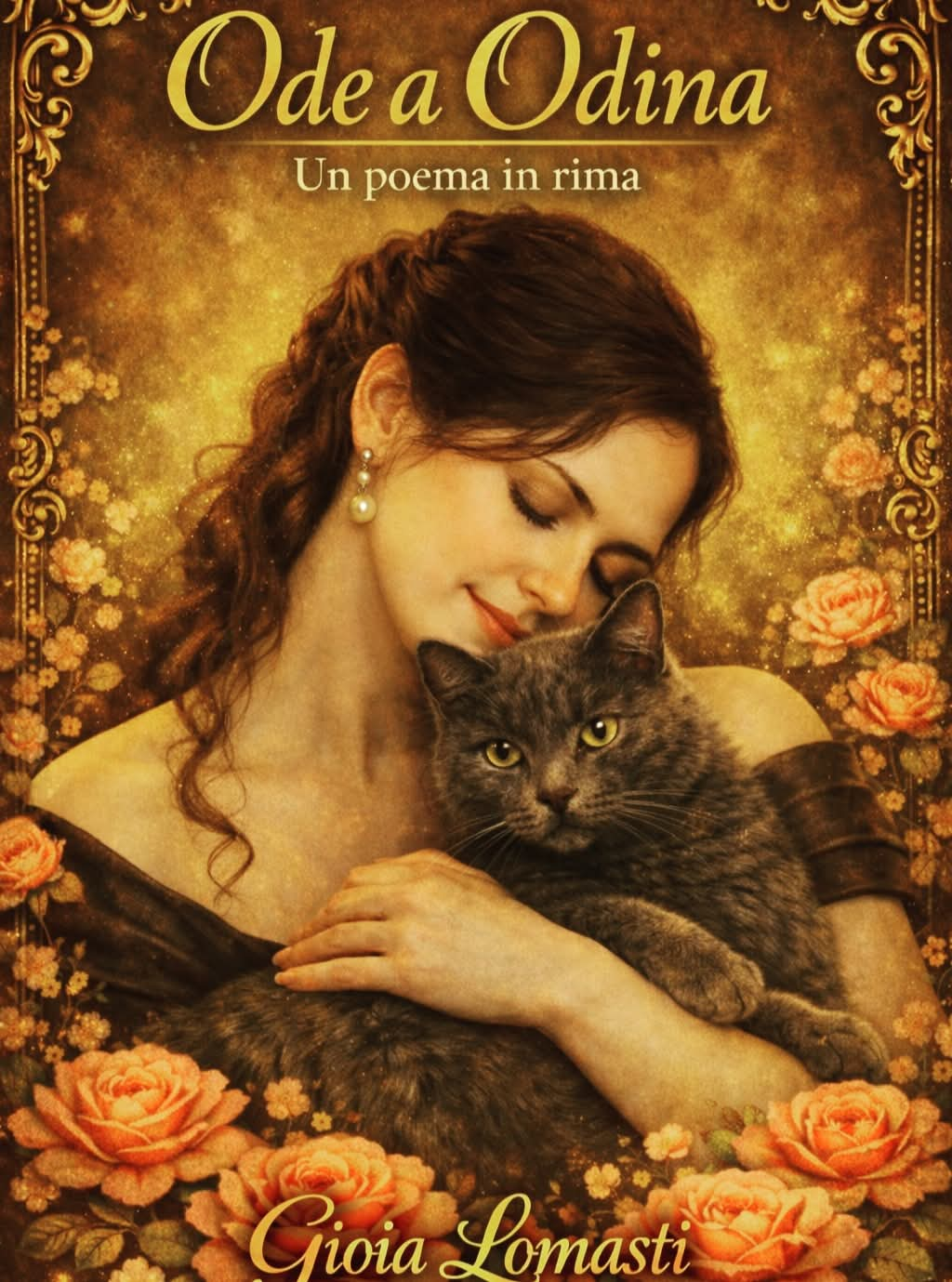
Gioia Lomasti’s Ode to Odina – A Poem in Rhyme Celebrates the Unconditional Love of Companion Animals
A poetic tribute to the bond between humans and animals, the new book will be available from December 2026 through Amazon, major online bookstores, and bookshops. A quiet encounter, a…
 thesilkroadtoday