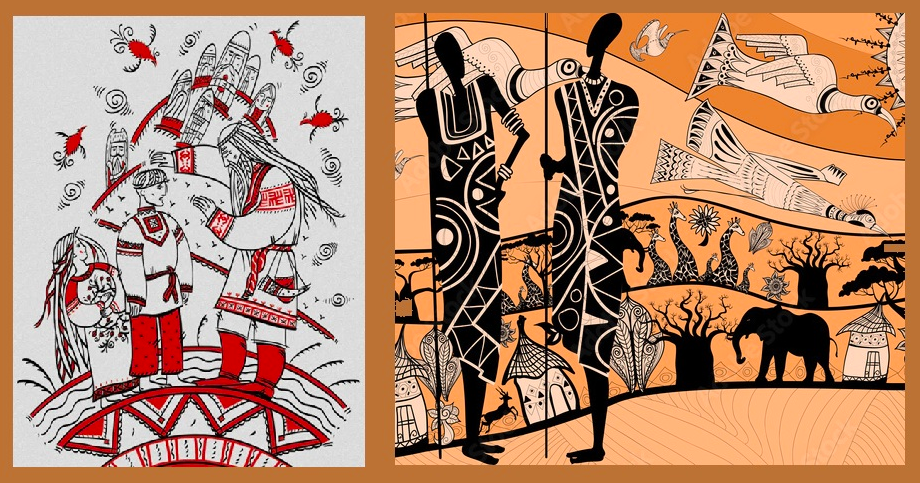
Folklore as a Condensation of Wisdom and a Foundation for the Unity of Peoples

The task of preserving and comprehending the diversity of the world’s languages is becoming increasingly urgent. This calls for a return to primary sources, to those cultural and historical layers that ensure the continuity of meanings, customs, and spiritual patterns. For this reason, the launch of an international project dedicated to the Decade of the Languages of the Peoples of the World naturally begins with an appeal to folklore as the authentic foundation of every cultural tradition.

Folklore reveals itself as a form of the people’s spiritual life in its original integrity. Within it is manifested the deep structure of collective reflection on existence—a way of appropriating reality expressed through stable motifs, rituals, words, and images. Every element of folklore bears the imprint of popular experience accumulated over many generations, reinforcing the value orientations of human communication.

Through oral narratives, ritual practices, chants, legends, and parables, the rootedness of the human being in an unbroken chain of events becomes apparent. Here lies the point at which individual experience merges with the experience of the community. Folklore preserves the inseparable unity of form and content: ritual action and verbal expression, images and semantic structures interact organically, creating the architecture of collective memory.

The development strategy of the pilot project “Russia–Ghana” is defined by the aspiration toward a comprehensive and indivisible consideration of all historical stages through which the creative self-realization of humanity unfolds.

Folklore tradition emerges as the primary phase, marked by inner wholeness.


Attention then turns to the earliest written practices—chronicles, religious texts, and ancient literature—where the transition from oral transmission of meaning to its fixation in a system of signs takes place.
Writing continues the work of folklore: it consolidates norms and worldviews, gives them a stable form, and expands the sphere of their dissemination. Folk tales and rituals gain expressive power in chronicles, hagiographies, and religious narratives, leading to the formation of new typologies of speech and modes of thinking.

Within the framework of the project, the next stage involves the study of classical texts, in which literary genres, canons, and traditions of professional authorship take shape. Here, systems of motifs, artistic images, and concepts—harmonized within the space of written culture—begin to play a formative role. A hierarchy emerges that is capable of reflecting both individual thought and collective experience, ensuring the continuity of literary tradition with the primordial rhythms of folkloric speech.

Contemporary literature, included in the scope of analysis, does not interrupt this movement but develops it further. A complex interaction unfolds between the search for new forms and the internal logic of preserving cultural heritage. Tradition and innovation meet; historically established images encounter new semantic configurations.

The digital era, incorporated into the overarching concept of the project, reveals new horizons of creative development. The tools offered by electronic platforms, interactive technologies, multimedia formats, and networked communication create possibilities not only for the transmission but also for the hybridization of meanings. The field of dialogue expands, giving rise to a new form of linguistic existence—dynamic, multilayered, capable of reaching a wide audience and generating new modes of collaborative creativity.

Through engagement with folklore, writing, classical texts, modern literature, and digital forms, a gradual ascent toward a holistic understanding of linguistic and cultural diversity is achieved. The project launched today seeks to explore the origins and tensions of the universe of human creativity. Processes of comparison and analysis encompass the experiences of Russia and Ghana—states with unique histories and distinctive cultural systems, yet possessing points of convergence that allow unity to be discerned within diversity.

Folklore, serving as the first foundation, becomes the initial point of orientation. Through it emerges the general contour of human culture—with all its internal contradictions and harmonies, with its striving for self-preservation and renewal. Understanding folklore as a field of inseparable interaction between word, ritual, and worldview enables reflection on the spiritual rootedness of language, on language as a repository of tradition, memory, and anticipation of the future.

The Decade of the Languages of the Peoples of the World acquires a spiritual framework when each stage preserves its inner connection—historical, semantic, and axiological. A return to origins does not confine consciousness to the past; rather, it enables new responses to contemporary challenges and affirms, amid changing conditions, the resilience of tradition and its readiness for a living, continuous dialogue of cultures.

Thus the project’s path is formed: from rootedness in folklore to the expansion of horizons

in writing, classical heritage, contemporary, and digital culture. Within this movement, the capacity of language to unite peoples and epochs, to preserve human experience, and to construct a vertical axis of meaning in our shared world is revealed.

Margarita Al

  • Related Posts

    A Look at Alfred Nyagaka Nyamwange’s Collection of Books

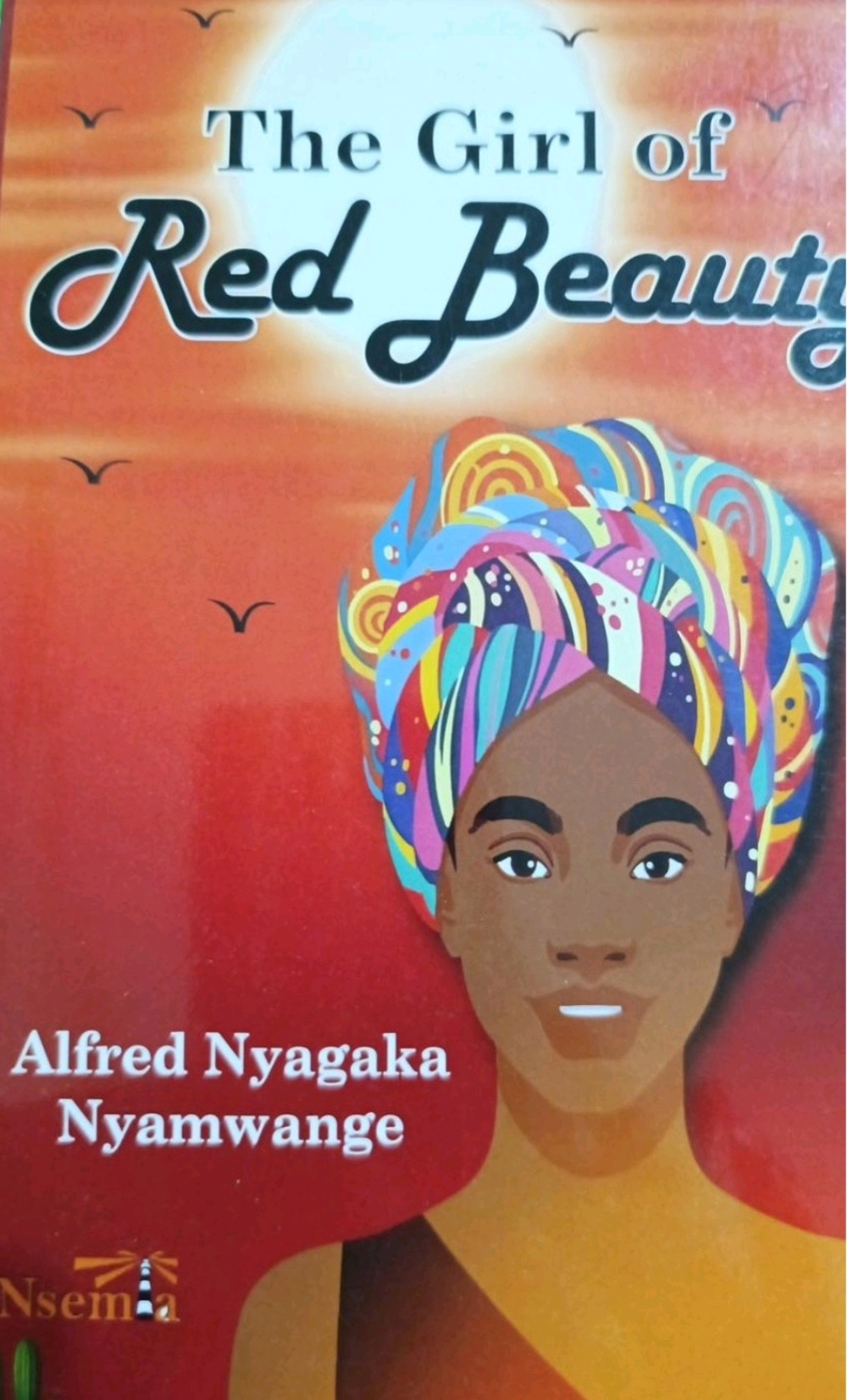
      THE GIRL OF RED BEAUTY  What does it mean to belong to a people, and how can a community preserve its identity when the voices of its ancestors begin to fade beneath the pressures of modernity? In The Girl of Red Beauty, Alfred Nyagaka Nyamwange invites readers into the cultural universe of the AbaGusii through a sustained poetic engagement with the community’s oral traditions, beliefs, social practices and philosophies. Presented in thirteen chapters of verse, the work draws upon songs, proverbs, sayings, stories, play games and the rhythms of everyday life in the Gusii highlands. Its poetic world follows the human journey from birth and childhood through initiation and marriage to old age and death. Along the way, it evokes relationships between individuals, families, the land, the ancestors and the divine. The girl at the centre of the work becomes a poetic point of entry into a much wider cultural landscape: a world shaped by communal memory, inherited wisdom, social expectations and changing relationships. The collection is distinctive in its creative negotiation between written poetry and African orature. Its language draws on indigenous expressions and direct translations from EkeGusii, bringing local imagery and proverbial thought into English. Songs, performance rhythms and the imagined presence of the lyre and drum give the written verse an oral energy, inviting readers not merely to observe the culture but to hear, sing and imaginatively participate in it. The Girl of Red Beauty is both a literary work and an act of cultural remembrance. It does not present tradition as a museum piece; rather, it opens a space for considering cultural continuity, the tensions between inherited practices and contemporary life, and the responsibility of transmitting indigenous knowledge to future generations. Rooted in Gusii experience yet attentive to wider questions of identity and belonging, the book offers international readers an encounter with the imaginative resources of an African community. A poetic celebration of identity, a preservation of memory and an invitation to return to the living sources of cultural knowledge. THE FOOTFALLS OF MY HEART  Love may begin with attraction, but in a traditional community its consequences reach far beyond two individuals. In The Footfalls of My Heart, Alfred Nyagaka Nyamwange presents a narrative poem that explores courtship and marriage in the cultural world of the AbaGusii, giving particular prominence to the voice, perspective and agency of the bride. The poem centres on Gechemba and Rimura. Rimura is a celebrated warrior and prospective groom whose reputation, strength and determination do not automatically guarantee success in love. Gechemba is a young woman who observes, questions, teases and responds to the man seeking her affection. Through her perspective, the reader encounters the emotional play of attraction, hesitation, playful resistance and growing attachment. The courtship becomes a spirited exchange in which wit and persuasion matter alongside status and material wealth. Beyond the romantic encounter, the work traces the social processes through which marriage connects families and lineages. It evokes the meeting between prospective partners, family introductions, negotiations over bride wealth, preparations, marriage rituals, songs, communal celebrations and the incorporation of the bride into a new household. Cattle and other forms of bride wealth carry meanings that extend beyond payment: they express commitment and create networks of relationships between families. The poem is rich in EkeGusii expressions, proverbs, indigenous imagery, humour and the rhythms of oral performance. It draws on cultural memory while allowing readers to consider the values and tensions embedded in marriage practices. The bride’s voice is especially important: she is not simply an object of pursuit but a participant whose response, judgement and choice shape the unfolding relationship. As a companion to The Girl of Red Beauty, this work extends Nyamwange’s poetic exploration of Gusii cultural life. Where the earlier poem approaches the community through a girl’s growth and the wider cycle of life, The Footfalls of My Heart foregrounds the woman’s perspective in the journey towards marriage and family continuity. A warrior pursues; a woman responds and chooses; families negotiate; a community gathers. The Footfalls of My Heart is a poetic exploration of love as both an intimate emotion and a communal bond. THE BROKEN COLUMN  What happens when a society’s established ways of life encounter forces that challenge its institutions, beliefs and sense of identity? The Broken Column by Alfred Nyagaka Nyamwange is a historical and cultural novel set in the world of the AbaGusii, tracing the experiences of a warrior and the wider transformations of his community. At the centre of the narrative is Okeyo, a young man renowned for courage, physical strength and exceptional skill. His reputation as a warrior places him within a social order that values protection, honour, responsibility and service to the community. Yet Okeyo’s life is not a simple succession of heroic achievements. His relationships, personal struggles, choices and encounters with adversity expose the vulnerabilities beneath the public image of the fearless warrior. His destiny is shaped by the demands of his calling and by the changing circumstances of the society around him. The novel evokes a community organised through kinship, village life, ancestral expectations, warrior traditions and collective obligations. Its landscape is not merely a backdrop: it is a lived environment in which cattle, homesteads, social relations and communal security carry cultural significance. Okeyo’s experiences intersect with those of other people, particularly the women whose presence and decisions influence his path. A profound historical change gathers around this personal story. The arrival of foreign authority, missionary Christianity and colonial power unsettles the foundations of the community. Established loyalties are questioned; inherited practices encounter new religious and political claims; and individuals must negotiate the competing demands of continuity, resistance and accommodation. The meaning of courage itself becomes uncertain as the society confronts a future it cannot fully control. The Broken Column therefore operates on two connected levels: it is the story of a man whose life contains both achievement and vulnerability, and the story of a people experiencing a difficult historical transition. Through its engagement with masculinity, identity, power, faith, tradition and colonial encounter, the novel invites readers to consider what happens when the structures that sustain a community begin to fracture.…

    Dance in Silence, Poem by Anwar Rahim

    They speak without a sound Their steps upon the ground No music needs to play Their hearts still find the way Two shadows in the light They hold each other…

    اترك تعليقاً

    لن يتم نشر عنوان بريدك الإلكتروني. الحقول الإلزامية مشار إليها بـ *