 thesilkroadtoday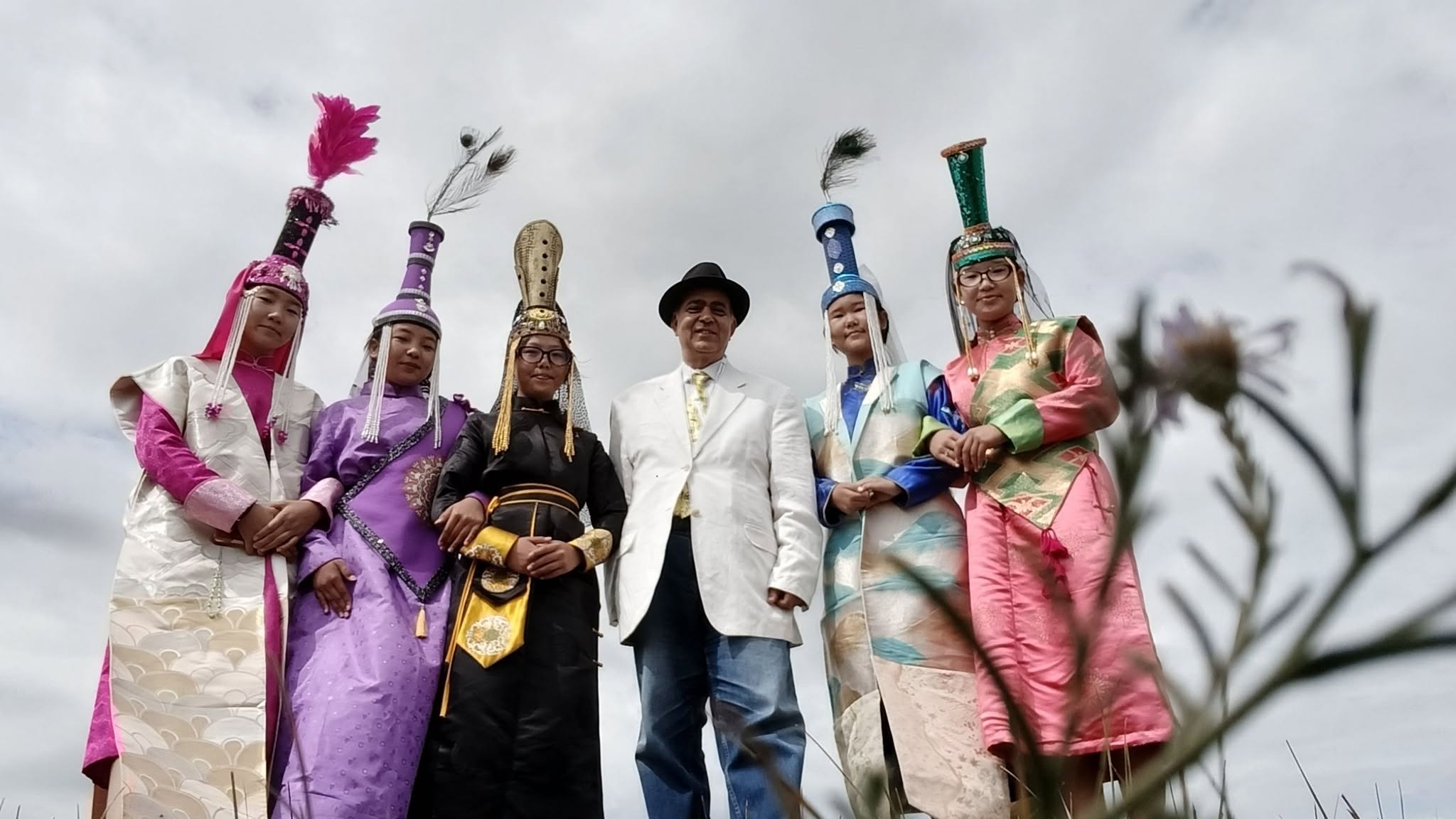
By Dr. Ashraf Aboul-Yazid — Words and Photography
The journey itself seemed to whisper to me that I was not so much crossing distances as passing through layers of history. From Cairo to Ulaanbaatar, the capital of Mongolia, by way of Dubai and Beijing, the journey—lasting nearly two days—was not merely a passage from one city to another, or from one continent to the next. It was a journey through time itself; a journey in which the distant and the familiar stood side by side, where fact embraced legend, and modern cities met the memory of nomads still breathing beneath the vast sky of the steppes.
The farther the aircraft carried me from Cairo, the more I felt that I was leaving one age behind to enter another. In Dubai, the desert seemed to have dressed itself in glass and steel. In Beijing, thousands of years of civilization walked side by side with the trains of the future and forests of skyscrapers. Then, as we approached Ulaanbaatar, history appeared to slow its pace, allowing me to listen to the echo of horses’ hooves, to the silence of night and wilderness, and to the stories of tribes preserved by the wind long before they were copied into books.
There, in Mongolia, the past does not seem forgotten. It lives in the ger, in traditional dress, in the gallop of horses, in the preparation of food, and in the relationship between human beings, the earth, the sky, and animals. Yet, in the same moment, a Mongolian may step out of the ger or change into modern clothes and return to the contemporary world—to work, a mobile phone, a car, and a schedule of appointments. It is as if two different ages inhabit the same person, not in conflict, but in harmony.
The journey was also a passage across the tables of different eras: modern dishes arriving beside foods that carry the memory of a thousand years; a life built around horses, cattle, livestock, and the two-humped camels, alongside another life advancing rapidly toward the rhythms of modern cities. Across the endless steppes, animals were not simply part of the landscape; they were companions in humanity’s history, memory, and existence.
Even the sky seemed to participate in the journey. A brilliant sun would open before the eye a horizon of gold, only for thunder to arrive unexpectedly and rain to fall, as though nature had suddenly reclaimed its ancient voice. Nothing was ever entirely fixed. The weather changed as the images of history changed, while the immense sky remained the great page upon which the Mongols had written their earliest stories.
Curiously, even driving in Mongolia seemed to carry its own philosophical lesson. Some cars had their steering wheels on the right, others on the left—as if the country were saying: Your direction does not matter as much as your humanity—and your respect for the traffic rules!
And so, I did not arrive in Mongolia merely as a visitor discovering a new place. I felt instead that I had arrived in an ancient time that had somehow remained alive. I was traveling toward Ulaanbaatar, yet in truth I was traveling backward: toward the first human being, toward the journey, the tent, the fire, the horse, and the legend; toward that distant moment when humanity first discovered that a road is not simply the distance between two places, but an endless dialogue between the past, the present, and the future.
A Journey of the Pen: The 120th Anniversary of the Birth of Poet Dashdorjiin Natsagdorj
Here, the sun rises five hours before it does in Egypt. The sky over Ulaanbaatar is clear, and the wind is gentle and serene. The capital once founded by nomads has become a stage upon which a great epic is performed. From August 16 to 20, 2026, Mongolia became the setting for an exceptional literary and cultural journey celebrating the 120th anniversary of the birth of Dashdorjiin Natsagdorj, one of the foremost founders of modern Mongolian literature.
The international celebration bore the evocative title “Ekh Nutag,” meaning “Homeland.” Its symbolic route began in Ulaanbaatar, the country’s capital, and extended across the steppes, through natural landscapes and historical landmarks, in a journey that evoked both the memory of the poet and the memory of the homeland.
The journey was not merely a sequence of ceremonial stops. Rather, it resembled a passage through the geography of Mongolian identity, linking the capital with the steppes, historical monuments, rivers, and places deeply rooted in the cultural memory of the people. In this way, the landscape itself became part of the celebration of literature.
The festivities began in Ulaanbaatar, Mongolia’s cultural and intellectual heart. From the capital, participants embarked on their journey dedicated to Natsagdorj and to the ever-renewed meaning of homeland in Mongolian literature. The city served as the starting point for an international gathering of writers, poets, intellectuals, and guests from different countries, united in celebrating a Mongolian literary legacy that has transcended borders and continues to live within cultural and human memory.
I presented the participants with the text of the celebrated poet’s poem, “Mongolia, My Motherland,” in both English and Arabic, allowing the poem to be reborn in the language of al-Dad—Arabic—for the very first time.
A major part of the celebration included the presentation of three medals: the Medal of the World Union of Mongolian Nomadic Culture and Heritage, the 120th Jubilee Medal of Poet Natsagdorj, presented by the World Organization of Writers, and an official Medal of Honor from the Ministry of Culture, Sports, Tourism and Youth of Mongolia, in recognition of my contributions to culture and the arts and to strengthening bridges of cultural communication.
I was also awarded the title and medal of “Distinguished Cultural Worker,” together with a Certificate of Appreciation, in recognition of my contributions to the development of culture and the arts, which were acknowledged by the Mongolian government.
This honor, presented to me by the poet and organizer of the invitation, Gerelt-Od Purevjav, President of the World Union of Mongolian Nomadic Culture and Heritage, represents recognition of the importance of cultural work, translation, and literature in building bridges of friendship among peoples—particularly between Egypt and Mongolia. For me, it is also a new responsibility: a call to continue working for cultural dialogue and closer understanding among civilizations.
I cherish this Mongolian honor as recognition of a long journey in literature and culture, and as a message of friendship sent from the land of the steppes to the land of the Nile.
Dunjin Boldog: Entering Historical Memory
The next stop was Dunjin Boldog, a region closely associated with Mongolia’s historical landscape and national memory. Here, literature encountered history in the heart of Mongolia’s open wilderness.
The road itself thus became part of the celebration. Leaving the urban environment behind and moving toward the vast steppes gave the journey a distinctive atmosphere, allowing participants to experience the meaning of “Ekh Nutag”—the Homeland—not merely as a literary idea, but as a living land and an enduring memory.
Bayandelger Soum: The Homeland in the Heart of the Steppes
The journey continued toward Bayandelger Soum, where participants encountered the magnificent expanse of the Mongolian steppes. The simplicity of the landscape and its overwhelming natural grandeur offered an ideal setting for reflecting upon Natsagdorj’s contribution to Mongolian poetry and cultural consciousness.
The open horizon, the silence of the countryside, and the enduring connection between generations all gave the celebration a special meaning. Here, the homeland was no longer simply a word within a poem. It became a living landscape in which memory, humanity, and history converged.
Baganuur: Between Heritage and Modernity
The journey then reached the Baganuur District, another important stop along this cultural route. The movement from the capital toward Mongolia’s eastern regions revealed the broad vision behind the celebration and its desire to take literature beyond the conventional walls of conference halls and reconnect it with people and place.
The journey also reflected one of the essential characteristics of Natsagdorj’s legacy: the ability of literature to connect the individual with society, history, and the wider world.
Khentii Province — Tsenkhermandal Soum: Approaching the Historical Heart
From Baganuur, the journey continued toward Khentii Province, reaching Tsenkhermandal Soum. This region carries a profound sense of Mongolia’s historical and cultural roots.
As we ventured deeper into the countryside, the celebration began to resemble a literary pilgrimage. Poetry moved beyond the halls of cities and into the landscapes that had helped shape Mongolian consciousness over the centuries. The journey thus became a dialogue between the written word and the land, between literature and the landscapes that had nurtured the nation’s collective memory.
Kherleniin Khodoo Aral: A Journey into the Soul of Mongolia
The final destination was Kherleniin Khodoo Aral, surrounded by some of Mongolia’s most captivating natural scenery. The river, the endless grasslands, and the distant mountains formed a powerful visual and symbolic conclusion to a celebration centered on the idea of homeland.
Here, the meaning of “Ekh Nutag” reached its deepest symbolic dimension. The homeland is both geography and memory, belonging and history, land and language. The journey demonstrated how the legacy of a poet can remain alive when it is connected to the places, people, and traditions that inspired him.
Sengür Stream… When Nature Celebrates the Birth of Temüjin
During my journey through Mongolia, our steps led us to a place whose memory contained more than geography—a place connected to the story of the boy Temüjin, who would later become one of the most famous figures in world history: Genghis Khan.
Here, amid the vast steppes, mountains, and waters, history does not appear to be a closed book. It is a living trace that the visitor can touch in the earth, contemplate in the movement of the river, and rediscover through poetry.
Our destination was Sengür Stream, a place associated with the memory of Temüjin’s birth. Here, Mongolian memory celebrates water as a witness to beginnings. In the culture of the steppes, rivers and streams are not merely elements of nature; they are lifelines, pathways of memory, and markers along the routes traveled by generations.
The poet and musician placed his poem upon a stone monument, from which the covering was ceremonially removed. Then the singing and music began. I held the Mongolian flag as it fluttered in the wind, which seemed to celebrate with us the moment when the rain stopped—only to return again after we had finished!
I stood before the poem written in celebration of Sengür Stream, where the river is evoked as both a mirror of nature and a repository of history. Its verses portray branching water like a network of thousands of veins flowing between the mountains, while the waters of the Kherlen River reflect the moonlight, giving the landscape a distinctive poetic sanctity.
In the poem, Sengür becomes more than a stream. It is a string upon which the Kherlen River plays, allowing the music of poetry to flow. It is also the water of a land from which the ancestors departed, while their memory remained behind, and the water of sacred springs gently moving through the blue land of Mongolia.
The poem reaches the height of its symbolism when it makes the stream a witness to the pages of history. Its flowing water carries, metaphorically, “lines of gold” within the record of independent Mongolia. It becomes a spring for the people, flowing from the past into the present, as though history itself had taken the form of water that never ceases to run.
Perhaps the most beautiful aspect of this place is that the birth of Temüjin is remembered here not merely as the birth of a military leader, but as the beginning of a legend shaped between nature and humanity. Before Temüjin became Genghis Khan, he was a child of the steppes, living beneath an open sky, surrounded by rivers, mountains, horses, and tribes. His character was formed in a world where nature itself was a daily partner in the making of destiny.
Standing before this landscape, I found myself reflecting upon the profound relationship between place and legend. Places shaped by memory do not remain neutral geography. They become open texts, where every stone, stream, tree, and plain may carry a chapter from the story of a people.
And so, Sengür Stream appeared to me like a page of water from the book of Mongolian history. Here begins the first thread of the story of a child who would change the face of Asia and the world, while the water continues to flow, indifferent to the passing of centuries.
A river does not remember in the way human beings remember. Yet in its continuous movement, it carries the metaphor of time itself: water moves on, generations succeed one another, and the legend remains.
My visit to this place was like standing at the meeting point of three different ages: the age of Temüjin the child; the age of Genghis Khan, who became a legend before whose monuments people bow in reverence; and the age of contemporary Mongolia, which returns to its past through poetry, memory, and the celebration of place.
In the presence of Sengür Stream, I realized once again that traveling through Mongolia is not merely a journey across geography. It is a journey into the deep layers of history—a history whose waters are still flowing, whose poems are still being written, and whose steppes continue to preserve their secrets for those who arrive with the heart of a traveler and the eyes of a poet.
At Every Stop: Books, Letters, and the Poetry of the Mongolian Script
At every place where we stopped, there was an opportunity to exchange books. My poet friend and English translator, Ganbold, presented me with one of his publications, in which he translated stories by Gabriel García Márquez.
To the Arabic eye, the Mongolian script seems like a living trace of rain—tiny droplets suspended upon an invisible thread, falling from the sky before settling gently upon the page. There is something of cascading water in its vertical extension, the tenderness of a branch touched by a drop in its curves, and the rhythm of a mountain stream descending from the heights in the measured regularity of its signs.
It is as though the writer does not draw words, but simply allows the rain to write in its own language.
The letters follow one another quietly, connected as though by a thread of water and air. The page appears almost like a curtain of translucent drops that have just fallen from a distant cloud. Perhaps its beauty lies in the fact that it does not merely speak the language; it offers the eye a silent music as well, transforming writing into a landscape.
Some of the books were bilingual—Mongolian and English, or Mongolian and Russian. Thus, my suitcase became so full that it seemed to carry a small library, one I preserved for its human value even when reading it was difficult for me.
Among the most remarkable books, written in this visually astonishing language, was an anthology of poets, a large-format volume of 656 pages. I was the only African Arab poet included in it, alongside my Syrian poet friend Hani Nadim, the only Arab Asian poet in the anthology. Circumstances related to his work prevented him from accepting the invitation, so I carried his commemorative medal and his copy of the anthology with me, to present them to him when we meet in Moscow a few weeks later.
Contemporary Mongolia… Two Parallel Lives Between Memory and Modernity
During my journey through Mongolia, I was not searching merely for a place, nor for the vastness of the steppes that seem to have no end, nor simply for traces of the Mongol Empire in its cities and faces. As a traveler and writer, I was trying to read the human being before reading the geography—to see how contemporary Mongolians inhabit two different times, and how effortlessly they move between them, as though the distance between past and present were not centuries, but a single moment.
The Mongolia I encountered is not a country living in the past, as someone viewing it from afar might imagine. Nor is it a society that severed its ties with its past when modernity arrived. Rather, it is a social space where different eras coexist, where the past remains present—not as a museum, but as an identity that can be summoned at any moment.
Perhaps what impressed me most about the contemporary Mongolian character was the ability to live two parallel lives without experiencing any sharp contradiction between them.
In everyday life, the Mongolian is thoroughly modern: wearing urban clothes, using a smartphone, working in institutions, companies, universities, and government offices, driving cars, following the world online, and engaging with the modern economy and the demands of professional and urban life. He is fully part of the twenty-first century.
Yet all it takes is a national occasion, a cultural celebration, or a festival for something remarkable to happen.
He puts on the deel, the traditional Mongolian garment, and suddenly it seems as though another self has been summoned from within. At that moment, he is not simply putting on a piece of clothing; he is recovering an entire collective memory. The garment becomes a social language that calls forth the ancestors, the steppes, the horses, the nomads, the epics of forebears, the stories of the empire, and symbols accumulated over centuries.
What is striking is that this transformation requires no elaborate ritual. A single garment can be enough to move a person from the contemporary world of professional life into another symbolic realm. The office worker becomes a child of the steppes; the intellectual recovers something of the ancient storyteller; the urban young person suddenly finds himself part of a narrative older than the city in which he lives.
From a sociological perspective, this behavior can be understood as a form of everyday negotiation between identity and modernity. The Mongolian does not necessarily choose between past and present; rather, he draws upon both to construct his sense of self. Modernity provides the tools with which to live and work, while historical memory provides a sense of belonging and meaning.
And here lies, in my view, one of the most distinctive features of the Mongolian character that I encountered during the journey: the past is not the opposite of modernity, but one of its symbolic components.
It is a character capable of moving from the office to the traditional ger, from the smartphone screen to a folk song, from an official meeting to a celebration led by horses, wrestlers, and archers, without ever feeling that he has abandoned himself.
This, I believe, explains the powerful presence of traditional symbols in contemporary Mongolian public life. Heritage is not revived merely so that people may remember what once was; it is revived so that they may declare who they are now.
Thus, traditional dress, horses, music, and popular festivals are not merely folkloric spectacles for tourists. They are instruments through which collective memory is reproduced and identity continually redefined, in a society that has moved rapidly from a nomadic way of life to the modern state, and from the open steppes to the capital and urban society.
In Ulaanbaatar especially, the paradox becomes even more visible. A crowded modern city of towers, institutions, cafés, screens, smartphones, and cars—and amid all of it, traditional dress appears as though quietly declaring that modernity has not erased the steppes from memory.
Perhaps the opposite is true: the stronger the presence of the modern world, the greater the need to summon one’s roots. This is what made my journey to Mongolia transcend the ordinary meaning of geographical travel. I moved from place to place, but at the same time I was moving through layers of time. In the contemporary Mongolian, I saw a fascinating balance between the identity of the modern citizen and that of the child of the steppes.
He does not live in his past all the time, but he knows how to summon it at the right moment. He does not abandon his modernity when he puts on the garments of his ancestors, nor does he abandon his ancestors when he returns to contemporary dress and goes to work.
And so I came to understand that the contemporary Mongolian lives two parallel lives: an everyday life governed by work, the city, and technology, and a symbolic life inhabited by memory, legend, and ancestors. Between these two lives there is no rupture, but an open door through which a person may pass whenever he chooses.
Perhaps this ability to bring different eras together was one of the most beautiful lessons I carried home from Mongolia: that modernity does not necessarily mean forgetting who we once were, and that honoring the past does not mean ceasing to create the future.
For when a traveler leaves Mongolia, he may carry with him images of steppes, horses, and mountains. But if he listens carefully to the people there, he returns with something deeper: the realization that identity is not a garment we put on once and for all, but an entire world through which we can move between yesterday, today, and tomorrow without losing ourselves.
Shamanism in Mongolia: When the Soul Listens to the Sky
In Mongolia, the shaman does not appear to belong solely to the past. Rather, shamanism remains a presence within collective memory and the popular imagination, as well as in the profound relationship between human beings and nature.
The roots of Mongolian shamanism reach back to distant ages, predating the spread of Buddhism, when nomadic people saw in the sky, mountains, rivers, and steppes spirits and powers worthy of respect and reverence. The shaman, or Böö in the Mongolian tradition, stands as a symbolic intermediary between the visible world and the realm of spirits, employing chants, drums, and traditional rituals on various occasions—as we witnessed during our journey: the lighting of the fire, the offering of sacrifices, the rising fragrance of incense, and the ringing of bells.
Among the most enduring symbols of shamanism is the Eternal Blue Sky, which in the Mongolian worldview represents a supreme power, alongside the reverence accorded to nature, mountains, rivers, and sacred places. Fire, too, is regarded as an element of particular spiritual significance, while certain rituals retain their connection to ancestral heritage and to the seeking of protection and blessing.
We were accompanied throughout this journey, from beginning to end, by the great shaman Ziran Byambadorj.
During a journey through Mongolia, it is difficult to separate shamanism from the landscape itself. The vast steppes, the neighing of horses, the clarity of the sky, and the distant mountains all provide this ancient heritage with its living space.
Perhaps the distinctive character of Mongolian shamanism lies in the fact that it represents more than ancient religious rituals. It reflects a philosophy of life in which human beings see themselves as part of nature, rather than its masters. That is why some of its symbols have remained alive in contemporary culture—as a living bond between the Mongolian people, their ancestors, their land, and the sky above their homeland.
The Mongolian Academic Military Song and Dance Ensemble
We visited two places whose names are closely associated with the military. The first was the Mongolian Academic Military Song and Dance Ensemble, under the General Staff of the Mongolian Armed Forces; the second was the Official Ceremonial Horse Training Center.
The ensemble is an artistic institution that carries within its performances the memory of a nation, bringing together music, dance, history, and the military spirit. Since ancient times, the Mongolian people have accumulated a rich heritage of customs, traditions, and arts, and generations have passed this legacy from one to another as an essential part of their identity and collective memory. From this wellspring emerged the ensemble, whose history became closely intertwined with the memory of soldiers and warriors—with the songs that inspired courage, the hymns of victory, the rhythms of marching and battle, and the dreams for which they fought: land, independence, and freedom.
During our visit to the academy, our military guide and artist, Renchindorj Onorjargal, recounted the history of the ensemble, which was founded in 1932. Since then, December 12 has been observed each year as the anniversary of its establishment. Throughout its history, the ensemble has served as an artistic voice accompanying the armed forces during times of war and liberation. It has also performed for the people, contributed to the nation’s cultural life, and participated in cultural events both within Mongolia and abroad.
This artistic contribution did not go unrecognized by the state. The ensemble received the War Merit Medal in 1962, a Government Certificate of Appreciation in 1972, and the Red Banner Medal for Military Merit in 1982.
On November 27, 2002, by Government Resolution No. 29, the ensemble was officially granted the name “Academic Military Song and Dance Ensemble,” in recognition of its stature and contribution to the national culture.
During my visit, I felt that I was witnessing more than an artistic ensemble. I was approaching Mongolia’s memory as it sang and danced. Every melody carried an echo of the past; every movement revived an image of the warriors; every rhythm connected yesterday with today.
It was an experience that confirmed that art can preserve history in ways that books alone cannot. A song can become memory, a dance can become a story, and the stage can become a space where the spirit of the warrior encounters the soul of the poet and artist.
At the Official Ceremonial Horse Training Center
At the Official Ceremonial Horse Training Center, I learned about some of its responsibilities and its role in managing and developing aspects of the military institution and strengthening its readiness to fulfill its national duties. Strategic planning, the development of military education and training, enhancing the efficiency of leadership, modernizing weapons and equipment systems, and strengthening military security all form part of a broader mission: preserving identity while preparing for the future.
It has become a longstanding tradition for the Nine White Banners of the State, accompanied by eight additional banners, to be carried in a ceremonial procession during the Naadam Festival. Mongolia’s State Symbols Law stipulates that the President of Mongolia shall establish the procedures governing these ceremonies.
According to the law and established ritual, the national flag is displayed on the southern side of the Government Palace, while the honor guard, wearing their distinctive golden-yellow hats, takes its position—as though time itself had stopped before us.
The honor guard stood facing the statue of Genghis Khan. Then, as the solemn strains of military music rose into the air, with its trumpets and drums, the guards emerged through the eastern gate beside the statue of Genghis Khan, carrying the Nine White Banners.
The resounding music, its measured rhythm, and the confident, solemn steps of the procession seemed to awaken the spirit and glory of the Mongol ancestors. Leading the procession was the bearer of the State Banner, followed by the principal banner bearer and the ceremonial guard.
The horses, prepared for this ritual over months and years, performed their role with remarkable silence and composure. They seemed entirely indifferent to the thunder of the music and the crowds of people, moving forward with steady confidence, without a single unnecessary movement.
According to the prescribed tradition, the procession consists of thirty-two horses: two dappled gray horses, eight light chestnut horses, and twenty-two black and dark-brown horses, evoking the colors of the horses associated with Genghis Khan as recorded in history.
For these nomadic people, every number carries a meaning. The two dappled gray horses symbolize central power; the eight chestnut horses represent protection and balance; while the twenty-two dark-colored horses symbolize movement and continuity.
Led by a single rider, with the horses arranged in rows of three, the procession passes before the Government Palace and then circles it clockwise before continuing in its orderly formation toward Bogd Khan Mountain, along the road stretching across the open steppes.
The crowds salute the Nine White Banners as the procession advances amid cheers and celebration. Gradually, the sound of the horses’ hooves rises above the music and the voices of the people, becoming increasingly distinct and powerful until it seems to be no longer merely a sound, but a vibration coursing through the body itself.
The State Banner is fashioned from a single original piece, made from the hair of the manes and tails of pure white horses. The hair used must be at least 80 centimeters long, carefully selected from among herds across different regions of Mongolia.
The Nine White Banners stand 362 centimeters high, while the circumference of the crown measures 55 centimeters. The eight accompanying banners are each 262 centimeters high, with a crown diameter of 40 centimeters. Their upper sections are crowned with branching steel finials shaped like forks, engraved with exquisite artistic motifs.
At the summit of the Nine White Banners appears a flame-shaped ornament resting upon a flower-shaped base. The banner itself is wrapped with a four-section silk ribbon made of white brocade decorated with yellow motifs.
From the earliest times to the present day, Mongolians have revered and honored the Nine White Banners as a symbol of the prosperity of the state and the continuity of its existence. The roots of this tradition date back to 1206. Historical records state that the Nine White Banners were first raised when Genghis Khan proclaimed the establishment of the Great Mongol Empire.
In Volume 31 of Ethnology, in a study entitled “Some Issues Concerning the Origin and Development of Genghis Khan’s White Banners,” by researcher S. Ulziibayar and others, we read:
“The political concept that described all the nations of the earth as ‘the five-colored peoples and the four foreigners,’ and called the ruler who extended his authority over them all ‘the Khan of the Nine Banners,’ had existed for a thousand years. The number of nine white banners, established at the Great Khural in 1206, reflected this tradition, while the color white symbolized the blessing of the power of Heaven.
Thus, the Nine White Banners became the banners of the Great Mongol Empire, which flourished under the protection of the Eternal Blue Sky. They were sacred banners made from the white hair of mares and stallions, raised as an oath before the Eternal Blue Sky that their bearer had become ruler of the earth.
The ornament above the banner represented a white falcon descending while embracing the sun and the moon, carrying to the Mongols the spirit of Heaven and its sacred blessing—the blessing of the Borjigin lineage beneath the Eternal Blue Sky. The restoration of the ancestors’ banners in their authentic form, those whose power was strengthened by the power of the Eternal Blue Sky and the protection of the Great Sacred Fortune, remains a wish shared by many Mongolians.”
When Mongolia adopted its new Constitution in 1992, it declared: “The traditional Nine White Banners of the unified Mongolian state are the revered symbol of the Mongolian state.”
With this declaration, the Nine White Banners, which had nearly faded away in the winds of time, returned once more, carrying all their ancient power and majesty.
A Literary Journey Beyond Borders
The international “Ekh Nutag” celebration was far more than a program commemorating the 120th anniversary of the birth of Dr. Natsagdorj. It was a cultural journey across Mongolia, following a route that connected Ulaanbaatar, Dunjin Boldog, Bayandelger, Baganuur, Tsenkhermandal, and Kherleniin Khodoo Aral.
The journey gave us the opportunity to discover Mongolia not only through its literature, but also through its nature and historical memory. For Mongolian readers and intellectuals, the celebration reaffirmed the enduring presence of one of the most important literary voices in the country’s history.
The road from the capital to the steppes thus became a metaphor for literature itself: a road that crosses borders, generations, and cultures, yet always returns to its source—to the land, to memory, and to the homeland.
I cannot leave without mentioning the food. I have no idea how many sheep I ate! Mutton seemed to be sleeping in almost every dish. And I will certainly never forget khorkhog, which is not merely a meat dish, but an experience that captures something of the spirit of traditional Mongolian nomadic life.
Khorkhog is usually prepared with mutton or goat meat. Extremely hot stones, heated in a fire, are placed together with the meat inside a tightly sealed container, allowing the meat to cook through the combined effect of heat and steam within an enclosed space.
But the secret of khorkhog lies not only in its ingredients; it lies in the ritual surrounding it. Its rich aroma fills the air, while the meat, cooked on the bone, seems to have absorbed the very essence of the marrow, until one imagines that the water, salt, and meat have been transformed into a flavor deeper than the sum of their parts.
The hot stones are themselves part of the experience. People of the steppes handle them with confidence, passing them from palm to palm. Yet a visitor must treat them with caution—they are not merely warm stones.
Khorkhog retains its own special magic: an aroma that arrives before the taste, a heat that touches the hand, and a flavor carrying the memory of the steppes and the Mongolian people.
In celebrating Natsagdorj 120 years after his birth, Mongolia was not merely reclaiming its past. It was affirming that the poetry of the homeland remains a living force—capable of bringing people together, opening new horizons for cultural dialogue, and transforming a journey across the steppes into a shared journey through memory, identity, and the human spirit.