 thesilkroadtoday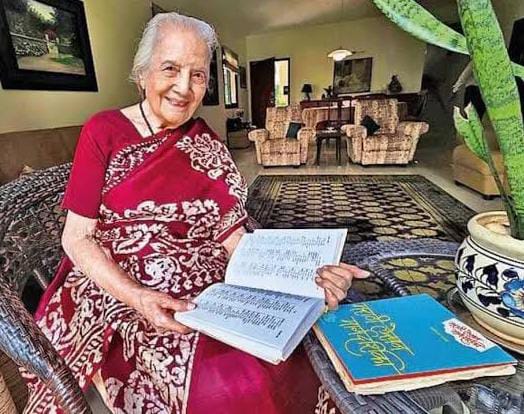
Prof. Swati Haribhau Kate
Head, Department of Sociology, People’s College, Nanded – 431602 INDIA
Prof. Yasmin Sheikh is widely respected as an eminent researcher and writer who made a significant contribution to the enrichment of the classical Marathi language. A passionate lover of the Marathi language, Marathi grammar, and the very vocation of teaching, Prof. Yasmin Sheikh lived a remarkable life spanning 101 years. She passed away on 24 August 2026.
Prof. Yasmin Sheikh was born as Jeusha Ruben. She belonged to the Bene Israel Jewish community. Her father, John Ruben, worked in the Public Works Department of Government. Yasmin grew up in Maharashtra and developed a deep and abiding love for the Marathi language. She completed her education with Marathi Language and Literature as her subject. In 1949, she entered into an interfaith marriage with Aziz Ahmed Ibrahim Sheikh.
Marathi Shabdalekhan Kosh (A Dictionary of Marathi Spelling), Karyatmak Vyakaran (Functional Grammar), and Marathi Lekhan Margadarshika (A Guide to Marathi Writing) are among her important works. These books constitute a rich treasure that she bequeathed to the Marathi language.
For her outstanding contribution to the study of language, Prof. Yasmin Sheikh received the Dr. G. N. Jogalekar Memorial Award in 2015. In 2017, she was honoured with the Dr. Ashok Kelkar Language Scholar Award by the Department of Marathi Language of the Government of Maharashtra. On 26 May 2017, the Maharashtra Sahitya Parishad honoured her with its Lifetime Achievement Award. More recently, on 22 February 2024, the Karnala Charitable Trust conferred upon her the Shikshanpremi Shantaram Shahasane Lifetime Achievement Award in recognition of her dedicated service to the Marathi language.
As a reader, I was first introduced to Prof. Yasmin Sheikh’s work through her book Marathi Shabdalekhan Kosh. Just as it is true that language and basic letters have to be taught, it is equally true that the fundamental centre of linguistic knowledge exists innately within a child. The teacher’s role is to give that innate potential a specific form and direction. In this context, Dr. Sheikh’s observations, recorded after studying the scribbles made by young children, are extraordinarily significant. These observations offer profound guidance to those engaged in the study of child psychology and in teaching language and the basic letters of the alphabet.
Inspired by the conclusions presented by Yasmin Sheikh, I too undertook a study of the scribbles made by young children. Such a study is as important for understanding the acquisition of art as it is valuable as a guide for every scholar of language.
A young child is not merely making random scribbles; rather, the child is expressing himself or herself through them. The scribbles of every child possess a distinctive rhythm. Dr. Yasmin Sheikh observed that the forms of basic letters can often be discovered naturally within these patterns. As I pursued my own study in this area, I gradually came to appreciate the subtle details embedded in her observations.
Dr. Yasmin Sheikh studied language with great depth. She did not merely preserve her love for language and grammar; she also made sustained efforts to ensure that her insights would serve as a guide for future scholars. Her books emerged from this commitment. Her writings clearly demonstrate the depth of her scholarship and her dedication to the cause of language.
The book ‘Marathi Shabdalekhan Kosh’, written by Yasmin Sheikh, played an important role in helping the eighteen spelling and writing-related rules formulated in 1972 by the Marathi Sahitya Mahamandal committee become established and widely accepted. It is particularly admirable that this significant achievement was accomplished by a woman.
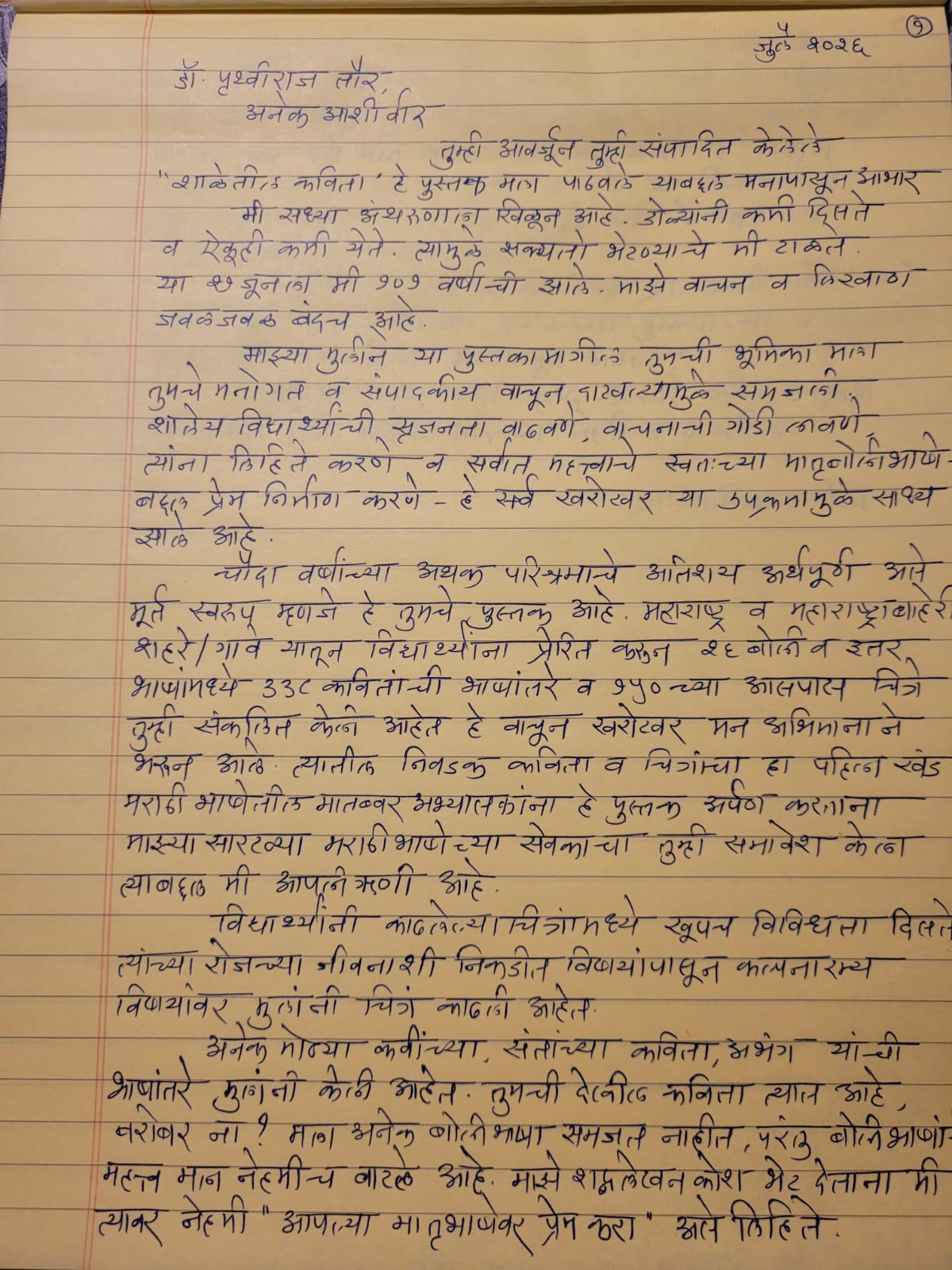
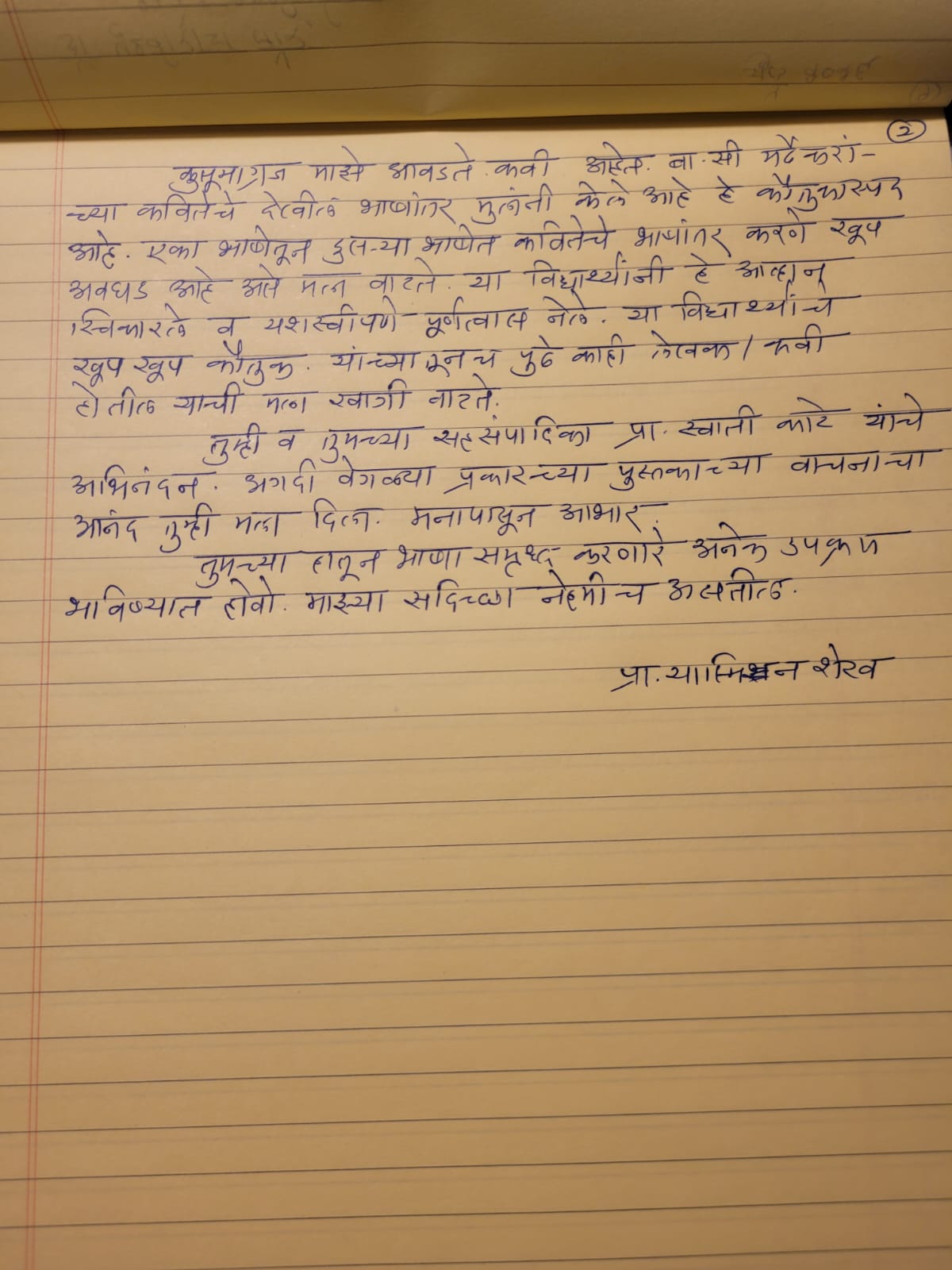
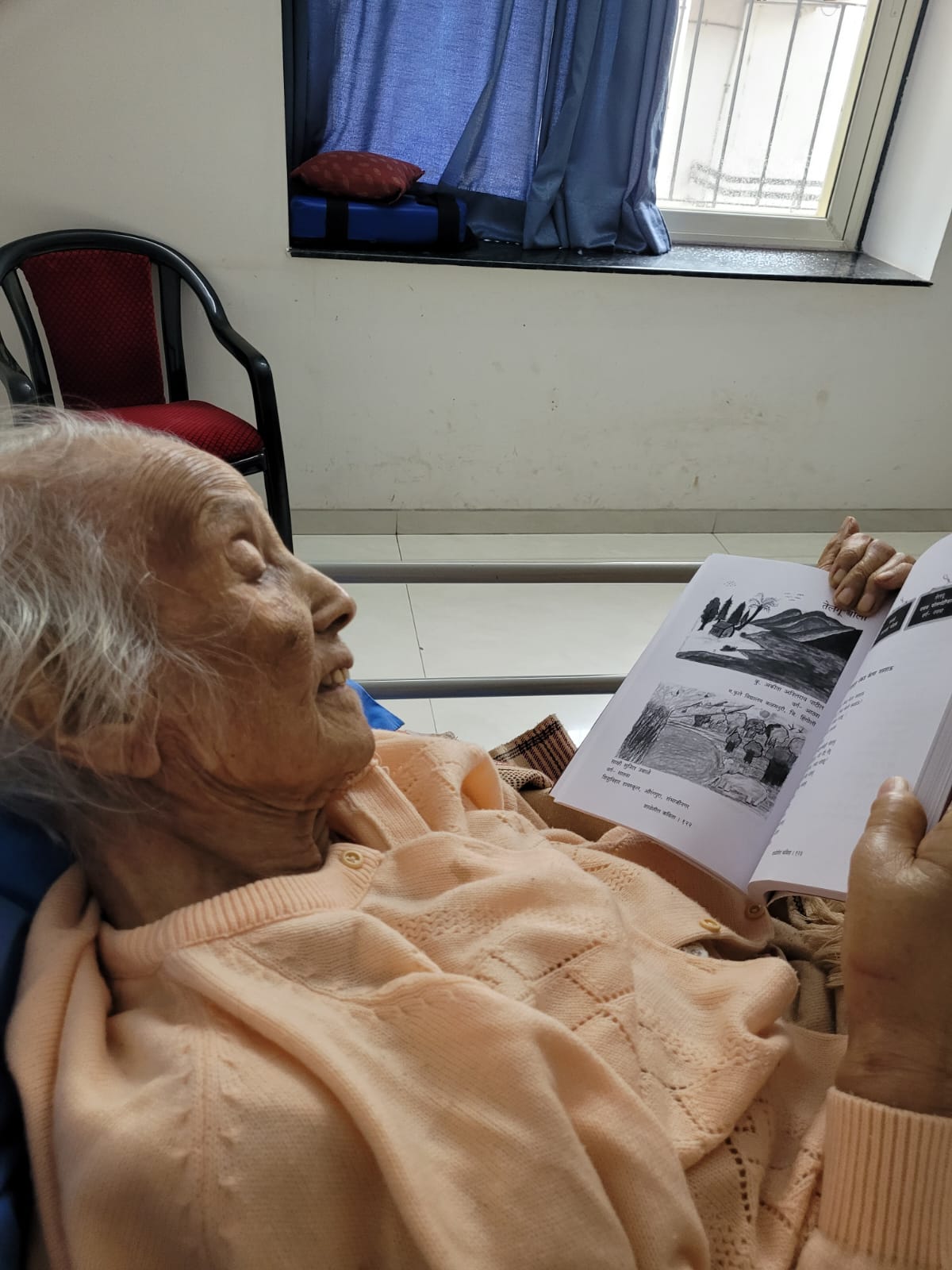
The book ‘Shaletil Kavita’ (Poetry in the School: Dialect–Society–Culture–Translation Linkages), edited by Dr. Prithviraj Taur and me, was dedicated to Dr. Yasmin Sheikh along with other language scholars and researchers. At the age of 101, she had the book read to her by her daughter Shama Bavikar and sent us a written response. Her letter arrived exactly one month before her passing. The response, extending to a page and a half, is a precious blessing for our work as well as for the children who participated in the ‘Shaletil Kavita’ initiative.
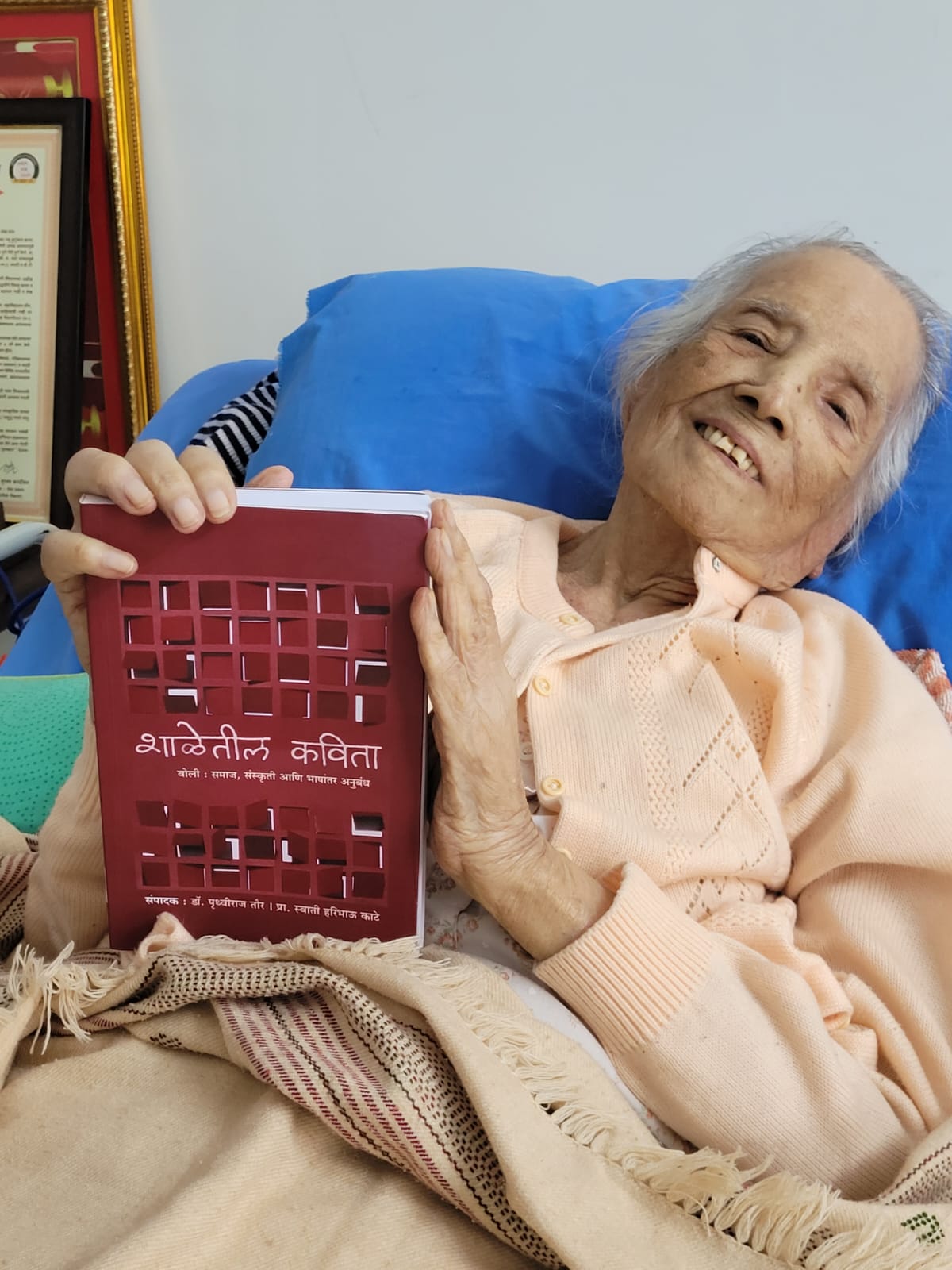
Yasmin Sheikh had an extraordinary love for Marathi, her mother tongue. She would emphatically say, “I am Marathi.” Her message that everyone should love their mother tongue is one that we must remember. It was an earnest appeal to the coming generations to keep their language alive.
Humanity has created the rich treasure of language through thousands of years of collective effort. Yet one generation can be enough to destroy it. To recreate that same language anew, however, would take hundreds of years.
The work of Dr. Yasmin Sheikh is a source of profound and intimate joy. The serenity and radiance on her face resembled the innocent glow on the face of a young child. That same radiance continued to shine on her face even at the age of 101. This joy itself is the truest testimony to the work she accomplished throughout her life.
A heartfelt and threefold salute to the life and work of Prof. Yasmin Sheikh.
— Prof. Swati Haribhau Kate
Head, Department of Sociology, People’s College, Nanded, INDIA
swatiprithviraj@gmail.com