 thesilkroadtoday
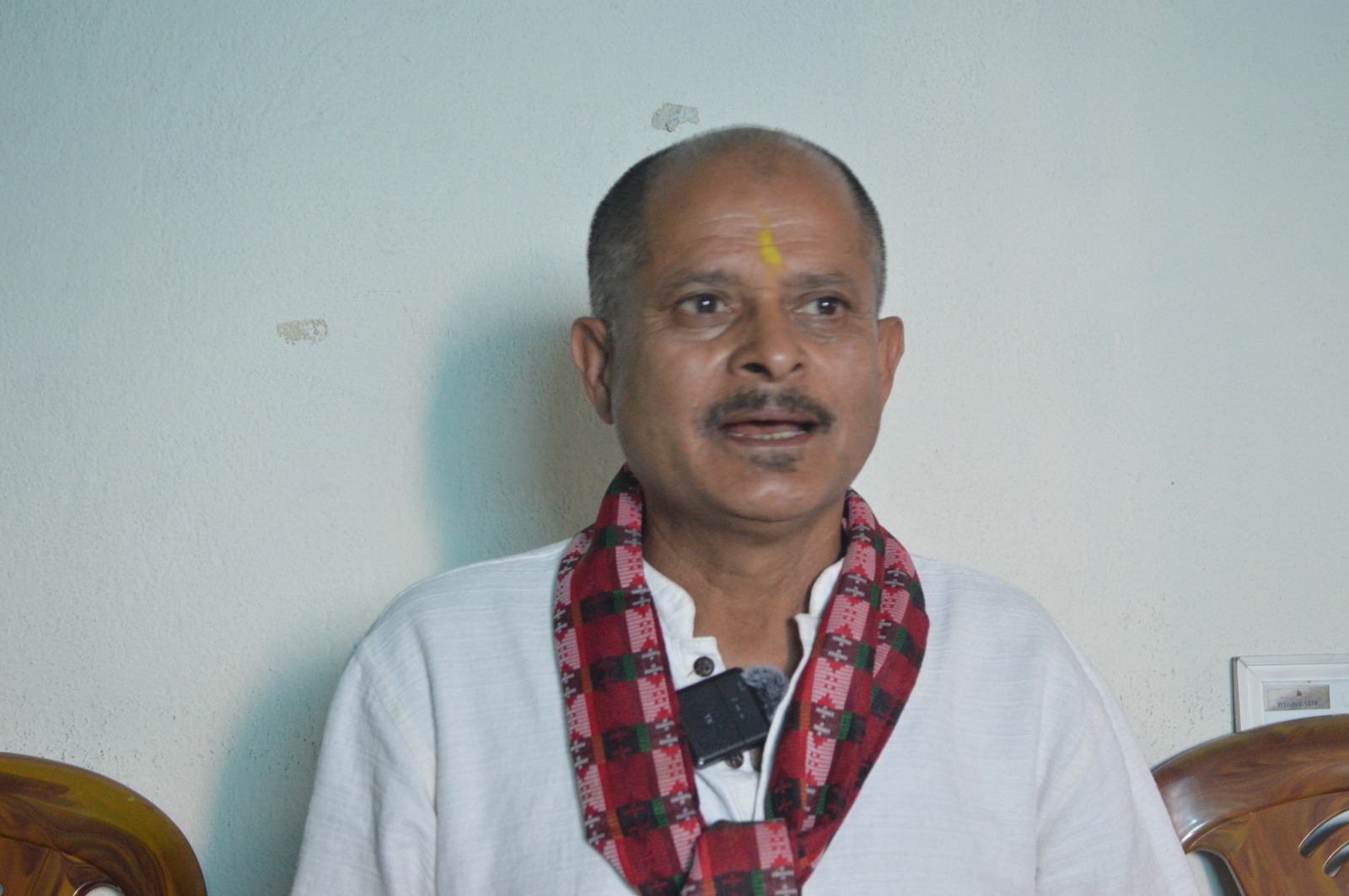
By Santosh Kumar Pokharel, Nepal
[pokharel.santosh@gmail.com]
I was among those invited to the Assembly but could not attend owing to time constraints. I am nonetheless glad that it concluded successfully, adopting its novel concept of Human Centralism. Having studied the participants’ reports and the unanimous adoption of noble humanistic categories in the declaration, I found certain gaps that I believe deserve attention. This critique is offered respectfully to the Assembly Chair and the honourable participants.
—
The Assembly and Its Decisions
The Second World Public Assembly, “New World: Values That Unite,” convened in Moscow over two days, 18–19 September 2026, bringing together delegates from more than 150 countries. Its flagship panel, “Humanitarian Modernization as a Key Strategy for Restoring the Meanings and Values of Civilizational Development,” met at the International Trade Center on 18 September.
Participants included representatives of intergovernmental and non-governmental organizations, experts in culture, science, education, and communication, writers, poets, and opinion leaders from around the world. The session was moderated by Alexandra Ochirova, Co-Chair of the Supreme Advisory Council of the World Peoples Assembly, UNESCO Goodwill Ambassador, member of the State Commission of the Russian Federation for UNESCO, and Doctor of Philosophical Sciences, together with Yulia Petrova, Deputy Secretary General of the World Peoples Assembly and Professor at the Financial University under the Government of the Russian Federation.
Opening the meeting, Alexandra Ochirova observed that the world has become unified, yet so complex that unipolar management no longer works. She affirmed that the human being is the main value of modern civilization, while warning that without cultural continuity this priority cannot be upheld. Her framing set the tone for the entire Assembly.
The Assembly adopted a declaration centred on Human Centralism—the principle that the human being, rather than any state, ideology, or civilization, must stand at the centre of global development. Key decisions and proposals include
· Humanizing science and technology so that they serve creation rather than destruction, as urged by Adnan Badran, Vice President of the Arab Peace Group, former Prime Minister of the Hashemite Kingdom of Jordan, and former Deputy Director-General of UNESCO.
· Supplementing international law with the concept of “national-cultural genocide”—the prohibition of a people’s native language and the deliberate destruction of its culture and historical memory—proposed by Alexander Zyagintsev, President of the Academy of Nuremberg Principles and Deputy Director of the Institute of State and Law of the Russian Academy of Sciences.
· Reviving international book exchange as a humanitarian bridge, alongside joint scientific and educational programmes, as put forward by Natalia Mikhalchenkova, Director General of the State Public Scientific and Technical Library.
· Preserving historical memory, including the lessons of the Second World War and the Nuremberg Trials.
· Promoting translation and cultural dialogue as foundations of mutual understanding, emphasized by Ashraf Abul-Yazid Eldali, poet, writer, and Secretary General of the Congress of African Journalists.
· Establishing cultural symbols of unity, such as the monument “Faith, Hope and Love,” presented by UNESCO Artist for Peace and sculptor Amri Aminov.
· Recognizing ancient heritage, including Russia’s Bosporan Kingdom and Kerch (Panticapaeum) as the oldest city in Russia, as recalled by Khristofor Konstantinidi, Scientific Supervisor of the International Scientific and Educational Center “Antique Heritage of Russia.”
· Ensuring technology serves human dignity, not as an end in itself, as argued by Gholamreza Soleymani, Head of State Insurance Affairs in Iran.
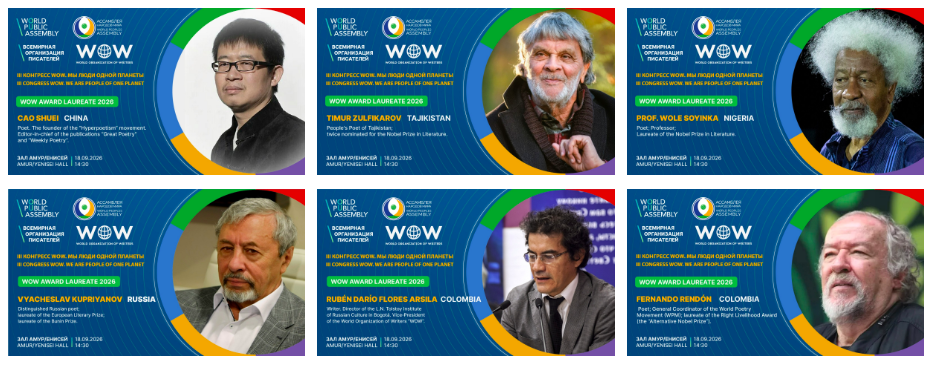
A recurring theme ran through the proceedings: scientific and technological progress is outpacing humanitarian knowledge, and the dialogue of cultures, education, and science must become the primary tools for building a sustainable and secure world. As the poet Cao Shui, leader of the “Great Poetry” movement, reminded delegates, all humanity descends from common ancestors, with a genetic difference of only 0.01%. “We do not need either Western centralism or Eastern centralism,” he declared. “What we truly need is human centralism.”
—
The Adopted Goal
The Assembly’s central achievement is the articulation of Human Centralism as an alternative to Western and Eastern centralism alike. The goal is a world order grounded in human dignity, cultural continuity, and shared responsibility—neither dominated by one pole nor fractured into competing blocs.
This is a noble aspiration. It rightly rejects domination and affirms our common humanity. But noble aspirations require mechanisms, and here the declaration falls short.
—
A Balanced Critique
First, the declaration does not clarify where Human Centralism stands in a multipolar world. Is it a neutral meta-norm acceptable to all poles, or a soft-power instrument of one? Without inclusive ownership and institutional anchoring in the UN, UNESCO, BRICS, the G20, and regional bodies, it risks floating above politics rather than constraining it. The Assembly must answer: who owns Human Centralism, and who enforces it?
Second, the tools offered are almost entirely soft. Translation, book exchange, educational programmes, and cultural monuments are confidence-building measures. They are necessary but insufficient. They cannot stop tanks, militias, or missile strikes. Harmony between civilizations also requires conflict early warning, mediation, peacekeeping, arms control, economic justice, and accountability for war crimes. The Assembly’s vision of humanitarian modernization must be matched by a security architecture.
Third, the declaration neglects the psychological roots of war. Wars and mass killings are not caused merely by civilizational misunderstanding. They are driven by humiliation, fear, greed, revenge, trauma, and narcissistic leadership—by personal and collective ego. The Assembly speaks of dignity and genocide but does not diagnose the anger that fuels genocide. As Cao Shui observed, our genetic unity is 99.99%; yet that 0.01% difference, when inflamed by ego and grievance, has produced the twentieth century’s worst atrocities. Solutions must therefore include truth and reconciliation, reparations, restorative justice, inclusive governance, emotional literacy in education, and accountability for leaders who incite hatred.
Fourth, and most seriously, the very term “Human Centralism” carries an intrinsic danger. Here a crucial distinction must be drawn between centrism and centralism. Centrism is close to individual selfishness—the ego that places the self at the centre. Centralism, by contrast, is the selfishness of larger collectives: nations, religious communities, ethnic groups, each placing itself at the centre. Both are assertions of superiority. Both breed ego. And both, when inflamed, lead eventually to wars and mass killings, as the present world only too painfully demonstrates.
If this is true of national, religious, and ethnic centralism, why should “human centralism” escape the same logic? The moment “human” is interpreted as “my humanity”—my nation’s humanity, my religion’s humanity, my civilization’s humanity—the principle silently converts into a new claim of superiority. It may inculcate feelings of superiority and ego, and these are precisely the seeds from which inter-community clashes and mass atrocities grow. Human centralism can therefore never mean the same thing to all. Each group will read itself into the centre. This is the danger the Assembly has not confronted.
To avoid this, Human Centralism must be relational, not atomistic—human-in-community, with dignity balanced by responsibility, rights by duties, and freedom by reciprocity. It must explicitly renounce superiority in all its forms and be accompanied by a Charter of Human Responsibilities. Without such safeguards, the concept risks becoming a new banner for old egoisms.
Finally, ideas alone do not stop wars. The abolition of slavery, the ban on chemical weapons, and the Nuremberg Principles all required power, institutions, and enforcement. Human Centralism can provide moral language and legitimacy, but it cannot replace security guarantees, diplomacy, or justice. Alexandra Ochirova’s closing observation—that scientific and technological progress is outpacing humanitarian knowledge—is precisely the problem. The solution, however, is not merely more humanitarian knowledge; it is the political will to act on it.
—
Conclusion
The Second World Public Assembly has given the world a necessary moral compass: Human Centralism. It rightly rejects domination by any single civilization and affirms our common humanity, echoing Alexandra Ochirova’s call for universal human imperatives of development and Cao Shui’s vision of a world beyond East and West. But a compass is not a vehicle. And a concept that begins with “centralism” must be handled with care, for centralism—whether individual or collective—has always been the seedbed of ego, superiority, and war.
To be credible, Human Centralism must be located within multipolar power politics, equipped with hard as well as soft tools, informed by a realistic psychology of anger and ego, and balanced by a robust ethic of responsibility. Above all, it must renounce every claim to superiority—whether of person, nation, religion, or civilization. If it is institutionalized, psychologized, and rationalized, it may yet become a genuine foundation for peace. If not, it risks becoming a noble slogan—or worse, a license for a new and more dangerous self-centredness. The Assembly’s aspiration is admirable. Its next task is to build the safeguards that match it.
—
September 22, 2026
Nepal
Santosh Kumar Pokharel is a globally acclaimed multilingual poet, writer and translator from Nepal.