 thesilkroadtoday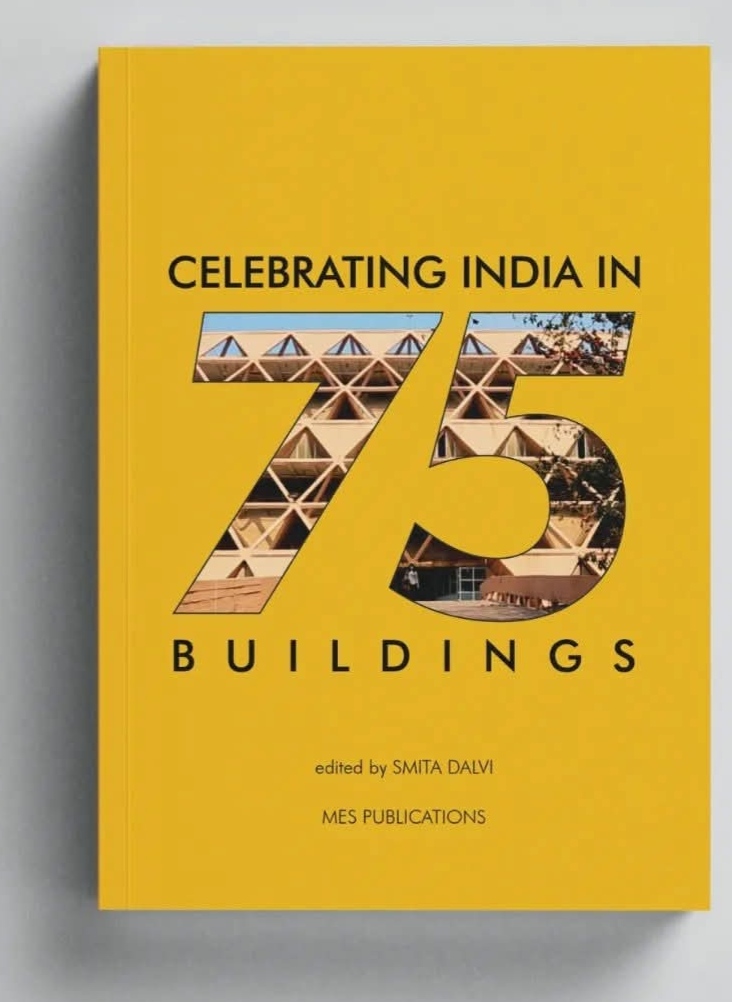
A Professional Report on Celebrating India in 75 Buildings and Panvel: Great City, Fading Heritage
Introduction
The study of architecture is not limited to buildings as physical structures; it is also a study of memory, society, history, identity, and the evolution of communities. Two publications by Prof. Smita Dalvi, published by MES Publications, make an important contribution to this broader understanding of India’s architectural and urban heritage.
The books—Celebrating India in 75 Buildings, edited by Prof. Smita Dalvi, and Panvel: Great City, Fading Heritage, co-authored by Prof. Smita Dalvi and Sonam Ambe—approach India’s built environment from two complementary perspectives. The first presents a national panorama of architectural development during the first 75 years of independent India, while the second focuses on the historical urban landscape of Panvel, a significant port and trading town in North Konkan.
Together, the publications establish a dialogue between national architectural transformation and local historical memory, demonstrating how buildings and urban spaces can function as documents of a nation’s social and cultural journey.
I. Celebrating India in 75 Buildings
Edited by Prof. Smita Dalvi
MES Publications
Celebrating India in 75 Buildings is an ambitious architectural and cultural survey that marks the first 75 years of independent India through its built environment. Covering the period from 1947 to 2022, the volume brings together significant buildings and structures that collectively reveal the changing architectural imagination of the country.
Rather than treating architecture merely as a collection of aesthetic objects, the publication positions buildings within the larger story of India’s development after independence. Each structure becomes a point of entry into questions of modernity, national identity, technological change, social transformation, and cultural continuity.
Architecture as a Record of Independent India
The significance of the book lies in its chronological and thematic scope. India’s independence in 1947 inaugurated a period of extraordinary transformation. The country was simultaneously constructing new institutions, cities and infrastructure while negotiating the relationship between inherited architectural traditions and modern design.
The buildings presented in the volume can therefore be read as physical witnesses to this transformation. They reflect changing approaches to:
- architectural design and planning;
- public and institutional architecture;
- modernity and technological development;
- cultural identity;
- urban expansion;
- post-independence nation-building;
- preservation and continuity of heritage.
The book consequently offers more than an architectural catalogue. It provides a visual and historical narrative of a country constructing its modern identity.
Stories Behind the Buildings
One of the publication’s strengths is its emphasis on the stories behind the buildings. Architecture acquires greater meaning when it is connected to the people, circumstances and historical moments that produced it.
This approach encourages readers to see buildings not as isolated monuments but as elements within living societies. Their design, purpose and continuing significance reveal changing patterns of Indian life and the aspirations of different generations.
For students of architecture, this makes the publication particularly valuable. It provides a bridge between architectural theory and the real historical contexts in which buildings emerge.
An Educational Resource
The book is especially relevant to young architecture students and researchers. By bringing together seventy-five examples, it encourages comparative study and helps readers understand the diversity of architectural responses that have emerged across India since independence.
It can serve as a reference for examining how architectural practice interacts with geography, culture, politics, technology and social change. At the same time, its accessible narrative character makes it useful beyond academic circles, particularly for readers interested in India’s cultural history.
Cultural Heritage and National Memory
At another level, Celebrating India in 75 Buildings can be understood as an exercise in cultural memory. Buildings survive as tangible records of historical experience. They preserve traces of the aspirations and achievements of the societies that created them.
By bringing seventy-five significant structures into a single publication, the volume contributes to the preservation and dissemination of India’s architectural memory at a moment when rapid urbanization is transforming many traditional landscapes.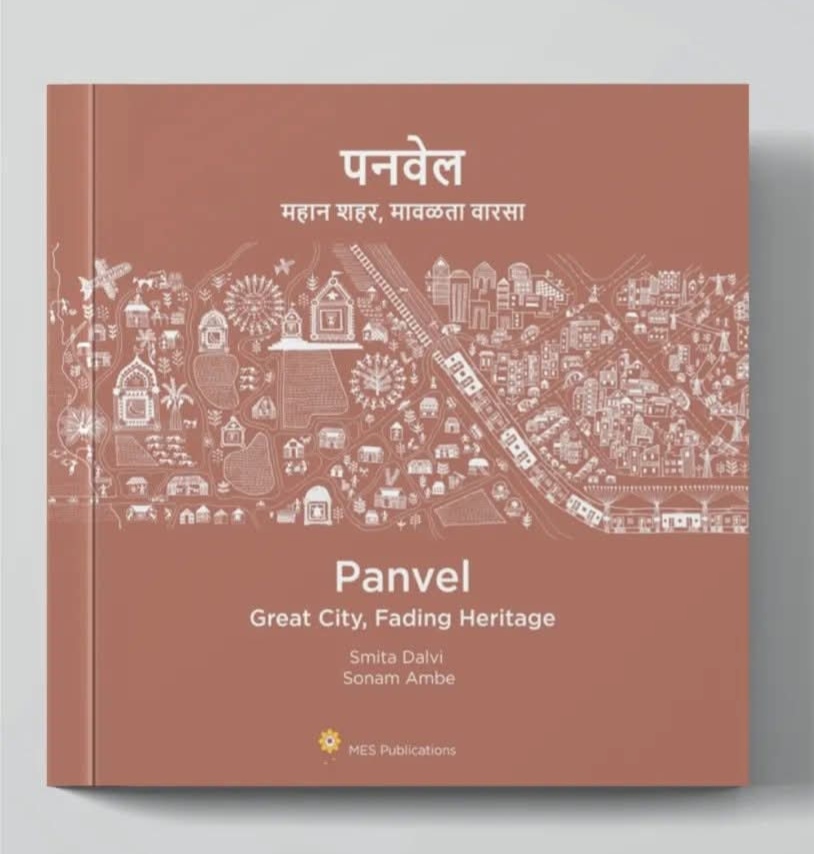
II. Panvel: Great City, Fading Heritage
By Prof. Smita Dalvi and Sonam Ambe
MES Publications
While Celebrating India in 75 Buildings adopts a national perspective, Panvel: Great City, Fading Heritage turns toward a particular city and its historical identity.
The book examines Panvel, a historic port and trading town in North Konkan whose urban history predates that of Mumbai. Through archival photographs, narrative illustrations and bilingual presentation, the authors reconstruct aspects of Panvel’s built heritage and the communities that shaped its urban character.
Panvel as a Historical Urban Centre
The book’s central importance derives from its insistence that Panvel deserves to be understood on its own historical terms. Contemporary perceptions of the region can easily be dominated by the enormous metropolitan presence of Mumbai and its surrounding urban expansion. Yet Panvel possesses a much older history as a centre of commerce, movement and settlement.
Its architecture is therefore not simply a collection of old buildings. It is evidence of the economic, social and cultural networks that once made the city an important centre in North Konkan.
The City Through Its Communities
A particularly valuable feature of the book is its attention to local communities. Urban heritage is created not only by architects and planners but also by generations of residents, merchants, craftsmen, religious communities and families.
By recording their stories alongside the surviving built heritage, Dalvi and Ambe create a more comprehensive portrait of Panvel. The city emerges as a living historical landscape rather than merely an archaeological site.
This community-centred approach is particularly important in heritage documentation because the disappearance of a building often means the disappearance of a part of the social history associated with it.
Archival Images and Narrative Illustrations
The use of archival images gives Panvel: Great City, Fading Heritage an additional documentary dimension. Photographs provide visual evidence of earlier urban conditions, while narrative illustrations help reconstruct the character of places that may have changed or disappeared.
The combination of image and text allows readers to understand the transformation of the city across time.
The book therefore functions simultaneously as:
- an architectural record;
- an urban-history study;
- a community history;
- a heritage-documentation project; and
- a visual archive of Panvel.
The Meaning of “Fading Heritage”
The phrase “Fading Heritage” is central to the book’s intellectual and emotional character. It points to the vulnerability of historic urban environments in the face of modernization, redevelopment and changing patterns of urban life.
Heritage is not automatically preserved by the passage of time. It requires documentation, recognition and conscious public engagement.
By recording Panvel’s architectural legacy while many elements of its historical urban fabric are under pressure, the authors perform an important act of cultural preservation. The book itself becomes part of the heritage it seeks to document.
III. Two Books, One Larger Vision
Although the two publications differ in scale, they share a powerful underlying philosophy.
Celebrating India in 75 Buildings asks us to consider how independent India built itself.
Panvel: Great City, Fading Heritage asks us to consider what may be lost when historical cities change.
The first moves across the nation and across seventy-five years. The second concentrates on one city and its accumulated memory. Together, they establish a productive relationship between development and preservation, modernity and memory, national history and local identity.
This relationship is particularly relevant in contemporary India, where rapid urban growth creates both new architectural possibilities and new challenges for heritage conservation.
IV. Contribution to Architectural and Cultural Studies
The importance of these publications extends beyond architecture in the narrow professional sense. They contribute to several interconnected fields:
Architectural History
The books document buildings and architectural environments as products of particular historical periods.
Urban Studies
They demonstrate how cities develop through commerce, migration, communities, infrastructure and changing patterns of settlement.
Heritage Studies
They highlight the urgency of documenting built heritage before transformation or disappearance makes such documentation impossible.
Cultural History
Buildings are presented as expressions of social identity, collective memory and cultural continuity.
Education
The publications offer students and young researchers accessible material through which architecture can be studied in relation to history and society.
Visual Documentation
Archival photography and illustrations transform the books into valuable records of places and buildings across time.
V. Overall Assessment
Prof. Smita Dalvi’s editorial and scholarly work in these two publications demonstrates an understanding of architecture as a form of cultural storytelling.
Celebrating India in 75 Buildings provides a broad national framework through which the architectural journey of independent India can be examined. Its seventy-five structures become milestones in a larger story of nation-building, cultural transformation and architectural experimentation.
Panvel: Great City, Fading Heritage, meanwhile, demonstrates the importance of looking closely at individual cities and communities. Its documentation of Panvel’s historical port-town identity, built heritage and local stories reminds readers that national heritage is ultimately composed of countless local histories.
Taken together, the books make a compelling argument: a nation’s architecture is also its memory in physical form. To document buildings is therefore to document the people, aspirations, values and historical experiences that gave those buildings meaning.
For architecture students, historians, urban researchers, heritage professionals and general readers interested in India’s cultural landscape, these publications offer valuable pathways into understanding both the achievements of modern India and the heritage that remains vulnerable to disappearance.
Most importantly, the books demonstrate that heritage preservation begins with seeing, recording, understanding and telling the story. Prof. Smita Dalvi and Sonam Ambe’s work on Panvel, alongside Dalvi’s wider national architectural compilation, contributes meaningfully to that essential cultural task.
Publication Information
Celebrating India in 75 Buildings
Edited by Prof. Smita Dalvi
MES Publications
Coverage: 1947–2022
Focus: Indian architectural development, significant buildings, cultural and historical heritage.
Panvel: Great City, Fading Heritage
By Prof. Smita Dalvi and Sonam Ambe
MES Publications
Format: Bilingual
Focus: Panvel’s history, communities, urban development, archival documentation and built heritage.
Both publications are available through MES Publications.
Ordering page:
MES Publications – Order the books