 thesilkroadtoday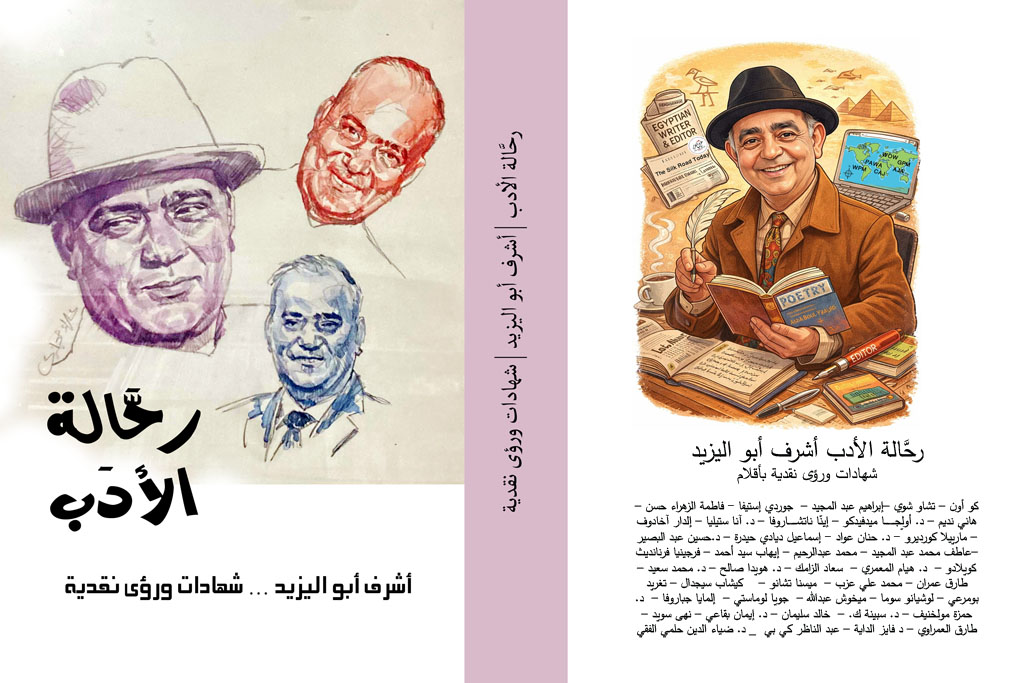
It is not easy for a writer, while still at the height of his creative journey, to become the subject of an entire book of testimonials and critical reflections. Yet The Literary Traveler: Ashraf Aboul-Yazid – Testimonials and Critical Perspectives demonstrates that the experience of Egyptian poet, novelist, traveler, journalist, and translator Ashraf Aboul-Yazid has transcended the boundaries of individual achievement to become a cultural phenomenon that spans continents.
The volume brings together dozens of literary and intellectual voices from the Arab world, Asia, Europe, Africa, and Latin America, forming a rich human and creative panorama around the author of The Silk Road, A Street in Cairo, and Shamous.
The book opens with moving reflections by the renowned Korean poet Ko Un, who sees Ashraf Aboul-Yazid as a spirit extending between ancient and modern Egypt, embodying a universal human fraternity that transcends borders. Ko Un emphasizes that honoring him during his lifetime is a rare and deserved tribute to someone who has devoted his life to literature and intercultural dialogue.
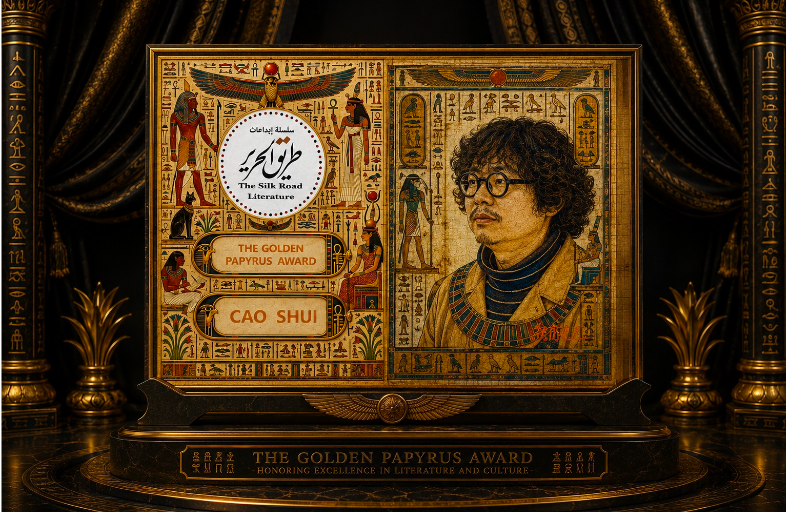
Chinese poet Cao Shui, founder of the “Great Poetry Movement,” contributes a profound critical study in which he presents Aboul-Yazid as a model of the poet who transforms travel, translation, and writing into a bridge between civilizations. He portrays him as a global literary voice that unites the heritage of the Nile with the anxieties of the modern age, blending the sacred and the everyday within a unique poetic vision.
From Egypt, the distinguished novelist Ibrahim Abdel Meguid writes about “the man who crosses continents,” reviewing his achievements in fiction, poetry, children’s literature, translation, journalism, and travel writing. He concludes that Ashraf Aboul-Yazid represents a rare creative phenomenon that cannot be confined to a single field.
Spanish writer and explorer Jordi Esteva describes his works as a solid bridge between languages and cultures, while filmmaker and writer Fatima Al-Zahraa Hassan examines his contributions to art criticism and the sociology of art, highlighting books and studies that approach artistic expression from broad cultural and humanistic perspectives.
In a remarkable testimonial, Syrian writer Hani Nadim offers a personal and deeply human portrait of Ashraf Aboul-Yazid, describing him as “the last encyclopedia” because of his extraordinary combination of talents in poetry, fiction, painting, translation, journalism, and travel literature, as well as his influential presence on both Arab and international cultural stages.
From Russia come the testimonies of Olga Medvedko and Inna Nacharova. Medvedko sees him as a true “bearer of culture,” dedicating his efforts to building bridges among peoples, while Nacharova calls him “Mr. Friendship Bridge,” recognizing his role in introducing her works to Arab readers through translation and cultural exchange.
Serbian translator Dr. Ana Stilija reflects on her experience translating his poetry into Serbian, describing the process as a journey through cities and souls alike. Azerbaijani poet Eldar Akhadov recalls memories of friendship and shared travels between Baku and Moscow, emphasizing that Aboul-Yazid brings people together not merely as friends, but as brothers and sisters in poetry and spirit.
From Venezuela, poet Mariella Cordero offers a reading that links ancient Egyptian poetry with Aboul-Yazid’s contemporary work. She argues that his poems continue a timeless human tradition stretching from Pharaonic love songs to the modern poem.
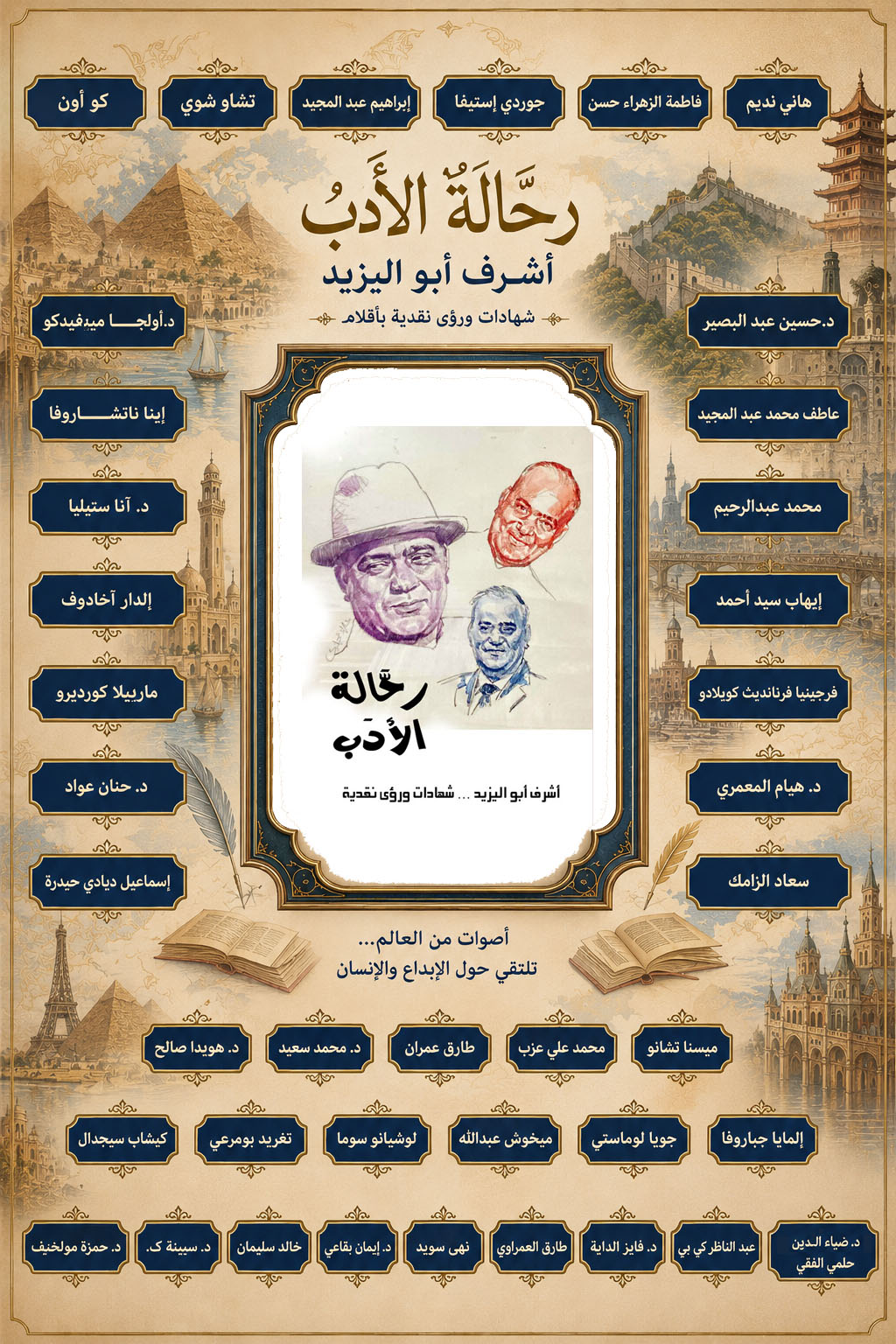
The book continues through a rich collection of multicultural and multilingual testimonies by Dr. Hanan Awwad, Ismail Diadi Haidara, Dr. Hussein Abdel Basir, Atef Mohamed Abdel Meguid, Mohamed Abdel Rahim, Ehab Sayed Ahmed, Virginia Fernández Cuellado, Dr. Hiyam Al-Maamari, Souad Al-Zamak, Dr. Howayda Saleh, Dr. Mohamed Saeed, Tarek Omran, Mohamed Ali Azab, Misna Chano, Dr. Keshab Sigdel, Taghrid Boumerai, Luciano Somma, Mikhos Abdullah, Gioia Lomasti, Elmaya Jabbarova, Dr. Hamza Molkhnev, Dr. Sabina K., Khaled Suleiman, Dr. Iman Biqa’i, Noha Sweid, Tarek Al-Amrawi, Dr. Fayez Al-Dayeh, Dr. Abdul Nazer K. B., and Dr. Diaa El-Din Helmy El-Fiqi.
Despite the participants’ diverse cultural and geographical backgrounds, a common thread runs through most of the contributions: the perception of Ashraf Aboul-Yazid as a model of the Arab intellectual open to the world. He is someone who has not limited himself to writing and creativity alone, but has transformed translation, travel, and cultural dialogue into a human mission.
To some, he is primarily a poet; to others, a traveler, translator, journalist, or cultural ambassador. Yet all contributors converge on one essential truth: he is the architect of a cultural project that extends beyond national boundaries into a broader human horizon.
Readers of The Literary Traveler emerge with a clear impression that the book is far more than a tribute to an individual. It is a documentation of a vast network of friendships and cultural relationships that Ashraf Aboul-Yazid has woven over decades of work and creativity. It is a book about a writer, but also about the power of literature to build bridges between peoples, and about the written word’s ability to cross continents just as true travelers do.