 thesilkroadtoday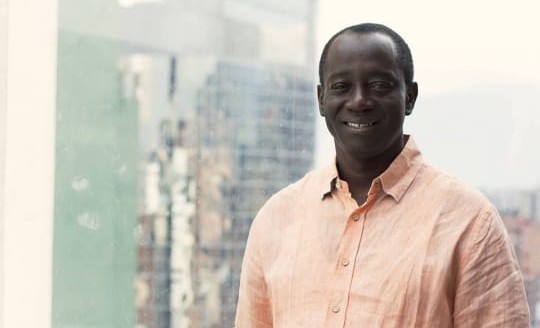
By Oumar Farouk Sesay
Wherever
life flings me,
in whatever corner
of the world receives my wanderings,
nothing
returns my soul to my father’s homestead
like a recitation of the Qur’an
with the rhythm and the cadence
many now call
the Soninke rendition
the voice undulating like a wave,
carrying the meanings of the ayahs,
the textual
and textured meanings of life.
Nothing
grabs the lapels of my soul
and drags me back
to the place of my first breath
like a rendition of Surah Ar-Rahman.
I hear it as I first heard it
on my father’s veranda
the sun meandering
through the leaves of the mango tree
to reach us,
lending its light
to the ambience of Ar-Rahman,
while petrichor rises
from the damp earth after rain,
the soil itself offering incense
to the pronouncement of the surah.
Above us,
flocks of birds glide
without the labor of wings,
their wings held open
as though the sky itself
had taught them surrender
their passage through the air
another quiet testament
to Ar-Rahman.
My father’s voice rose,
fell,
then rose again,
each ayah lingering
before surrendering to the next
until the veranda itself
seemed to tremble with recitation,
and I, still a child,
felt the sound
before I could hold its meaning.
Then came the refrain:
“Fa-bi-ayyi ālā’i Rabbikumā tukadhdhibān”
“Then which of your Lord’s favors will you both deny?”
then hearts melt in total surrender.
Again.
And
again.
My father’s voice
opening
the question
into the air,
and the chorus
of talibes
answering
in unison,
their voices gathering
beneath the veranda,
entering
the walls,
the damp earth,
my young body,
until fragrance,
light,
voice
and remembrance
became one
in response:
“Wa lā bi-shay’in min ni‘amika Rabbanā
nukadhdhibu, fa-laka al-ḥamd.”
“Of none of Your blessings, our Lord,
do we deny; all praise belongs to You.”
And the call and response
of the surah
drawing every soul
beneath my father’s veranda
inward,
toward surrender.
Even now,
across years and distances,
I hear that chorus
inside my soulscape.
Nothing
humbles me
like a recitation
of Surah Maryam
the voice of a cradled child
speaking on behalf of a mother:
“Qala inni ‘abdullahi ataniyal-Kitab
wa ja‘alani nabiyya.”
“Indeed, I am a servant of Allah.
He has given me the Scripture
and made me a prophet.”
And in that infant voice,
something in me
begins to travel backward,
charting
a footpath of faith
that tames my spirit
and folds my soul inward,
past memory,
past naming,
toward the beginning
toward that silence
before I, too,
was even
a thing remembered.
And
nothing
Strings
the straps of my soul
to my beginnings
like the echoes
of those talibes,
their voices still rising
in praise of Allah,
and the voices
of the karandays
in the warmth
of their karanthas,
pitching various verses
together in a symphony
of solo voices,
still crossing every distance
life has placed between
that veranda and me.
I may wander
to the farthest corners of the world,
but let Ar-Rahman rise
in that remembered cadence,
and the mango leaves stir again.
Let one voice call
and the others answer,
and the damp earth
release its incense once more.
Then distance loses its meaning.
The years fold inward.
I am no longer returning.
I am there
Embraced in the mercy of the Merciful
a child beneath the mango tree’s light,
the scent of rain rising around me,
my father’s voice
filling the veranda,
filling the world,
calling me back
to my beginning.
And the call does not end there.
It travels beyond memory,
beyond earth,
beyond breath,
gathering at the edge
of eternity,
until that first call home
seems to await another
the trumpet of Israfil
on the Final Day,
when every distance collapses,
every wandering ends,
and all beginnings
are summoned home
at the feet of the throne.