The Folk Culture of Maharashtra : Western Region of India

पांगुळ जालों देवा नाहीं हात ना पाय । बैसलों जयावरी सैराट तें जाय ।

खेटितां कुंप कांटी । खुंट दरडी न पाहे । आधार नाहीं मज कोणी । बाप ना माये ॥१॥

दाते हो दान करा । जातें पंढरपुरा । न्या मज तेथवरी । अखमाचा सोयरा ॥ध्रु.॥

हिंडतां गव्हानें गा । शिणलों दारोदारीं । न मिळे चि दाता कोणी । जन्मदुःखातें वारी ।

कीर्ति हे संतां मुखीं । तो चि दाखवा हरी । पांगळां पाय देतो । नांदे पंढरपुरीं ॥२॥

(Source : Collective work of Saint Tukaram , Verse no. 423 )

(God, I am paralyzed/ no hands, no feet/ the one who sits on/ it runs fast)

Once upon a time, every village in Maharashtra used to wake up with the song of Pangul. A Pangul man was often seen sitting on a tree or on a high wall saying “Dharma Jago” (Awake to perform your duties and start the day with charity). He would arrive in the village before sunrise. One of his symbolic relations is said to be with ‘Aruna,’ the crippled charioteer of the Sun, and another with Pingala, a small owl (considered a good omen).

Pangul, believed to have knowledge of the future, would narrate the importance of piety and charity through his songs. After that, Vasudeva was seen riding into the courtyard. Vasudeva men /community people are devotees of Lord Krishna. Their attire is similar to that of Shri Krishna. Nandiwala (a wandering community that keeps a sacred bull as a symbol of Lord Shiva’s vehicle) used to come and wonders across the road performing tricks and tactics with sacred bull for a whole day. At the end of the afternoon, the Bahurupi (Manifesto) men were seen wondering across roads in various appearances.

लग्नाला चला , तुम्ही लग्नाला चला

काळुबाई, साळूबाई लग्नाला चला

(Come to the wedding, you come to the wedding

Kalubai, Salubai let’s come to the wedding)

They entertained the diverse village population by dressing up in various costumes and singing songs. There were also Chitrakathi in the village, narrating picture stories. These communities played an important role in shaping the folk culture of Maharashtra. Dr. R.C. Dhere honored traditional folk artists by calling them as worshipers of folk culture. The Gondhali, who stages the ritual drama, are worshipers of goddess Renuka and Tuljabhavani. Waghyamurli Jagran is a form of  worshiping of Lord Khandoba. Potraj is the Priest of Mariaai, the goddess who stays under the trees outside of village. Bharadis are known as devotees of Lord Bhairavnath.  Bhope is the Bhagat (a priest) of Devi (Goddess). The Dahaka of Kumbhra (potter community men) is important in Munja’s (a local god idol of un-married god men) worship ritual. Dhangar community worships Biroba. Sahdev Bhadli are predictors of rainfall. Balsantosha comes to ask for old clothes. Dwari Joshi, Kudmude Joshi, Pingle Joshi belong to the astrologer communities telling predictions based on divine inspiration. These worshipers of various folk gods have helped cultivate the folk art of Maharashtra. These folk artists preserved their art not for the sake of fulfilling their stomach but for their faith. It is necessary to participate in the actual ritual to understand the words of the worshipers and the code of action properly.
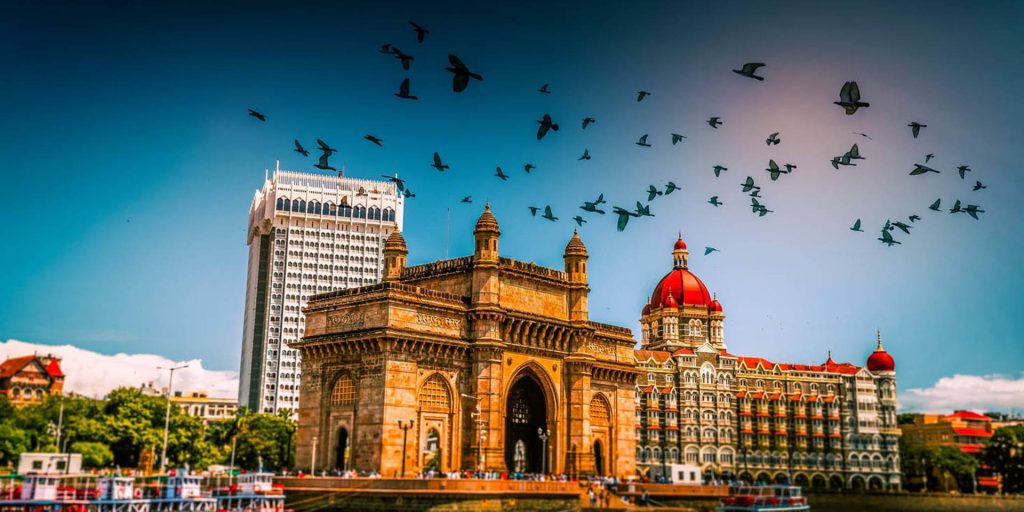
Maharashtra has its unique identity as compared to other western states. The state is situated at the confluence of North and South India. Obviously, the amalgamation of North and South Indian culture is very well visible in Maharashtra’s folk culture. The neighboring states of Gujarat, Madhya Pradesh, Chhattisgarh, Karnataka, Telangana, Goa have influenced Maharashtra’s folk culture. Coastal area of the Arabian Sea in the west has also influenced our folk culture. Therefore, there are regional variations in the folk culture of Konkan and the eastern districts like Gadchiroli, Chandrapur, Bhandara. Similarly, differences exist between the folk culture of Kolhapur, Sangli, and Satara in southern Maharashtra, and that of Dhule, Nandurbar, and Jalgaon in northern Maharashtra.  These differences are observable in various aspects such as dialect, food, costumes, customs, traditions, traditional games, rituals, worship practices, folklore, art forms & craftsmanship. Local geography has also influenced folk culture. Primitive culture, village culture and urban culture are three distinct forms of folk culture. All these three forms co-exist in the same region simultaneously.

Tribal culture is deeply connected to nature whereas the urban culture is not as closely associated   with it. For example, we can mention the wedding rituals of the Warli tribal groups, living in and around Palghar and out skirts of Mumbai metropolis. Even today, marriage ceremonies are performed by Dhwalerya at tribal padas (small colony) in remote area. These rituals are traditionally performed by the widowed woman of the pada. Warli painting is a part of these wedding rituals. On the wall of the marriage house, Dhavelerya has been drawing pictures in a specific way. This painting came to be known as Warli painting. The pada, with the remnant of primitive civilization, is sometimes visited by priests and sometimes by Dhavlerya for wedding ceremonies. But in the tribal padas near Mumbai, marriage ceremonies are performed by priests only. That is, in the same period, in the same territory, in the same group, all three folk cultures have been observed.

Maharashtra’s folk culture is based on agro-centric structure. Maharashtra’s folk culture has been shaped from the village, which is home to agriculture, farmers, Alutedars, Balutedars (categories of castes & communities allied different business, professions in villages like barber, carpenters, potters, etc.) and folk artists. In fact, the terms agrarian culture and folk culture are used synonymously. Due to association between agrarian culture and folk culture, Surjan and Sufalikaran (Creation and Fertility rituals) became the core component of folk culture. Folk culture has a unique relationship with land.

Bhumi is not just a piece of land or an object; she is ‘Mother Earth’, the Goddess. It is strongly believed that earth is source of the creation of sustenance, creativity, fertility, protection and prosperity.

Maharashtra’s folk culture has deeply ingrained the faith in Bhumi, the land through various worships and rituals. Ghatasthapana in Navratri, Varula Pooja performed on Shravan Panchami, worship of earthen pots on Makar Sankranti express the rituals relating to the relationship with the Bhumi, land or soil. Folk culture is associated with various elements of creation. Rivers, water bodies, mountains, bushes, animals, trees, and birds are important parts of people’s life. Therefore, the folk culture seems to worship all these as deities. Cows, buffaloes and bullocks are as important as land in agricultural culture. Puran Poli is offered to bullocks on the occasion of the Pola festival.

दिन दिन दिवाळी

गाई म्हशी ओवाळी

गाई म्हशी कोणाच्या?

लक्षुमनाच्या

लक्ष्मण कोणाचा?

आई बापाचा

दे ग माय खोबऱ्याची वाटी

वाघाच्या पाठीत घालीन काठी!

(Day to day Diwali ,

worship to Cows & Buffalo )

Cows  and cattle are worshiped  on the festival of Diwali. Women show their gratitude to the bull by fasting on Rishi Panchami. Folklores mention the bull as a brother and sometimes as a father. In the Festival of the Pola, a cow is formally married to a bashing-tied bull, marriages in people, the groom is also bashed. The practice of bashing was derived from the Pola festival to marriage culture in Maharashtrian people. This simply means that the process of exchange in various parts of folk culture goes on simultaneously. In the wedding ceremony, the mother of groom and the bride’s grandmother is Gifted by Special Cloths (Aaher) called ‘Pot Zakne’ and ‘Aajichir’. The broad spectrum of folk culture includes all rituals from man’s birth to death. Culture is seen to be preserved through a broader human value system.

These are very unique features of ritual of Maharashtra folk culture. Being at the confluence of North and South, Maharashtrian folk culture has a synergy of Patriarchal and Matriarchal practices. Maharashtrian folk culture emphasizes the collective way of life. Its tradition is mainly oral. Its continuity can be observed through images, symbols and myths.

Marathi folk literature is an integral part of Maharashtra’s folk culture. Folk tales, folk songs, (Ovi songs of Grindstone (Jaatyavaril Ovya), songs sung by farmers while pulling water from well (Motevarachi Gani), Death time (Martika) Songs, Rirual Songs (Vidhi Geete), Songs of Farming (Shramgeete, Bhalarigeete), Play Songs (Krida Geete), Girls’ songs(Fugdigeete, Bhulai Geete, Feragani Geete), festival Songs, various chants (Mantras), etc., Songs of Thakar- Gond-Andh-Warli-Konkana-Kolam tribes.  Gorbanjara songs, Vaganatya, Lavani, Powada, Kirtan, Sayings, Phrases, Ukhane, etc. all wealth of folklore is work related. Collectiveness, chanting, lyricism, location specificity, eternity are the characteristics of Maharashtrian folk literature.  Above all, it is expressed through the various dialects. Grandmother’s wallet (Aajibaicha Batava) is a traesure of folk medicine. The core of saint literature conveys the message of universal humanism which is also found in folk culture. By adopting the poetic/literary structures (Rachanabandh) from folk literature, the saints propogated about true path of life (Sanmarga ) & devotional thoughts in the community.

Different regional forms of Maharashtrian folk culture are found as they are related to daily life work and are expressed through dialects. The geographical condition of particular region has been shaped the life of people. Dashavatar from Sindhudurg, folk songs from the Zadi forest, Akhaji songs from Khandesh, ghost stories from Konkan, Kanbaicha Rot (special dabble sweet bread) from Khandesh, Ear twitching ritual (Kanpili) in Marathwada, Lalita Panchami and Bohada in Khandesh and  Marathwada, Dandar from Chandrapur  and Gadchiroli area. Horse dance tradition in Dolhare, Ras-Gana tradition in Shahada tahasil, Dhemsa in Kinwat-Mahur area are few examples.  Puranpoli is offered as sacred food to Gauri in Marathwada Vidarbha region while in Konkan fish-foods are offered as Naivedyam (sacred food) as impact of geographical diversity.

Gudhipadwa is a most important festival in Maharashtra. Maharashtrian folk culture is reflected through this festival. Gudhi, which is erected in the Maharashtrian houses every year which reminds of the Matriarchal tradition and the importance of women. However, in the later period, the festival added stories from the patriarchal system. Today in Maharashtra, every where this festival is celebrated in Marathi style, by synthesizing the rituals of maternal and paternal system. The unique confluence of two different cultures can be experienced on this occasion.

However, with the changing times, various forms of folk culture are disappearing. Modernization, mechanization, and marketization have affected the worshipers of folk culture; a changing village is not conducive to the preservation of folk culture. Rituals and customs are abbreviated. A new generation of worshipers is moving away from folk deity worship. Jate (Grinding Stone), now got vanished from households, has taken Ovi along with it. Along with the Mote (a bullock driven water pulling system settled on the well), the songs on Mote, sung to the beat of the bells on the necks of the bullocks, have also disappeared. With the advent of tractors, cowsheds have emptied and bulls have no longer a place in agricultural life.  The rich heritage and wisdom of folk culture is being lost at the hands of a changing new generation.

(Dr. Prithviraj Taur is a poet, translator and critic from India. He writes in Marathi language. Presently he is working as a Head of Marathi Department and Director of School of Fine and Performing Arts in SRTM University, Nanded, Maharashtra, India. Contact 9423274565)

Related Posts

Pokhrelian Stanzas: A Paradigm Shift in the Poetry World 

  By Santosh Kumar Pokharel   pokharel.santosh@gmail.com How the Knot Was Tied  As an instant poet, I had long dreamed of introducing a poetry structure that could express a poet’s say clearly in a compact stanza with brevity. I wanted to bring something morphosemantically new into the craft. While creating a new poem, I found that a short stanza of three lines could carry a full message—and I was certain this three-liner should not imitate the haiku in any way. I began with a syllabic pattern of 1-2-1, rhyming the last line with the first. The structure looked good. This style was first named #pokhreliknots. I then extended the poem to 1-2-3-2-1 in the same manner, and kept going until I reached a twenty-five-line stanza, nominating the longer forms Vingtet and Vint-e-Cinque. The rule everywhere remained unchanged—the first and last lines mirrored each other in rhyme. This was the first triangular structure to begin from a monosyllabic line and stretch to twenty, then twenty-five lines. During composition, I discovered that repeating the central line produced a peculiar resonance across the whole stanza. I adopted this as the Morphosemantic Trapezium, with patterns such as 1-2-3-3-2-1, 1-2-3-4-4-3-2-1, and 1-2-3-4-5-5-4-3-2-1. The fundamental rule of mirroring first and last lines was now firmly in place. Then came an opportunity to present a workshop for the master’s degree students of Tribhuvan University. There I felt the need for stanzas flexible enough to carry a poet’s entire say while keeping the rhyming rule unaltered. I began forming shorter stanzas for poems and lyrics—starting from polysyllabic counts and ending each stanza on the same rhyme as its opener. It was at this stage, when the polysyllabic opener came into use, that the form became known as Pokhrelian Stanzas. These shorter stanzas looked even more aesthetic and meaningful, which led me to name the complete form Pokhrelian Stanzas: Morphosemantic Triangulum and Morphosemantic Trapezium. I was overwhelmed with joy when beautiful lyrics and poems with grave meanings could emerge from this structure. Today, poets across continents are practicing this style. The Architecture of the Knot  What began as a three-line experiment grew into a complete architecture. The Pokhrelian Stanza rests on a single, unalterable principle: the first and last lines of every stanza mirror each other in rhyme. Upon this foundation, the form unfolds in two complementary movements. The first is the Morphosemantic Triangulum—the triangular stanza that begins with a monosyllabic line, expands syllabically to an apex, and contracts back to a monosyllabic line rhyming with the opening one. From the briefest Trimetric Knot or Trentet (1-2-1) to the Pentametric Knot or Pentet (1-2-3-2-1), the Heptametric Knot or Heptet (1-2-3-4-3-2-1), and onward to the extended Vingtet and Vint-e-Cinque, each stanza forms a visual and rhythmic triangle whose central line marks the summit of the thought. The expansion and contraction of syllables is not decorative; it is morphosemantic—the shape of the stanza carries the shape of the meaning. The second is the Morphosemantic Trapezium, born from the discovery that repeating the central line produces a peculiar resonance, an echo that deepens the stanza’s emotional and semantic field. Here the pattern becomes Quadret (1-2-2-3), Hexametric Knot or Hexet (1-2-3-3-2-1), Octet (1-2-3-4-4-3-2-1), and so on. The mirrored rhyme of first and last lines remains inviolate, but the doubled centre gives the poem a lingering, reflective quality—the knot tightened twice. As the form travelled from the page to the workshop, a further need arose: stanzas flexible enough to carry a poet’s entire say while preserving the rhyming rule. Thus emerged the polysyllabic stanzas—shorter and more numerous, beginning not with a monosyllable but with a longer line, and closing each stanza on the same rhyme as its opener. Patterns such as 3-4-5-5-4-3 and 5-6-7-8-8-7-6-5 allowed lyrics and longer poems to breathe without surrendering the form’s discipline. These shorter stanzas proved, if anything, even more aesthetic and meaningful—compact yet complete, rhymed yet free. Together, the Triangulum and the Trapezium, the monosyllabic and the polysyllabic, constitute the Pokhrelian Stanzas. Unlike haiku, which seeks brevity without rhyme, the Pokhreli Knot is confined and rhymed—a deliberate advance over modern blank verse and the loosely worded short poem. It offers the poet a structure at once strict and spacious, capable of wit, grief, love, and meditation within the same mirrored frame. Starting from the three-liner and extending to twenty-five-line stanzas, the Pokhrelian Stanzas render an unparalleled contribution to the morphology of poetry building. The Pokhrelian Sonnets and Beyond  At the furthest reach of the Trapezium so far lies the Pokhrelian Sonnet, a fourteen-line stanza following the pattern 1-2-3-4-5-6-7-7-6-5-4-3-2-1. This is the morphosemantic trapezium in its most extended form: the syllables climb from one to seven across seven lines, pause at the doubled seventh line—the apex where the resonance deepens—and then descend symmetrically to a monosyllabic close that rhymes with the opening word. The ascent gathers; the doubled centre holds; the descent releases. Meaning is carried as much by the architecture as by any single line. Sonnet Knot (1-2-3-4-5-6-7-7-6-5-4-3-2-1) Morphosemantic Trapezium March 30, 2024. Nepal. Naive Love’s boon From yonder Shall happen soon As liable, who should Give them the silver spoon My eyes are there for her Issues shall not me deter If love’s perfect and pure…

Soyinka at 40: Three Nobel Laureates Celebrate the Opening of the House of the Worlds of the Book 

By Bill F. Ndi, President of the Pan African Writers Association (PAWA), Director of International Programs and Professor of Modern Languages, Communication, and Philosophy at Tuskegee University, Alabama, USA.  Your Excellency, Permanent Secretary of the Academy of the Kingdom of Morocco, Professor Abdeljalil Lahjomri, Distinguished Nobel Laureates: Professor Wole Soyinka, Professor JMG Le Clézio, and Professor Michel Kodjo Boko, Your Excellencies Ministers of Government and Members of the Diplomatic Corp, Eminent Members of this notable body, esteemed writers, scholars, readers, publishers, and friends of literature from across Africa and the world, I bring you greetings from Tuskegee University, and on behalf of General Mark A. Brown who, last year, in this same venue, addressed this esteemed body. I, also, bring you greetings from the office of the President of The Pan African Writers Association. Today, we stand at the intersection of memory and destiny. We gather to celebrate two remarkable milestones: the fortieth anniversary of the historic Nobel Prize in Literature awarded to Wole Soyinka, the first Black African laureate in literature, whose achievement in 1986 affirmed the rightful place of African voices in the universal republic of letters; and the opening of the World House of Books, a new home for humanity’s stories, knowledge, imagination, and collective memory. Forty years ago, the recognition bestowed upon Wole Soyinka was not merely a personal triumph. It was a victory for Africa’s storytellers, poets, playwrights, intellectual traditions, and creative spirit. His Nobel Prize opened doors for generations of African writers and demonstrated to the world that African experiences, philosophies, histories, and dreams belong not at the margins, but at the very heart of global literature. As we celebrate this legacy, we are equally honored to pay tribute to Jean-Marie Gustave Le Clézio, recipient of the 2008 Nobel Prize in Literature. A writer of extraordinary depth and sensitivity, Le Clézio has spent his literary life exploring themes of migration, cultural encounters, human dignity, memory, and the enduring relationship between people and place. His works have consistently championed the voices of those often overlooked by history and have reminded us that literature serves as a bridge between cultures and civilizations. Through his profound humanism and openness to the diversity of the world’s cultures, he has enriched global literature and advanced the values of dialogue, understanding, and respect that unite humanity. As we celebrate the enduring legacy of Wole Soyinka, forty years after his historic Nobel Prize in Literature, and honor the distinguished writer J. M. G. Le Clézio, we also pay tribute to a man whose life’s work reminds us that knowledge is not only a pursuit of truth, but a service to humanity. The man alluded to is Professor Michel Kodjo Boko, a distinguished African scholar whose life’s work has combined scientific excellence, public service, and a profound commitment to humanity. Through his contributions to climate science and sustainable development, Professor Boko has helped deepen our understanding of one of the defining challenges of our age: climate change and its consequences for peace, security, and human well-being. Professor Boko stands as a testament to the power of ideas. If Wole Soyinka reminds us of the liberating force of literature, and J. M. G. Le Clézio of the universal reach of the human imagination, Michel Kodjo Boko reminds us that science, too, is an act of hope, a bridge between knowledge and responsibility, between understanding and action. Yet our gathering today is not only about honoring past achievements. It is about embracing a responsibility to the future. The opening of the World House of Books is therefore both timely and profound. A house of books is more than a building. It is a sanctuary of knowledge, a meeting place of civilizations, a repository of memory, and a bridge between generations. It symbolizes the conviction that books remain among humanity’s most powerful instruments for education, peace, cultural understanding, and social transformation. As we reflect on these historic milestones, let us move beyond celebration to commitment. Let every government invest boldly in libraries, literacy, publishing, translation, and the arts. Let educational institutions place books at the center of learning and intellectual development. Let publishers create opportunities for emerging voices. Let cultural organizations preserve literary heritage while supporting innovation. Let parents raise readers, and let communities nurture the culture of reading. The greatest tribute we can pay to Wole Soyinka, to Jean-Marie Gustave Le Clézio, and to all those whose words have illuminated our world, is not praise alone. It is to ensure that no child is denied access to books, no language is deprived of its written legacy, no library stands empty, and no worthy story remains untold. Today, I call upon Africa and the international community to launch a new literary renaissance: to build libraries where there are none, to strengthen publishing industries where they struggle, to translate works across cultures and languages, to preserve indigenous knowledge, and to make reading a continental movement and a global priority. To the young writers of Africa and the world, I offer a simple message: write courageously. Tell your stories with honesty, imagination, and conviction. Challenge injustice. Preserve memory. Celebrate diversity. Inspire hope. The future of literature belongs to voices that are authentic, fearless, and committed to truth. Let the World House of Books become not merely a monument, but a movement: A movement for knowledge over ignorance. A movement for culture over division. A movement for dialogue over prejudice. A movement for books over barriers. And a movement for the enduring power of the written word to transform humanity. On behalf of the Pan African Writers Association, I invite the world to join us in this mission: Read. Write. Publish. Preserve. Inspire. The next Nobel laureate is already among us. The next great African story is waiting to be told. And through the World House of Books, may future generations discover the shared humanity that unites us all. Long live African literature. Long live the culture of reading. Long live the power of books to transform the world.…

اترك تعليقاً

لن يتم نشر عنوان بريدك الإلكتروني. الحقول الإلزامية مشار إليها بـ *