 thesilkroadtoday
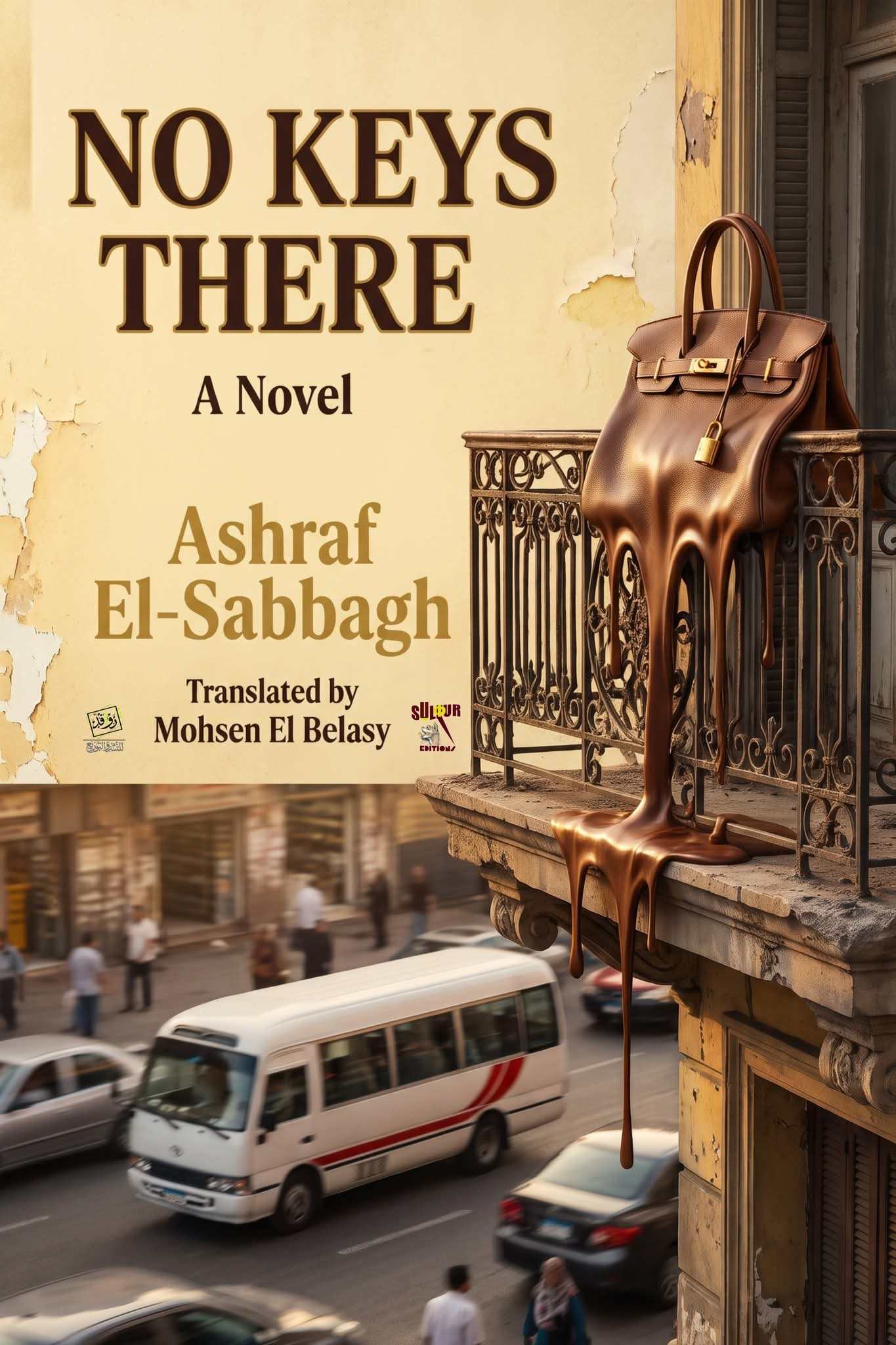
A Novel by Ashraf El Sabbagh
Translated into English by Mohsen L. Belasy
What does it mean to belong to a city that conceals its secrets even from those born within its walls? And what happens when love brings together two people from opposite ends of the social spectrum, compelling them to cross boundaries that separate not only their worlds but also their identities? These questions lie at the heart of *No Keys There*, the novel by Egyptian writer Ashraf El Sabbagh, a remarkable literary exploration of Cairo, human contradictions, social inequality, and the absurdities of contemporary life.
The novel opens with a striking dedication that serves as a symbolic key to its entire narrative: “To that city which hides its keys even from its own children; and whenever they pluck out its eyes, new eyes grow in their place, in which it hides the keys from meddling hands.” This enigmatic image establishes Cairo as more than a geographical setting. It becomes a living, mysterious organism, constantly changing, concealing its mechanisms of power, survival, privilege, and exclusion. Its keys may represent social advancement, access to opportunity, happiness, or the hidden entrances through which corruption and influence operate.
At the centre of the narrative is Saad, a poor journalist whose principal weapon against life’s disappointments is relentless, often hysterical laughter. His relationship with Nourhan Hanem Abaza, an exceptionally beautiful and aristocratic ophthalmologist from the prestigious Zamalek district, provides the novel with its central love story. Their contrasting backgrounds create an opportunity for the author to explore two different Cairos: the elegant world of inherited wealth and privilege, and the crowded neighbourhoods where ordinary people struggle to survive.
As their relationship develops, each enters the other’s unfamiliar territory. Nourhan discovers the popular districts of Sayyida Zeinab, Ain Shams, and Deir El-Malak, experiencing their cafés, inexpensive bars, street language, and everyday rhythms. Saad, meanwhile, finds himself moving through aristocratic gatherings and privileged social circles. Their emotional encounters become a journey across the city’s invisible class boundaries.
Yet the love story is only the narrative entrance to a much wider social panorama. Through apparently incidental episodes, El Sabbagh exposes corruption within the press and university institutions, sexual harassment, intellectual pretension, manipulated public opinion, and the media’s ability to manufacture collective perceptions. Even a tragic incident involving a minibus falling into the Nile becomes an occasion to examine how traditional media and social networks shape public consciousness.
The novel’s greatest strength lies in its black humour. Saad laughs at corruption, hypocrisy, poverty, and even his own moral compromises. He is not presented as an innocent observer standing outside the system. He participates in its small corruptions, accepts invitations and material privileges, and occasionally depends on Nourhan financially. His self-mockery makes him a complex and recognisable character rather than a conventional moral hero.
The language is equally significant. Its irony, playful exaggeration, and deliberate provocations transform everyday experiences into episodes of absurd theatre. Beneath the comedy, however, lies genuine affection for people and places damaged by social injustice. The poignant story of the little chick, narrated by Saad to Nourhan, reveals this emotional dimension. Like a tale from *The Thousand and One Nights*, it combines fantasy and wonder with a painful reflection on societies that repeatedly reproduce the same structures without moving forward.
With its forthcoming international edition from Sulfur Editions and its Middle Eastern edition from Cairo-based Rwafead Publishing House, translated by Mohsen L. Belasy, *No Keys There* enters a wider literary conversation. Its Cairo is unmistakably Egyptian, yet its questions about identity, class, institutional corruption, love, and the individual’s struggle to remain human are universal.
Ultimately, Ashraf El Sabbagh presents the city as an absurd stage where everyone searches for a key, although nobody can be certain that the door they wish to open actually exists. The novel invites readers to laugh, but never comfortably: behind its dazzling comic performance lies a serious examination of a society in which survival itself can become an elaborate act of theatre.
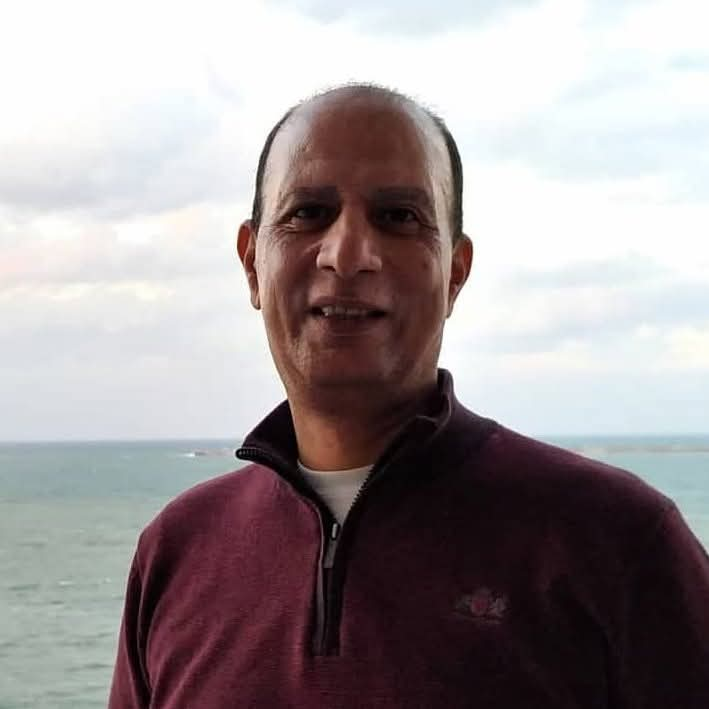
Ashraf El Sabbagh – Biography
Dr. Ashraf El Sabbagh is an Egyptian novelist, short-story writer, journalist, translator, and cultural commentator whose intellectual and creative career bridges Egyptian and Russian cultures. Based in Moscow for many years, he has developed a distinctive literary voice shaped by his experience of life between two societies and his close engagement with political, social, and cultural transformations.
El Sabbagh holds a bachelor’s degree in physics from Cairo University, as well as master’s and doctoral degrees in theoretical and mathematical physics from Moscow State University. He also studied Russian-language teaching and translation, developing a strong command of Russian that enabled him to translate literary, artistic, and critical works into Arabic.
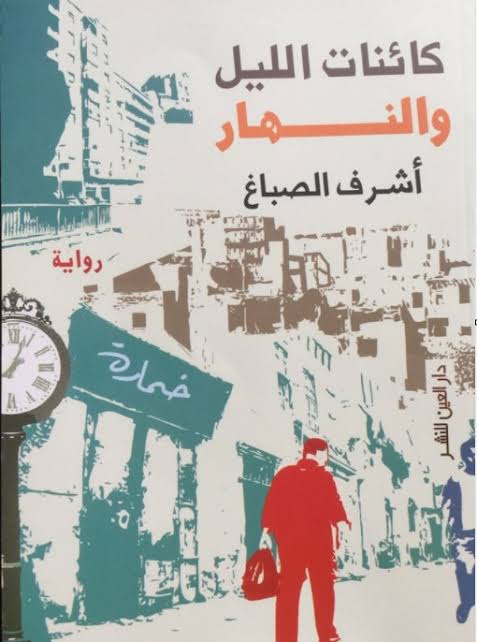
His literary publications include the short-story collections *An Eternal Poem in Yazid ibn Muawiya’s Tavern*, *Kharabish* (Scribbles), and *Thirst*, alongside novels such as *January*, *Fragments from the Life of Abu al-Wafa al-Masri*, *January Winds*, *A Policeman Is Joy*, and *No Keys There*. His writing is distinguished by irony, social observation, experimental narrative approaches, and an interest in the contradictions of contemporary life.
Alongside his literary work, El Sabbagh has built an extensive career in journalism, serving as a correspondent and media professional for several Arab and international outlets. His translations and writings have contributed to cultural dialogue between the Arabic-speaking world and Russia.