 thesilkroadtoday

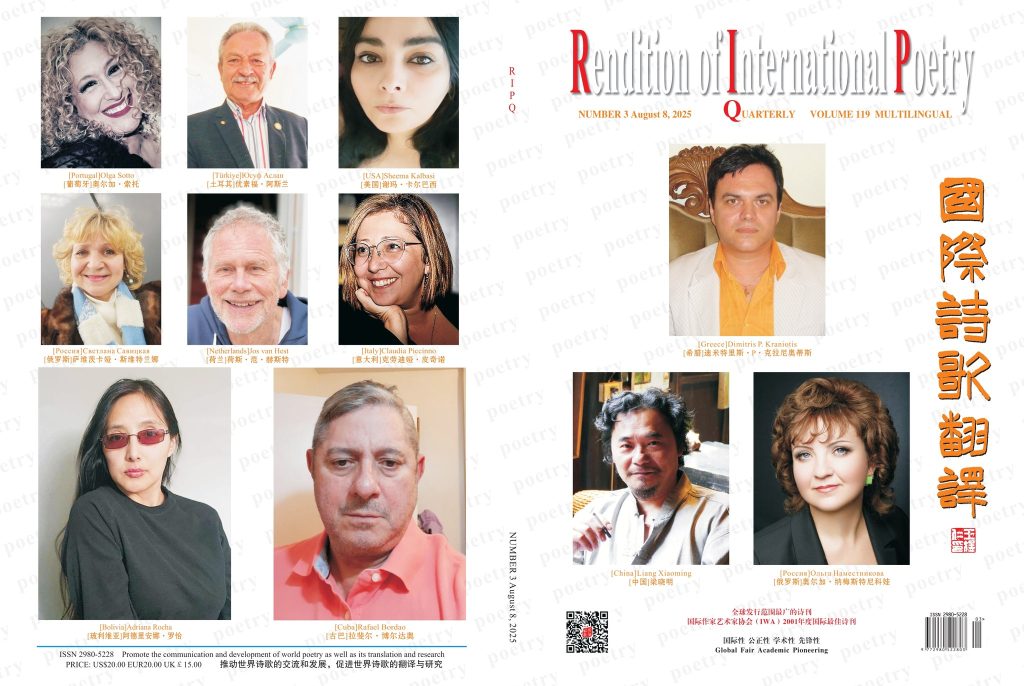
The Rendition of International Poetry Quarterly (Multilingual), a prestigious journal dedicated to the translation and appreciation of global poetry, is proud to announce the release of its third issue, Volume 119, on August 8, 2025. This quarterly publication, launched by the International Poetry Translation and Research Centre (IPTRC) and the World Union of Poetry Magazines, continues its mission to bring together poetic voices from all corners of the globe, transcending linguistic and cultural boundaries.
Highlighted Contributors in Issue #3
This special issue features a diverse collection of voices from established and emerging poets worldwide. From Lisbon to Lima, from Beijing to Belgrade, this edition celebrates the richness and variety of contemporary poetry. Olga Sotto (Portugal) opens the issue with her evocative series Lisbon Dates the Tagus, a reflection on place and memory. Liang Xiaoming (China) offers Heart, a poignant meditation on internal struggles and human connection. Ahmad Al-Khatat (Canada) shares The Rain Trusted My Plan, exploring themes of trust and the fragility of nature. Sheema Kalbasi (USA) contributes Dancing Through Centuries, weaving historical memory and contemporary life in her verses, and Alexis Donoso González (Chile) offers a somber view of death in Of the Dead, while Fei Yifei (China) captures the delicate beauty of tradition in First Time Fishing.
Also featured are works from renowned poets like Rafael Bordao (Cuba), Taghrid Bou Merhi (Lebanon-Brazil), Dimitris P. Kraniotis (Greece), Yusuf Aslan (Turkey), and Claudia Piccinno (Italy), among many others.
This issue showcases poetry in a multitude of languages, including Chinese, Portuguese, Russian, Greek, Arabic, Spanish, and English, among others. The issue highlights the beauty of multilingualism and its role in fostering international understanding and artistic exchange.
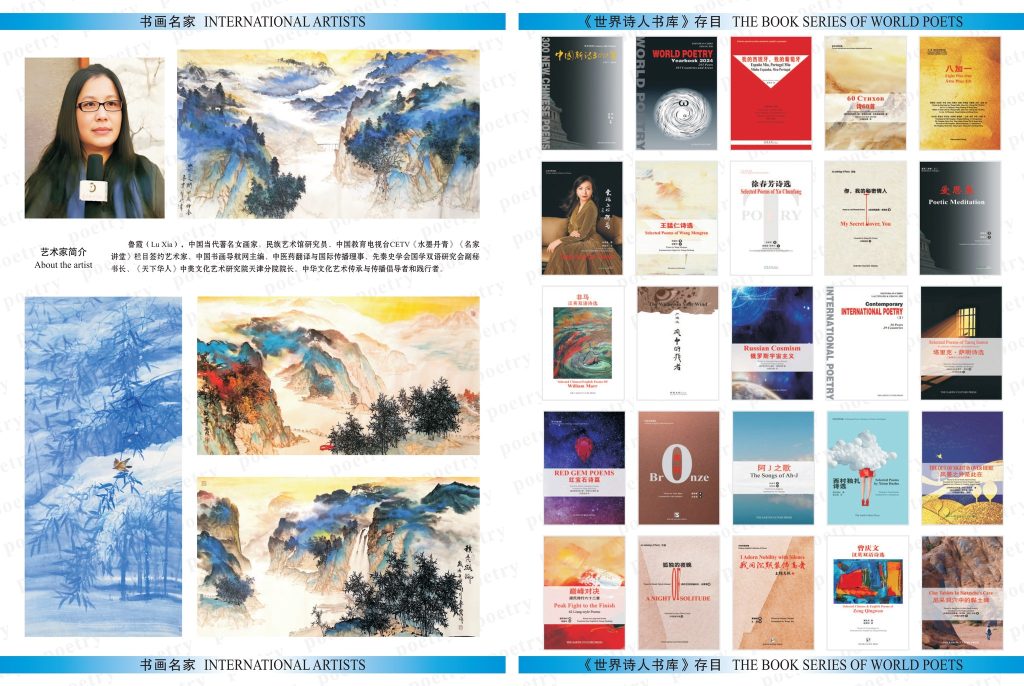
Special Sections in the Current Issue
Special Recommendations: Featuring standout poems and translations, including works by Olga Sotto, Liang Xiaoming, and Ольга Наместникова (Russia). International Poetry: Featuring poems from poets like Sheema Kalbasi (USA) and Fei Yifei (China). Poetry Collection at a Glance: A look at notable poetry collections from poets such as Md Ejaj Ahamed (India) and Adriana Rocha (Bolivia). Profile of Translators: Featuring in-depth profiles of translators including Wu Chunxiao and Bai Mingjiu (China). Master Critics: Critical essays and reflections on poetry from various parts of the world.
Online Interviews
This issue also features interviews with prominent figures in the world of poetry, such as Patrick Sammut (Malta) and Nedeljko Terzic (Serbia), as well as Luis Raúl Calvo (Argentina) in dialogue with Zhang Zhi (China), discussing their experiences as poets and editors.
Global Poetry News
Stay up-to-date with the latest trends in international poetry with updates on events, awards, and publications from the global poetry scene. Highlights include the 7th China Contemporary Poetry Award Ceremony and the release of the 2024 China WeChat Poetry Yearbook.
About Rendition of International Poetry Quarterly (Multilingual)
Rendition of International Poetry Quarterly is a unique journal that publishes poetry in multiple languages, providing a platform for poets to share their voices and ideas regardless of their native tongue. This quarterly publication includes poetry, translations, critical essays, interviews, and updates on the international poetry community. It seeks to bridge cultural divides and promote the exchange of artistic expression across nations.
The journal is published both in print and electronically, offering free access to the digital version to contributors. A subscription to the journal is available for $80 USD or €80 EUR per year (4 issues).
Submit to Rendition of International Poetry
The journal is open for submissions in multiple languages, welcoming contributions from poets, translators, critics, and artists worldwide. For submission guidelines, please visit the editorial website or contact us at:
- Email: wupm2023@126.com
- Phone: +13452083776
Subscription Details: Price: $80 USD or €80 EUR for 1 year (4 issues), Payment: Bank details available on request. For more information or to subscribe, please visit our website: www.renditionpoetry.com
Contact Information
Editorial Office: P.O. Box 031, Guanyinqiao Post Office, Jiangbei District, Chongqing City, China, Postal Code: 400020, Tel: +13452083776, Email: iptrc@163.com