Trending News:THE ROAR OF SILENCEالإعلان عن الجوائز الشعرية في مهرجان طريق الحرير الدولي السادسThe 6th Silk Road International Poetry Festival List of Awards6th Silk Road International Poetry Festival to Honor Poets and Celebrate Cultural Dialogue in Almatyملك الراي ينتصر للفن… وينتصر على الطقس في قرطاجعصفورة الكاف تغرد في افتتاح مهرجان بنزرتفي افتتاح مهرجان قرطاج: نوبة سيدي منصور المعدلة تعانق مناجاة الراي الصوفيةقلعة الزئير … حديث الاحتلال والمقاومةمجلة شعراء العالم (العدد الخاص بآسيا الوسطى) ظلال الجِمال على طريق الحريرGlobal Poets Magazine (Special Central Asia Issue): Camel Shadows on the Silk Roadالكشف عن الأوسمة والشهادات الجديدة لحركة الشعر العظيمNew Medals and Certificates for the Grand Poetic Movementكازاخستان تستضيف المؤتمر العالمي لقراءات شعرية من أجل السلامWorld Peace Poetry Recitation Congress to Convene in Kazakhstanالإفتاء بين سلطة النص وحركة التاريخ: قراءة في كتاب “الإفتاء والتاريخ” لأحمد التوفيقالكونية الروسية… الذاكرة: جديد الشاعرة ألكسندرا أوتشيروفا Russian Cosmism… Memory: A New Poetry Collection by Alexandra OchirovaWale Okediran’s TENANTS OF THE HOUSE Directed by Kunle Afolayan, Heads to African Indigenous Language Film Festival (AILFF) 2026 in Benin Republic.زيد والنملة … العلاقات والدروس WPA in Moscow: Charles de Gaulle and the Spirit of Dialogueجمعية شعوب العالم في الجامعة الأردنية: تعزيز التعاون الأكاديمي والاستعداد للقمة العامة للعالم العربيThe University of Jordan expressed its Readiness to Participate in the World Public Summit: Arab WorldOne Continent, Many Voices: PAWA President’s Historic West African Tourلا تغضب يا نعمان …الإشكال : الملابسات والحلول من الوثيقة إلى الدلالة: قراءة في إبستمولوجيا الكتابة التاريخية عند أحمد التوفيقوكانت البداية عبوراً (قصيدة للشاعرة اللبنانية ريتا نجيب نفاع)إيطاليا… حيث يصبح الشعر وطنًا | الرحلة الأدبية لإسماعيل دياديه حيدرةعش العصافير وقلب الصياد … وحديث الأم وعالم المفاهيم پیشوا کاکائي: هُنا وَ هُناك، نَحْنُ عاشقان نَديّان وَ مَغْمورانEXCLUSIVE INTERVIEW | MARGARITA AL: POETRY IS THE BEGINNING OF EVERYTHING“صندوق أجدادي” … أسراره وعوالمهد. حنان عواد تكتب: حسام حسن … رجولة لا تنحني!WHAT THE WORLD CAN LEARN FROM THE 36TH MEDELLÍN INTERNATIONAL POETRY FESTIVAL“Come Visit Me in My Dreams”: Cristina Somma’s Farewell to the Poet of Naplesإدجار موران… رحلة البحث عن الإنسانThe Bibliotheca Alexandrina: When the Book Meets Civilization and Heritage Becomes a Dialogue with the FutureFarewell to Luciano Somma… When the Man Who Made Poetry a Homeland Departsإيطاليا تودّع شاعر نابوليتكريم الدكتور أشرف أبو اليزيد في قصر ثقافة بنها… عودة شاعر إلى منبع الحلمDr. Ashraf Aboul-Yazid Honored at Benha Culture Palace: A Poet Returns to the Wellspring of His Dreamsفي الدفاع عن الشعراء | قصيدة للشاعر نيلس هافمؤتمر الصحفيين الأفارقة يدين تصاعد الاعتداءات على حرية الصحافة في أفريقياCongress of African Journalists Condemns Rising Attacks on Press Freedom Across AfricaPoetry Ignites the Soul: Margarita Al Celebrates the Spirit of the 36th Medellín International Poetry FestivalPoetry as a Bridge of Compassion at the Medellín International Poetry Festivalملصقات إديث بياف بين شجون الصوت ووجع اللونمهرجان أفلام السعودية في دورته الـ12: حضورٌ عالمي ونجاحٌ يحتذى بهUn Viaggio che Diventa Civiltà: Il Progetto della Via della Seta del Dr. Ashraf Aboul-Yazidسَيَٲتي صَبّاح … قصيدتان للشاعر بيشوا كاكيПутешествие реки в пути: жизненный путь доктора Ашрафа Абуль-Язида и культурный проект «Шёлковый путь»رحلة نهرٍ على سفر جسّدتها سيرة الدكتور أشرف أبو اليزيد ومشروعه الثقافي “طريق الحرير”A River’s Journey in Motion: Dr. Ashraf Aboul-Yazid’s Life and the Silk Road Cultural ProjectMedellín International Poetry Festival 2025–2026: Poetry as Resistance, Solidarity, and Human RenewalMargarita Al: Medellín’s Motto “Toward the Human Spring” Is a Call to Build the Future Through PoetryNPP Rises From Division: “The Party You Once Knew Is No Longer The Party We Have Today”World Assembly of Peoples and the World Organization of Writers Become Partners of the 36th Medellín International Poetry Festival مبادرة «تداول حقوق الأعمال الأدبية» ضمن معرض الاقتصاد الإبداعي لمشرق أفريقيا 2026Trading in Rights for Literary Storytellers in Mashariki Creative Economy Expo 2026جغرافيا الروح: الإنسان والمقاومة في سرديات العباس باجيروف وأشرف أبو اليزيدChinese Poetry and Colombian Verse Meet at the 36th Medellín International Poetry FestivalThe Geography of the Soul: Humanity and Resistance in the Fiction of Al-Abbas and Ashraf Daliصوتٌ فوق الزمن: مارجريتا آل تكتب عن الدورة السادسة والثلاثين لمهرجان ميديين الدولي للشعر«سلاف الثقافية» في عددها العشرين: بين مونديال المال وملاحم الذاكرة الإنسانيةشاعران عربيان في أنطولوجيا منغولية!Motherland: A Global Anthology Celebrating the Poetic Heritage of the Mongolian Worldمن القصيدة إلى الشاشة: كيف وجدت قصيدة «قطار يعبر الصحراء» لأشرف أبو اليزيد حياة جديدة في السينماFrom Poem to Screen: How Ashraf Aboul-Yazid’s “A Train Crosses the Desert” Found a New Life in CinemaLiberia 2029: Why George Weah and Jewel Howard-Taylor Should Rescue LiberiaNext Recital Celebrates International Voices in Poetry and CinemaPoetry as a Space of Freedom: Mexico City Hosts the IX International Poetry Festival “En el Lugar de los Escudos”Hong Kong Literature and Art Strengthens Its Global Literary Presence with an International Editorial and Advisory NetworkKazan Opens International Call for Film Projects at the XXII Altyn Minbar Film Festivalإذاعة الدهماني تستضيف الكاتب والشاعر التونسي محمد الشارنيالشاعرة بونه ندائي تكتب من طهران: حتى يحلَّ الليلArt and Nature Unite in Mexico’s “Echoes of the Desert” Exhibitionحيدرة، الشاعر والفيلسوف، يروي أرضه والمنفى في «تيبراي»Haïdara, Poet and Philosopher, Tells of His Homeland and Exile in TebraeLiterature, Culture, and Heritage Take Center Stage at the 4th International Minangkabau Literary Festival in West Sumatraالشعر والذاكرة والمخطوطات: إسماعيل ديادي حيدرة يحمل روح تمبكتو إلى ساليرنوPoetry, Memory and Manuscripts: Ismaël Diadié Haïdara Brings the Spirit of Timbuktu to Salernoشعر العالم يجتمع افتراضياً في مكسيكو سيتي لمواجهة «زمن اللايقين»Pan-African Writers Association Announces First Longlist for PAWA Poetry Competition 2026Mexico City: World Poets Unite for Peace at the IX International Poetry Festivalصالون دار المعارف الثقافي يحتفي بالمؤرخ المصري الكبير الدكتور أحمد زكريا الشلقنبوءة نَبْض… حين تحوّل الشعر إلى احتفال بالحياة في بعقلينSpotlight on St. Mary’s SHS Entertainment Prefect: Nutifafa Dela Ahiaworالقليوبية تحتفي بأدب الطفل في ملتقى «المصطلح والمفهوم»طبعة ثالثة لرواية “كوم الخادم” للكاتب عبدالعليم حريص: ملحمة غرائبية في القرى المصريةCAJ International Magazine: Africa at the Crossroads of Resilience and RenewalCongress of African Journalists Calls for Urgent Action on Nigeria’s Security CrisisMargarita Al Announces Latin American Poetry Tour Across Brazil and ColombiaFrom Earth to Eternity: A Literary Bridge Through His Pen غريد الشيخ تكتب: قفا نبك من ذكرى واي فاي!د. أشرف أبو اليزيد «مع السامر» على شاشة الفضائية المصرية: الأدب جسرٌ بين الحضارات وطريق الحرير مشروعٌ للإنسانيةDr. Ashraf Aboul-Yazid on Ma’a Al-Samer on Egyptian Satellite TV: Literature as a Bridge Between Civilizations and the Silk Road as a Project for Humanity«100 книг авторов» — культурный проект под кураторством Джойи Ломасти и Эмануэле Маркуччо100 كتاب لمائة مؤلف – مشروع ثقافي تدشنه جيويا لوماستي وإيمانويل ماركوتشوThe Cultural Project “100 Libri d’Autore”, Launched by Gioia Lomasti and Emanuele MarcuccioAshraf Aboul-Yazid’s Poetry Collection in Russian Presented to the National Library of Brazilإهداء ديوان أشرف أبو اليزيد باللغة الروسية إلى المكتبة الوطنية البرازيلية
Trending News:THE ROAR OF SILENCEالإعلان عن الجوائز الشعرية في مهرجان طريق الحرير الدولي السادسThe 6th Silk Road International Poetry Festival List of Awards6th Silk Road International Poetry Festival to Honor Poets and Celebrate Cultural Dialogue in Almatyملك الراي ينتصر للفن… وينتصر على الطقس في قرطاجعصفورة الكاف تغرد في افتتاح مهرجان بنزرتفي افتتاح مهرجان قرطاج: نوبة سيدي منصور المعدلة تعانق مناجاة الراي الصوفيةقلعة الزئير … حديث الاحتلال والمقاومةمجلة شعراء العالم (العدد الخاص بآسيا الوسطى) ظلال الجِمال على طريق الحريرGlobal Poets Magazine (Special Central Asia Issue): Camel Shadows on the Silk Roadالكشف عن الأوسمة والشهادات الجديدة لحركة الشعر العظيمNew Medals and Certificates for the Grand Poetic Movementكازاخستان تستضيف المؤتمر العالمي لقراءات شعرية من أجل السلامWorld Peace Poetry Recitation Congress to Convene in Kazakhstanالإفتاء بين سلطة النص وحركة التاريخ: قراءة في كتاب “الإفتاء والتاريخ” لأحمد التوفيقالكونية الروسية… الذاكرة: جديد الشاعرة ألكسندرا أوتشيروفا Russian Cosmism… Memory: A New Poetry Collection by Alexandra OchirovaWale Okediran’s TENANTS OF THE HOUSE Directed by Kunle Afolayan, Heads to African Indigenous Language Film Festival (AILFF) 2026 in Benin Republic.زيد والنملة … العلاقات والدروس WPA in Moscow: Charles de Gaulle and the Spirit of Dialogueجمعية شعوب العالم في الجامعة الأردنية: تعزيز التعاون الأكاديمي والاستعداد للقمة العامة للعالم العربيThe University of Jordan expressed its Readiness to Participate in the World Public Summit: Arab WorldOne Continent, Many Voices: PAWA President’s Historic West African Tourلا تغضب يا نعمان …الإشكال : الملابسات والحلول من الوثيقة إلى الدلالة: قراءة في إبستمولوجيا الكتابة التاريخية عند أحمد التوفيقوكانت البداية عبوراً (قصيدة للشاعرة اللبنانية ريتا نجيب نفاع)إيطاليا… حيث يصبح الشعر وطنًا | الرحلة الأدبية لإسماعيل دياديه حيدرةعش العصافير وقلب الصياد … وحديث الأم وعالم المفاهيم پیشوا کاکائي: هُنا وَ هُناك، نَحْنُ عاشقان نَديّان وَ مَغْمورانEXCLUSIVE INTERVIEW | MARGARITA AL: POETRY IS THE BEGINNING OF EVERYTHING“صندوق أجدادي” … أسراره وعوالمهد. حنان عواد تكتب: حسام حسن … رجولة لا تنحني!WHAT THE WORLD CAN LEARN FROM THE 36TH MEDELLÍN INTERNATIONAL POETRY FESTIVAL“Come Visit Me in My Dreams”: Cristina Somma’s Farewell to the Poet of Naplesإدجار موران… رحلة البحث عن الإنسانThe Bibliotheca Alexandrina: When the Book Meets Civilization and Heritage Becomes a Dialogue with the FutureFarewell to Luciano Somma… When the Man Who Made Poetry a Homeland Departsإيطاليا تودّع شاعر نابوليتكريم الدكتور أشرف أبو اليزيد في قصر ثقافة بنها… عودة شاعر إلى منبع الحلمDr. Ashraf Aboul-Yazid Honored at Benha Culture Palace: A Poet Returns to the Wellspring of His Dreamsفي الدفاع عن الشعراء | قصيدة للشاعر نيلس هافمؤتمر الصحفيين الأفارقة يدين تصاعد الاعتداءات على حرية الصحافة في أفريقياCongress of African Journalists Condemns Rising Attacks on Press Freedom Across AfricaPoetry Ignites the Soul: Margarita Al Celebrates the Spirit of the 36th Medellín International Poetry FestivalPoetry as a Bridge of Compassion at the Medellín International Poetry Festivalملصقات إديث بياف بين شجون الصوت ووجع اللونمهرجان أفلام السعودية في دورته الـ12: حضورٌ عالمي ونجاحٌ يحتذى بهUn Viaggio che Diventa Civiltà: Il Progetto della Via della Seta del Dr. Ashraf Aboul-Yazidسَيَٲتي صَبّاح … قصيدتان للشاعر بيشوا كاكيПутешествие реки в пути: жизненный путь доктора Ашрафа Абуль-Язида и культурный проект «Шёлковый путь»رحلة نهرٍ على سفر جسّدتها سيرة الدكتور أشرف أبو اليزيد ومشروعه الثقافي “طريق الحرير”A River’s Journey in Motion: Dr. Ashraf Aboul-Yazid’s Life and the Silk Road Cultural ProjectMedellín International Poetry Festival 2025–2026: Poetry as Resistance, Solidarity, and Human RenewalMargarita Al: Medellín’s Motto “Toward the Human Spring” Is a Call to Build the Future Through PoetryNPP Rises From Division: “The Party You Once Knew Is No Longer The Party We Have Today”World Assembly of Peoples and the World Organization of Writers Become Partners of the 36th Medellín International Poetry Festival مبادرة «تداول حقوق الأعمال الأدبية» ضمن معرض الاقتصاد الإبداعي لمشرق أفريقيا 2026Trading in Rights for Literary Storytellers in Mashariki Creative Economy Expo 2026جغرافيا الروح: الإنسان والمقاومة في سرديات العباس باجيروف وأشرف أبو اليزيدChinese Poetry and Colombian Verse Meet at the 36th Medellín International Poetry FestivalThe Geography of the Soul: Humanity and Resistance in the Fiction of Al-Abbas and Ashraf Daliصوتٌ فوق الزمن: مارجريتا آل تكتب عن الدورة السادسة والثلاثين لمهرجان ميديين الدولي للشعر«سلاف الثقافية» في عددها العشرين: بين مونديال المال وملاحم الذاكرة الإنسانيةشاعران عربيان في أنطولوجيا منغولية!Motherland: A Global Anthology Celebrating the Poetic Heritage of the Mongolian Worldمن القصيدة إلى الشاشة: كيف وجدت قصيدة «قطار يعبر الصحراء» لأشرف أبو اليزيد حياة جديدة في السينماFrom Poem to Screen: How Ashraf Aboul-Yazid’s “A Train Crosses the Desert” Found a New Life in CinemaLiberia 2029: Why George Weah and Jewel Howard-Taylor Should Rescue LiberiaNext Recital Celebrates International Voices in Poetry and CinemaPoetry as a Space of Freedom: Mexico City Hosts the IX International Poetry Festival “En el Lugar de los Escudos”Hong Kong Literature and Art Strengthens Its Global Literary Presence with an International Editorial and Advisory NetworkKazan Opens International Call for Film Projects at the XXII Altyn Minbar Film Festivalإذاعة الدهماني تستضيف الكاتب والشاعر التونسي محمد الشارنيالشاعرة بونه ندائي تكتب من طهران: حتى يحلَّ الليلArt and Nature Unite in Mexico’s “Echoes of the Desert” Exhibitionحيدرة، الشاعر والفيلسوف، يروي أرضه والمنفى في «تيبراي»Haïdara, Poet and Philosopher, Tells of His Homeland and Exile in TebraeLiterature, Culture, and Heritage Take Center Stage at the 4th International Minangkabau Literary Festival in West Sumatraالشعر والذاكرة والمخطوطات: إسماعيل ديادي حيدرة يحمل روح تمبكتو إلى ساليرنوPoetry, Memory and Manuscripts: Ismaël Diadié Haïdara Brings the Spirit of Timbuktu to Salernoشعر العالم يجتمع افتراضياً في مكسيكو سيتي لمواجهة «زمن اللايقين»Pan-African Writers Association Announces First Longlist for PAWA Poetry Competition 2026Mexico City: World Poets Unite for Peace at the IX International Poetry Festivalصالون دار المعارف الثقافي يحتفي بالمؤرخ المصري الكبير الدكتور أحمد زكريا الشلقنبوءة نَبْض… حين تحوّل الشعر إلى احتفال بالحياة في بعقلينSpotlight on St. Mary’s SHS Entertainment Prefect: Nutifafa Dela Ahiaworالقليوبية تحتفي بأدب الطفل في ملتقى «المصطلح والمفهوم»طبعة ثالثة لرواية “كوم الخادم” للكاتب عبدالعليم حريص: ملحمة غرائبية في القرى المصريةCAJ International Magazine: Africa at the Crossroads of Resilience and RenewalCongress of African Journalists Calls for Urgent Action on Nigeria’s Security CrisisMargarita Al Announces Latin American Poetry Tour Across Brazil and ColombiaFrom Earth to Eternity: A Literary Bridge Through His Pen غريد الشيخ تكتب: قفا نبك من ذكرى واي فاي!د. أشرف أبو اليزيد «مع السامر» على شاشة الفضائية المصرية: الأدب جسرٌ بين الحضارات وطريق الحرير مشروعٌ للإنسانيةDr. Ashraf Aboul-Yazid on Ma’a Al-Samer on Egyptian Satellite TV: Literature as a Bridge Between Civilizations and the Silk Road as a Project for Humanity«100 книг авторов» — культурный проект под кураторством Джойи Ломасти и Эмануэле Маркуччо100 كتاب لمائة مؤلف – مشروع ثقافي تدشنه جيويا لوماستي وإيمانويل ماركوتشوThe Cultural Project “100 Libri d’Autore”, Launched by Gioia Lomasti and Emanuele MarcuccioAshraf Aboul-Yazid’s Poetry Collection in Russian Presented to the National Library of Brazilإهداء ديوان أشرف أبو اليزيد باللغة الروسية إلى المكتبة الوطنية البرازيلية
Poet, novelist, and translator Dr. Ashraf Aboul-Yazid believes that establishing an Arab critical school—one with its own foundations, theoretical pillars, and practical tools—must begin with a serious critical undertaking grounded in respect for our heritage and a renewed reading of it. Western criticism dismantled and analyzed its own texts before it could build its schools. “We must read our texts from within, not by borrowing hats and coats that do not belong to them. I am also inclined to explore the relationship between a human being and his time—how fear turns into will, and exile into a new homeland for the imagination.”
How would you introduce the novelist and writer Dr. Ashraf Aboul-Yazid?
My fiction is preoccupied with tracing human lives lived away from home—whether the person is a transient traveler, a seasoned wanderer, a daring adventurer, a resident scholar, a working migrant, or a compelled refugee. Since life itself is a journey, and since I have always been enamored with travel, I have come to believe that the image of a human being outside his homeland deserves contemplation. It need not be confined to sociological studies alone; it can also deepen the artistic exploration within narrative writing.
Let me add that my engagement with this kind of writing arose from an inner sense that estrangement is not merely a geographical shift; it is a mirror that reveals the layers of the human being—his strengths and frailties, his tribulations and moments of rising. A person outside his homeland becomes someone else—renewed, wounded, and rediscovering himself. Thus, when I present myself as a novelist, I see my writing as an ongoing quest for this transformed human—the one shaped by the roads he walks, the houses that reshape him, and the times that embody his life.
What are the main issues you explore in your creative texts?
My writings mirror my concerns. Just as I have been preoccupied with portraying the human being outside his homeland, my passion for travel led me to read many autobiographical journeys of notable figures—such as The Travel Memoirs of Sheikh Mustafa Abd al-Raziq during his Parisian journey, and The Folly of Youth by Bayram al-Tunsi during his exile. As for poetry, it is my personal voyage.
I am also drawn to revealing the human relationship with time—how fear transforms into resolve, how exile becomes a new homeland for the imagination, and how language becomes a bridge through which the reader crosses toward himself. Amid all this, poetry remains the most intimate companion—the voice of the self when it removes its masks, and the endless notebook of the journey.
Which literary schools have influenced your writing?
Just as I practiced various forms of literary expression—poetry, prose, and translation—my reading library (in Arabic) has been rich. I can mention, as examples rather than a complete list: in fiction, I enjoyed the works of Yahya Haqqi and Naguib Mahfouz; in poetry, I admired Salah Abdel Sabour and Amal Dunqul; and in the arts, I was inspired by Mohieddine Ellabbad and Tharwat Okasha. Their influence was not superficial but served as sources of spiritual and aesthetic illumination:
Yahya Haqqi taught me the sensitivity of living detail; Naguib Mahfouz taught me how to construct a complete fictional world; Salah Abdel Sabour and Amal Dunqul transformed poetry, for me, into something more than language—it became a stance, a vision, and the ability to open a wound so that it may give light.
In the arts, Mohieddine Ellabbad was a school of complex simplicity, while Tharwat Okasha opened before me the gates of visual awareness and cultural history. All these influences formed within me a river of inspirations that blended with my personal experience, shaping a writing that always seeks the beauty of meaning—and the meaning within beauty.
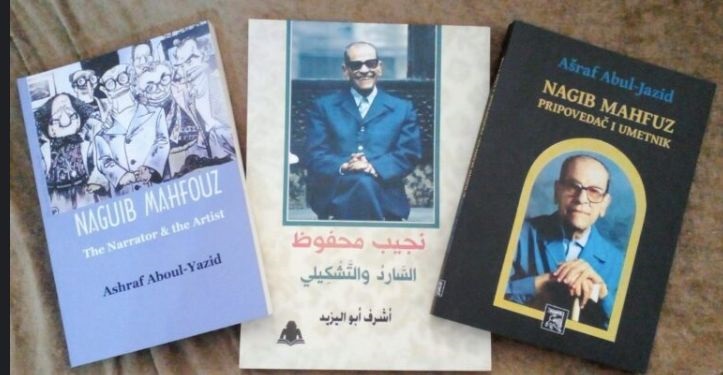
Naguib Mahfouz, The Narrator and the Artist in Arabic, English and Serbian
Do we need today an Arab critical school with its own theoretical and practical foundations?
I believe this must begin with a serious critical endeavor grounded in respect for our heritage and a renewed reading of it. Western criticism built its schools only after it had dismantled and analyzed its texts. We must read our own texts from within, not by borrowing garments from others.
And if we delve deeper into this question, what first comes to mind is the pioneering role of One Thousand and One Nights (Arabian Nights) —that millennia-long work which is not merely a book of tales but an early narrative project in structuring time, inventing the marvelous, shaping characters, blending voices, and layering narrative levels. This work inspired many of the world’s great writers—from Borges to Márquez, from Goethe to Pushkin—and its impact reached modern European narrative schools.
How then can we speak of an Arab critical school without reclaiming this narrative legacy and rereading it anew—seeing it as a foundational fabric of the global novel, not merely a heritage text placed on a shelf?
The need for an Arab critical school is not an intellectual luxury but a necessity for regaining confidence in our own aesthetic sources. To read our texts through an Arab critical lens is to restore value to our achievements, to build analytical tools rooted in the nature of our language, the history of our storytelling, and the uniqueness of our imagination. It is to ask our own questions—not borrowed ones.
A serious critical enterprise begins only when we believe that we possess a rich heritage capable of generating schools and theories, and that Arabian Nights—along with many other classical texts—is not a moment locked in the past but a gateway through which we may overlook a future of Arab criticism worthy of our legacy, attuned to the world, and capable of contributing to it as well.
How do you assess the current Arab critical movement? Has it kept pace with the vast number of texts published today?
One cannot speak about the Arab critical movement today without acknowledging a striking paradox: on one hand, the literary scene is witnessing an explosion in the number of published works—novels appearing daily, and young voices entering the scene with determination as they search for their own sound. On the other hand, criticism seems to be retreating from its historical role as a revealer of innovative experiences and a monitor of new visions.
Critics, in many cases, have become followers of the dominant award circuits, chasing the texts produced by major publishing institutions instead of shaping their own reading maps and reorganizing the scene according to the criterion of creativity rather than the criterion of popularity. Criticism—meant to be a light that moves ahead of the text—has, in many instances, fallen behind it, focusing on what is already celebrated while overlooking writings that reinvent language and experience.
This dependency on the climate of prizes has normalized the mainstream and marginalized genuine narrative and poetic adventures. Rare is the critic who dares to discover an unseen new voice or restore value to works deprived of marketing machinery.
Thus, it can be said that the Arab critical movement has not kept pace with this immense publishing flow, for it has lost its original courage—the courage of discovery, of divergence, and of shaping taste rather than following it. Criticism is still capable of rising again, but it needs an intellectual independence that restores its role as the mind of creativity rather than the echo of its institutions.
What are your future projects and the key issues you wish to write about?
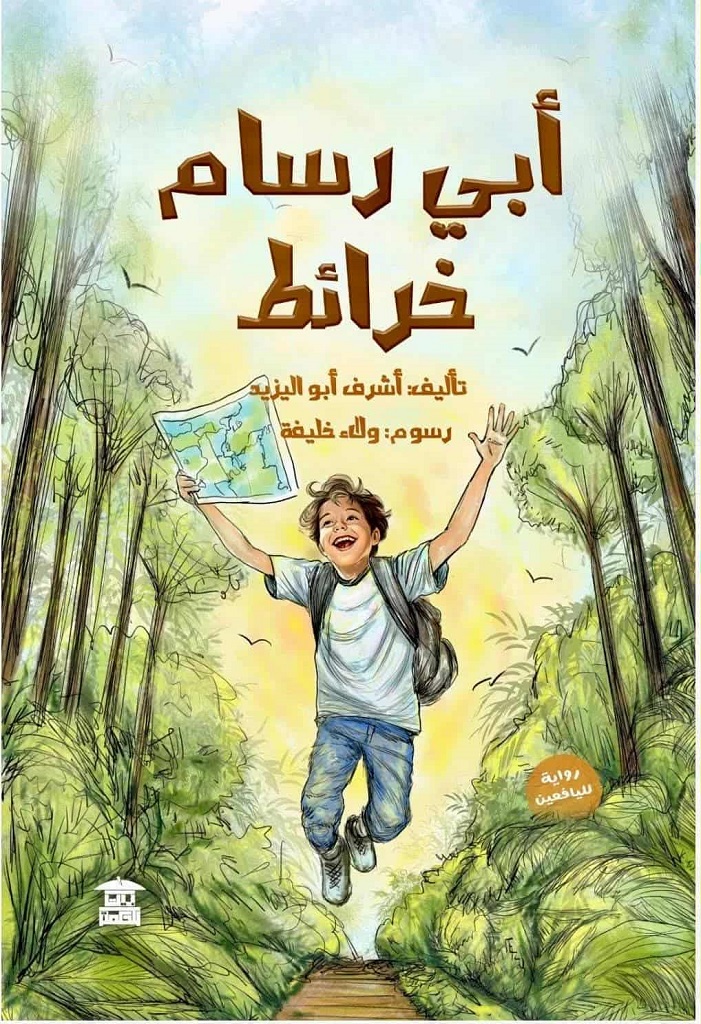
In every creative sea there is a ship preparing to unfurl its sails, and today I see more than one vessel ready to set out. I am completing my fifth novel, an extension of my ongoing questions about the transformed expatriate human being—following my previous novels Shamawes, 31, A Backyard Garden, and The Interpreter. In parallel, I continue work on a new book for young readers, relying on the blend I love and uphold: history breathing through adventure, science disguised in the pleasure of storytelling, and language becoming a gateway to shaping consciousness.
I also continue my work in translation, currently translating several creative works that cross geographical borders, in keeping with my conviction that true literature resides not in a single homeland, but in the shared human experience.
Alongside this, I have begun a series of interviews through which I hope to revive what I began nearly two decades ago in my television program The Other—a program through which I hosted cultural icons from fifty countries and built bridges across distant shores. Whereas in the past I traveled to meet them, today I meet them through the virtual realm, where Creative Silk Road Encounters has become a new window for cultural messages to breathe and for spiritual and intellectual maps to take shape.
As for the issues I wish to explore, they include transformed identities, the memory of place, and the intersections of the human journey as it confronts estrangement and rediscovers itself through language, dialogue, and the beauty of difference.
Perhaps my most important critical endeavor is the forthcoming publication of my doctoral dissertation—prepared as a book to be released next year—under the same title: Crisis Management in the Arabic Novel and Its Social Impact.
How do you view the world of literary prizes in your country and across the Arab region?
The world of literary awards is a thorny realm, its questions intertwined like threads on an old loom. The perplexity begins with the formation of judging panels and the considerations that sometimes accompany them—considerations that belong less to literature than to maps of influence and negotiated distributions among prospective winners. Then comes the problem of the frantic pursuit of awards, a pursuit that drives some writers to tailor their works in advance to the measures of certain prizes, as though creativity has come to be written according to a single template rather than the freedom of the spirit and the uniqueness of experience. Thus, critical taste—meant to shape its criteria from the essence of texts—becomes a taste shaped under the shadow of awards, not to subject them to critique but to submit to them.
I speak neither from the position of a disgruntled writer nor from that of a defeated or resentful critic. By God’s grace, I have received awards and honors in Korea, the UAE, Kuwait, Turkey, Nigeria, Russia, Egypt, Kazakhstan, and elsewhere. I also regard the study of my work in academic dissertations at international universities, the inclusion of my texts in educational curricula, and my membership on international judging panels as another form of recognition—no less meaningful than material prizes.
Yet I speak as an observer who sees the scene as it is: a landscape that needs greater transparency, boldness, and a return to the essence of literature itself—before anything else.
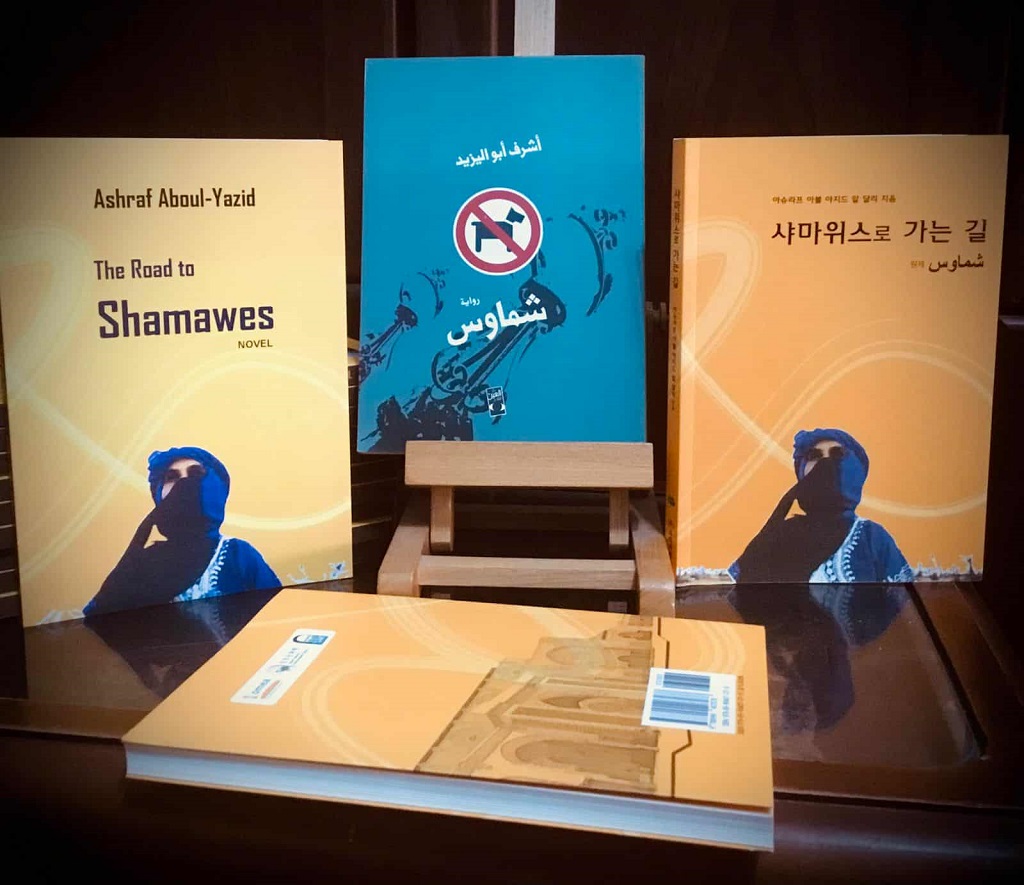
Shamawe in Arabic, English and Korean
Why have we not yet competed with world literature? And when will our texts be translated and cross our national and Arab borders? How do your experience—and the experiences of others—resonate within this horizon?
When the question of competing with world literature is raised, its essence does not lie in a lack of talent or a scarcity of creativity. Rather, it lies in the absence of an integrated system capable of presenting this creativity to the world, carrying it from the local to the universal with confidence and clarity.
My own works have been translated into Spanish, English, Korean, German, Russian, Azeri, Sindhi, Serbian, Turkish, Persian, Urdu, and Malayalam—and soon into French. My books have been published in capitals stretching from Cairo, Beirut, Dubai, and Kuwait to Moscow, Seoul, Istanbul, Berlin, and San José, passing through Mumbai, Karachi, Baku, and beyond. From this, I can say that, on a personal level, international reach is a reality, not a possibility.
Yet I believe that universality does not lie in travel or translation alone, but in impact—in a text’s ability to crack the familiar, or to open a new window in human consciousness. The world is not searching for a voice that resembles other voices; it seeks the one that is different, capable of adding a fresh tone to the global chorus.
Thus the real question, for me and for all writers, remains: Has our presence beyond our borders made a difference? Has it left its ember glowing in the mind of the distant reader? For universality, at its core, is not that a book reaches the reader, but that it reaches his heart, and remains alive after the last page is turned.
My Father, the Mapmaker,
Why children’s literature? What motivates you to write for and about young readers?
My constant motivation in writing for young readers has been to craft stories that weave together history, science, adventure, and linguistic discovery—stories that speak to the mind, not merely to the ear.
More specifically, I believe the issues I tackle do not stop at the borders of place or identity; they extend to the very question of knowledge: How does a child learn?How does the young expatriate preserve memory?How do we write an adventure that links imagination to heritage, blending language lessons with the enchantment of narrative and the excitement of science?
Translation, Arabization, and the Horizon of Developing Arab Creativity
Arab creativity cannot breathe its vast horizons without two essential wings: translation and Arabization. These are the pathways that allow texts to cross the boundaries of their language, to enter a living dialogue with other cultures, and at the same time to welcome the experiences of other nations—enriching our imagination and sharpening our tools.
Thus, the development of Arab creativity begins with a firm belief that translation is not a technical act, but a comprehensive civilizational project.
I long for large-scale national translation initiatives—projects with a clear vision and a sustainable strategy, grounded in the understanding that when knowledge is transmitted with fidelity and imagination, it transforms from a text into a force of change. The nations that rose to prominence placed translation at the heart of their cultural endeavor. Today, we are in greater need than ever of institutions that translate, Arabize, and redefine our relationship with knowledge, rather than relying solely on individual efforts, however valuable.
At the heart of such a project stands the translator—who must be given the place worthy of his role: honored both intellectually and materially, recognized as a cultural frontline soldier, not a shadow behind the text. A translator is not a carrier of words but a builder of bridges; without him, literature remains local no matter how beautiful it is.
Only when strong institutions arise—institutions that elevate the value of translation, honor the translator, and extend bridges to the world—will Arab creativity step out of its isolation, transforming from a local wave into a universal voice capable of contributing, not merely appearing on the margins.
A Short Story By Sherif Abd ElMegid, Egypt Her footsteps quickened, as steady and measured as the cadence of a military march. She kept turning her head, alert and terrified,…
6th Silk Road International Poetry Festival to Honor Poets and Celebrate Cultural Dialogue in Almaty
Almaty, Kazakhstan —On 26 July 2026, the Award Ceremony of the 6th Silk Road International Poetry Festival will take place from 3:00 to 6:00 p.m. at the Almaty Museum of…
 thesilkroadtoday