Trending News:BOOK REVIEW: THE ROAD TO SHAMAWES افتتاح معرض «جنكيز خان وعالم المغول» في برلينباكو: حفل تقديم الطبعة الأذربيجانية من رواية «شماوس» للكاتب أشرف أبو اليزيد Baku: Presentation Ceremony Held for the Azerbaijani Edition of Ashraf Dali’s Novel Shamawesجو تونس.. بينالي الفن المعاصرنهى سويد تكتب “… ثم ّ زغرودة امرأة”إقامة حفل تقديم كتاب «كيف عرفتُك» في مركز سومقاييت للمقام الموسيقيديجول ـ بورقيبة.. وصراع الإرادات في بنزرتحلمت حلما غريبا … جدلية الأحلام وواقع اليقظةلطيفة حرباوي.. حين تضحك القصيدة بسن واحدةFrom Ake to Stockholm: Revisiting Wole Soyinka’s Journey from Childhood Memories to Global Literary LegacyLittle Stars, Big Stories: My First English Storybook Introduces Young Learners to the Joy of Readingمن شارعٍ في القاهرة إلى داكار: الصحافة السنغالية تحتفي بالرحلة الأدبية للشاعر المصري أشرف أبو اليزيدFrom a Street in Cairo to Dakar: Senegalese Press Highlights Egyptian Poet Ashraf Aboul-Yazid’s Literary Journeyقراءة تشكيلية مختصرة: معرض”ناس من شارعنا” للفنان القدير عبدالرازق عكاشةRabat Celebrates the Worlds of Booksالرباط تحتفي بعوالم الكتاب: حوار الثقافات وقراءات الشباب واحتفاء شعري بمحمود درويشحيفا والنورس …آفاق الأحاديث والوقائع«ناس من شارعنا».. عبد الرازق عكاشة يحتفي بشعرية الحياة اليومية في معرض جديدKorean Business Delegation to Attend Arab-African Investment Summit in Egyptمع وولي سوينكاWith Wole Soyinkaزيتونة تالا … جدلية المسار والذات الطفوليةGranada Celebrates Sahiliana 2026: 680 Years of Literary Heritage Connecting Mali and Spainفنانٌ شامخٌ بموقفه الوطنيGlobal Call for Poems: “Hearts Poetry Connects Across Borders” Invites Poets to Explore the Awakening of the SoulRabat Celebrates Its Role as UNESCO World Book Capital 2026 with the Opening of the House of Book Worldsالمكحلة وطائر الرفرافThe Royal Academy of Morocco Launches the House of the Worlds of Booksأكاديمية المملكة المغربية تطلق «دار عوالم الكتاب»صوتُ الصحراء الذي يسكن المنفىThe Voice of the Desert That Inhabits Exileالعملاق الخجول … ثنائية الطرح والحلولحوار مع الفنانة التشكيلية منار مجدي «كوبا بويزيا» تنقل الشعر إلى قلب حي كازينو ديبورتيفو في هافاناجائزة WOW لعام 2026: تشاو شوي — الشعر جسرٌ بين العوالممهرجان كستريتش الدولي للشعر يفتتح دورته الثانية عشرة في كينياA Day of Friendship in Riogembo Village, Kenyaيومٌ من الصداقة في قرية ريوجيمبوالكَوّنُ في ذاتِهِ … قصيدة للشاعر پیشوا کاکائيPOET AND THE WARTales from Our Streets: The Poetry of Everyday Life in Abdel Razek Okasha’s Parisحكايات من شارعنا: شعرية الحياة اليومية في باريس عبد الرازق عكاشةMadam Sabena: THE VOICE OF MOTHERSRANTAU AND RHYTHM: WHEN POETRY BECOMES A HOMEشعر بلا حدود: مهرجان كستريتش الدولي للشعر في دورته الثانية عشرة (حوار مع د. كريستوفر أوكيموا)Freedom, Responsibility, and Renewal: Literature Must Remain Humanity’s Most Courageous ConversationGolden Papyrus Award Announces Three New Laureates from Syria, Saudi Arabia, and Kenyaجائزة البردي الذهبي تعلن أسماء ثلاثة فائزين جدد من سوريا والسعودية وكينياThey Were Returning HomeCaroline Laurent Turunc… The Poetess of Light brings her story from Antakya to children around the worldكارولين لوران تورونك… شاعرة النور تحمل حكايتها من أنطاكية إلى أطفال العالمJapanese Ambassador Ueno Atsushi Welcomes Natalia Tjahja Ahead of Asian Para Games Aichi NagoyaKEDA Welcomes President El-Sisi’s Visit to South Korea, Hailing a New Era of Strategic Partnership and Economic Cooperationاتحاد الكتاب الأذربيجانيين يحتفي الترجمة الأذرية لرواية أشرف أبو اليزيد «شماوس» في باكوAzerbaijani Writers’ Union to Celebrate Azerbaijani Translation of Ashraf Aboul-Yazid’s Novel Shamawes in Bakuالمفتاح والمزاح … السلوكيات : الطرح والحلولبستان حسام … رسالة العمل وآفاق الاتقانMemory That Defeats Death – An Interview with Alexandra Ochirovaالذاكرة التي تنتصر على الموتثلاث ليالٍ وليلة… مجموعة قصصية تستكشف عتمات النفس البشرية Poetry Without Borders: Inside the 12th Kistrech International Poetry Festival (Interview)SAHILIANA: An Anthology of the Poetry of Es-Sahili and His Descendants Celebrating 680 Years of Poetic Heritageالاتحاد الاقتصادي الأوراسي – الإمارات العربية المتحدة: جسر تجاري جديد لأوراسيا الكبرىآثار مصر القديمة في قازان تستعيد حياة جديدةخلف الشاشة … الهواية وخارطة الطريق فوفو جرة حكي … جدلية الطرح والحلول Maldives Sports Minister and Indonesia’s NOC Stand Behind 100 CTFP for Para AthletesTwo Significant Publications on Indian Architecture, Urbanism and Heritageشاعر الكلمة المقاتلة … إفندي منصوروفيتش كابييفبعد سبع سنوات على وفاته.. إحياء ذكرى الشاعر المكسيكي إنريكي سيرفين بقراءة قصائد في «إل خونكو»فيل في الغرفة!100 Libri d’Autore: A Literary Bridge of Words Connecting Authors, Readersحين تجلس الكاميرا في مقعد القاضيПамять, время, семья, история и Родинаقراءة نقدية في ديوان ألكسندرا أوتشيروفا “الكونية الروسية: الذاكرة”A Critical Reading of Alexandra Ochirova’s Russian Cosmism: MemoryPoetry, Academia and the Silk Road Converge at Shaanxi CollegeNutifafa Takes the Mic at UniMAC Freshers’ JamInterview with Paola Carletti, conducted by Gioia LomastiInterview with Simona Righi – Siris Mosaiciأولوغبيك يسداوليتوف (قصائد مختارة)الأمثال الشعبية في المنطقة الشرقية للمملكة المغربية … حين تتحول الذاكرة الشعبية إلى كتابPAWA Quarterly Newsletter Highlights a Dynamic Season of African Literary and Cultural Engagementسجادة السعادة … ثقافة العمل والتدين تقديم كتاب الأكاديمية ألكسندرا أوتشيروفا «الكونية الروسية… الذاكرة» في القاعة البيضاء بأكاديمية الفنون الروسيةPRESENTATION OF THE BOOK BY RAH ACADEMICIAN A. V. OCHIROVA, “RUSSIAN COSMISM… MEMORY,” IN THE WHITE HALL OF THE RUSSIAN ACADEMY OF ARTSKnowledge, Character and National Service: The Educational Thought of Swami Ramanand TirthHomeland : A New Anthology Brings Together 140 Poets of Mongol HeritageMongolia and Egypt Explore New Horizons for Agricultural CooperationThe Rhythm of Vietnam to Celebrate 2026 International Translation Day Award Recipients in Ho Chi Minh CityKistrech International Poetry Festival 2026: Poets from Around the World Gather in Kenyaكينيا: ثلاثة شعراء عرب في مهرجان كستريتش الدولي للشعرKistrech International Poetry Festival: Kenya Welcomes the World Through PoetryLITERARY OCTOBER OF CUBAPOESIA BRINGS WRITERS, POETRY AND COMMUNITY CULTURE TO HAVANAAn Albanian Translation of a Nepalese ArticleMOROCCO TO LAUNCH HOUSE OF BOOK WORLDS IN RABAT, CREATING A PERMANENT HOME FOR GLOBAL LITERARY EXCHANGEحكاية خيط … حديث الحرف وأفقها ثلاثة ثعالب ذكية … جدلية الطقوس والمعارف
Trending News:BOOK REVIEW: THE ROAD TO SHAMAWES افتتاح معرض «جنكيز خان وعالم المغول» في برلينباكو: حفل تقديم الطبعة الأذربيجانية من رواية «شماوس» للكاتب أشرف أبو اليزيد Baku: Presentation Ceremony Held for the Azerbaijani Edition of Ashraf Dali’s Novel Shamawesجو تونس.. بينالي الفن المعاصرنهى سويد تكتب “… ثم ّ زغرودة امرأة”إقامة حفل تقديم كتاب «كيف عرفتُك» في مركز سومقاييت للمقام الموسيقيديجول ـ بورقيبة.. وصراع الإرادات في بنزرتحلمت حلما غريبا … جدلية الأحلام وواقع اليقظةلطيفة حرباوي.. حين تضحك القصيدة بسن واحدةFrom Ake to Stockholm: Revisiting Wole Soyinka’s Journey from Childhood Memories to Global Literary LegacyLittle Stars, Big Stories: My First English Storybook Introduces Young Learners to the Joy of Readingمن شارعٍ في القاهرة إلى داكار: الصحافة السنغالية تحتفي بالرحلة الأدبية للشاعر المصري أشرف أبو اليزيدFrom a Street in Cairo to Dakar: Senegalese Press Highlights Egyptian Poet Ashraf Aboul-Yazid’s Literary Journeyقراءة تشكيلية مختصرة: معرض”ناس من شارعنا” للفنان القدير عبدالرازق عكاشةRabat Celebrates the Worlds of Booksالرباط تحتفي بعوالم الكتاب: حوار الثقافات وقراءات الشباب واحتفاء شعري بمحمود درويشحيفا والنورس …آفاق الأحاديث والوقائع«ناس من شارعنا».. عبد الرازق عكاشة يحتفي بشعرية الحياة اليومية في معرض جديدKorean Business Delegation to Attend Arab-African Investment Summit in Egyptمع وولي سوينكاWith Wole Soyinkaزيتونة تالا … جدلية المسار والذات الطفوليةGranada Celebrates Sahiliana 2026: 680 Years of Literary Heritage Connecting Mali and Spainفنانٌ شامخٌ بموقفه الوطنيGlobal Call for Poems: “Hearts Poetry Connects Across Borders” Invites Poets to Explore the Awakening of the SoulRabat Celebrates Its Role as UNESCO World Book Capital 2026 with the Opening of the House of Book Worldsالمكحلة وطائر الرفرافThe Royal Academy of Morocco Launches the House of the Worlds of Booksأكاديمية المملكة المغربية تطلق «دار عوالم الكتاب»صوتُ الصحراء الذي يسكن المنفىThe Voice of the Desert That Inhabits Exileالعملاق الخجول … ثنائية الطرح والحلولحوار مع الفنانة التشكيلية منار مجدي «كوبا بويزيا» تنقل الشعر إلى قلب حي كازينو ديبورتيفو في هافاناجائزة WOW لعام 2026: تشاو شوي — الشعر جسرٌ بين العوالممهرجان كستريتش الدولي للشعر يفتتح دورته الثانية عشرة في كينياA Day of Friendship in Riogembo Village, Kenyaيومٌ من الصداقة في قرية ريوجيمبوالكَوّنُ في ذاتِهِ … قصيدة للشاعر پیشوا کاکائيPOET AND THE WARTales from Our Streets: The Poetry of Everyday Life in Abdel Razek Okasha’s Parisحكايات من شارعنا: شعرية الحياة اليومية في باريس عبد الرازق عكاشةMadam Sabena: THE VOICE OF MOTHERSRANTAU AND RHYTHM: WHEN POETRY BECOMES A HOMEشعر بلا حدود: مهرجان كستريتش الدولي للشعر في دورته الثانية عشرة (حوار مع د. كريستوفر أوكيموا)Freedom, Responsibility, and Renewal: Literature Must Remain Humanity’s Most Courageous ConversationGolden Papyrus Award Announces Three New Laureates from Syria, Saudi Arabia, and Kenyaجائزة البردي الذهبي تعلن أسماء ثلاثة فائزين جدد من سوريا والسعودية وكينياThey Were Returning HomeCaroline Laurent Turunc… The Poetess of Light brings her story from Antakya to children around the worldكارولين لوران تورونك… شاعرة النور تحمل حكايتها من أنطاكية إلى أطفال العالمJapanese Ambassador Ueno Atsushi Welcomes Natalia Tjahja Ahead of Asian Para Games Aichi NagoyaKEDA Welcomes President El-Sisi’s Visit to South Korea, Hailing a New Era of Strategic Partnership and Economic Cooperationاتحاد الكتاب الأذربيجانيين يحتفي الترجمة الأذرية لرواية أشرف أبو اليزيد «شماوس» في باكوAzerbaijani Writers’ Union to Celebrate Azerbaijani Translation of Ashraf Aboul-Yazid’s Novel Shamawes in Bakuالمفتاح والمزاح … السلوكيات : الطرح والحلولبستان حسام … رسالة العمل وآفاق الاتقانMemory That Defeats Death – An Interview with Alexandra Ochirovaالذاكرة التي تنتصر على الموتثلاث ليالٍ وليلة… مجموعة قصصية تستكشف عتمات النفس البشرية Poetry Without Borders: Inside the 12th Kistrech International Poetry Festival (Interview)SAHILIANA: An Anthology of the Poetry of Es-Sahili and His Descendants Celebrating 680 Years of Poetic Heritageالاتحاد الاقتصادي الأوراسي – الإمارات العربية المتحدة: جسر تجاري جديد لأوراسيا الكبرىآثار مصر القديمة في قازان تستعيد حياة جديدةخلف الشاشة … الهواية وخارطة الطريق فوفو جرة حكي … جدلية الطرح والحلول Maldives Sports Minister and Indonesia’s NOC Stand Behind 100 CTFP for Para AthletesTwo Significant Publications on Indian Architecture, Urbanism and Heritageشاعر الكلمة المقاتلة … إفندي منصوروفيتش كابييفبعد سبع سنوات على وفاته.. إحياء ذكرى الشاعر المكسيكي إنريكي سيرفين بقراءة قصائد في «إل خونكو»فيل في الغرفة!100 Libri d’Autore: A Literary Bridge of Words Connecting Authors, Readersحين تجلس الكاميرا في مقعد القاضيПамять, время, семья, история и Родинаقراءة نقدية في ديوان ألكسندرا أوتشيروفا “الكونية الروسية: الذاكرة”A Critical Reading of Alexandra Ochirova’s Russian Cosmism: MemoryPoetry, Academia and the Silk Road Converge at Shaanxi CollegeNutifafa Takes the Mic at UniMAC Freshers’ JamInterview with Paola Carletti, conducted by Gioia LomastiInterview with Simona Righi – Siris Mosaiciأولوغبيك يسداوليتوف (قصائد مختارة)الأمثال الشعبية في المنطقة الشرقية للمملكة المغربية … حين تتحول الذاكرة الشعبية إلى كتابPAWA Quarterly Newsletter Highlights a Dynamic Season of African Literary and Cultural Engagementسجادة السعادة … ثقافة العمل والتدين تقديم كتاب الأكاديمية ألكسندرا أوتشيروفا «الكونية الروسية… الذاكرة» في القاعة البيضاء بأكاديمية الفنون الروسيةPRESENTATION OF THE BOOK BY RAH ACADEMICIAN A. V. OCHIROVA, “RUSSIAN COSMISM… MEMORY,” IN THE WHITE HALL OF THE RUSSIAN ACADEMY OF ARTSKnowledge, Character and National Service: The Educational Thought of Swami Ramanand TirthHomeland : A New Anthology Brings Together 140 Poets of Mongol HeritageMongolia and Egypt Explore New Horizons for Agricultural CooperationThe Rhythm of Vietnam to Celebrate 2026 International Translation Day Award Recipients in Ho Chi Minh CityKistrech International Poetry Festival 2026: Poets from Around the World Gather in Kenyaكينيا: ثلاثة شعراء عرب في مهرجان كستريتش الدولي للشعرKistrech International Poetry Festival: Kenya Welcomes the World Through PoetryLITERARY OCTOBER OF CUBAPOESIA BRINGS WRITERS, POETRY AND COMMUNITY CULTURE TO HAVANAAn Albanian Translation of a Nepalese ArticleMOROCCO TO LAUNCH HOUSE OF BOOK WORLDS IN RABAT, CREATING A PERMANENT HOME FOR GLOBAL LITERARY EXCHANGEحكاية خيط … حديث الحرف وأفقها ثلاثة ثعالب ذكية … جدلية الطقوس والمعارف
Poet, novelist, and translator Dr. Ashraf Aboul-Yazid believes that establishing an Arab critical school—one with its own foundations, theoretical pillars, and practical tools—must begin with a serious critical undertaking grounded in respect for our heritage and a renewed reading of it. Western criticism dismantled and analyzed its own texts before it could build its schools. “We must read our texts from within, not by borrowing hats and coats that do not belong to them. I am also inclined to explore the relationship between a human being and his time—how fear turns into will, and exile into a new homeland for the imagination.”
How would you introduce the novelist and writer Dr. Ashraf Aboul-Yazid?
My fiction is preoccupied with tracing human lives lived away from home—whether the person is a transient traveler, a seasoned wanderer, a daring adventurer, a resident scholar, a working migrant, or a compelled refugee. Since life itself is a journey, and since I have always been enamored with travel, I have come to believe that the image of a human being outside his homeland deserves contemplation. It need not be confined to sociological studies alone; it can also deepen the artistic exploration within narrative writing.
Let me add that my engagement with this kind of writing arose from an inner sense that estrangement is not merely a geographical shift; it is a mirror that reveals the layers of the human being—his strengths and frailties, his tribulations and moments of rising. A person outside his homeland becomes someone else—renewed, wounded, and rediscovering himself. Thus, when I present myself as a novelist, I see my writing as an ongoing quest for this transformed human—the one shaped by the roads he walks, the houses that reshape him, and the times that embody his life.
What are the main issues you explore in your creative texts?
My writings mirror my concerns. Just as I have been preoccupied with portraying the human being outside his homeland, my passion for travel led me to read many autobiographical journeys of notable figures—such as The Travel Memoirs of Sheikh Mustafa Abd al-Raziq during his Parisian journey, and The Folly of Youth by Bayram al-Tunsi during his exile. As for poetry, it is my personal voyage.
I am also drawn to revealing the human relationship with time—how fear transforms into resolve, how exile becomes a new homeland for the imagination, and how language becomes a bridge through which the reader crosses toward himself. Amid all this, poetry remains the most intimate companion—the voice of the self when it removes its masks, and the endless notebook of the journey.
Which literary schools have influenced your writing?
Just as I practiced various forms of literary expression—poetry, prose, and translation—my reading library (in Arabic) has been rich. I can mention, as examples rather than a complete list: in fiction, I enjoyed the works of Yahya Haqqi and Naguib Mahfouz; in poetry, I admired Salah Abdel Sabour and Amal Dunqul; and in the arts, I was inspired by Mohieddine Ellabbad and Tharwat Okasha. Their influence was not superficial but served as sources of spiritual and aesthetic illumination:
Yahya Haqqi taught me the sensitivity of living detail; Naguib Mahfouz taught me how to construct a complete fictional world; Salah Abdel Sabour and Amal Dunqul transformed poetry, for me, into something more than language—it became a stance, a vision, and the ability to open a wound so that it may give light.
In the arts, Mohieddine Ellabbad was a school of complex simplicity, while Tharwat Okasha opened before me the gates of visual awareness and cultural history. All these influences formed within me a river of inspirations that blended with my personal experience, shaping a writing that always seeks the beauty of meaning—and the meaning within beauty.
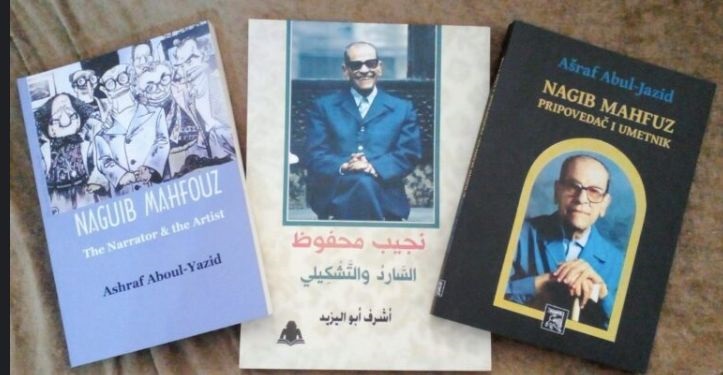
Naguib Mahfouz, The Narrator and the Artist in Arabic, English and Serbian
Do we need today an Arab critical school with its own theoretical and practical foundations?
I believe this must begin with a serious critical endeavor grounded in respect for our heritage and a renewed reading of it. Western criticism built its schools only after it had dismantled and analyzed its texts. We must read our own texts from within, not by borrowing garments from others.
And if we delve deeper into this question, what first comes to mind is the pioneering role of One Thousand and One Nights (Arabian Nights) —that millennia-long work which is not merely a book of tales but an early narrative project in structuring time, inventing the marvelous, shaping characters, blending voices, and layering narrative levels. This work inspired many of the world’s great writers—from Borges to Márquez, from Goethe to Pushkin—and its impact reached modern European narrative schools.
How then can we speak of an Arab critical school without reclaiming this narrative legacy and rereading it anew—seeing it as a foundational fabric of the global novel, not merely a heritage text placed on a shelf?
The need for an Arab critical school is not an intellectual luxury but a necessity for regaining confidence in our own aesthetic sources. To read our texts through an Arab critical lens is to restore value to our achievements, to build analytical tools rooted in the nature of our language, the history of our storytelling, and the uniqueness of our imagination. It is to ask our own questions—not borrowed ones.
A serious critical enterprise begins only when we believe that we possess a rich heritage capable of generating schools and theories, and that Arabian Nights—along with many other classical texts—is not a moment locked in the past but a gateway through which we may overlook a future of Arab criticism worthy of our legacy, attuned to the world, and capable of contributing to it as well.
How do you assess the current Arab critical movement? Has it kept pace with the vast number of texts published today?
One cannot speak about the Arab critical movement today without acknowledging a striking paradox: on one hand, the literary scene is witnessing an explosion in the number of published works—novels appearing daily, and young voices entering the scene with determination as they search for their own sound. On the other hand, criticism seems to be retreating from its historical role as a revealer of innovative experiences and a monitor of new visions.
Critics, in many cases, have become followers of the dominant award circuits, chasing the texts produced by major publishing institutions instead of shaping their own reading maps and reorganizing the scene according to the criterion of creativity rather than the criterion of popularity. Criticism—meant to be a light that moves ahead of the text—has, in many instances, fallen behind it, focusing on what is already celebrated while overlooking writings that reinvent language and experience.
This dependency on the climate of prizes has normalized the mainstream and marginalized genuine narrative and poetic adventures. Rare is the critic who dares to discover an unseen new voice or restore value to works deprived of marketing machinery.
Thus, it can be said that the Arab critical movement has not kept pace with this immense publishing flow, for it has lost its original courage—the courage of discovery, of divergence, and of shaping taste rather than following it. Criticism is still capable of rising again, but it needs an intellectual independence that restores its role as the mind of creativity rather than the echo of its institutions.
What are your future projects and the key issues you wish to write about?
In every creative sea there is a ship preparing to unfurl its sails, and today I see more than one vessel ready to set out. I am completing my fifth novel, an extension of my ongoing questions about the transformed expatriate human being—following my previous novels Shamawes, 31, A Backyard Garden, and The Interpreter. In parallel, I continue work on a new book for young readers, relying on the blend I love and uphold: history breathing through adventure, science disguised in the pleasure of storytelling, and language becoming a gateway to shaping consciousness.
I also continue my work in translation, currently translating several creative works that cross geographical borders, in keeping with my conviction that true literature resides not in a single homeland, but in the shared human experience.
Alongside this, I have begun a series of interviews through which I hope to revive what I began nearly two decades ago in my television program The Other—a program through which I hosted cultural icons from fifty countries and built bridges across distant shores. Whereas in the past I traveled to meet them, today I meet them through the virtual realm, where Creative Silk Road Encounters has become a new window for cultural messages to breathe and for spiritual and intellectual maps to take shape.
As for the issues I wish to explore, they include transformed identities, the memory of place, and the intersections of the human journey as it confronts estrangement and rediscovers itself through language, dialogue, and the beauty of difference.
Perhaps my most important critical endeavor is the forthcoming publication of my doctoral dissertation—prepared as a book to be released next year—under the same title: Crisis Management in the Arabic Novel and Its Social Impact.
How do you view the world of literary prizes in your country and across the Arab region?
The world of literary awards is a thorny realm, its questions intertwined like threads on an old loom. The perplexity begins with the formation of judging panels and the considerations that sometimes accompany them—considerations that belong less to literature than to maps of influence and negotiated distributions among prospective winners. Then comes the problem of the frantic pursuit of awards, a pursuit that drives some writers to tailor their works in advance to the measures of certain prizes, as though creativity has come to be written according to a single template rather than the freedom of the spirit and the uniqueness of experience. Thus, critical taste—meant to shape its criteria from the essence of texts—becomes a taste shaped under the shadow of awards, not to subject them to critique but to submit to them.
I speak neither from the position of a disgruntled writer nor from that of a defeated or resentful critic. By God’s grace, I have received awards and honors in Korea, the UAE, Kuwait, Turkey, Nigeria, Russia, Egypt, Kazakhstan, and elsewhere. I also regard the study of my work in academic dissertations at international universities, the inclusion of my texts in educational curricula, and my membership on international judging panels as another form of recognition—no less meaningful than material prizes.
Yet I speak as an observer who sees the scene as it is: a landscape that needs greater transparency, boldness, and a return to the essence of literature itself—before anything else.
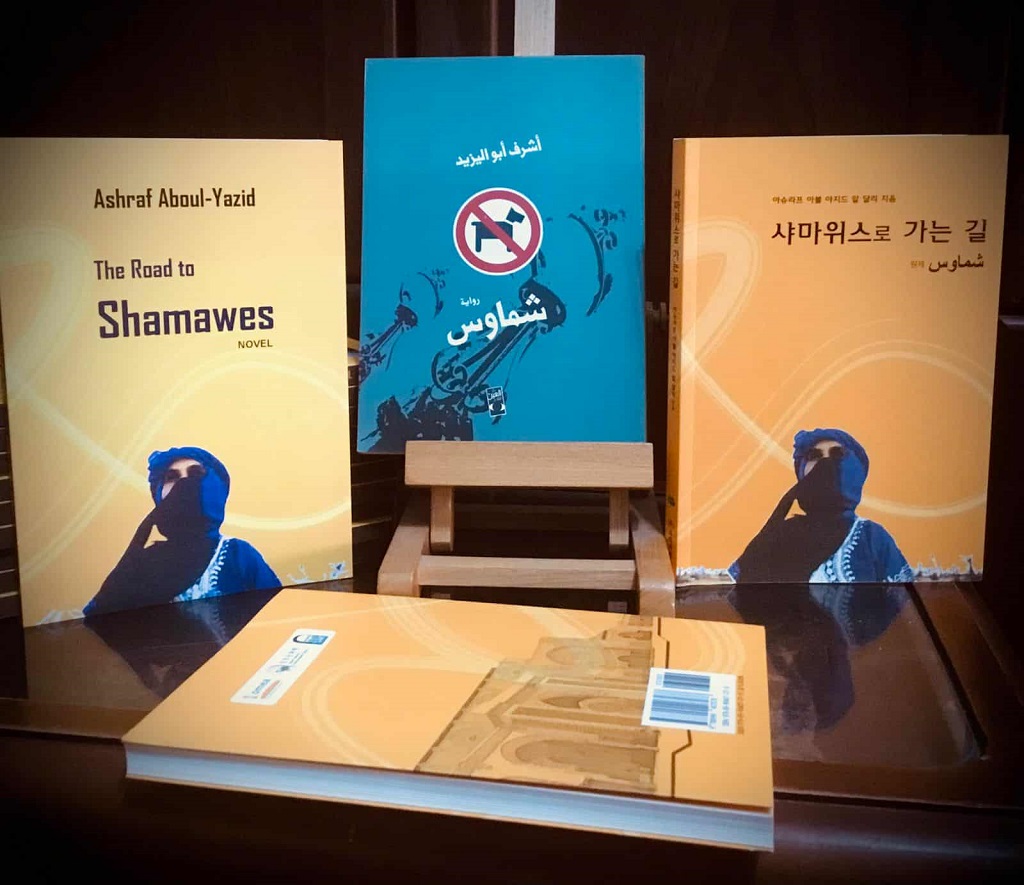
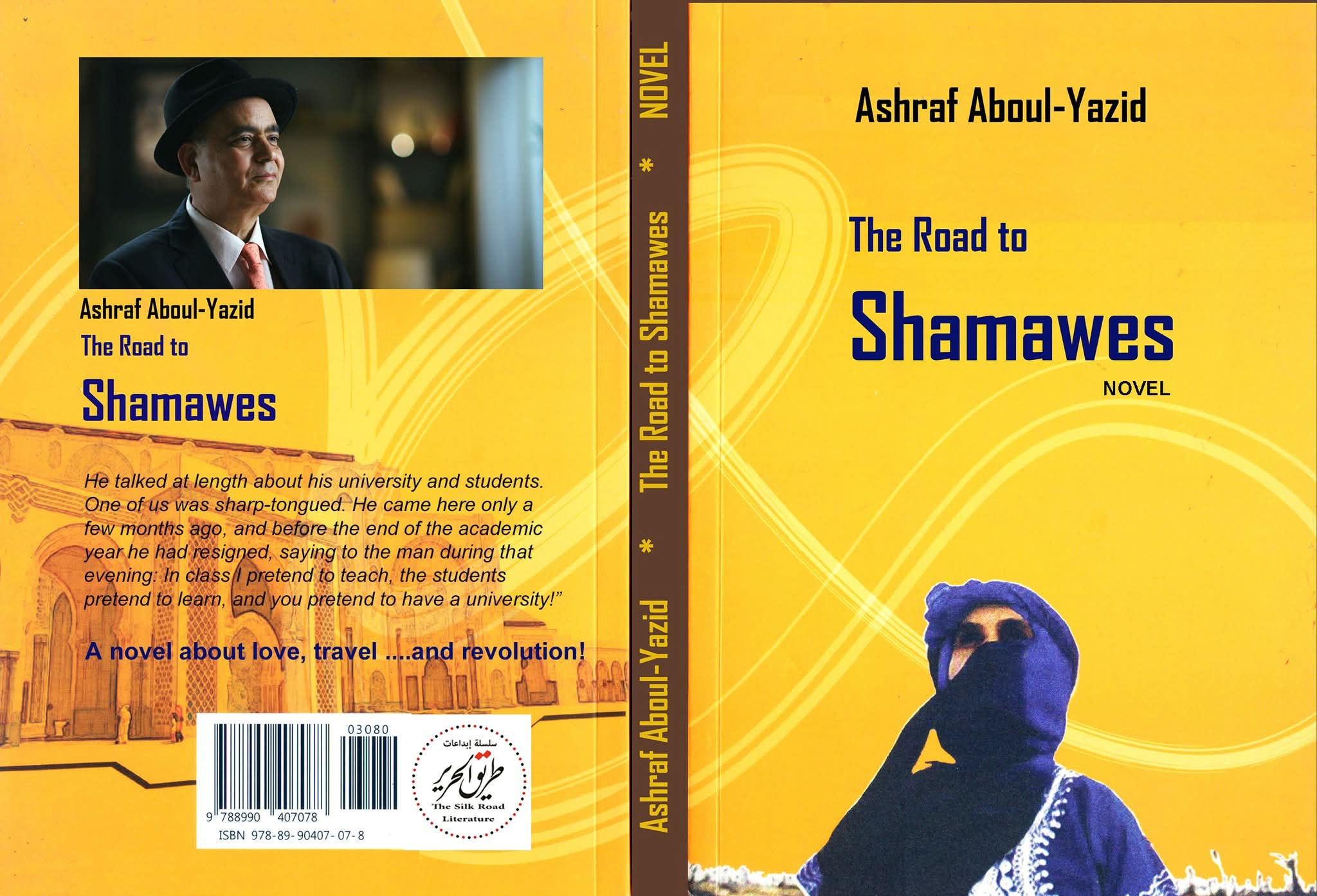
Shamawe in Arabic, English and Korean
Why have we not yet competed with world literature? And when will our texts be translated and cross our national and Arab borders? How do your experience—and the experiences of others—resonate within this horizon?
When the question of competing with world literature is raised, its essence does not lie in a lack of talent or a scarcity of creativity. Rather, it lies in the absence of an integrated system capable of presenting this creativity to the world, carrying it from the local to the universal with confidence and clarity.
My own works have been translated into Spanish, English, Korean, German, Russian, Azeri, Sindhi, Serbian, Turkish, Persian, Urdu, and Malayalam—and soon into French. My books have been published in capitals stretching from Cairo, Beirut, Dubai, and Kuwait to Moscow, Seoul, Istanbul, Berlin, and San José, passing through Mumbai, Karachi, Baku, and beyond. From this, I can say that, on a personal level, international reach is a reality, not a possibility.
Yet I believe that universality does not lie in travel or translation alone, but in impact—in a text’s ability to crack the familiar, or to open a new window in human consciousness. The world is not searching for a voice that resembles other voices; it seeks the one that is different, capable of adding a fresh tone to the global chorus.
Thus the real question, for me and for all writers, remains: Has our presence beyond our borders made a difference? Has it left its ember glowing in the mind of the distant reader? For universality, at its core, is not that a book reaches the reader, but that it reaches his heart, and remains alive after the last page is turned.
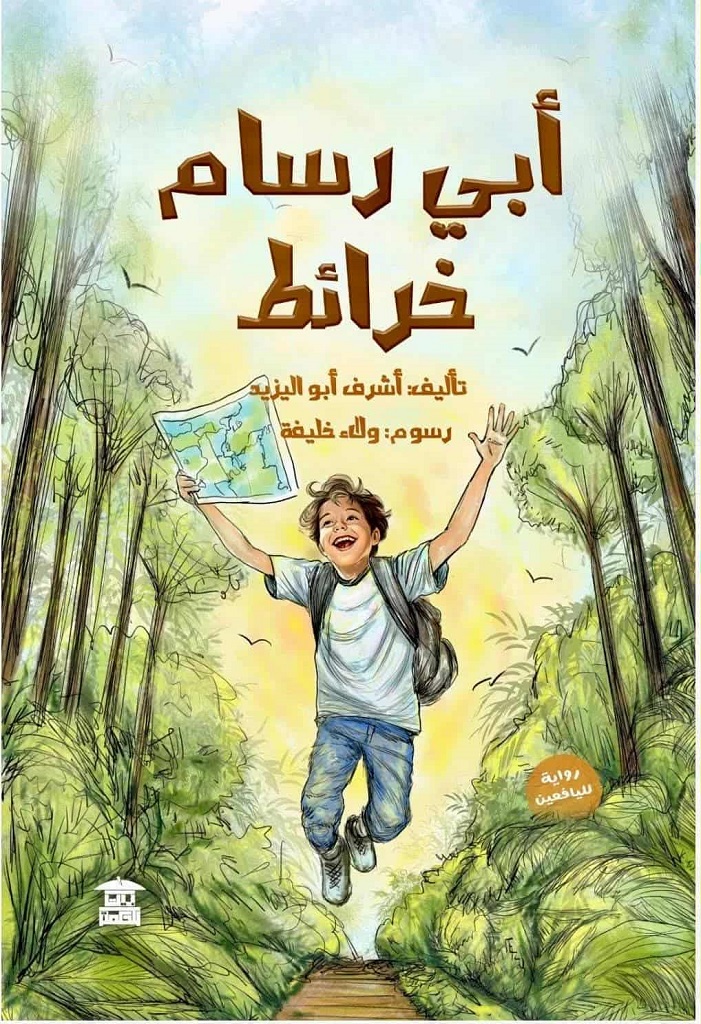
My Father, the Mapmaker,
Why children’s literature? What motivates you to write for and about young readers?
My constant motivation in writing for young readers has been to craft stories that weave together history, science, adventure, and linguistic discovery—stories that speak to the mind, not merely to the ear.
More specifically, I believe the issues I tackle do not stop at the borders of place or identity; they extend to the very question of knowledge: How does a child learn?How does the young expatriate preserve memory?How do we write an adventure that links imagination to heritage, blending language lessons with the enchantment of narrative and the excitement of science?
Translation, Arabization, and the Horizon of Developing Arab Creativity
Arab creativity cannot breathe its vast horizons without two essential wings: translation and Arabization. These are the pathways that allow texts to cross the boundaries of their language, to enter a living dialogue with other cultures, and at the same time to welcome the experiences of other nations—enriching our imagination and sharpening our tools.
Thus, the development of Arab creativity begins with a firm belief that translation is not a technical act, but a comprehensive civilizational project.
I long for large-scale national translation initiatives—projects with a clear vision and a sustainable strategy, grounded in the understanding that when knowledge is transmitted with fidelity and imagination, it transforms from a text into a force of change. The nations that rose to prominence placed translation at the heart of their cultural endeavor. Today, we are in greater need than ever of institutions that translate, Arabize, and redefine our relationship with knowledge, rather than relying solely on individual efforts, however valuable.
At the heart of such a project stands the translator—who must be given the place worthy of his role: honored both intellectually and materially, recognized as a cultural frontline soldier, not a shadow behind the text. A translator is not a carrier of words but a builder of bridges; without him, literature remains local no matter how beautiful it is.
Only when strong institutions arise—institutions that elevate the value of translation, honor the translator, and extend bridges to the world—will Arab creativity step out of its isolation, transforming from a local wave into a universal voice capable of contributing, not merely appearing on the margins.
A critical examination of power, justice and social Transformation Book Title: The Road to Shamawes Author: Ashraf Aboul-Yazid (Ashraf Dali) Original Language: Arabic Genre: Social Realism/Political Fiction Original Publication: 2007 Original Publisher: Dar Al-Ain Publishing House, Cairo, Egypt English Edition: Published in 2024 by Dar Al-Naher, Cairo Reviewer: Rolince Onyango Otieno Introduction Literature becomes particularly powerful when it moves beyond the narration of individual experiences to interrogate the social, political and moral…
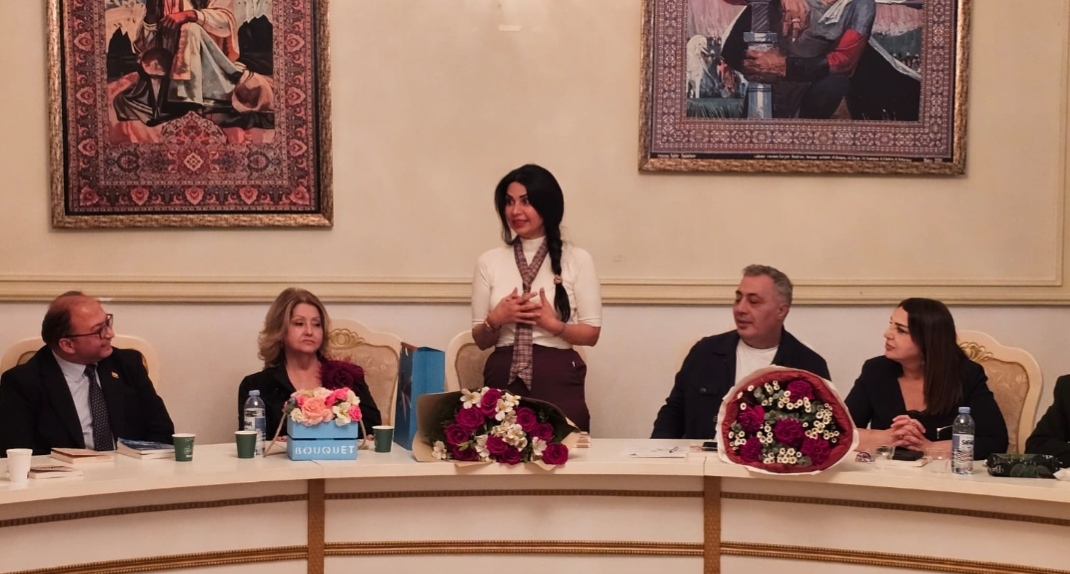
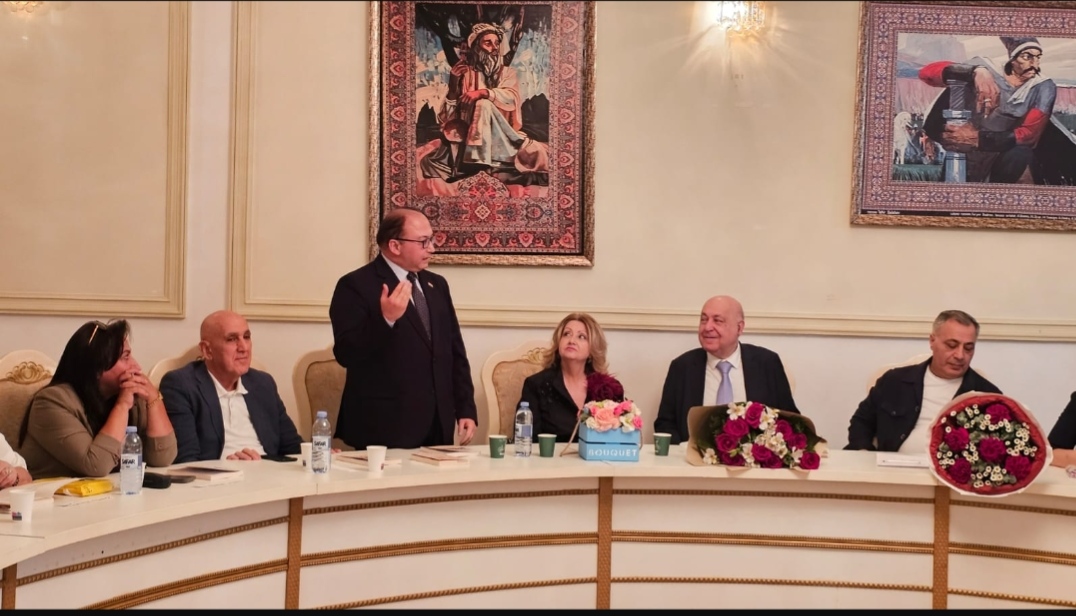
باكو: حفل تقديم الطبعة الأذربيجانية من رواية «شماوس» للكاتب أشرف أبو اليزيد
21 أكتوبر 2026 المصدر: Yeni Kitab – أخبار الأدب، Kultur.az، 20 أكتوبر 2026. أُقيم حفل تقديم الطبعة الصادرة باللغة الأذربيجانية من رواية «شماوس» للكاتب المصري أشرف دالي، الشاعر والمترجم والصحفي،…
 thesilkroadtoday