 thesilkroadtoday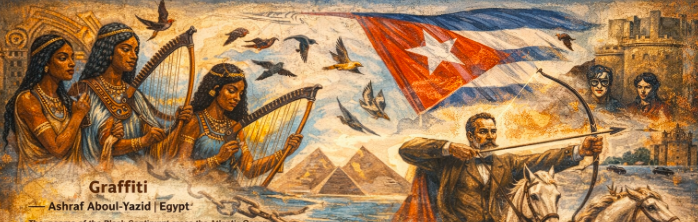
The poems of the Black Continent cross the Atlantic Ocean,
light as the first pulse of freedom—
wings of an ancient longing and tales whose shackles were broken
after a long night of colonialism.
They set out from Africa, having learned to turn the wound into a language
and memory into fuel for flight,
so the poem becomes an act of crossing
that halts at no border of geography
and recognizes no walls of oppression.
T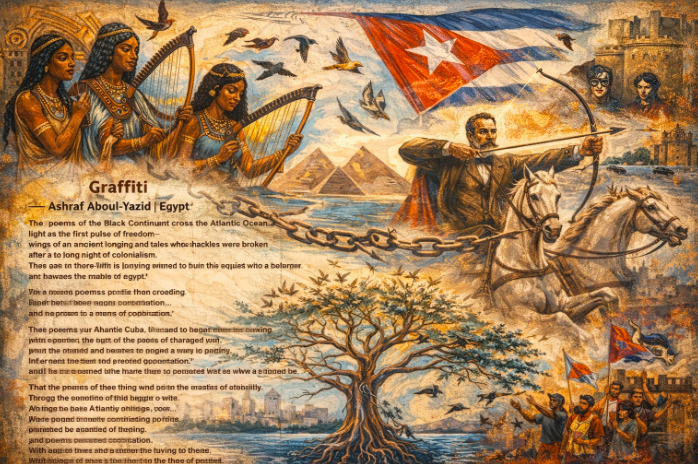 hese poems soar toward Cuba, the land of freedom and resilience,
where words take root in the basins of everyday life.
There the poem finds itself in another mirror of struggle;
its voices multiply, its presence grows firmer,
as if it had returned to a home that has known it since time immemorial.
With the feathers of their wings, they draw the maidens of the Nile,
playing the song of ancient Egypt—
a song unbroken for seven thousand years,
the song of silt and sun and flood,
the song of humanity’s first step
as it learned to write its name on the banks of time.
The melody stretches from temple stone to the heart,
and the body becomes an instrument
that preserves what history has forgotten.
On a mural in Cuba, a leader takes form, riding his war chariot,
not as a conqueror but as a guardian of the dream,
sending arrows of poetry into the hearts of the enemies of freedom;
masks fall before fortresses do,
and conscience awakens.
In this shared expanse, birds build their nests upon the salt tree—
a tree that has known tears, seas, and waiting,
yet still stands.
On its branches the poems rest after their long journey
and understand that the land which has resisted long enough
can finally grow wings.