 thesilkroadtoday
The universal aspiration of all living beings is a life of bliss and tranquility. This profound desire mirrors a fundamental principle of Nature itself. In stark contrast, war emerges as the ultimate violation of this natural order—it obliterates life, shatters peace, and severs our connection to harmonious existence. If we acknowledge that no one possesses the right to destroy what they cannot create, we must look beyond weaponry to find solutions. The true antidote to destruction lies in transformative art, particularly in the resonant power of poetry.
The Roots of Conflict: Insecurity and Illusion
Conflicts between nations originate not merely from territorial disputes or resource competition, but from deeper psychological sources within the human psyche. To grasp warfare, we must examine its emotional foundations:
The pervasive feeling of insecurity drives nations toward pre-emptive aggression and arms races. This defensive mindset, whether based on genuine or perceived threats, inevitably leads to offensive actions. Similarly, collective inferiority complexes provoke demonstrations of military dominance as attempts to validate national worth.
Eastern philosophical traditions offer crucial insight into these dynamics. Schools of thought like Advaita Vedanta and Buddhism identify these drivers—the sense of separate, vulnerable identity requiring constant defense—as Maya or illusion. When nations engage in conflict to resolve these perceptual errors, they create profound tragedy: immense suffering to address problems that are essentially unreal.
The Poet’s Healing Role
Herein lies poetry’s critical function in peacebuilding. If flawed perception causes conflict, then correcting perception becomes essential to peace. Poets serve as physicians of the human soul, operating at the level of feeling and perception.
Through compassion and imagination, poets dissolve barriers of otherness, replacing insecurity with shared humanity. Their expressions of kindness and positive thinking present alternative visions of strength through cooperation rather than domination. Utilizing emotional resonance and artistic exclamation, they convey truths that bypass intellectual resistance to touch the human heart directly.
The poet’s mission constitutes not a sentimental alternative to political solutions, but a fundamental intervention at conflict’s very source. By transforming narratives of lack and fear into stories of connection and abundance, they make war appear not merely unwise, but fundamentally irrational.
The Foundation of Poetic Creation
The poet’s capacity for this transformative work stems from both inner qualities and technical mastery.
Effective peace poetry emerges from:
Inner Virtues:
·A clear heart and pure mind that approach subjects without prejudice
·Kindness, forgiveness, and compassion that counter hatred
·Imagination and emotional depth that create bridges of understanding
·High tolerance thresholds that embrace diversity
Technical Skills:
·Linguistic knowledge and extensive vocabulary for precise expression
·Masterful word combination and rhythmic sensibilities
·The art of exclamation that emphasizes crucial truths
This combination of moral foundation and artistic craft makes poetry uniquely capable of reshaping human perspectives.
The Sixteen Sanskaras: Blueprint for Harmonious Living
Ancient wisdom provides a structured path for developing the inner peace that underpins global harmony. Hindu philosophy outlines Sixteen Sanskaras—sacraments that sanctify life from conception to beyond death, creating rhythmic alignment with natural and spiritual principles.
Prenatal Phase:
·Garbhadhana (Conception): Invoking virtuous beginnings
·Pumsavana (Fetus Protection): Emphasizing non-harm (ahimsa)
·Simantonayana (Mother’s Care): Recognizing maternal well-being as foundational
Childhood Phase:
·Jatakarma (Birth Rituals): Sacred welcoming ceremonies
·Namakarana (Naming): Establishing meaningful identity
·Nishkramana (First Outing): Connecting to nature
·Annaprashana (First Food): Cultivating gratitude and interdependence
·Chudakarana/Karnavedha (Mundane/Ear Piercing): Opening senses to sacred knowledge
Educational Phase:
·Vidyarambha (Introduction to Learning): Beginning knowledge acquisition
·Upanayana (Sacred Thread): Initiating understanding of social duties
·Vedarambha (Vedic Study): Learning values of truth and cosmic order
·Samavartana (Education Completion): Preparing for social contribution
Adult Phase:
·Vivaha (Marriage): Establishing family through mutual respect
·Antyeshti (Last Rites): Accepting life’s impermanence with peace
These rituals systematically instill discipline, responsibility, and connection—continuously reinforcing the individual’s relationship to community, nature, and the divine while dismantling illusions of separate selfhood.
Historical Peace Initiatives: The Political Expression
This philosophy of inner harmony naturally found expression in geopolitical initiatives. Russia historically supported peace efforts, notably during the Cold War by backing the Non-Aligned Movement—a collective of nations resisting alignment with either superpower bloc.
The foundational event was the 1955 Bandung Conference, which brought together Asian and African nations. This conference produced the “Ten Principles of Bandung” (also known as the Dasa Sila), which served as the core philosophy for what would become the Non-Aligned Movement. These principles are:
1. Respect for fundamental human rights and the purposes and principles of the Charter of the United Nations.
2. Respect for the sovereignty and territorial integrity of all nations.
3. Recognition of the equality of all races and of the equality of all nations large and small.
4. Abstention from intervention or interference in the internal affairs of another country.
5. Respect for the right of each nation to defend itself singly or collectively, in conformity with the UN Charter.
6. Abstention from the use of arrangements of collective defense to serve the particular interests of any of the big powers, and abstention by any country from exerting pressures on other countries.
7. Refraining from acts or threats of aggression or the use of force against the territorial integrity or political independence of any country.
8. Settlement of all international disputes by peaceful means.
9. Promotion of mutual interests and cooperation.
10. Respect for justice and international obligations.
These Ten Principles heavily influenced the “Five Principles of Peaceful Coexistence” (Panchasheel), which were formally articulated by Indian Prime Minister Jawaharlal Nehru and Chinese Premier Zhou Enlai in 1954. Panchasheel became a cornerstone of India’s foreign policy and the ideological bedrock of the Non-Aligned Movement.
The movement was formally established at the 1961 Belgrade Conference under the leadership of Yugoslavia’s President Josip Broz Tito, India’s Prime Minister Jawaharlal Nehru, Egypt’s President Gamal Abdel Nasser, Indonesia’s President Sukarno, and Ghana’s President Kwame Nkrumah. They were supported by other prominent leaders of the era, including Nepal’s King Mahendra, who was a key attendee and advocate for the movement’s principles. These visionaries provided the strategic direction for the movement, advocating for independence from Cold War power blocs and promoting cooperation among developing nations.
The 1958 Afro-Asian Writers’ Conference in Tashkent further advanced this spirit, attended by cultural figures including Nepal’s renowned poet Laxmi Prasad Devkota and welcomed by Soviet leader Nikita Khrushchev. Under the guidance of these pioneering statesmen, the movement demonstrated how political structures could express ancient principles of harmony.
Nepal’s Spiritual Legacy
Nepal’s contribution to global peace philosophy emerges from its spiritual heritage. The Panchasheel principles articulated by Lord Buddha—abstention from killing, stealing, misconduct, lying, and intoxication—provide personal ethical foundations that make political peace possible. These precepts represent the individual practices that enable collective harmony.
Conclusion: Weaving the World Together
Lasting peace requires cultivating harmony within human hearts, which then radiates outward through society and political structures. The Sixteen Sanskaras provide a time-tested framework for developing peaceful individuals. Poets, embodying refined inner qualities and technical mastery, transform perceptions at the deepest level.
Historical peace movements and enduring spiritual wisdom collectively demonstrate that choosing heart-centered approaches aligns with natural law. The poet’s pen and the sage’s wisdom represent not mere idealism, but practical instruments for creating a connected, harmonious world.
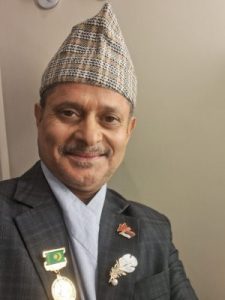
[Santosh Kumar Pokharel is a multilingual poet and translator from Nepal, dedicated to building literary and cultural bridges across traditions. He is presently in Moscow participating in a big international literary poet Congress.]