 thesilkroadtoday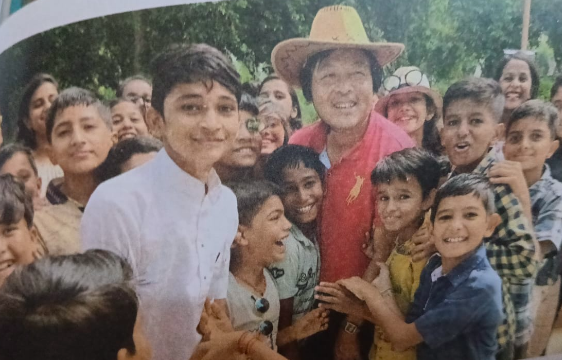
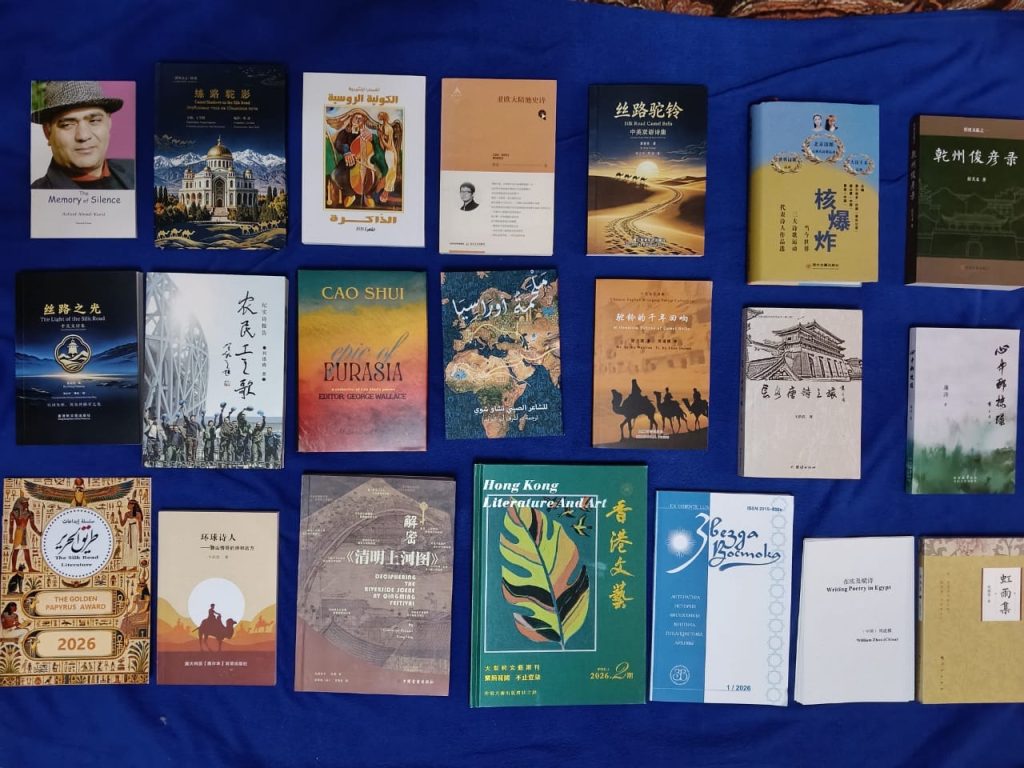
Every literary journey leaves behind more than memories; it leaves books bearing the voices of the people and places encountered along the way. During the 6th Silk Road International Poetry and Art Festival, which brought together writers, poets, translators, and artists across Uzbekistan and Kazakhstan, I had the privilege of receiving a remarkable collection of books directly from their authors.
Each volume was offered not merely as a gift, but as an invitation to enter a distinct cultural landscape, to discover another language of memory, history, imagination, and identity. In this series of articles, I will present these works one by one, offering reviews that go beyond summary to explore their literary merit, cultural significance, and the conversations they create across borders. Together, these books form a living library of the contemporary Silk Road, where literature continues to unite civilizations through the enduring power of the written word.
A Review of Global Poet: Poetry and Distant Horizons by Cao Qizhong
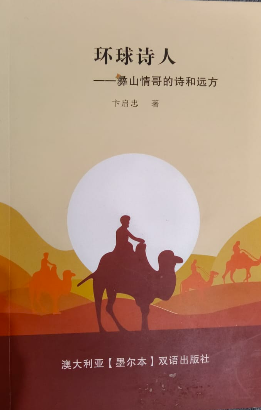
There are books that describe journeys, and there are books that transform journeys into poetry. Global Poet: Poetry and Distant Horizons by the Chinese poet Cao Qizhong belongs to the latter category. More than a collection of travel poems, it is a lyrical atlas where geography becomes emotion, history becomes memory, and every destination becomes an encounter with humanity.
The title itself reflects the spirit of the volume. The poet is not confined to a homeland or a single literary tradition. Instead, he embraces the world as his poetic landscape, crossing borders in search of beauty, understanding, and shared human values. Published in a bilingual Chinese-English edition, the book naturally extends its invitation to an international readership, making poetry itself a bridge between civilizations.
According to the book’s profile, Cao Qizhong has traveled extensively, beginning with his participation in the Chinese Poetry Delegation at the 36th Congress of Poets in Prague. His literary journeys continued through Russia, Spain, Portugal, South Africa, and many other countries. Yet the destinations themselves are only the starting point. What truly matters is the human encounter. Landscapes, architecture, monuments, and historical memories become symbols through which the poet contemplates civilization and the common aspirations of people everywhere.
The photographs included in the volume reinforce this impression. They portray the author before iconic landmarks such as Moscow’s Red Square and St. Basil’s Cathedral, while another image captures him among fellow writers and poets, reminding readers that literature is also a collective dialogue beyond national boundaries. These visual elements transform the collection into both a poetic memoir and a documentary record of cultural exchange.
One of the most striking poems reproduced in the volume, “Tribute to The Communist Manifesto—Feelings behind Marx’s Tomb,” reflects Cao Qizhong’s engagement with intellectual history. Standing before Karl Marx’s resting place in London, the poet meditates on the publication of The Communist Manifesto in 1848 and its profound influence on modern history. Rather than presenting a purely political statement, the poem examines the enduring power of ideas to shape societies, awaken collective consciousness, and inspire historical change. It demonstrates the poet’s willingness to engage with philosophy and history as subjects worthy of poetic reflection.
Throughout the collection, Cao Qizhong’s style remains accessible and sincere. His language avoids unnecessary complexity, allowing emotion and observation to remain at the center of the reading experience. The poems celebrate cultural diversity while rejecting prejudice and extremism. As the profile emphasizes, “Love is his eternal theme of creation,” a principle that resonates across every page. His poetry consistently advocates openness, dialogue, and respect for different peoples and cultures.
The bilingual presentation further enhances the significance of the book. It enables readers from different linguistic backgrounds to appreciate not only the meaning of the poems but also the broader vision behind them. Such editions play an important role in international literary exchange, encouraging mutual understanding in an increasingly interconnected world.
Ultimately, Global Poet: Poetry and Distant Horizons is more than a travelogue in verse. It is a testimony to the belief that poetry can accompany every journey, illuminate every landscape, and connect distant cultures through shared human experience. Cao Qizhong writes not simply as a traveler recording places, but as a citizen of the world who sees every road as an opportunity for dialogue and every poem as an invitation to discover humanity anew.
In an age often marked by division and misunderstanding, this collection reminds readers that literature remains one of the most enduring passports across borders—a passport stamped not by customs officials, but by memory, imagination, and the universal language of poetry.
Dr. Ashraf Aboul-Yazid