 thesilkroadtoday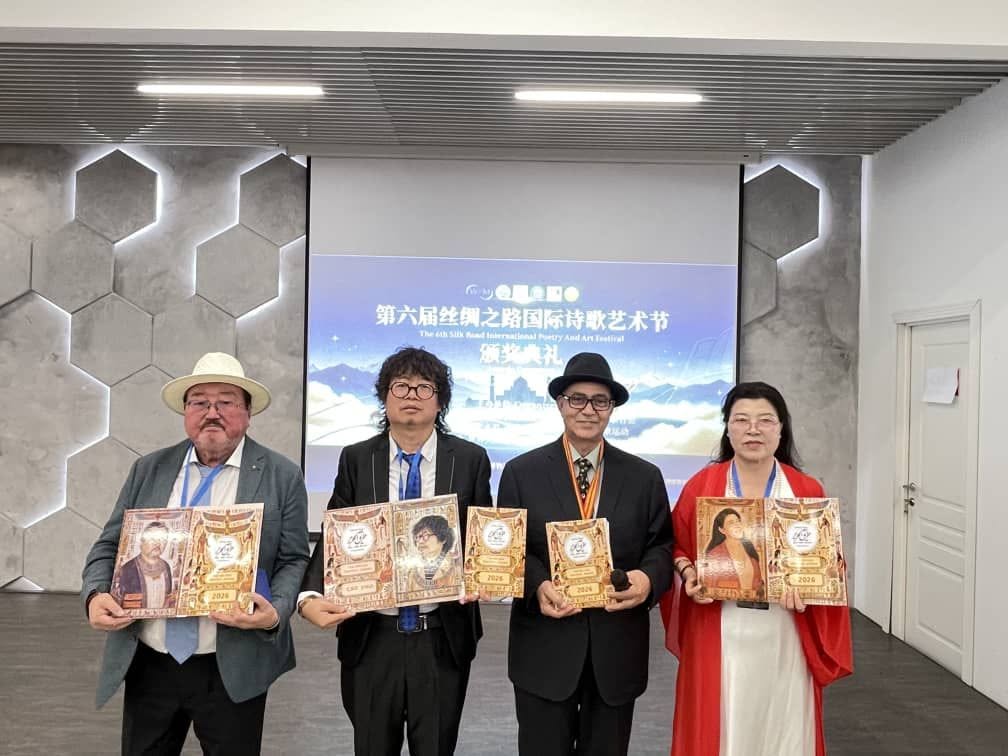
By Dr. Ashraf Aboul-Yazid
When the Silk Road Literature Series initiated the Golden Papyrus Award, it sought more than the celebration of literary achievement. The award was conceived as a symbolic return to the origins of human storytelling and cultural exchange. Its two emblems are deeply significant: Horus, the ancient Egyptian falcon god whose all-seeing gaze symbolizes vision, wisdom, and protection; and the papyrus, the material upon which one of humanity’s earliest civilizations inscribed its memory, imagination, and knowledge.
Together, Horus and Papyrus represent literature’s enduring mission: to see beyond boundaries and to preserve the spirit of humanity through writing.
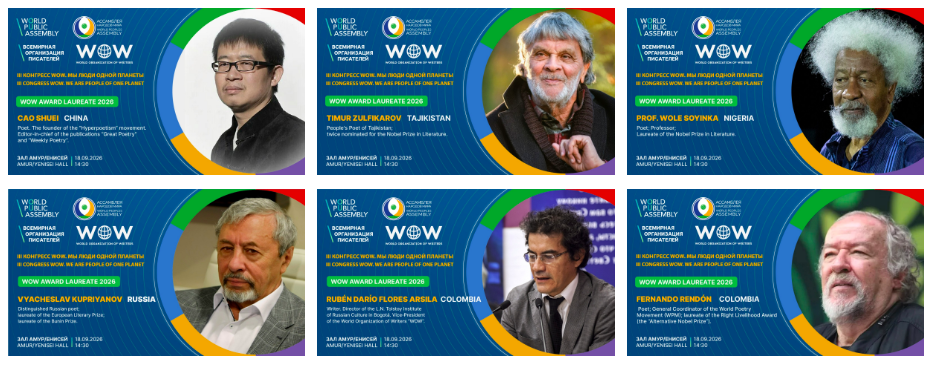
The Golden Papyrus Award 2026 is conferred upon three distinguished figures whose lives and works embody this philosophy: the Kazakh poet Ulugbek Orazbayuly Yesdaulet, the Chinese poet and novelist Cao Shui, and the Chinese Silk Road poet Wang Fangwen. Although they belong to different generations and literary traditions, they are united by a common belief that literature is a bridge between peoples and an instrument of spiritual dialogue.
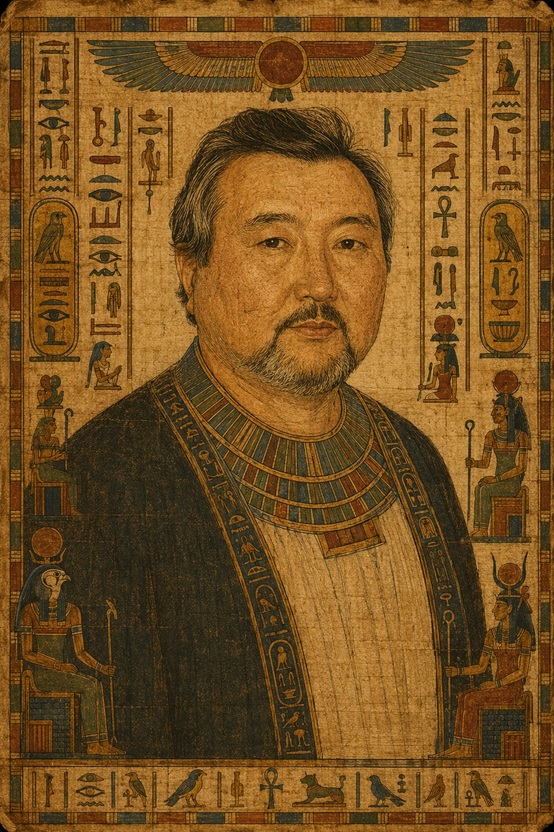
Ulugbek Orazbayuly Yesdaulet stands as one of the great poetic voices of contemporary Kazakhstan. Born in the Zaisan region of Eastern Kazakhstan in 1954, his literary journey has been inseparable from the cultural and historical transformations of his homeland. From his first published book at the age of twenty to his role as Chairperson of the Writers’ Union of Kazakhstan, his career demonstrates a rare continuity between artistic excellence and cultural responsibility.
Yesdaulet is not merely a poet of lyrical expression; he is a renovator of poetic form. As the founder of Kazakh white verse and free verse traditions, he opened new possibilities for poetic language in Kazakhstan. His books, including White Caravan, Zaman-ai, and Felted Book, reveal an author deeply concerned with memory, identity, and the metaphysical dimensions of human experience. The numerous honors bestowed upon him, including the State Prize of the Republic of Kazakhstan and the title of Honored Worker of Kazakhstan, recognize not only an individual achievement but also a poetic vision that has enlarged the horizons of modern Turkic literature.
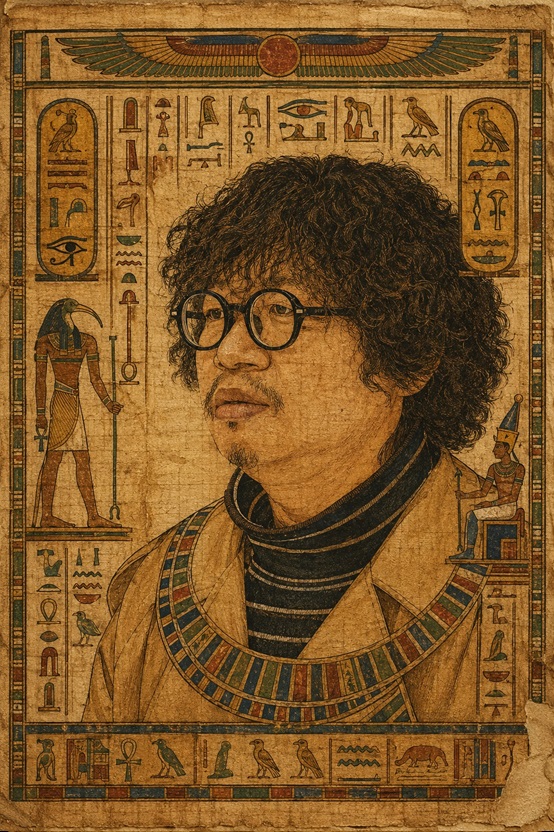
If Yesdaulet represents continuity and renewal within a national literary tradition, Cao Shui represents literary expansiveness on a global scale. Born in 1982, he has become one of the representative figures of contemporary Chinese literature and a major architect of transnational literary dialogue.
His oeuvre is astonishing in both volume and diversity. Fifty published books encompassing poetry, novels, essays, translations, fairy tales, television series, and films testify to a creative energy of exceptional magnitude. Yet quantity alone cannot explain his significance. Through works such as Epic of Eurasia and Princess Snow Leopard, Cao Shui proposes a new literary geography in which civilizations converse rather than confront one another.
As founder of the Great Poetry Movement and an active participant in international literary organizations, he has transformed literature into a living network of cultural encounters. The translation of his works into thirty-six languages and the receipt of more than one hundred literary awards worldwide reveal a writer whose imagination transcends national borders. In Cao Shui’s vision, the Silk Road ceases to be merely a historical route and becomes a poetic metaphor for humanity’s interconnected destiny.
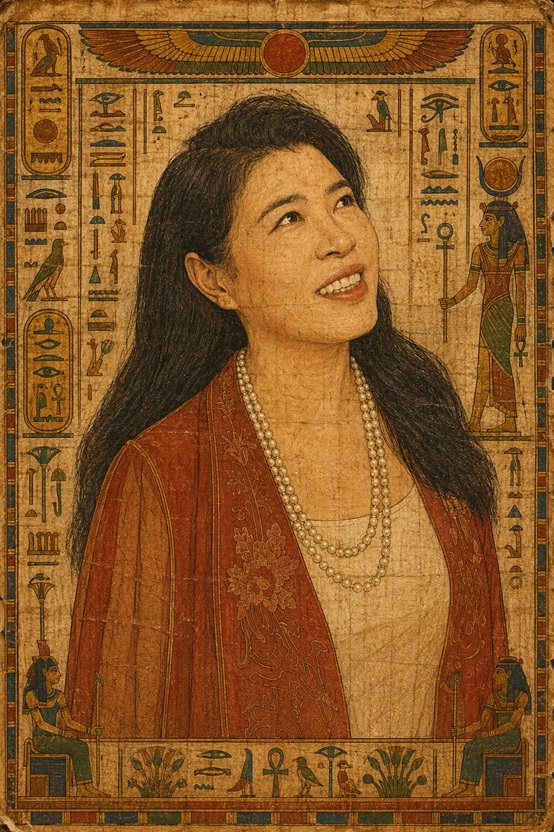
The third laureate, Wang Fangwen, brings to the Golden Papyrus Award a distinctly lyrical embodiment of the Silk Road spirit. Born in Xi’an—the ancient eastern gateway of the historical Silk Road—she has devoted her career to cultivating literary exchange among nations. As a wandering Silk Road poet, distinguished professor, literary editor, and cultural organizer, she has continuously sought to unite poetic imagination with intercultural communication.
Her numerous awards, including the Russian Pushkin Poetry Award and the China Top Ten Contemporary Poets Award, testify to the international resonance of her work. The twelve literary books she has authored reveal a writer who understands poetry as both an inward journey and an outward dialogue. Her leadership in institutions such as the Silk Road International Poets Federation and World Poets magazine demonstrates a commitment to creating spaces where voices from different cultures can encounter one another in mutual respect.
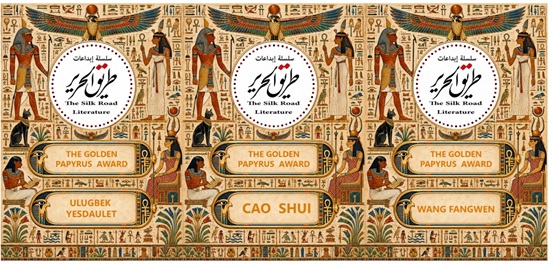
The selection of these three writers is, therefore, not accidental. Each represents a distinct dimension of contemporary world literature. Yesdaulet embodies the renewal of national poetic consciousness; Cao Shui exemplifies literary universality and civilizational imagination; Wang Fangwen personifies the poetic vocation of intercultural encounter.
Under the gaze of Horus and through the symbolic medium of Papyrus, the Golden Papyrus Award 2026 recognizes that literature remains one of humanity’s greatest acts of resistance against division, forgetfulness, and spiritual isolation. These laureates remind us that writing is not merely an aesthetic exercise. It is a form of memory, a gesture of friendship among civilizations, and an enduring Silk Road upon which words continue their ancient journey from one human heart to another.