 thesilkroadtoday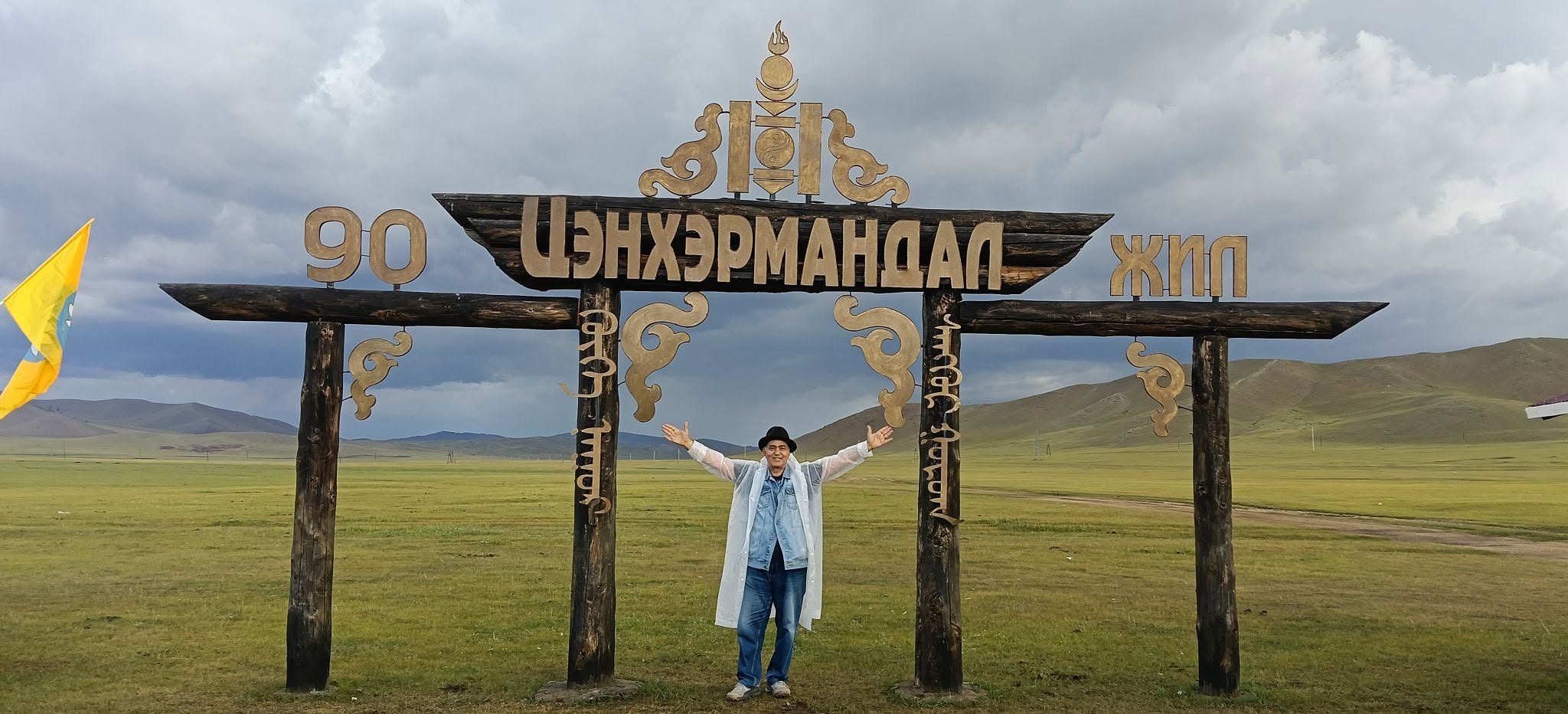
MONGOLIA / EGYPT — The Silk Road Today
Egyptian writer, poet, translator, and cultural figure Dr. Ashraf Aboul-Yazid has formally accepted an invitation to join the World Academy of Mongolian Writers, following an official invitation extended by Dr. Ch. Tumendemberel, representing the Academy.
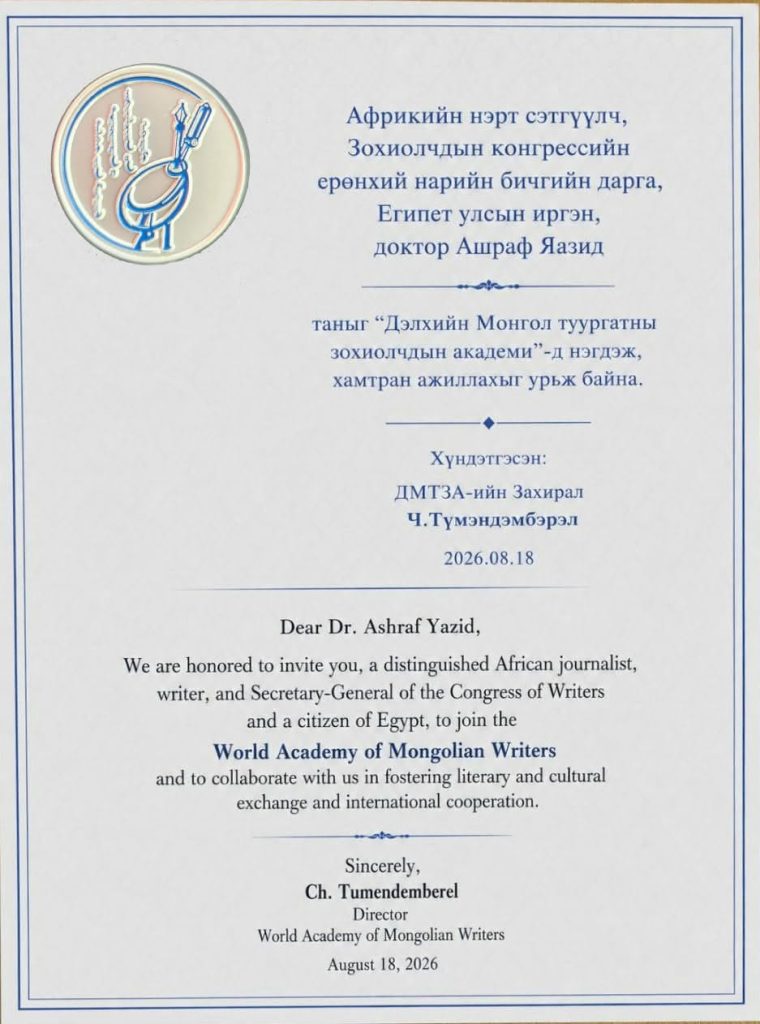
 The invitation marks a significant new step in strengthening literary and cultural relations between Egypt and Mongolia, building upon Dr. Aboul-Yazid’s longstanding engagement with Mongolian literature, poetry, cultural heritage, and the international literary community.
In his official letter of acceptance, Dr. Aboul-Yazid expressed his sincere gratitude for the invitation, describing his admission to the distinguished Academy as a great honor. He welcomed the opportunity to contribute to the Academy’s activities and to work toward strengthening literary exchange, cultural dialogue, and international cooperation among writers and intellectuals.
“It is a great honor for me to be invited to become part of this distinguished Academy. I am pleased to accept the invitation with appreciation and enthusiasm,” Dr. Aboul-Yazid stated.
A New Chapter in Egypt–Mongolia Literary Relations
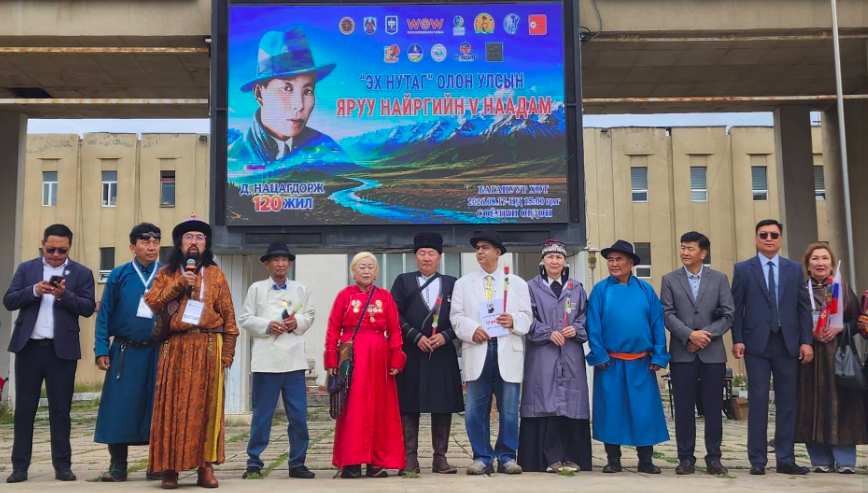
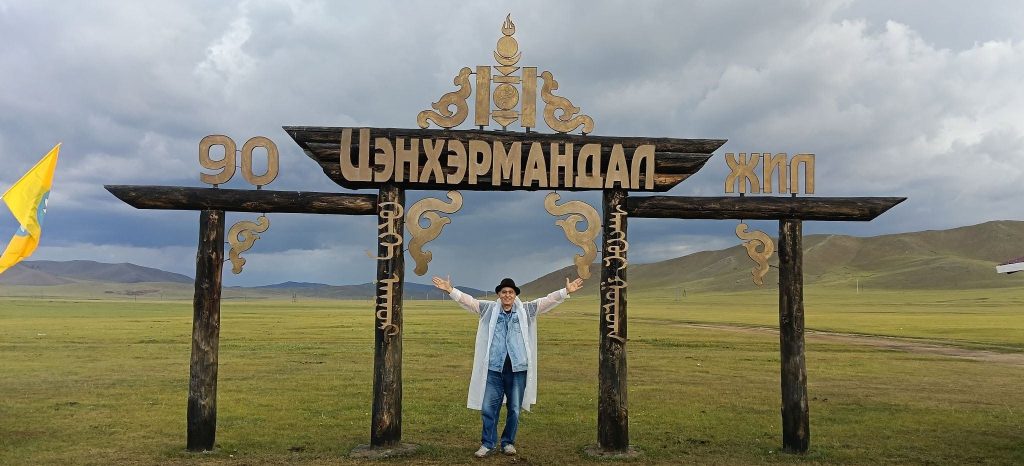
Dr. Aboul-Yazid emphasized the importance he attaches to the friendship and cultural relations between the peoples of Mongolia and Egypt. His acceptance comes at a particularly meaningful moment, following his recent visit to Mongolia, where he participated in literary and cultural activities and experienced the country’s renowned hospitality firsthand.
He noted that the visit strengthened his admiration and respect for Mongolia’s culture, literature, traditions, and cultural heritage.
The acceptance of the Academy’s invitation therefore represents not only a personal literary honor, but also an opportunity to further develop connections between the literary communities of the two countries.
Dr. Aboul-Yazid expressed his willingness to serve as a bridge between Egyptian and Mongolian writers, intellectuals, poets, and cultural institutions, with the shared objective of promoting mutual understanding through literature and culture.
Literature as a Bridge Between Peoples
Throughout his international literary activities, Dr. Aboul-Yazid has advocated literature as a means of connecting civilizations and creating dialogue across geographical, linguistic, and cultural boundaries.
His work with the Silk Road Literature series has particularly focused on bringing writers and poets from different regions into conversation, highlighting the historical Silk Road as a space not only for the exchange of goods, but also for the movement of ideas, stories, poetry, traditions, and cultural memory.
Dr. Ashraf Aboul-Yazid is the Secretary-General, Congress of African Journalists (CAJ), Editor-in-Chief, Silk Road Literature Series, Vice-President of both Pan African Writers Association (PAWA) & World Organization of Writers (WOW) and member of the Egyptian Union of Writers. His new association with the World Academy of Mongolian Writers adds another dimension to this continuing effort.
Mongolian literature occupies a distinctive place in the cultural landscape of Central and Inner Asia, carrying the memory of nomadic civilization, oral traditions, poetry, history, and a profound relationship with the natural world. Greater literary exchange between Mongolia and Egypt can open new avenues for translating, publishing, and introducing the literary traditions of both countries to wider audiences.
Strengthening the Mongolia–Egypt Cultural Bridge
Dr. Aboul-Yazid has expressed his hope that his membership in the Academy will contribute to expanding cooperation between writers and intellectuals in Mongolia and Egypt and, more broadly, to international literary cooperation.
He stated that it would be an honor to continue building bridges between the literary communities of the two countries within a framework founded on mutual respect, cultural understanding, and a shared belief in the power of literature to bring people together.
His recent journey through Mongolia has already created new personal and professional connections with Mongolian writers, poets, translators, cultural figures, and literary institutions. His acceptance of the Academy’s invitation provides a formal framework through which these relationships can continue to develop.
From the Silk Road to Contemporary Literary Dialogue
The new membership also resonates with the broader philosophy of the Silk Road Literature Project, which has sought to revive the cultural dimension of the historic Silk Road through contemporary literature.
For Dr. Aboul-Yazid, Mongolia represents an important cultural meeting point within this wider literary geography. The country’s rich nomadic heritage and poetic traditions offer unique possibilities for dialogue with the literary cultures of Africa, the Arab world, Asia, and beyond.
His membership in the World Academy of Mongolian Writers is therefore expected to encourage further literary initiatives, translations, exchanges, and collaborative projects connecting Mongolian literature with international literary communities.
The initiative also reflects a growing recognition that cultural diplomacy can be advanced not only through official institutions, but through writers, poets, translators, scholars, and intellectuals whose work creates lasting human connections.
A Commitment to Future Cooperation
In concluding his acceptance letter, Dr. Aboul-Yazid once again expressed his gratitude to Dr. Ch. Tumendemberel for the confidence placed in him and for the distinguished invitation.
He affirmed his eagerness to work productively with the World Academy of Mongolian Writers and to contribute to its literary and cultural mission.
The new association opens a promising chapter in the literary dialogue between Egypt and Mongolia, bringing together two ancient civilizations with deep traditions of storytelling, poetry, writing, and cultural memory.
As literature continues to cross borders and languages, the partnership between Dr. Ashraf Aboul-Yazid and the World Academy of Mongolian Writers stands as a new expression of the enduring principle that literature can build bridges where geography creates distance—and that cultural dialogue begins when peoples listen to one another’s stories.