 thesilkroadtoday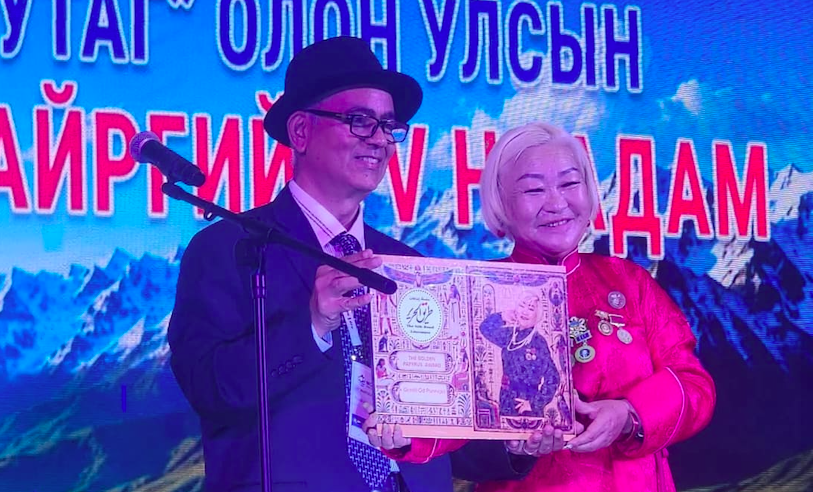
MONGOLIA — The Silk Road Today
In an atmosphere where poetry, heritage, and cultural memory converged, Mongolia hosted the presentation ceremony of the Golden Papyrus Award, an initiative of the Silk Road Literature Project, during the “Ekh Nutag” International Poetry Festival. The ceremony formed part of the celebrations marking the 120th anniversary of the birth of Dashdorjiin Natsagdorj, one of the most prominent figures in modern Mongolian literature and poetry.
The award ceremony carried a significance extending beyond the recognition of individual literary and cultural achievements. It reaffirmed the Silk Road as not merely a historical route of trade and commerce, but as a vast space for the exchange of ideas, cultures, traditions, and literature. In this context, poetry remains one of humanity’s most powerful bridges, capable of transcending borders and reconnecting peoples through shared cultural memory.
Four Laureates on the Golden Papyrus Stage
The Golden Papyrus Award was presented to four distinguished literary and cultural figures in recognition of their contributions to literature, cultural dialogue, the preservation of heritage, and international communication among peoples.
The laureates were:

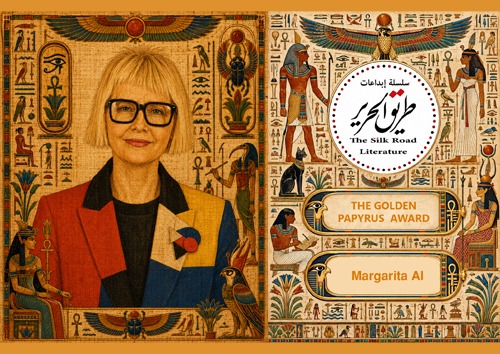
- Margarita Al, President of the World Organization of Writers (WOW), a poet, philosopher, literary critic, and scholar whose work brings poetry into dialogue with philosophy and metaphysical thought.
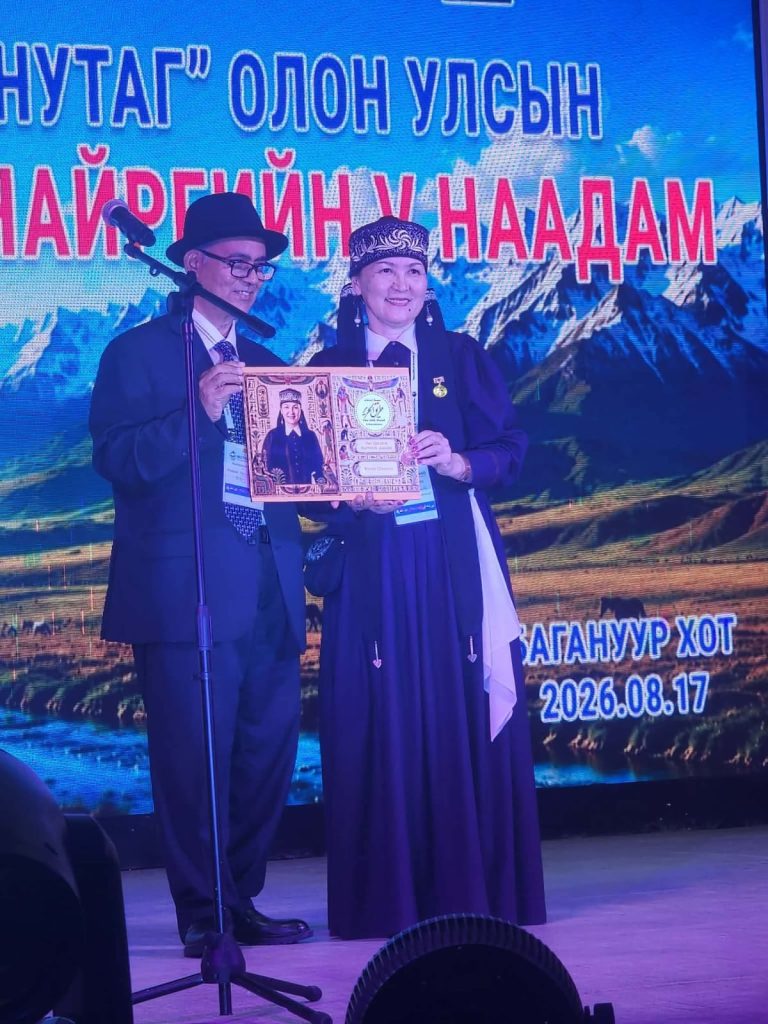
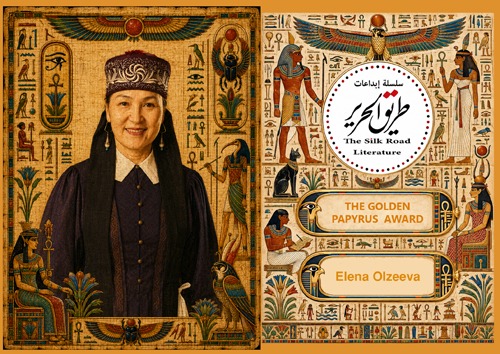
- Elena Olzievna, Secretary of World Literature at the World Assembly of European, Asian and African States, in recognition of her contribution to international literary and cultural cooperation.
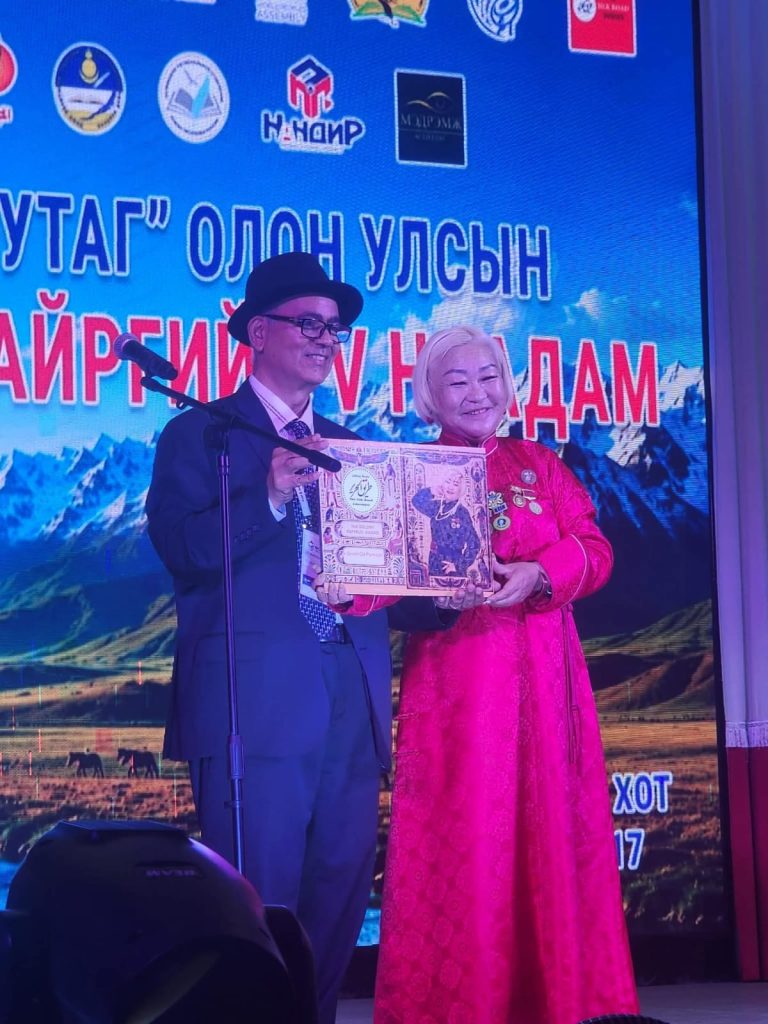
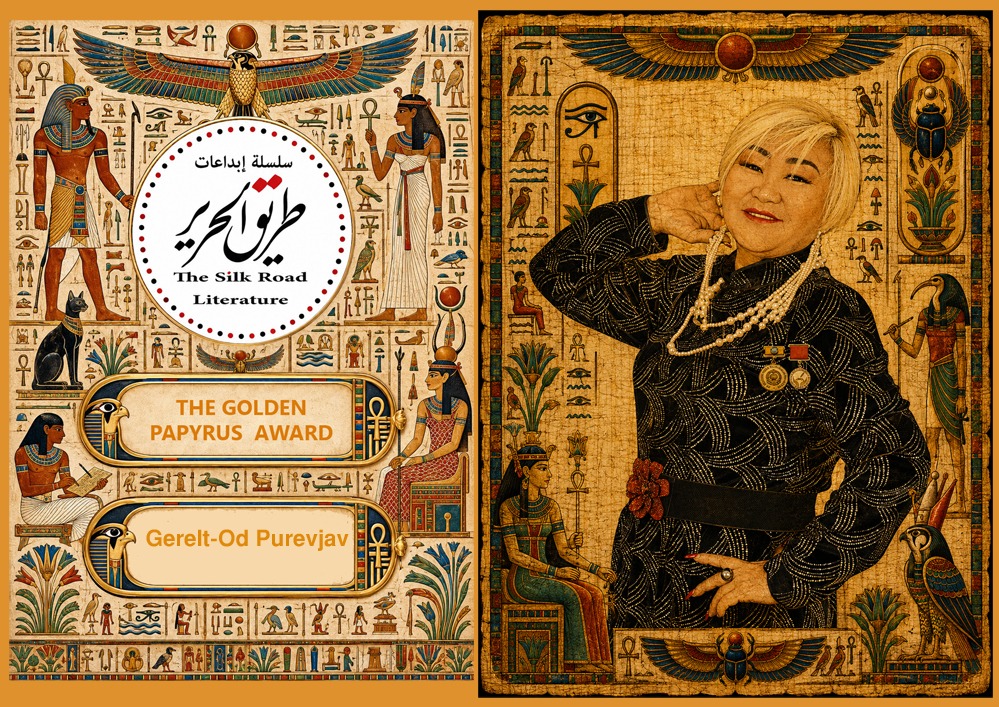
- Borivjavin Gerelt-Od, President of the United Confederation of Cultural Heritage of Nomadic Peoples of Mongolian Origin, for her efforts to preserve, promote, and transmit Mongolian and nomadic cultural heritage.
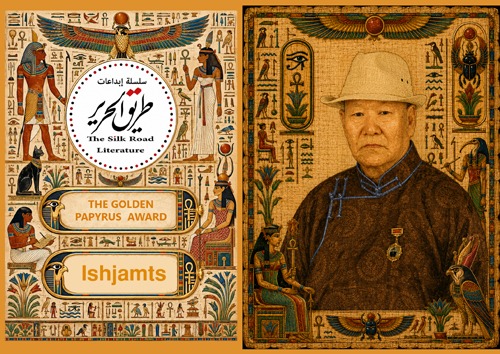
- Tsedend-Ish, veteran poet and artist from the Inner Mongolia Autonomous Region of China, whose career represents a living continuation of Mongolian poetry and cultural heritage across geographical borders.
The awards were presented by Dr. Ashraf Aboul-Yazid, Editor-in-Chief of the UNESCO Silk Road Literature Project and Secretary-General of the Congress of African Journalists, during the festival proceedings.
The ceremony thus brought together literary voices from different cultural spheres, creating a symbolic meeting point between Arab, African, Central Asian, Mongolian, and Chinese cultural traditions.
 A Prize Rooted in the Memory of Civilization
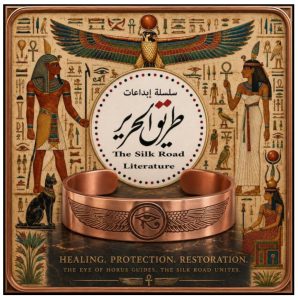
The Golden Papyrus Award derives its symbolism from two powerful emblems associated with ancient Egyptian civilization: Horus, the falcon deity whose vigilant eye represents vision, wisdom, and protection; and papyrus, the ancient writing material that became one of humanity’s earliest great vehicles for recording knowledge, memory, and imagination.
The philosophy behind the award therefore goes beyond honoring individual writers. It seeks to reconnect contemporary literature with the earliest foundations of human civilization, when writing emerged as a means of preserving memory and transmitting knowledge from one generation to another.
The Golden Papyrus embodies a simple yet profound conviction: literature can cross borders, preserve civilizations, and bring peoples together through the enduring power of the written word.
The recognition of four writers and cultural figures from different geographical and cultural backgrounds, presented in Mongolia during a major celebration of Mongolian poetry, gave tangible expression to this philosophy.
Great literature, in this vision, belongs not to one nation alone. It is part of the shared inheritance of humanity.
From Natsagdorj to the Literature of the World
The presentation of the Golden Papyrus Award gained an additional dimension because it took place within celebrations marking the 120th anniversary of Dashdorjiin Natsagdorj.
Natsagdorj occupies a central place in Mongolia’s literary memory. His poetry and writings helped shape modern Mongolian literature and remain an important reference point in the country’s cultural identity.
Celebrating his legacy therefore meant more than looking back at a great poet of the past. It also provided an opportunity to present Mongolian literature and cultural heritage to the wider world and to establish a dialogue between Mongolia’s literary legacy and contemporary international literature.
In this sense, the Golden Papyrus Award became a natural part of the celebration: an Egyptian symbol of ancient writing meeting the poetic heritage of Mongolia, through the cultural routes represented by the Silk Road.
A Recognition Beyond Borders
The geographical distance separating the laureates did not prevent the award from reaching each of them.
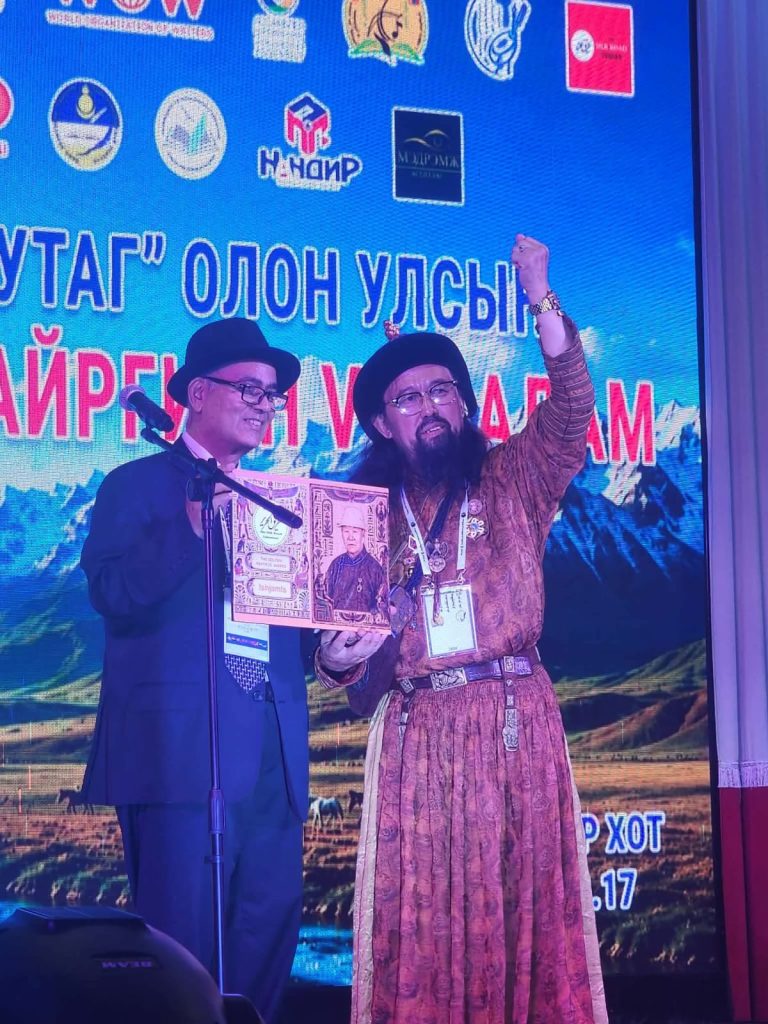
Because Tsedend-Ish was unable to attend the ceremony in person, his award was accepted on his behalf by Sh. Mendbayar, Head of the Mongolia Branch of the United Confederation of Cultural Heritage of Nomadic Peoples of Mongolian Origin in Inner Mongolia. He will subsequently deliver the award to the distinguished poet and artist.
The gesture reflected the very essence of the Golden Papyrus Award: culture transcends political and geographical boundaries. The award follows the creator wherever he or she may be, recognizing literature and heritage as open spaces of communication among peoples.
The ceremony in Mongolia consequently brought together two powerful cultural symbols separated by thousands of kilometres yet connected through the history of civilization: Egyptian papyrus, representing the ancient memory of writing, and Mongolian poetry, representing the enduring memory of a people and its nomadic heritage.
At the heart of this encounter, the Silk Road Literature Project appeared to reclaim the ancient Silk Road’s most enduring function—not merely the movement of silk, spices, and goods, but the movement of ideas, words, poems, traditions, and human memory from one civilization to another and from one generation to the next.
The Golden Papyrus Award, presented in Mongolia during the 120th anniversary celebrations of Natsagdorj, thus became more than a literary distinction. It was a cultural message: the civilizations of the Silk Road continue to speak to one another—and literature remains one of their most eloquent languages.