 thesilkroadtoday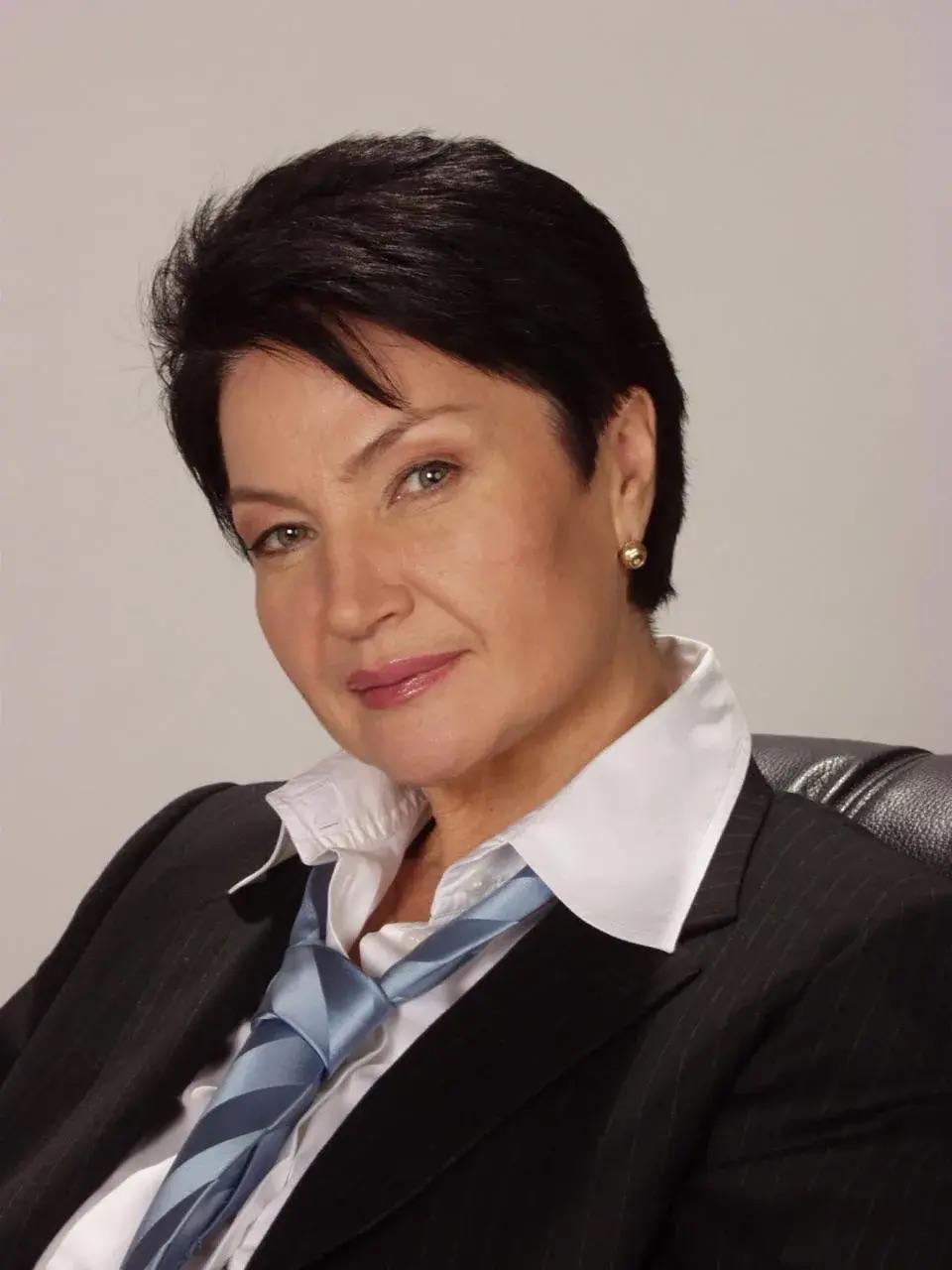
President — Public and Political Newspaper |
“Memory is a revelation of Immortality,
A force that defeats Death.”
These lines by Alexandra Ochirova perhaps capture more precisely than anything else the spirit of a conversation about her new poetry collection, *Memory*. Here, memory is by no means nostalgia for the past. It is the only way to preserve the connection between different eras, safeguard the humanity within human beings, and prevent civilization from losing its very self.
Ochirova speaks of memory both as a poet and as someone who has spent many years working in humanitarian security, culture, and international relations. In her book, fields, forests, rivers, the changing seasons, the cosmos, and the human soul all become parts of a single space. The personal and the universal are inseparable.
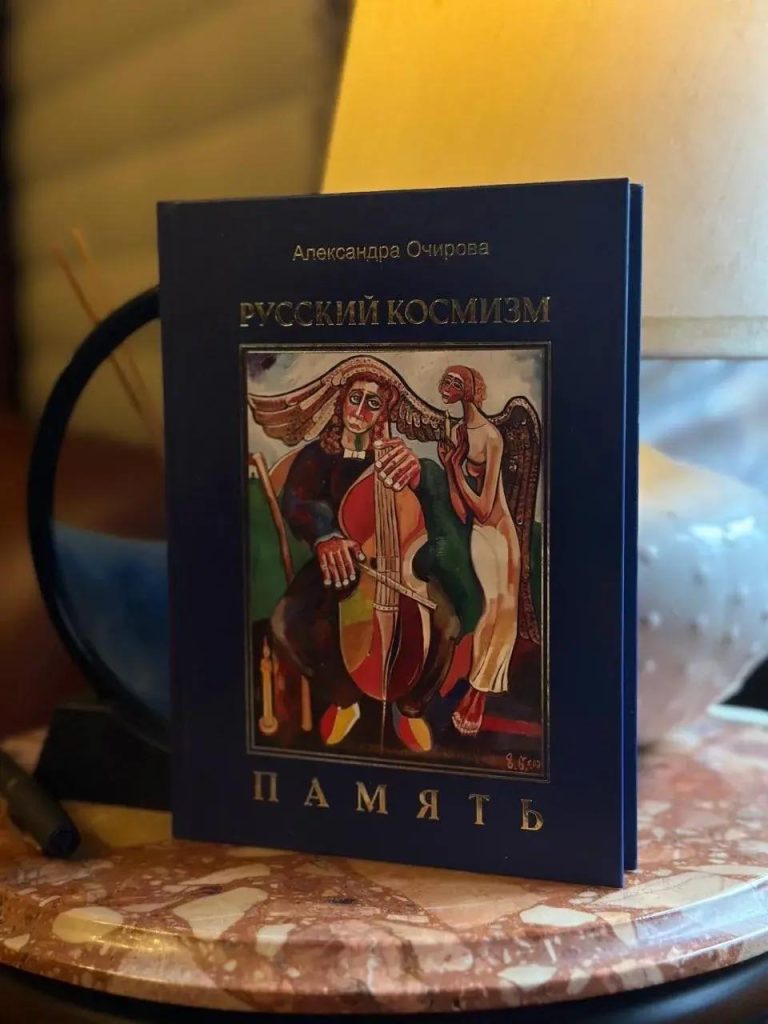
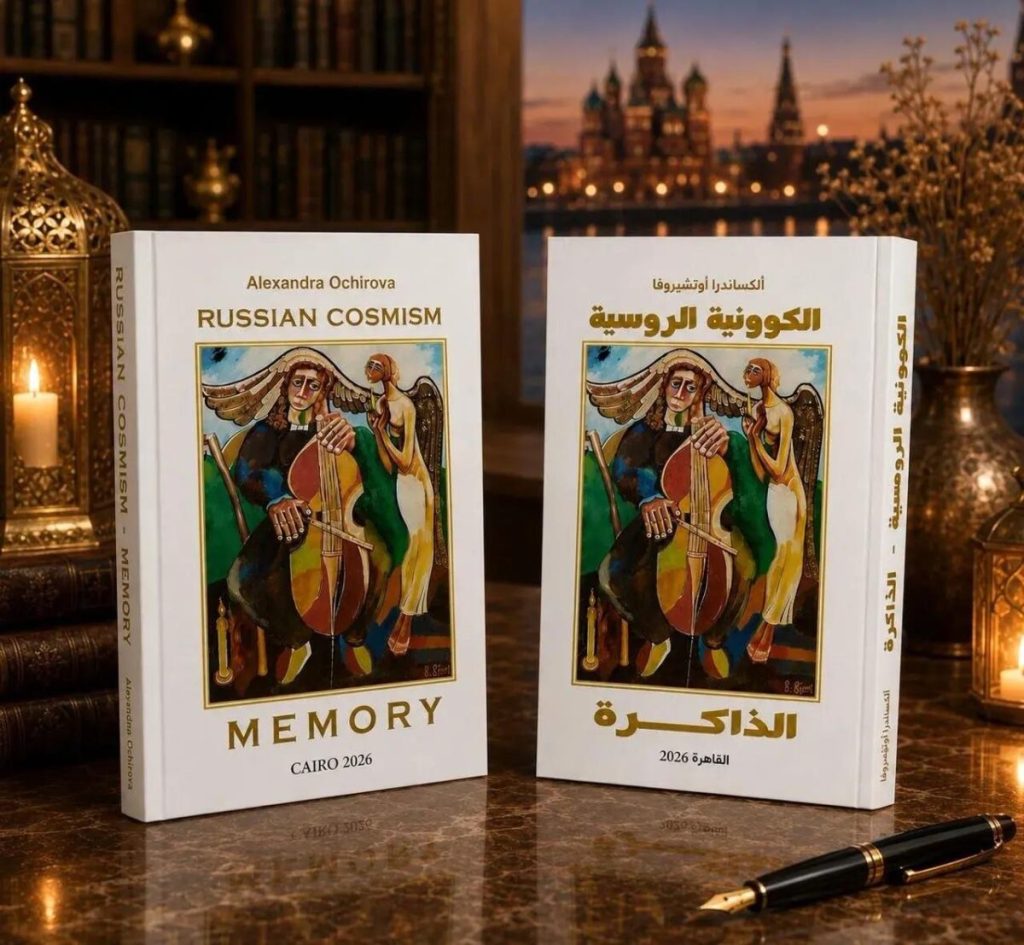
The new book continues the Russian Cosmism series, which includes the collections Russian Cosmism and The Oath. Memory has been translated into Arabic and English. A special place in the book is reserved for the legacy of Zurab Tsereteli: the collection is dedicated to the memory of the artist, and his works enter into a dialogue with the poetic texts.
We spoke with Alexandra Ochirova about memory, morality, the future of civilization, and why humanity needs poetry today.
**Interviewer:** Alexandra Vasilyevna, why did memory become the central theme of your new book?
**Alexandra Ochirova:** First and foremost, because memory is an expansive, multifaceted concept with many meanings. In my view, memory lies at the very foundation of our humanity. This subject has concerned me since my youth, long before I ever intended to share my thoughts with the public.
I have always lived simultaneously in the external world and in my own inner world—a comfortable, invisible space inaccessible to others. Observing the outside world from within this private space, I saw it differently from those around me: more deeply, more comprehensively, and with an awareness of the hidden connections between everything. Over the years, poetry has sharpened this vision. As Scripture says, a person sees only as much as they have been granted to see.
I do not know how much has been granted to me, but I know for certain that I see things differently from others. The perception of a poet and a cosmist makes it possible to “look beyond the horizon,” without any auxiliary means. None are needed when one possesses MEMORY: a mirror in which everything that has ever been reflected is preserved forever, even if it touched its surface for only a brief moment.
As we observe the changing seasons and the unfolding space of each day, we begin to understand that every moment is unique and connected to eternal values. Memory is one of the sources of civilization’s development and a condition of its resilience. It enables us to preserve, strengthen, and prolong life on Earth. Within memory lie the channels of continuity established by God: biological, spiritual, moral, and semantic.
**Interviewer:** So *Memory* can be read as a book about continuity?
**Alexandra Ochirova:** Absolutely. The destruction of self-awareness, identity, and meaning has always led to the destruction of countries and peoples. Today, this no longer concerns individual states or cultures alone; it concerns all of humanity.
No country and no nation can face global challenges alone. Yet when we discuss these challenges, we often forget what matters most: morality.
For me, morality is not an abstract category. It is a question of how the world is governed. Our answer will determine what kind of future we create.
**Interviewer:** For many years, you have spoken of morality as a strategic principle. In this book, the idea takes on the force of a poetic imperative. What has the greater power to influence people: the poet’s word or conceptual policy documents?
**Alexandra Ochirova:** These are deeply interconnected things. This very relationship lies at the heart of everything I do, and it is what I speak about to people, regardless of the audience before which I appear.
The human being is the greatest problem facing contemporary civilization, because civilization is beginning to lose its human face.
If we turn to antiquity and examine the very concept of memory, we find that practically all the themes developed in later periods—and still relevant today—had already been identified. The great discovery of the ancient world was the recognition of the HUMAN BEING as the measure of all things. Socrates said, “Know thyself.”
**Interviewer:** Socrates said that if you know yourself, you will know the whole world…
**Alexandra Ochirova:** Yes, of course. Today, human beings have lost that central position. Scientific and technological progress has outpaced other dimensions of development. Yet, if we are to preserve humanity, we must protect the highest values inherent in human nature.
What has happened throughout history? Whenever meaning has been lost and human personality destroyed, civilizations have collapsed, states have fallen, and wars have erupted. That is why we now need human self-determination within the historical process, humanitarian modernization, and a return to genuine values.
**Interviewer:** And this is where morality emerges as an imperative for civilization?
**Alexandra Ochirova:** Exactly.
For me, this is connected above all with Russian literature, particularly the work of Leo Nikolayevich Tolstoy. He argued that everything we do ultimately relates to understanding morality and developing it—for the sake of a civilization in which human potential can unfold, where people can realize their creative capacities and renounce violence.
If we once spoke of *Homo sapiens*, the thinking human being, and the productive human being, then today it is only the moral human being who can save the world.
Morality must become a strategic resource for development: the foundation of national legislation, international agreements, and relations between the state and society.
I have been able to develop a scholarly understanding of the concepts of a “new moral order” and a “civilization of meaning.” In my view, these are the objectives toward which all peoples should strive as they shape a common agenda and work to safeguard humanity.
Mikhail Lomonosov once spoke of “preserving the people” in his treatise *On the Preservation of the Russian People*, written in November 1761 and addressed to Count Ivan Ivanovich Shuvalov. Today, when the world has reached an unprecedented level of complexity, we must speak of preserving all humanity.
**Interviewer:** In your book, all these ideas are expressed not as a political manifesto, but as poetry. The world you describe is tangible: fields, forests, rivers, seasons, light. What does your connection with nature give you?
**Alexandra Ochirova:** I exist in the unity of what I have come to know, what I have seen, and perhaps even what I have glimpsed unnoticed by others. No two leaves on a tree are identical; everything in the world exists as a unique entity. Human beings are unique, too.
For me, nature is a coherent, dynamic picture that fills me with wonder. It allows me to love every kind of weather, to live and hope, and to see things in my own way. Even when I look through the same window, I observe a changing world.
The intrinsic value of human life is a true gift from God. We may hope for immortality, although we do not know how it will come about.
That is precisely why we must never surrender what makes us human: our ability to make decisions and our ability to be ourselves. A human being cannot be replaced. There is nothing and no one that can take their place.
**Interviewer:** Perhaps this is why poetic language is so important to you?
**Alexandra Ochirova:** Of course. Poetry is a concentrated vessel of memory, emotion, and everything that is human.
Rhythm has a powerful effect of its own, but the meaning conveyed by poetry is of the highest, almost magical order. Even translations of the most ancient poets remain poetic after losing their rhyme, because they allow us to open a door into our own souls.
This poetic sensibility is precisely what we must pass on to children, so that they remain human and preserve the beauty of the world.
Poetry brings together the ability to feel and the ability to think. If you cannot do both, it is better not to write.
**Interviewer:** You speak of memory as a connection between the past and the future. Today, however, memory has become a battleground. People argue about history, values, and the right of different peoples to their own past. Is your book *Memory* a contribution to this debate?
**Alexandra Ochirova:** Without a doubt. I consider it immoral, and therefore unacceptable, even to debate whether a people has the right to memory and to its own past!
Whatever human beings do, they must retain the degree of freedom necessary for the development of their creative and personal potential.
Culture has always served as a connecting link and a bearer of meaning. It has united places and eras while preserving the memory of civilizations that have passed away. Poetry possesses a special ability to connect people—to bring one human being closer to another—because it addresses feeling and thought simultaneously.
**Interviewer:** For many years, you have participated in the work of international organizations, persistently reminding the world of the importance of humanitarian security and the need to build systems of cooperation. Yet you also maintain that the world is, in practice, barely governable. What would you like to tell the world today specifically as a poet?
**Alexandra Ochirova:** I call on every person to become a poet in some measure: not merely to reason, but also to feel.
However different we may be, we experience happiness in the same way when we attain something for which we have striven. We also grieve alike when we lose something dear to our souls.
Do we not feel the same when we see tears in a child’s eyes, when we accompany our parents on their final journey, or when we hope to meet again beyond the boundaries of earthly existence?
It is the states of our souls that unite us. That is the foundation on which poetry is built.
**Interviewer:** People frequently speak today of a spiritual and moral crisis. What do you see as its greatest danger?
**Alexandra Ochirova:** A spiritual and moral crisis always comes before an economic one. Meanings collapse, and civilizations fall. It has always been so.
Such a crisis can be overcome only by recognizing the humanitarian danger that pushes people toward consumer society and mechanistic forms of survival. When the most fundamental right—the right to life and human dignity—is no longer respected, coercion begins to displace dialogue.
But complexity cannot be governed through simplicity. The world is multipolar, and it is through interaction that society can be created and sustained.
Now is the time to recognize morality as a strategic resource that has never been fully put to use. We must transform risks and challenges into purposeful progress toward a humanitarian and technological civilization in which the human being remains the principal actor without losing identity or sovereignty.
And none of this can be achieved without memory.
**Interviewer:** So, for you, memory is not a backward glance, but a condition for moving forward?
**Alexandra Ochirova:** Exactly.
Memory connects us with what came before us and with what will come after us. It preserves our ability to recognize—and therefore our ability to continue.
Perhaps this is why I return again and again to the same thought: a human being must remember who they are, where they came from, and what they live for.
And poetry helps preserve that memory.
Memory, standing at its full height,
And kneeling before God in the image of time,
Of generations gone forever,
Having crossed the eternal Rubicon.
…
Memory is a revelation of Immortality,
A force that defeats Death.
These lines come from the poem *Memory*, which gave the collection its title. They sound like the book’s conclusion—and, at the same time, an appeal to the future.
On September 23, the book *Russian Cosmism… Memory* was presented in the White Hall of the Russian Academy of Arts.
Egyptian writer Ashraf Dali, reflecting on Ochirova’s book, defines its central meaning as follows: memory is not simply a return to the past, but a force through which human beings become aware of themselves and their place in the universe. It preserves the identity of peoples, connects generations, and ensures the continuity of civilization.
In this sense, Russian Cosmism extends beyond the boundaries of a single national philosophical tradition. It becomes a conversation about the destiny of humanity—about what can unite people separated by time, space, language, and culture.
And perhaps this is precisely why a book about memory turns out to be a book not about the past, but about the future.
*Interview by Andrey Yavny, writer, Doctor of Philosophical Sciences, and Adviser to the Chairman of the General Council of the Assembly of the Peoples of the World.*
*Source: President newspaper, “Память, побеждающая смерть,” September 30, 2026; updated October 7, 2026.