 thesilkroadtoday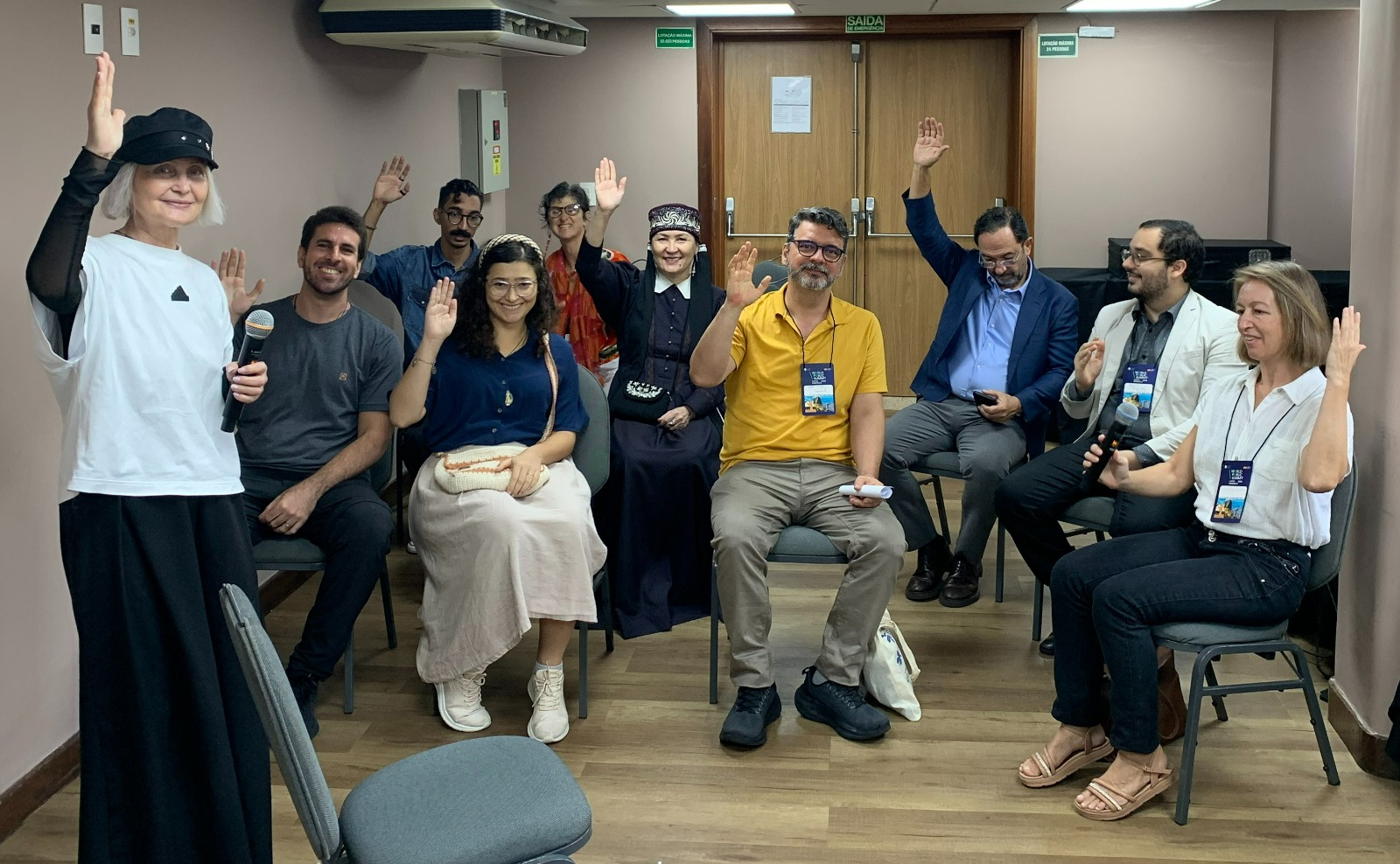
As part of the World Public Summit in Latin America, the World Organization of Writers (WOW) held a series of “World Literature Salon” meetings in Brazil. The dialogue among writers, translators, and readers connected Salvador and Rio de Janeiro, reaffirming the mission of the platform: to serve as an open space for cultural participation, mutual respect, and the living word directed toward the future.
The first World Literature Salon in Latin America took place in the Brazilian city of Salvador. The city offered an evening where poetry, translation, academic thought, and urban culture merged into a single experience. A small circular seating arrangement, open windows, and the atmosphere of an open seminar created a setting in which every word carried a measure of personal responsibility. The spoken word resonated at the crossroads of traditions. Writers, editors, professors, emerging authors, translators, and legal scholars gathered in the format of a literary salon to combine author readings with an analytical discussion on the horizon of 2035—exploring how technological acceleration is transforming cultural practices, educational paths, and our ability to hear and understand one another.
The structure of the meeting was both rigorous and flexible. Brief self-introductions established the participants’ professional backgrounds and current projects. Author readings—limited to one, or at most three texts—allowed every voice to be heard before the conversation turned to broader principles and consequences. The subsequent discussion unfolded in a circle, moving from the specifics of literary craft to general theoretical conclusions and back again, with careful attention to clarifying questions and reasoned argumentation.
The first thematic session focused on technological acceleration and its cultural consequences. Participants noted the increasing density of information flows and the growing demands placed on attention and perceptual discipline. As a counterbalance, they emphasized practices of “inner navigation”: slow reading, precise expression, and respect for the reader’s time. The semantic integrity of a text was viewed as an ethical standard, while editorial rigor was regarded as an instrument of public trust.
The second session addressed human identity and the competencies that remain the sovereign domain of human beings. Empathy, compassion, gratitude, moral self-reflection, and the willingness to support others and accept responsibility were identified as qualities that form the foundation of trust and social capital. Participants emphasized that these characteristics emerge from personal experience and free choice and therefore must be cultivated through education, communication, and responsible artistic practice.
Art was discussed as a means of translating private experience into a shared field of meaning. Words, music, dance, and cinema were seen as parallel channels performing the same task: transforming experience into forms that carry both beauty and knowledge. Within this context, the concept of “emotional precision” was highlighted—the ability to express lived experience in a way that preserves balance, allowing the pauses between lines to become a continuation of thought rather than mere ornamentation. It was precisely these moments of silence that created an atmosphere of concentration in which readers and authors met in a shared responsibility for meaning.
A separate discussion centered on translation and bilingualism. Translation practice sharpens sensitivity to nuance, reduces the risk of semantic distortion, and opens literary works to new audiences. Participants discussed mechanisms of cooperation among authors, editors, and translators that help refine tone and terminology, thereby strengthening the intercultural verification of ideas.
The legal and ethical segment focused on the human role in decision-making processes involving algorithms. Responsibility begins at the stage of defining a task, interpreting results, and evaluating consequences. According to the speakers, regulatory approaches should be calibrated to encourage innovation while simultaneously ensuring the protection of rights, transparency, and accountability.
The meeting produced several practical conclusions. First, participants emphasized strengthening linguistic and editorial culture: clear argumentation, thoughtful reviewing, and a courteous yet precise tone should become the standard of public writing. Second, they proposed educational initiatives, including courses in attentive reading and critical writing for school and university students, with a focus on interpretation and citation ethics. Third, they called for interdisciplinary projects looking toward 2035: joint publications, collaborative translation initiatives, and regular discussions at the intersection of the humanities, the arts, and law.
The city itself provided an essential context. Salvador is a place with a powerful cultural tradition, where the rhythm of the streets naturally rhymes with poetic lines and academic rigor coexists with vibrant living expression. The evening demonstrated the effectiveness of the circle as a format: equal distance among speakers created an opportunity to listen to content, maintain balance, and test one’s own arguments without the pressure of gestures or theatrical effects.
The final impression was one of practical clarity. The coming decade appears as a test of the maturity of language, empathy, and legal thinking. The response to this challenge lies in consistent practice: writing clearly, reading attentively, translating responsibly, debating on substance, and helping those nearby. The meeting in Salvador demonstrated that such a practice is achievable through interdisciplinary cooperation, careful work with language, and fidelity to high personal standards—without which the cultural agenda loses both coherence and trust.
I, Margarita Al, moderated the salon. Among the participants and guests attending in person were João Filho, Claudio Souza Pereira, Allex Leila, Gustavo Felicíssimo, Alice Vieira, Alberto Andrade, Maria Elizabeth, Rodrigo Vilosa, Maria Afita, Elena Olzeeva, Jefferson Guedes, and Alexander Ageev. Every guest of the salon read their own poetry.
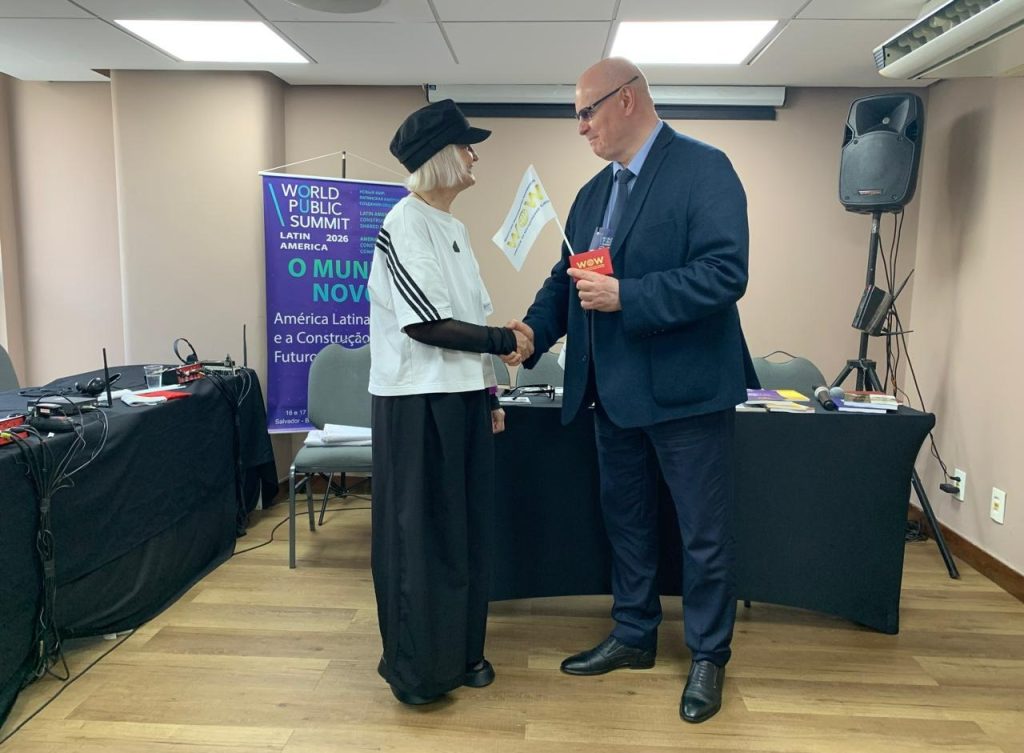
In the concluding part of the event, membership certificates of the World Organization of Writers (WOW) were presented to Alexander Ivanovich Ageev, Jefferson Guedes, Maria Elizabeth Vilosa, Alberto Andrade, and João Filho.
Margarita Al
President of the World Organization of Writers (WOW)
17 June 2026