 thesilkroadtoday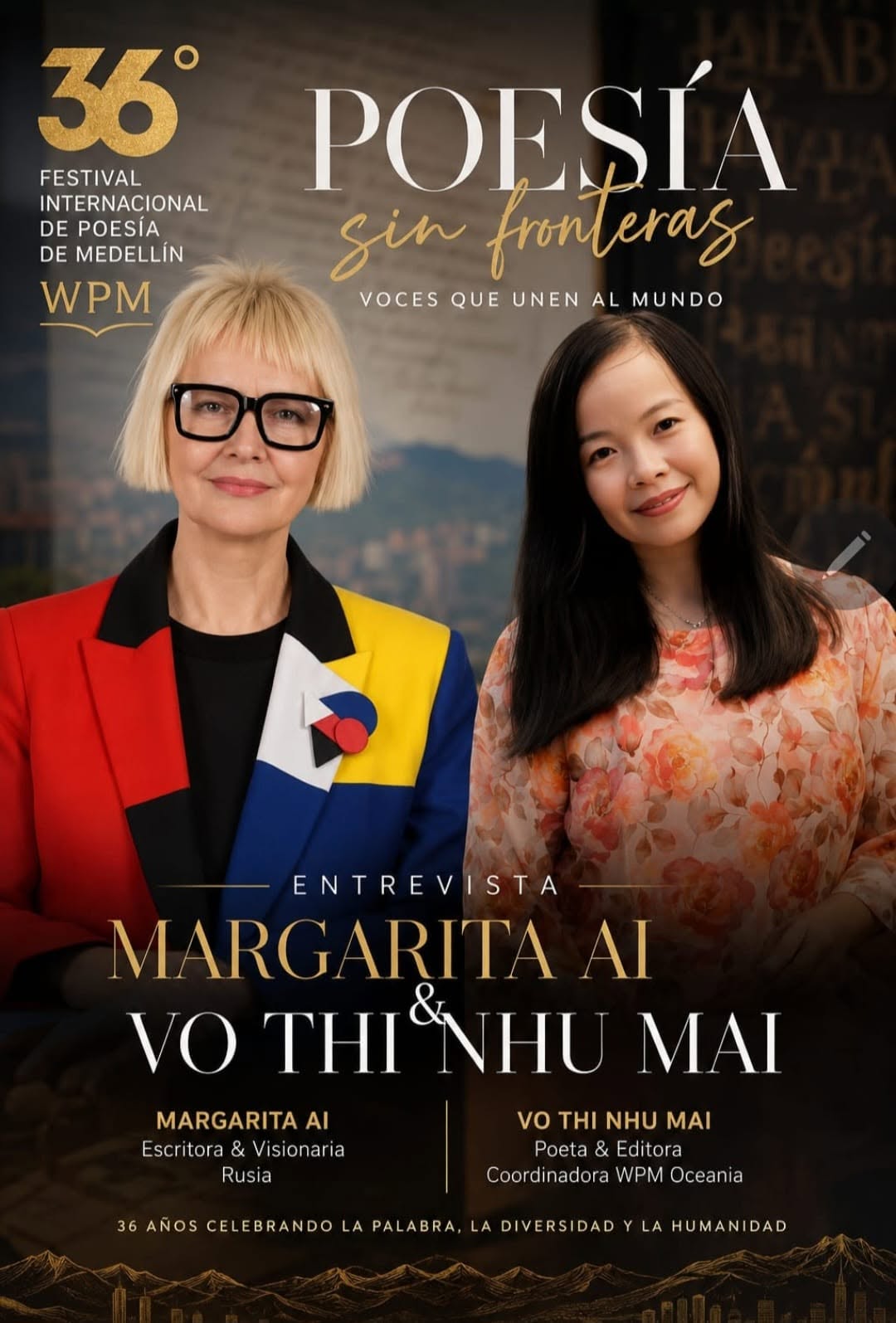
Conducted by Vo Thi Nhu Mai, Multicultural Press Australia
MEDELLÍN, Colombia — One of the world’s most renowned literary gatherings, the Medellín International Poetry Festival, has entered a new phase of international cooperation through a partnership with the World Organization of Writers (WOW), a rapidly growing global literary association dedicated to fostering dialogue among writers, preserving cultural diversity, and promoting literature as a force for peace.
Founded following a memorandum signed in Cairo in 2023 and officially registered in Moscow on December 25, 2023, WOW emerged from an initiative of the Eurasian Peoples’ Assembly. The organization was established with the ambition of connecting writers, literary institutions, and cultural organizations across continents while advocating for literature’s humanitarian role in an increasingly divided world.
Among its founding figures are UNESCO Goodwill Ambassador Alexandra Vasilyevna Ochirova and poet Margarita Al, who serves as President of WOW and Chair of the Literary Council of the Assembly of the Peoples of the World.
Since its establishment, WOW has expanded rapidly. The organization has convened international congresses bringing together writers from dozens of countries, launched the multilingual WOW World Literary Prize, and developed initiatives supporting young authors, literary translation, and intercultural cooperation.
Against this backdrop, the signing of a cooperation agreement with the Medellín International Poetry Festival marks another significant milestone in WOW’s growing international presence.
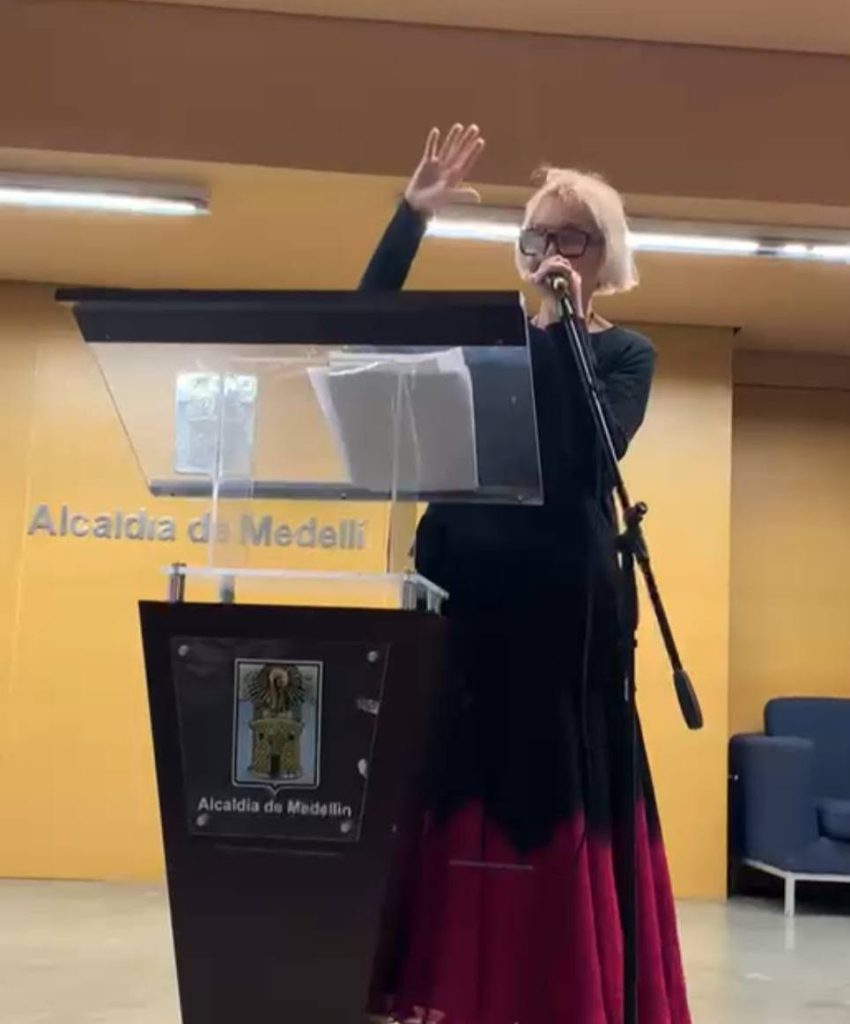
During the festival, I spoke with Margarita Al about the origins of the partnership, the enduring importance of poetry, and why she believes literature remains one of humanity’s strongest instruments for peace.
THE INTERVIEW
What inspired WOW to partner with the Medellín International Poetry Festival at this particular moment?
Margarita Al: Thank you, that is an excellent question.
My friendship with Fernando Rendón goes back to 2019, when I invited him to participate in the Eurasian Literary Festival (LIFF) in Baku, Azerbaijan. That same year, both the Medellín International Poetry Festival and LIFF, which I direct, were recognized among the world’s leading literary festivals. In a sense, we were even viewed as competitors.
But literature should never be driven solely by competition.
Its true purpose is to unite people.
That idea eventually became one of the foundations of the World Organization of Writers. After years of cooperation between literary communities, we formally established WOW in 2023 with a simple but ambitious mission: to bring together writers, poets, literary festivals, publishers, translators, and cultural organizations from every region of the world.
Today I have the honour of serving as President of WOW, and one of my principal responsibilities is helping to build those international connections.
That is why signing this agreement with Fernando Rendón and the Medellín International Poetry Festival is such an important moment for us. It is more than a ceremonial partnership, It represents a long-term commitment to cooperation between two literary communities that have admired each other’s work for years.
We already know that the Medellín Festival has successfully developed projects beyond Colombia, and I sincerely hope that together we will one day organize major Medellín Poetry Festival events in Russia and in many other countries.
Poetry belongs to every nation, every language, and every culture.
The more opportunities we create for writers to meet, the stronger our global literary community becomes.
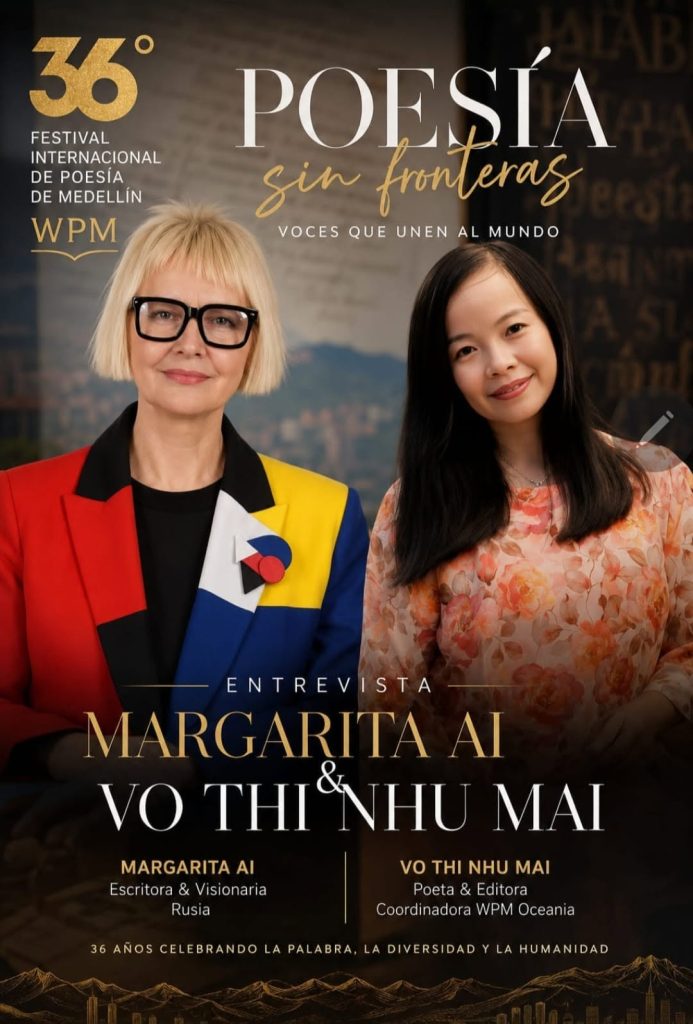
In your opinion, what role does poetry play today in strengthening peace and fostering intercultural dialogue?
Margarita Al: I am both a poet and a philosopher, and I have always believed that poetry often becomes the true avant-garde of civilization.
People sometimes imagine philosophy leading the way, but I see it differently.
Poetry senses change first.
It discovers new meanings before society fully understands them, while philosophy listens carefully and later explains those discoveries. Poetry helps us recognize new directions—not only in literature, but in the cultural development of humanity itself.
That is enormously important.
There is a phrase that has accompanied humanity for centuries:
“In the beginning was the Word.”
That has always been true.
It remains true today.
And I believe it will always remain true.
The poetic word possesses an extraordinary concentration of meaning. Within poetry live philosophy, culture, memory, ethics, history, and spirituality.
But I would go even further.
Poetry also influences economic and technological progress.
Every innovation begins as an idea.
Every idea begins as language.
Someone must first imagine it.
Someone must first speak it.
Often those first words seem strange or even incomprehensible. Society may not immediately recognize their significance. But over time those ideas become accepted, understood, and eventually integrated into everyday life.
That is why words carry such enormous responsibility.
Poetry is not simply an artistic expression of emotions.
It expands the boundaries of thought.
It teaches us empathy.
It allows cultures to speak to one another.
And in a world that is increasingly fragmented by conflict and misunderstanding, poetry remains one of the few universal languages capable of bringing people together beyond politics, borders, or ideology.
For me, that is one of literature’s greatest contributions to peace.
What new opportunities will this partnership create for young and emerging writers and poets around the world?
Margarita Al: I believe the greatest opportunity is connection.
Today writers communicate continuously through international networks and online communities. Many of us already know one another through these literary circles, but meaningful collaboration requires more than digital communication.
Writers need places where they can meet.
They need festivals.
They need translations.
They need dialogue.
Knowing when literary events take place is much more important than many people realize. To participate in a festival such as Medellín often requires nearly a full year of preparation. Writers must organize visas, finances, travel, publications, translations, and new work. They prepare themselves creatively for readings before international audiences.
Medellín offers so many stages and venues that poets often need entirely new collections of poems to present throughout the festival.
Translation is equally essential.
Without translation, literature cannot travel.
Without translators, cultures cannot truly hear one another.
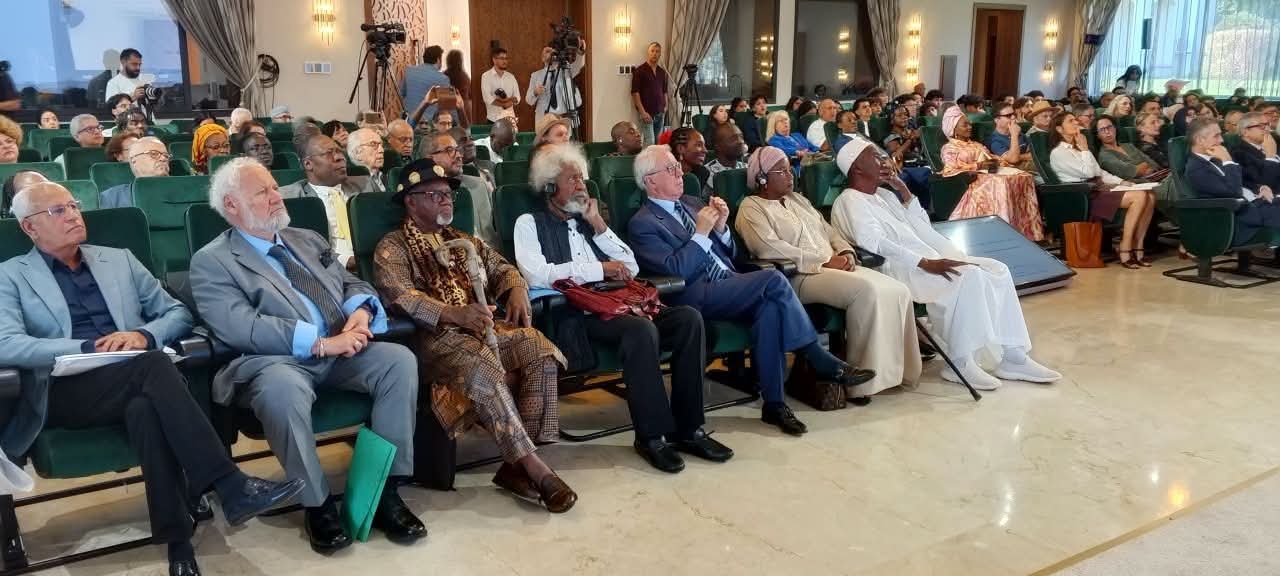
One of the initiatives we are especially proud of emerged during the Second Congress of the World Organization of Writers, where delegates from 65 countries participated. Together we proclaimed the Decade of the Languages of the Peoples of the World—an initiative dedicated to celebrating linguistic diversity while strengthening international literary cooperation.
Each year highlights different linguistic traditions, recognizing that every language carries its own history, philosophy, and way of understanding the world.
Today, here in Medellín, we are opening a new chapter dedicated to the Spanish language. Similar cultural initiatives devoted to Arabic and other languages are already taking place in different regions of the world.
These projects are not symbolic ceremonies.
They create real exchanges.
Writers travel.
Books are translated.
Poets meet readers they otherwise would never encounter.
Cultures begin conversations that continue long after festivals have ended.
The more we learn each other’s languages, the more we understand each other’s literature.
The more we understand each other’s literature, the closer we become as human beings.
That is the future we are trying to build.
Building Bridges Through Poetry
The cooperation agreement between WOW and the Medellín International Poetry Festival reflects a broader vision shared by both organizations: that literature should not remain confined within national borders but should circulate freely across languages and cultures.
For Margarita Al, the partnership is another step toward building an international community where poetry serves not only as an art form but also as a bridge between peoples.
As the interview concluded, she reflected on the recognition she had received during the festival with characteristic humility.
“I am very happy and deeply honoured. Thank you very much.”