 thesilkroadtoday
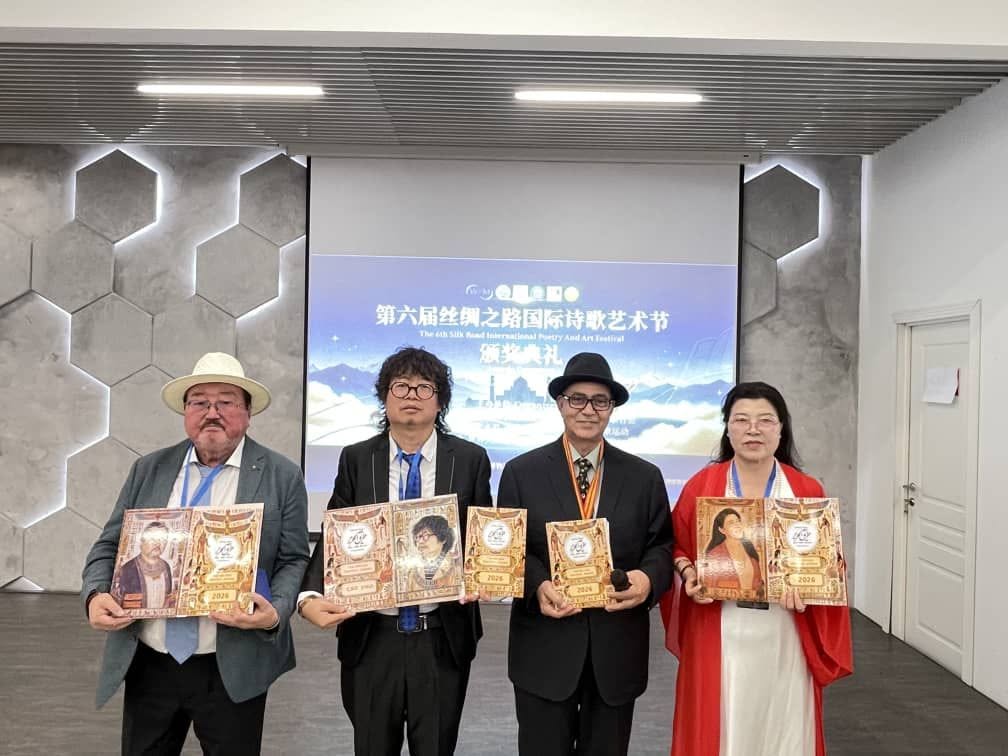
Every literary journey leaves behind more than memories; it leaves books bearing the voices of the people and places encountered along the way. During the 6th Silk Road International Poetry and Art Festival, which brought together writers, poets, translators, and artists across Uzbekistan and Kazakhstan, I had the privilege of receiving a remarkable collection of books directly from their authors.
Each volume was offered not merely as a gift, but as an invitation to enter a distinct cultural landscape, to discover another language of memory, history, imagination, and identity. In this series of articles, I will present these works one by one, offering reviews that go beyond summary to explore their literary merit, cultural significance, and the conversations they create across borders. Together, these books form a living library of the contemporary Silk Road, where literature continues to unite civilizations through the enduring power of the written word.
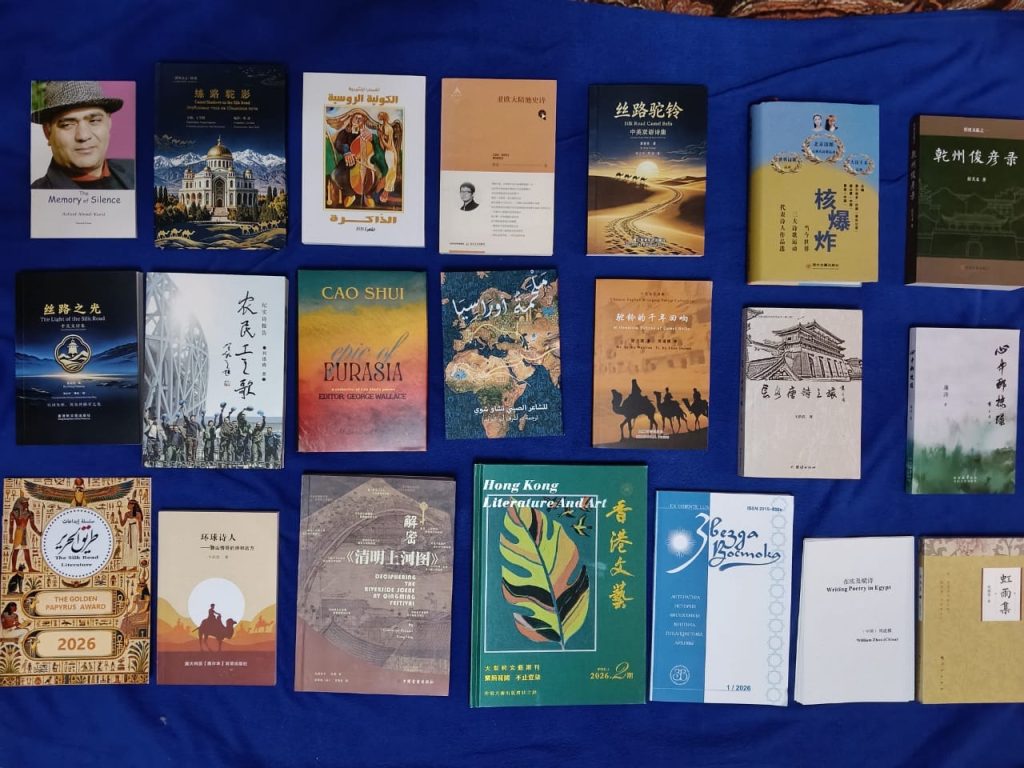
A Review of Deciphering the Riverside Scene at Qingming Festival
Some books invite readers to admire a work of art; others teach them how to see it. Deciphering the Riverside Scene at Qingming Festival belongs to the latter category. Written by Confucian Zhangzi Hong Ling (Kong Yizhang Zihongling)—a distinguished poet, scholar, calligrapher, painter, and a 78th-generation descendant of Confucius—the volume is a remarkable literary and cultural exploration of one of China’s greatest artistic treasures: Zhang Zeduan’s immortal handscroll Along the River During the Qingming Festival.
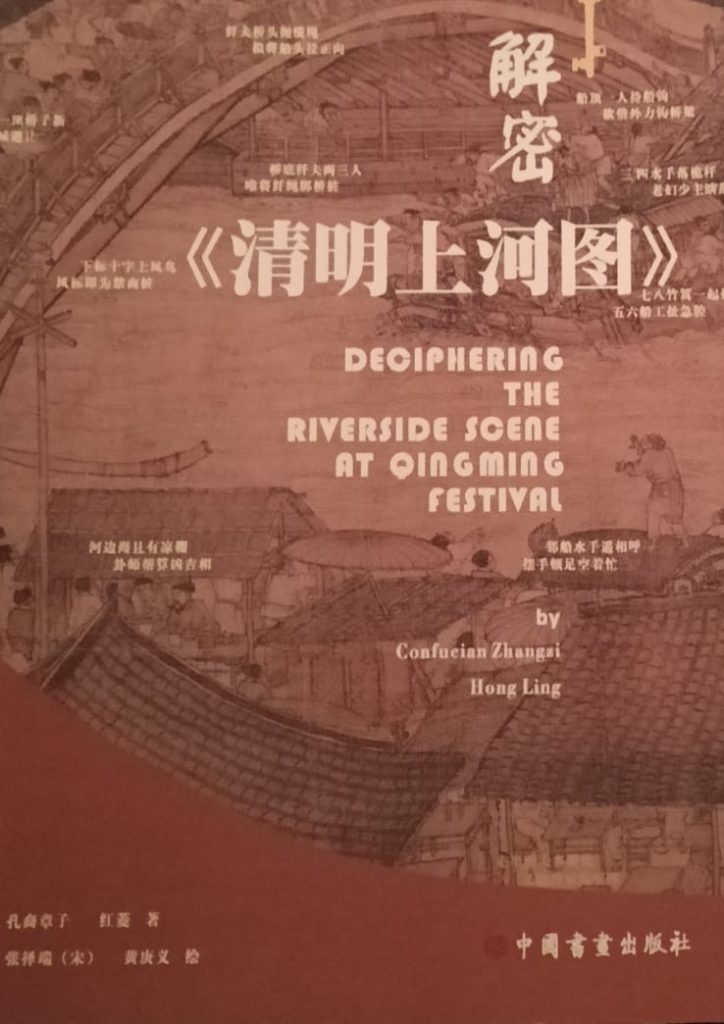
For centuries, the famous Song Dynasty painting has fascinated historians, artists, and lovers of Chinese civilization. Stretching over five meters in length, the scroll portrays the bustling life of the Northern Song capital with extraordinary realism. Yet Zhangzi Hong Ling argues that the painting is far more than a beautiful panorama; it is an encyclopaedia of an entire civilization. His book seeks to decode every gesture, every architectural detail, every boat, bridge, merchant, and passerby, revealing layers of meaning often overlooked by ordinary viewers.
The author’s achievement is impressive in both scale and dedication. After more than six years of meticulous research into historical documents and close examination of the painting, he produced an annotated poetic commentary comprising 2,680 seven-character lines. This unusual combination of scholarship and poetry transforms the book into a bridge between academic research and artistic appreciation. Rather than offering a conventional art historical analysis, Zhangzi revives the painting through verse, allowing readers to experience its rhythm, movement, and emotional depth.
One of the book’s greatest strengths lies in its ability to animate the smallest details. A fleeting moment on Hongqiao Bridge—a group of men leaping over the railing, sailors lowering their masts, boatmen fastening ropes to bridge piers, or workers struggling to guide vessels beneath the bridge—becomes a vivid narrative of engineering, cooperation, and human ingenuity. Scenes that may initially appear chaotic are patiently interpreted as evidence of sophisticated navigation techniques, urban planning, and the vibrant commercial life of the Northern Song Dynasty.
The chapter devoted to shipbuilding is particularly fascinating. Through poetic descriptions, readers discover advanced maritime technology centuries ahead of its time: balanced rudders, pivoting masts that could be lowered beneath bridges, iron-nailed hulls, watertight joinery, and innovative sailing mechanisms. These passages remind us that the Song Dynasty was not only a cultural golden age but also a period of remarkable scientific and technological achievement. The poetry preserves technical knowledge while maintaining an elegant lyrical voice—a rare accomplishment.
Structurally, the book follows the geographical progression of the original scroll. Beginning with the peaceful suburban landscape, it gradually enters the world of river dwellers, crosses the celebrated Hongqiao Bridge, explores lively riverside markets, passes through the city gates, celebrates urban prosperity, and finally reaches the residences of noble families before concluding with the historical journey of the painting itself. This arrangement mirrors the visual experience of slowly unrolling the masterpiece, encouraging readers to travel through the landscape rather than merely observe it.
Beyond its artistic analysis, Deciphering the Riverside Scene at Qingming Festival is also a meditation on cultural memory. Zhangzi compares the painting’s significance in Chinese civilization to Leonardo da Vinci’s The Last Supper and the Sistine Chapel ceiling in Western culture, suggesting that familiarity with this masterpiece is essential to understanding China’s artistic identity. His conviction reflects not cultural pride alone but a sincere desire to preserve and communicate one of humanity’s greatest visual narratives.
The author’s own distinguished career enriches the work. As a celebrated professor, poet, playwright, novelist, calligrapher, and painter—recipient of numerous international honours, including a Gold Medal at the Fifth Silk Road International Arts Festival—Zhangzi brings multiple artistic disciplines into conversation. His mastery of literature enables him to interpret painting poetically, while his understanding of visual art ensures historical precision and aesthetic sensitivity.
Ultimately, this volume is much more than a commentary on a famous painting. It is an invitation to rediscover the Northern Song Dynasty as a living civilization populated by merchants, craftsmen, scholars, sailors, musicians, children, and travellers whose everyday lives unfold across the handscroll with remarkable vitality. By transforming visual details into poetic language, Zhangzi Hong Ling restores voices to figures who have remained silent for nearly a thousand years.
Deciphering the Riverside Scene at Qingming Festival is therefore an important contribution to art history, Chinese cultural studies, and literary scholarship. It demonstrates that great paintings are not static images but living texts waiting to be read. Through patient research, poetic imagination, and profound cultural insight, Zhangzi Hong Ling has produced a work that enriches our understanding not only of a masterpiece but also of the civilization that created it. For readers interested in Chinese art, history, literature, or the dialogue between image and word, this book offers an unforgettable intellectual and aesthetic journey.
Dr. Ashraf Aboul-Yazid