 thesilkroadtoday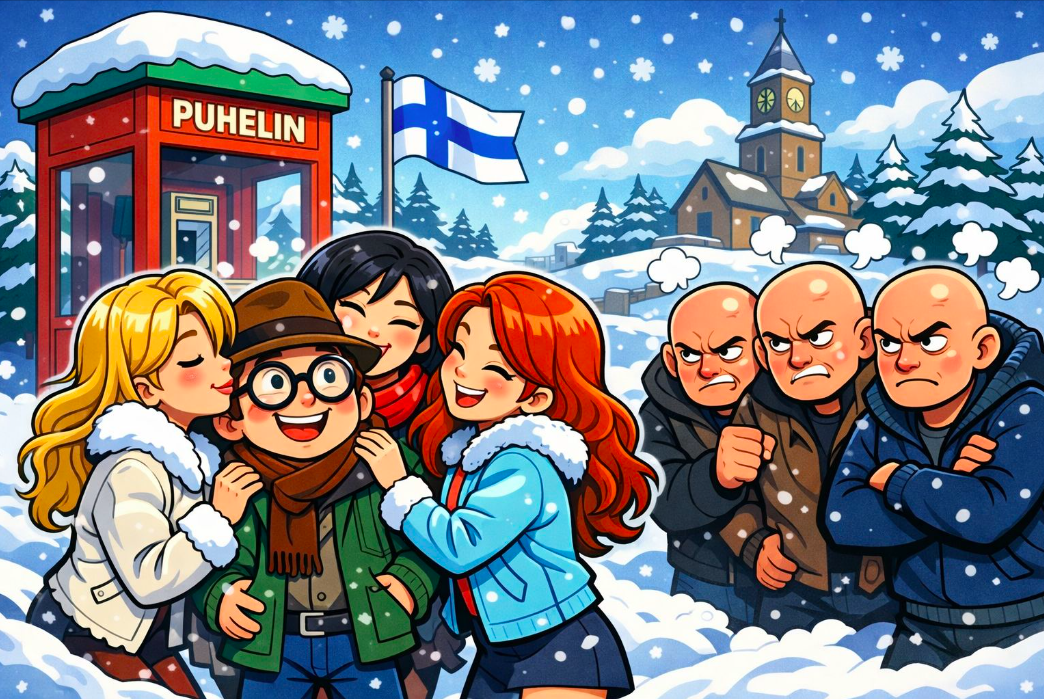
What do you think of a restaurant that serves chicken soup on the condition that the chef does not use the chicken’s organs, so that no sexual connotations might arise—because sex is forbidden—and that he gets rid of its head and wings, so it neither thinks nor flies with a taste of freedom that is politically rejected and religiously condemned? Conversation in the restaurant must not touch, directly or indirectly, on any political or religious matters, and the chicken’s breast must not be placed naked in hot water, as that would be a sin to which human-rights organizations might object.
In short: chicken soup… without chicken!
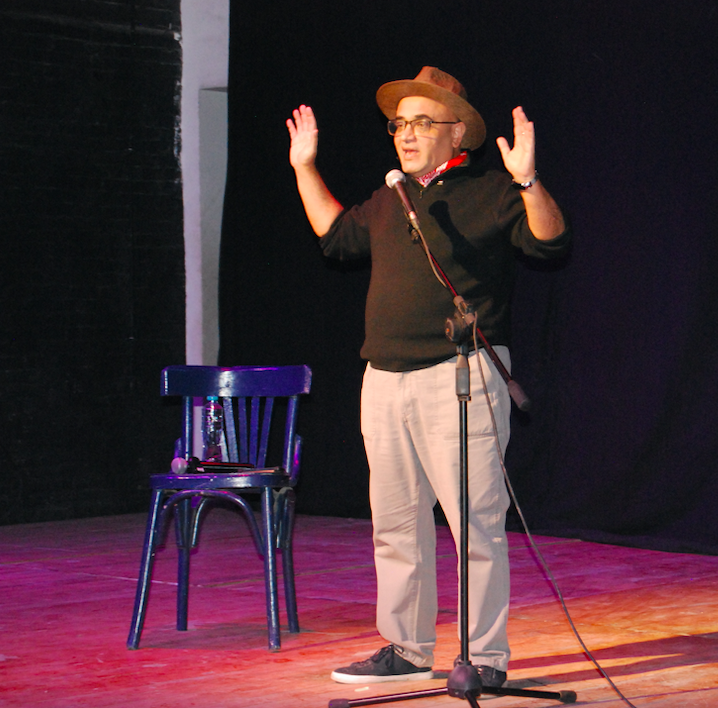
That was the challenge facing the seasoned media “man of the impossible,” Hossam El Sokkari, who entangled his audience in the second show of the game he had begun, as he starts a new journey—after having tried all paths and reached their peaks—only to leave them behind and begin again, challenging himself anew.
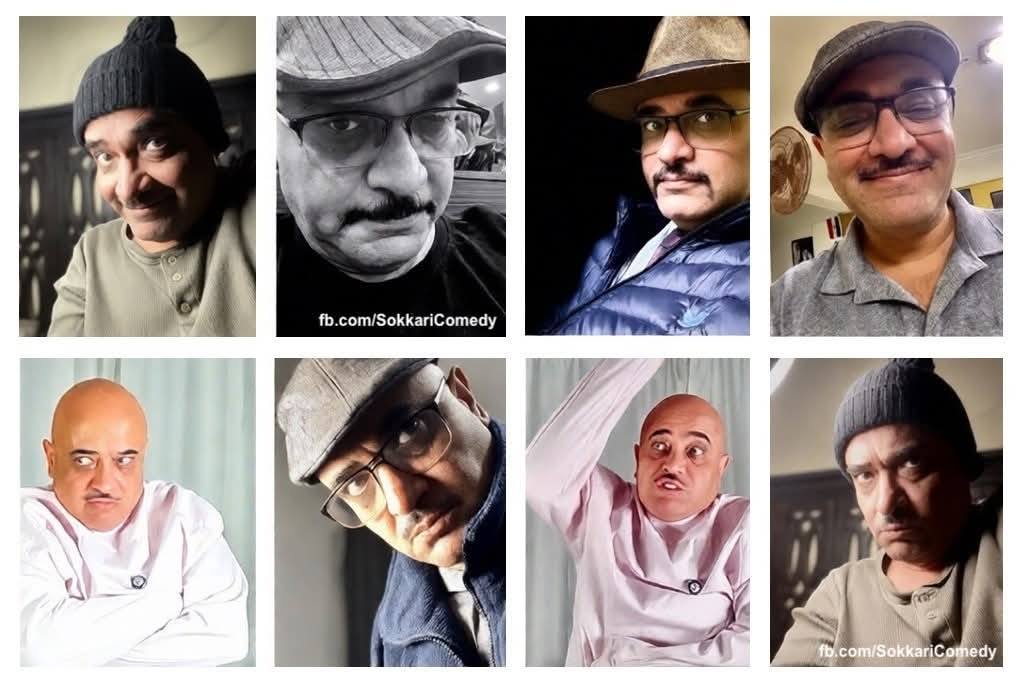
In his previous professional decades, Hossam El Sokkari addressed the general public from behind a veil: whether through the silver screen from a television studio somewhere in the Capital of Fog or the City of a Thousand Minarets, or in a blue space where no one communicates except through the clouds of its virtual skies. Now, however, he breaks all those barriers to face a live audience, face to face, and step onto the stage—as presenter, writer, actor, director, and producer. Had he been alone, he would have played the role of the audience as well.
He is a man of challenges. But to present stand-up comedy without sex, politics, or religion means he must offer an alternative—or summon three alternatives to compensate for these three absences.
In short, El Sokkari had to invent his own Sokkari stand-up.
The successful choice of the Finnish experiment relied on surprise. True, this is no longer far from imagination, but evoking Finland—its people and its time—was accompanied by the creation of a large lexicon and a substantial encyclopedia, after which the audience undoubtedly became more knowledgeable. Here he establishes a distinct feature and a unique identity; the Sokkari stand-up audience will expect a cognitive dose that should be no less than an exploration of the worlds of language, culture, and travel literature.
Hossam El Sokkari appeared as a serious image of the man overtaken by Finland, and I think that in his next show he may devote more time to specific characters, perhaps even printing some of the caricatures he published, or showing us glimpses of the photos he alluded to.
As for the second Sokkari alternative, it was the presentation of new voices. I admit I did not enjoy the two pieces that appeared that evening. True, I write classical poetry, but I published a colloquial poetry collection in 1989; still, I did not find the colloquial texts that reached my ears appealing, despite the social and emotional value their author ascribed to them. Perhaps that is a flaw in me, as I am detached from the vocabulary that has become a hallmark of a group that may find acceptance in the street, but not on a theater stage.
Then we come to the visitor from India, who was no less heavy; he seemed to have lost his sense of humor along the way, or perhaps thought that travel is merely a discovery of the other, whereas it is— in my view—a rediscovery of the self. Spicy food may be a stereotype, but look today at Cairo alone: the spread of Indian restaurants and Indian spices used by homemakers and cooking shows—does that not signal an acceptance of food culture? India today is known as a tourist country, and its table has become palatable to the world.
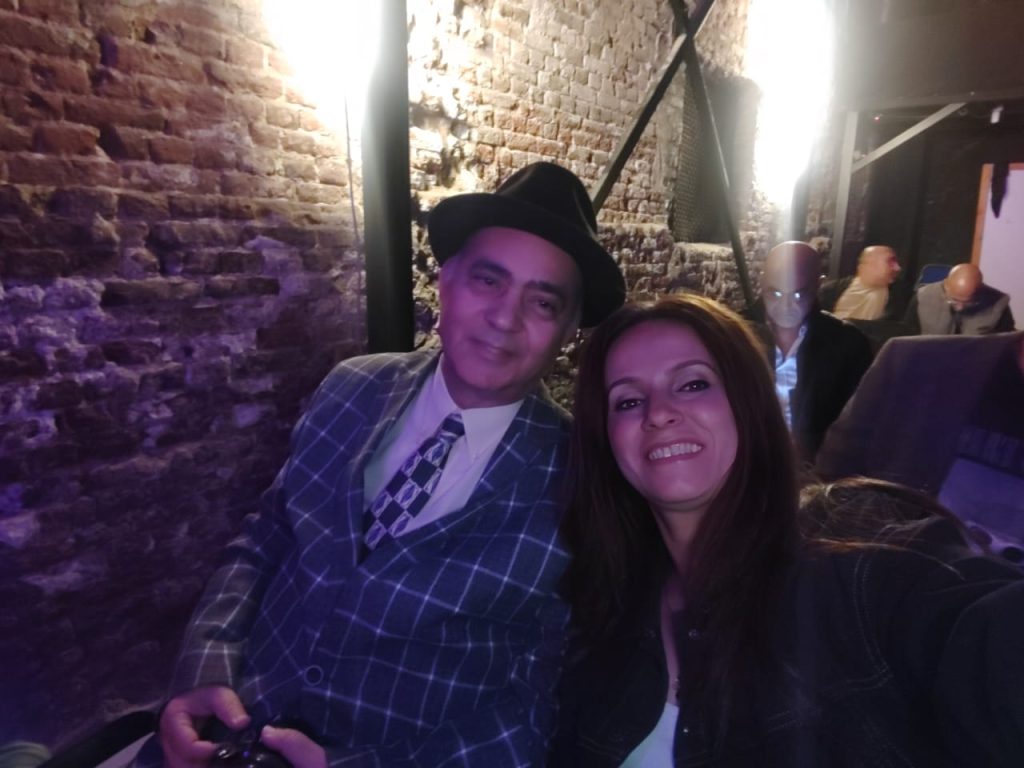
Breaking the barrier between Hossam El Sokkari and his audience was not limited to what he said on stage. The third alternative came through creating a dialogue between the live audience and the virtual audience that used to message him or comment on his work. This lays the foundation for a new current in stand-up comedy—not by recycling social media, but by creating a new participatory space that turns the show into a living organism, one that does not end with the fall of the curtain but continues across new spaces.
Sokkari’s stand-up comedy created a lively atmosphere long missed by Cairo’s audience, and perhaps this successful show will encourage the establishment of a new current for this comprehensive art—one that only an artist with El Sokkari’s courage, culture, and experience can deliver.
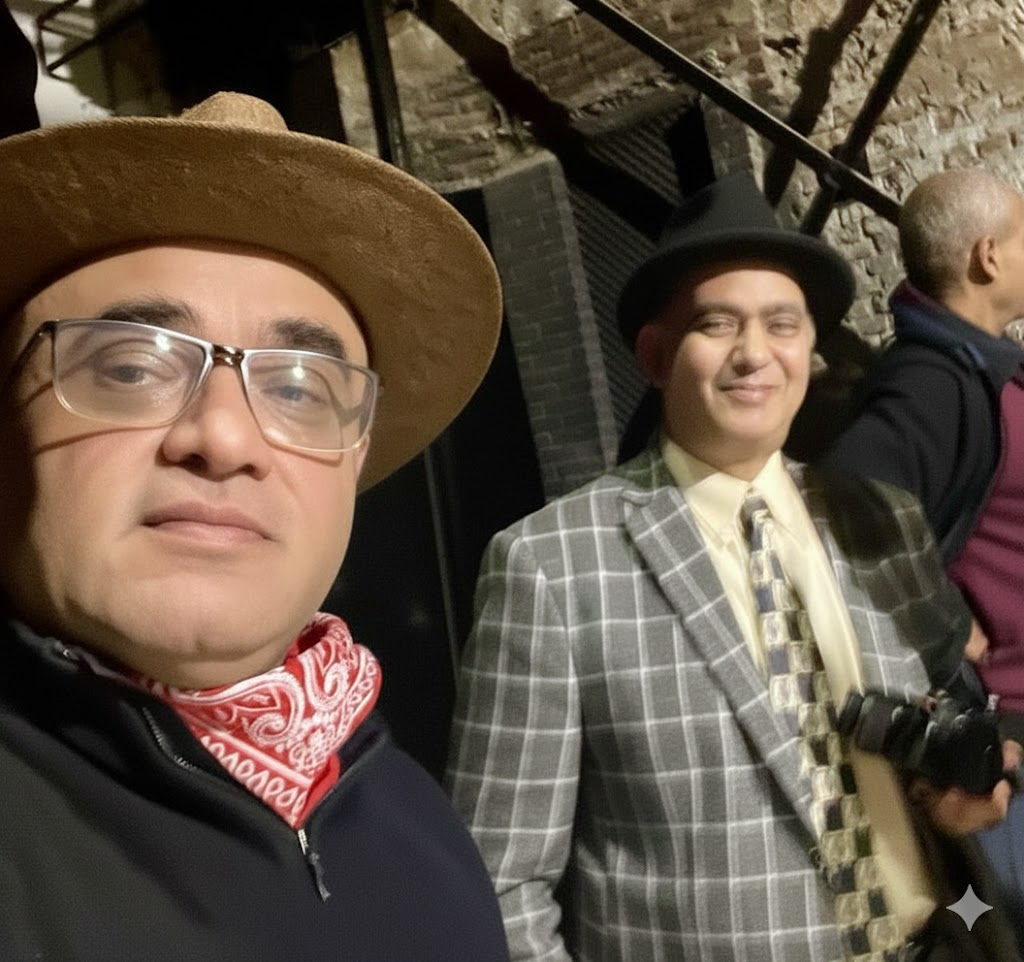
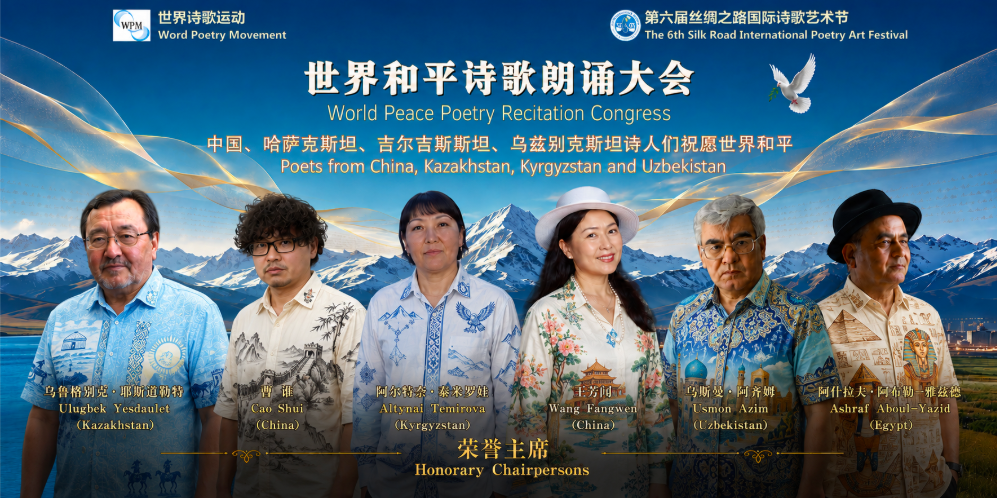
Post-show selfie: Hossam El Sokkari and Ashraf Aboul-Yazid