
 thesilkroadtoday
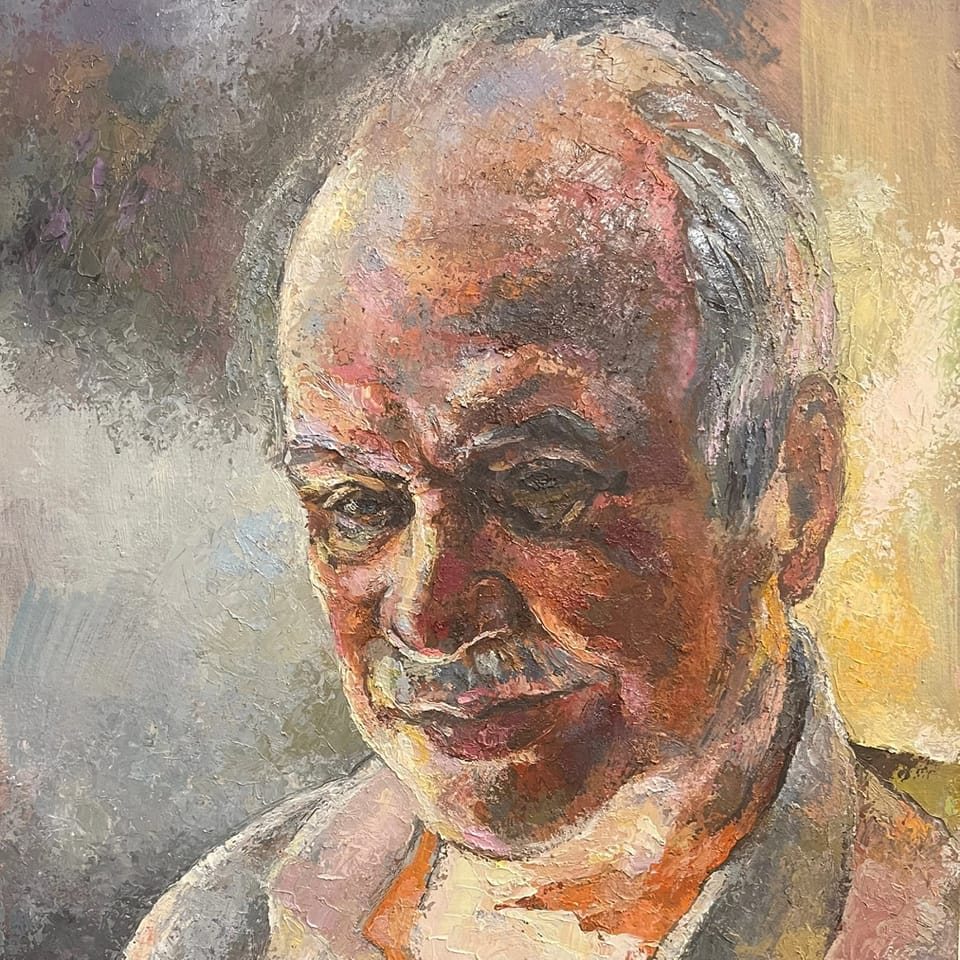
The global literary community is mourning the loss of Konstantin Alexandrovich Kedrov, a towering figure in Russian and world poetry. A poet, philosopher, literary critic, and the visionary behind the theory of the metacode and the term metametaphor, Kedrov was the founder of metametaphorism—a poetic school that merged cosmic thought with lyrical precision.
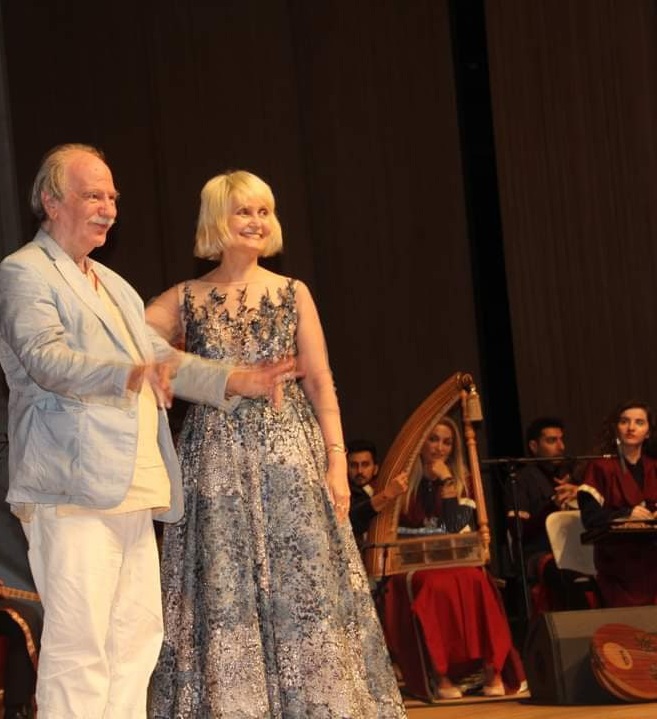
Margarita Al, President of the World Organization of Writers (WOW) and head of the Literary Council of the Assembly of the Peoples of Eurasia and Africa, issued a heartfelt farewell to WOW members:
“Konstantin Alexandrovich Kedrov has passed away — a poet, philosopher, and author of the theory of the ‘metacode’ and ‘metametaphor.’ His words were as precise as a formula, and as infinite as the universe.
Born in Rybinsk in 1942 under the surname Berdichevsky, Kedrov began his poetic journey in the early 1960s. His work became a brilliant fusion of intellectual inquiry and lyrical depth, merging science and cosmos, logic and emotion into a unique literary force.
A professor at the Gorky Institute of Literature, Doctor of Philosophy, and Candidate of Philological Sciences, Kedrov had been a member of the USSR Writers’ Union since 1989 and served on the executive committee of the Russian PEN Club.
He founded the literary group DOOS — the Voluntary Society for the Protection of Dragonflies — one of the most poetic and independent collectives in modern literary history.
Nominated for the Nobel Prize in Literature (2003–2005), he received the Manhae Prize in South Korea (2013) and the World Literary Prize WOW (2023). His concept of the metametaphor redefined the poetic image as a universe in itself.
He taught us to see the cosmos in a line of verse, to feel infinity in every word. His legacy will shine like the light of distant stars.
Bright memory to the poet, the thinker, and the man for whom poetry was the breath of the universe.”
Renowned Russian poet and UNESCO Goodwill Ambassador Alexandra Ochirova shared her moving tribute:
“This is impossible to accept. One can only hope that the immortality of the soul is more than a centuries-old human dream.
A great poet, thinker, and human being has left us—someone who devoted his life to serving the Word and to beauty. He looked beyond the limits of the Universe and the human spirit, uniting eternity with the moment, thought with emotion, and making the invisible visible, illuminated by love and light.
The pain of this loss will linger for his friends and loved ones, but his legacy—recognized as a national treasure—will endure in Russian literature and global culture.
I love you, dear Konstantin Alexandrovich. Eternal memory, eternal love, and boundless gratitude.
Yours, Alexandra Ochirova.”
From Austria, Russian poet Victor Klykov reflected:
“An extraordinary poet has passed—a man who embodied the spirit of contemporary global poetry. He was a kind, generous soul, always encouraging young poets on their journey. He gave us not only a new poetic vision, but a philosophical one as well: the ‘philosophy of poetry.’ His words, his thoughts, and his mentorship will stay with us. Farewell, dear friend and teacher.”

WOW member Olga expressed her admiration:
“Blessed memory to the great poet of the Universe! Konstantin Alexandrovich will always live in our hearts. His masterful, unmatched body of work will endure for centuries.
He had a pure, radiant soul and created unmatched beauty. I remember his words about death — how it cannot exist while someone is remembered.
Konstantin Kedrov will live on in many hearts. Eternal memory to you, Konstantin Alexandrovich. We remember you. We love you. Forever.”
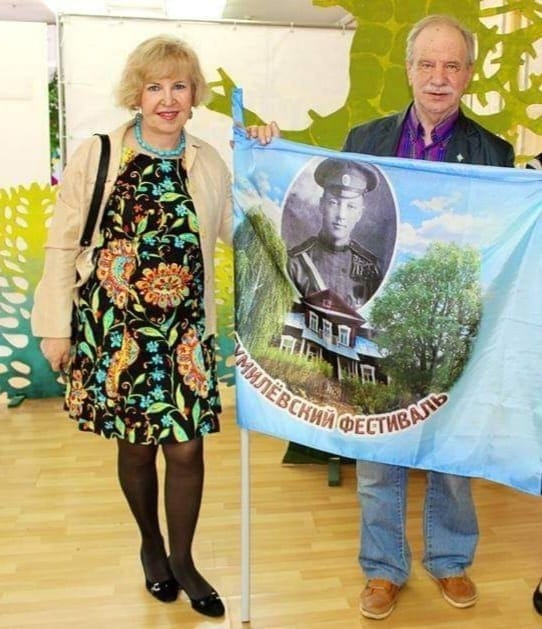
Poet and cultural studies expert Olga Medvedco added:
“The poet, philosopher, and teacher Konstantin Kedrov has passed into eternity. He greatly encouraged me in my work with the Gumilyov Society. What rich and inspiring conversations we shared! A truly extraordinary thinker. Blessed be his memory.”
Celebrating a Life in Verse
On November 12, 2024, the literary community in Moscow celebrated Kedrov’s 82nd birthday. On that occasion, WOW President Margarita Al wrote an open letter honoring the organization’s co-founder:
“Dear colleagues and friends,
Today we celebrate the 82nd birthday of Konstantin Alexandrovich Kedrov — an exceptional poet, Doctor of Philosophy, and the visionary behind the theories of the metacode and metametaphor.
A laureate of the WOW Prize and the Manhae Prize, Kedrov continues to inspire us. On this special occasion, I invite everyone to offer their poetic wishes in the form of a quatrain. Let this become a new tradition for the World Organization of Writers, a poetic tribute to one of our finest minds.”
The Manhae Prize: A Global Honor
The Manhae Prize, referenced by Margarita Al, is a prestigious set of awards given in the categories of Peace, Social Service, Academic Excellence, and Arts & Literature. It is named after Han Yong-un (1879–1944), a poet, reformist Buddhist monk, independence activist, and resistance figure against Japanese occupation. The awards are presented by the Society for the Promotion and Practice of Manhae’s Ideals.

Across Continents: Encounters with Kedrov
In Nepal, the author met Anuradha Koirala, founder of Maiti Nepal and the country’s first female governor. A celebrated activist, she was named CNN Hero of the Year (2010) and won the Manhae Prize for Community Service.
From Turkey, thanks to Margarita Al, the author connected with Kedrov during a video call. The poet proudly displayed his Manhae Prize for Literature (2013) and warmly congratulated the author on receiving the same honor in 2014.
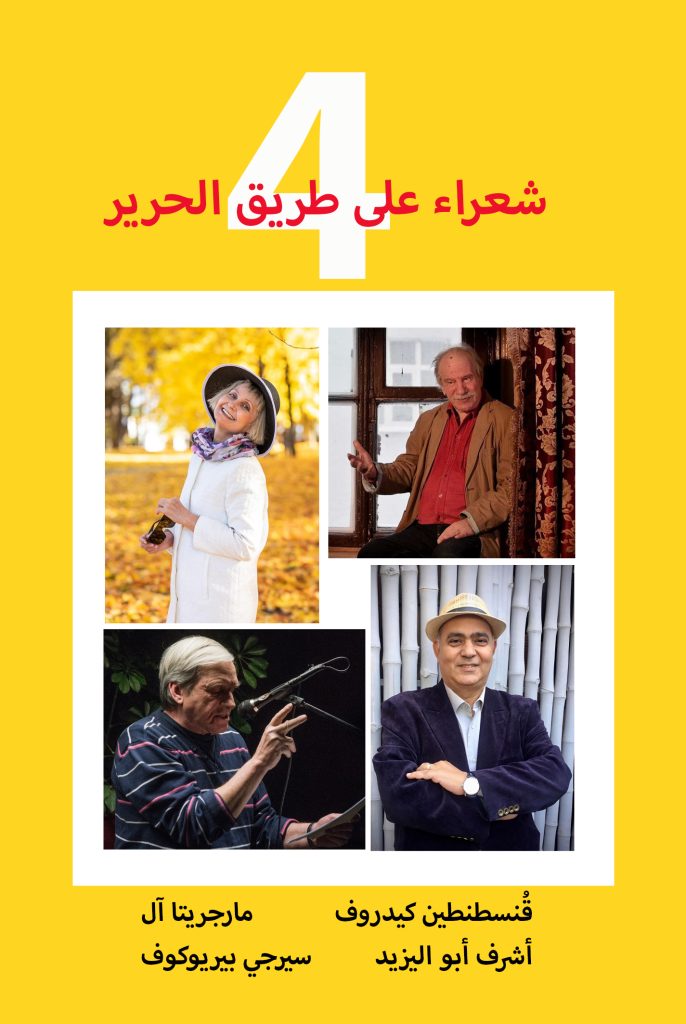
Later, in Cairo, during the sixth edition of the Eurasian Literary Festival, their paths crossed again. This meeting inspired the author’s Arabic translations of Kedrov’s poetry, featured in the anthology Four Poets on the Silk Road. This collection included poems by Konstantin Kedrov, Margarita Al, Sergey Biryukov, and Ashraf Aboul-Yazid, and was released at the 2023 LIFFT Eurasian Literary Festival.
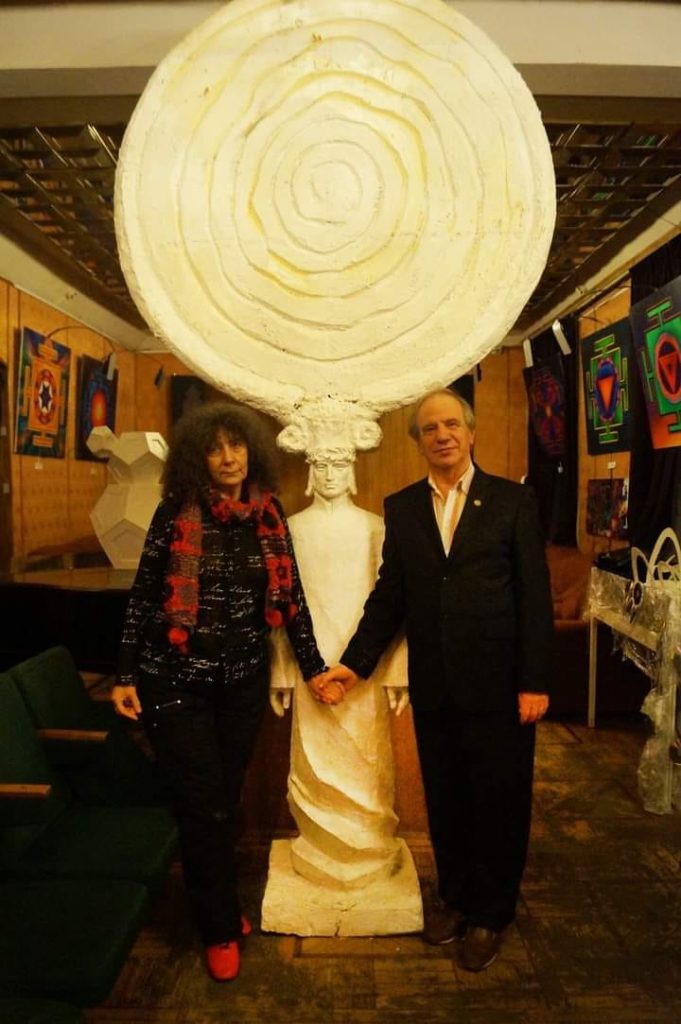
2013, at Chekhovka on Strastnoy 6, at the exhibition of sculptor Mokrousov.
Photo by Margarita Al — with Konstantin Kedrov and Elena Katsyuba.
A universe has dimmed, yet its light continues to shine in words — in poems, philosophies, and memories. Konstantin Kedrov’s spirit lives on, eternal in the constellation of world poetry.

I’m not sure why but this website is loading extremely slow for me.
Is anyone else having this issue or is it a problem on my end?
I’ll check back later on and see if the problem
still exists.
Also visit my web site – nordvpn coupons inspiresensation