
 Africa enters 2026 carrying a familiar paradox: a continent alive with ideas, talent, and institutional momentum, yet still wrestling with gaps between promise and practice. This edition of CAJ International Magazine captures that tension with rare clarity, bringing together voices from parliaments and villages, global forums and local markets, screens and canvases, bookshelves and city streets.
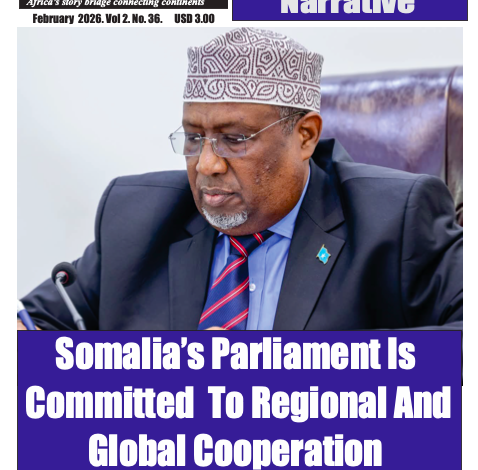
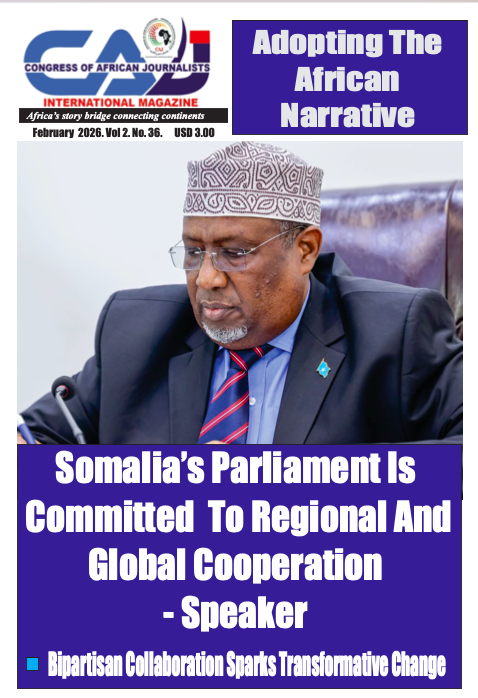
Our cover story from Somalia sets a powerful tone. Speaker Hon. Sheikh Adan Mohamed Nur Madale reminds us that democratic institution-building in Africa is not an abstract aspiration but a daily, negotiated effort. The work of Somalia’s 11th House of the People—marked by bipartisan cooperation with the Senate—demonstrates how legislative cohesion can translate into people-centred laws on security, health, education, and economic recovery. In a region too often framed through conflict, Somalia’s parliamentary commitment to regional and global cooperation signals an Africa determined to shape its own governance narratives.
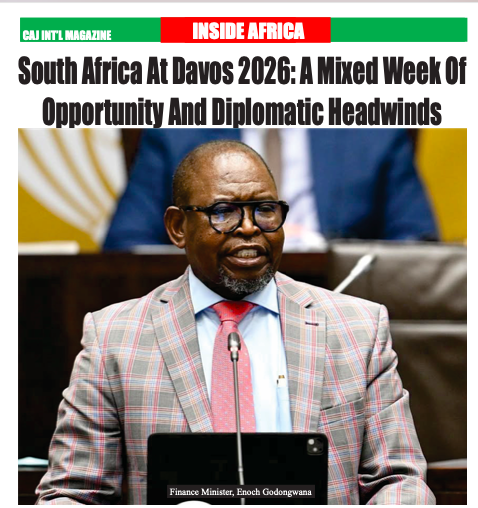 From Mogadishu to Davos, Africa’s engagement with the world remains complex. South Africa’s mixed week at the World Economic Forum illustrates both opportunity and diplomatic headwinds, revealing how African states must navigate global capital, geopolitics, and national priorities with strategic clarity. The lesson is clear: dialogue matters, but it must be anchored in coherent domestic visions.
Those visions must begin early. The report from Tanzania’s Kagera region is a sobering reminder that neglecting Early Childhood Development is not merely a social oversight but a strategic failure. A continent whose future population is overwhelmingly young cannot afford to exclude its children from health and learning systems at the most formative stage of life.
Similarly, debates on health insurance across Africa show progress and persistent inequality coexisting uneasily—coverage expanding in some countries while millions remain one illness away from poverty.
Urban Africa, meanwhile, is reinventing itself. From Accra to Lagos, the repurposing of urban assets offers a sustainable path through rapid population growth, blending economic vitality with environmental responsibility. Yet, as the voices from Eswatini’s digital creators show, innovation without enabling policy leaves talent stranded. Monetization bans and regulatory inertia risk silencing new African storytellers in the digital age.
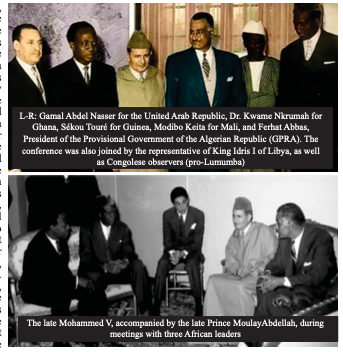 At the heart of this edition lies a deeper question of narrative. Dr. Ashraf Aboul-Yazid’s call for adopting the African narrative echoes across our arts and culture sections.
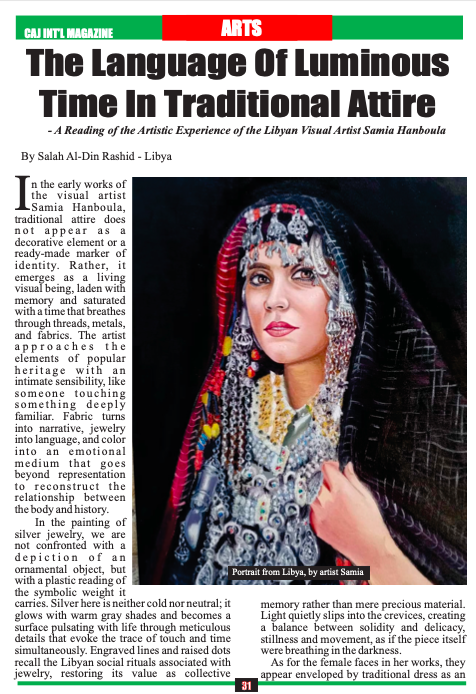 Whether through Samia Hanboula’s luminous reimagining of traditional attire, the rediscovery of Russian poet Nikolai Gumilyov’s African journeys, or the magical realism of The Red Island, Africa and its diasporic interlocutors are asserting memory, imagination, and cultural sovereignty. Cinema, as Nuha Swaid argues, carries a duty of aesthetics—to stand with the people, not above them.
Finally, the stark reflections on Nigeria’s leadership crisis and the poetic journey through Tripoli remind us that critique and care must coexist. Africa does not need charity narratives or cosmetic fixes; it needs accountable leadership, inclusive development, and space for its people to speak, create, and act.
This issue is an invitation: to listen across borders, to connect policy with culture, and to insist—steadily—that Africa’s future be authored by Africans themselves.