 thesilkroadtoday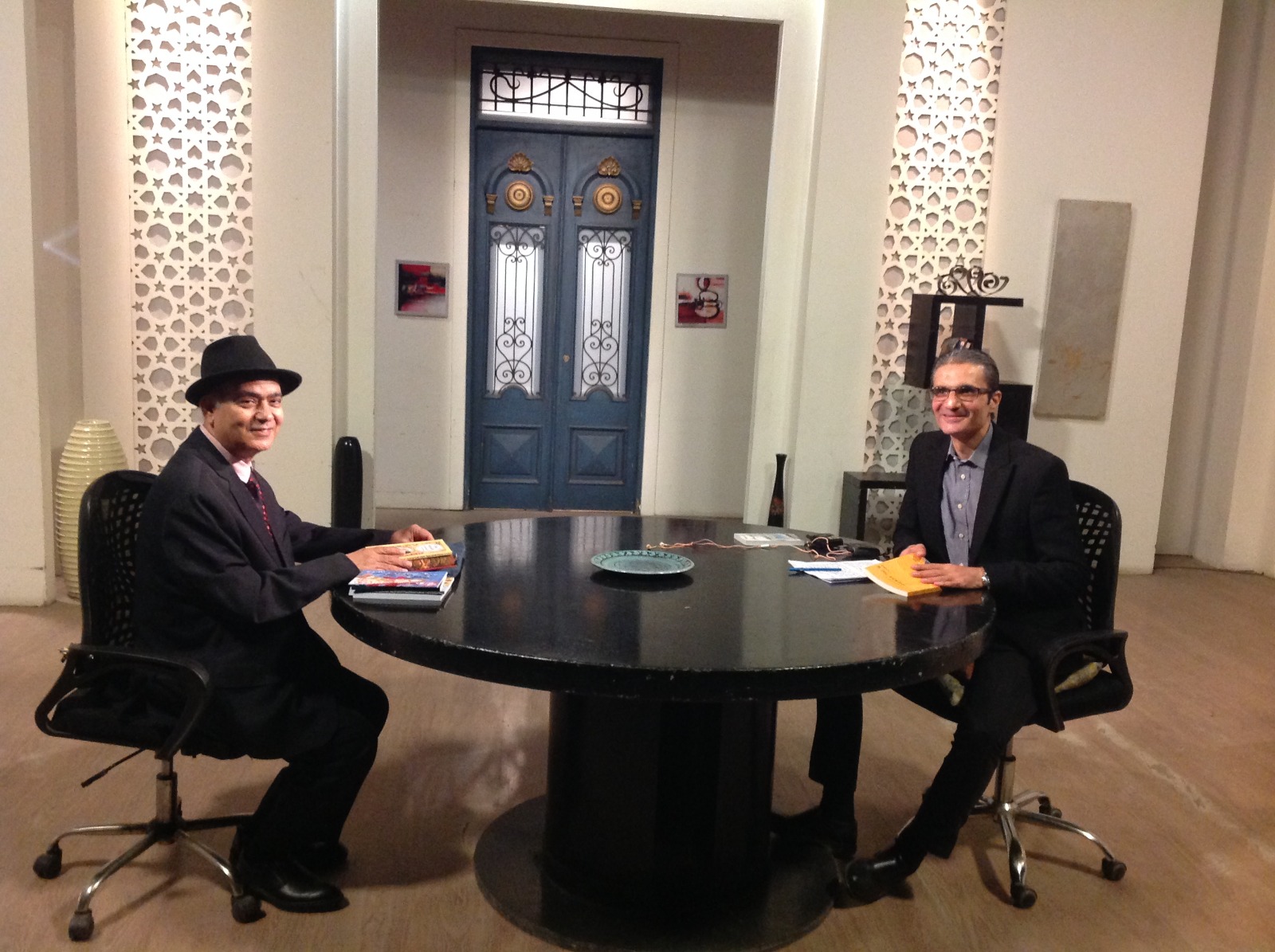
The Egyptian Satellite Channel’s cultural program Ma’a Al-Samer (With the Narrator), broadcast on Friday evening, June 26, 2026, hosted poet, novelist, traveler, and translator Dr. Ashraf Aboul-Yazid; Secretary General, The Congress of African Journalists (CAJ), in an open conversation about his literary and cultural journey, his travels across continents, and the creative and cross-cultural projects that emerged from those experiences.
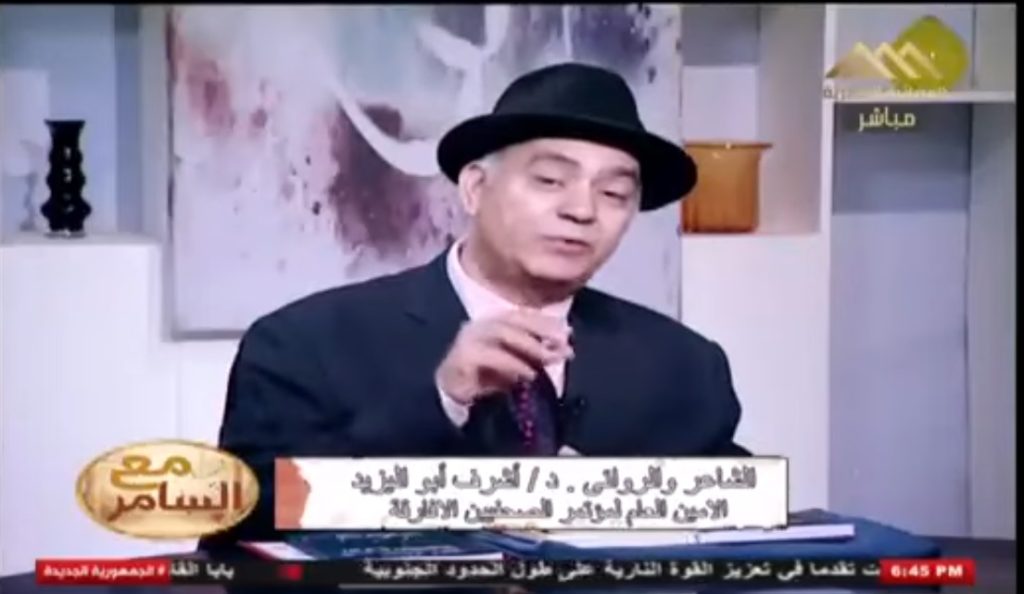
The conversation began with his early years as a writer in his hometown of Benha. Aboul-Yazid noted that he would return to the Benha Culture Palace a week later to celebrate the fiftieth anniversary of the beginning of his literary journey there, recalling the Ramadan evenings and cultural gatherings in which he participated throughout the governorate.
The discussion then explored major milestones in Aboul-Yazid’s career in poetry, fiction, translation, travel writing, and literature for children and young adults. It also highlighted his continuous efforts to build bridges between cultures and civilizations through his books, translations, and international participation, as well as his cultural and media initiatives aimed at introducing Arabic literature to wider audiences and fostering human dialogue. He also shared his vision for the future of Arab culture and the role of literature in bringing peoples and nations closer together.
From Traveling the Silk Road to a Global Cultural Project
Aboul-Yazid spoke about his long relationship with the Silk Road, which began with extensive journeys through its historical and cultural stations in Asia and Europe. These travels resulted in the publication of the Silk Road Encyclopedia by the Bibliotheca Alexandrina. The experience later evolved into the launch of the Silk Road Creativity Series, a project that sought to move beyond traditional European centrality by searching for creative voices in Asia, Africa, and Europe outside the dominant English and French cultural spheres, thus presenting a broader and more diverse picture of the world’s literary and artistic landscape.
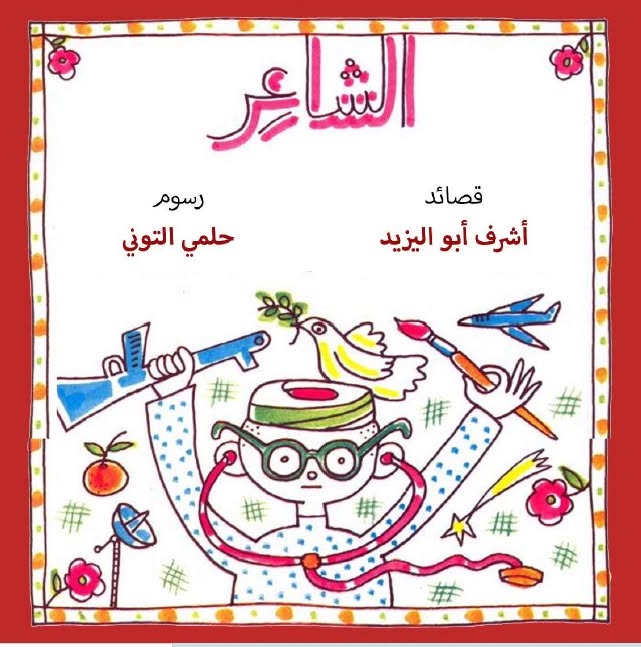
Children’s and Young Adult Literature: From Theory to Practice
The interview also addressed Aboul-Yazid’s experience in writing for children and young readers. He emphasized that his project in this field has moved from theoretical considerations to practical application. During the program, he read a poem from his collection The Poet, illustrated by the late Egyptian artist Helmi El-Touni, and discussed several of his novels for young readers, including My Cat Writes a Book, My Father Is a Mapmaker, and The Papyri of Grandmother Raweya.
He explained that these works combine creative language with history and scientific knowledge, reflecting his belief that literature for younger generations should unite aesthetic pleasure with intellectual awareness and provide young readers with keys to understanding both the world and humanity.
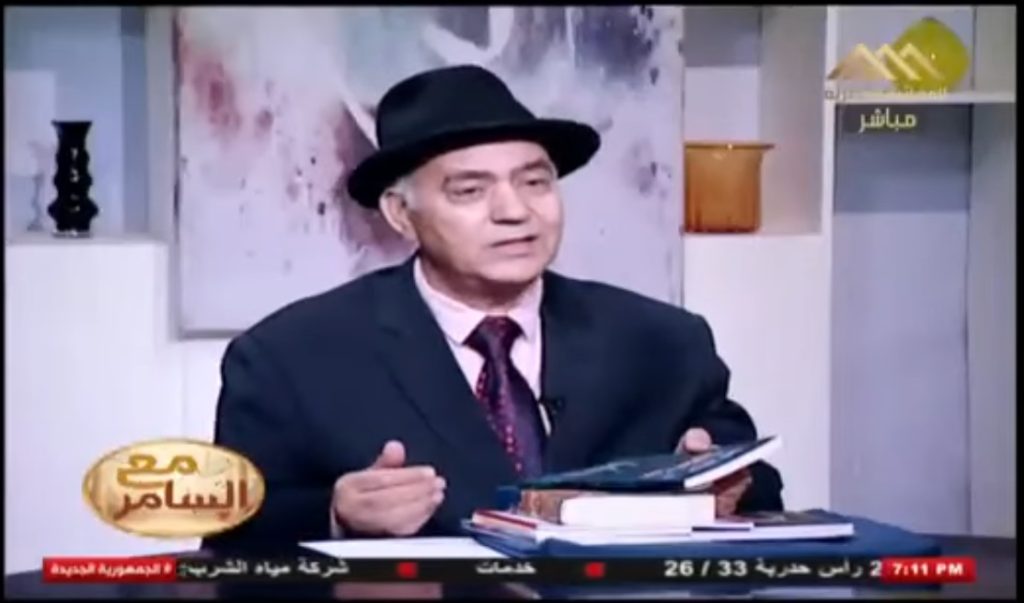
The Human Being beyond Homeland: A Recurring Fictional Theme
Speaking about his fiction, Aboul-Yazid noted that his novels are essentially concerned with the human experience beyond one’s homeland—whether as a migrant, an exile, or someone seeking work and knowledge abroad.
He reviewed the translations of his novels, including Shamawes, published in Korean and English; A Backyard Garden, translated into English and Malayalam in Calicut, India; and The Interpreter, published in English in Kolkata. He also mentioned his novel 31, which is currently being translated.
Translation as a Discovery of Humanity
The discussion also touched upon several works he has translated into Arabic. Among them is a collection by the Indian poet Hemant Divate, which he described as presenting an image of a “third India,” far removed from the stereotypes often perpetuated by cinema and historical narratives.
He also discussed his translation of The Broken Pot, a play by Nigerian writer Esther Adelana, which depicts traditional Nigerian wedding ceremonies and reveals striking intersections with Egyptian rural customs and traditions.
Likewise, he spoke about his translation of The Mortal Life by Kenyan poet Christopher Okemwa, pointing to the work’s profound human imagery and universal motifs shared by African and global civilizations, including concepts such as aging.
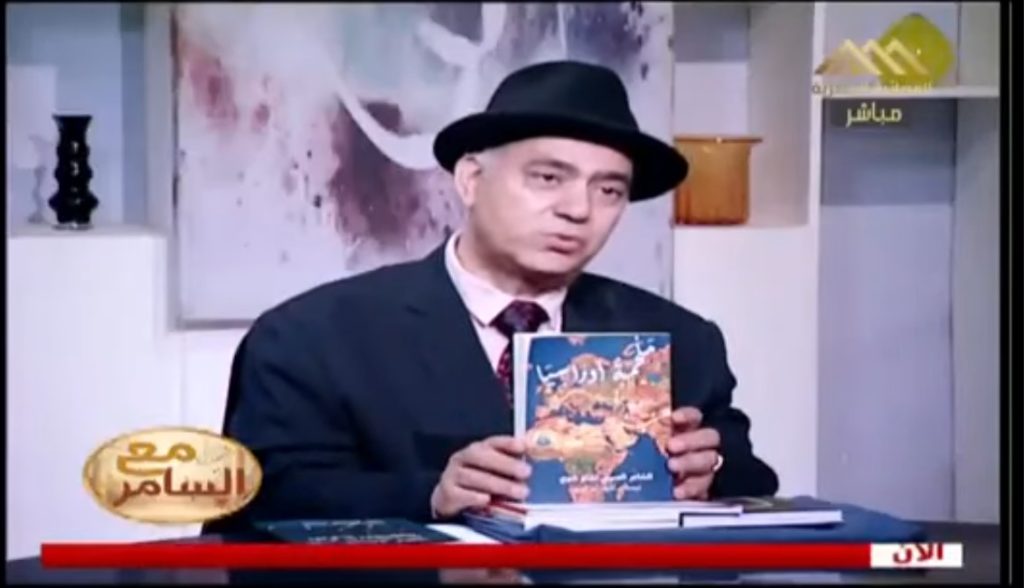
Eurasian Epic: A New Wave in Epic Literature
Dr. Ashraf Aboul-Yazid elaborated on his Arabic translation of Eurasian Epic by Chinese poet Cao Shui. He explained that the poet began his professional life in a newsroom but left journalism in pursuit of creative freedom, embarking on a long journey along the Silk Road, starting from Xi’an, passing through Kashgar in Xinjiang, and continuing into the heart of Eurasia.
Aboul-Yazid noted that his Arabic translation was based on the English version translated by American poet George Wallace, the text that Cao Shui himself adopted as the source for subsequent translations into other languages, including Italian.
He observed that Eurasian Epic has revived the epic genre in its contemporary form, following the eras of classical and didactic epics, and has inaugurated what may be described as a third wave of epic literature—one that embodies the spirit of shared humanity that Cao Shui seeks to celebrate and unify.
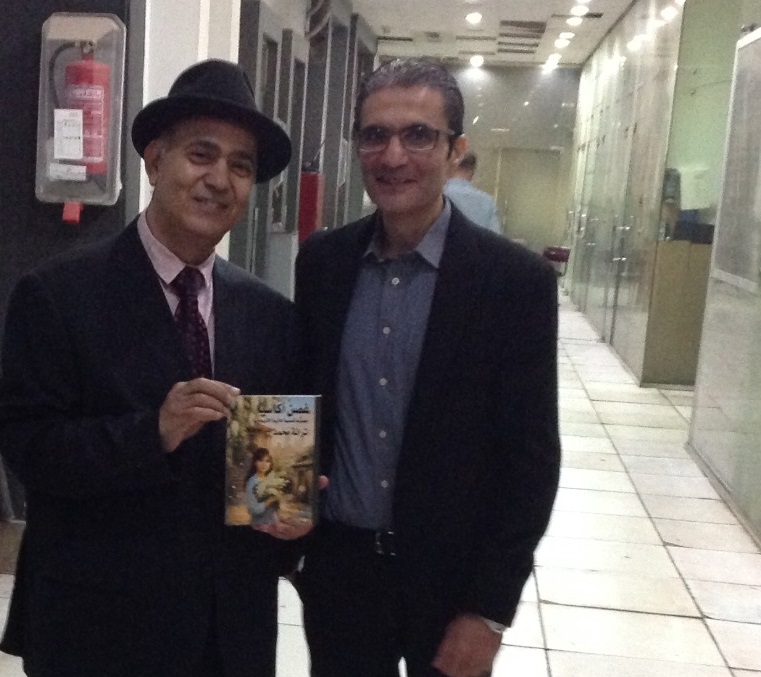
Before the program concluded, the guest presented several of his books and translations to the production team, including the short story collection Acacia Branch by Azerbaijani writer Terane Memmed.
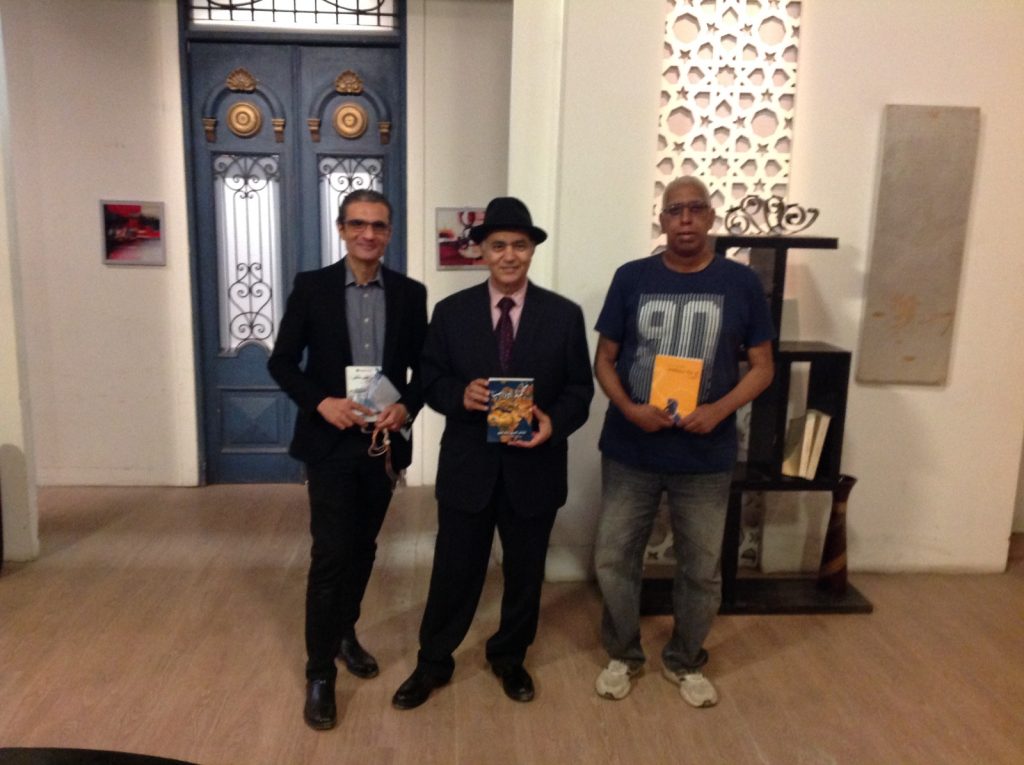
Ma’a Al-Samer is regarded as one of the leading cultural and artistic programs on Egyptian Satellite Television. It is dedicated to hosting distinguished figures of thought and creativity from Egypt and the Arab world, offering viewers rich conversations that combine knowledge with human experience. The program is broadcast live every Friday and is presented by Wael Shahbandar, prepared by writer Sherif Abdel-Meguid, and directed by artist Walid Mamdouh.