 thesilkroadtoday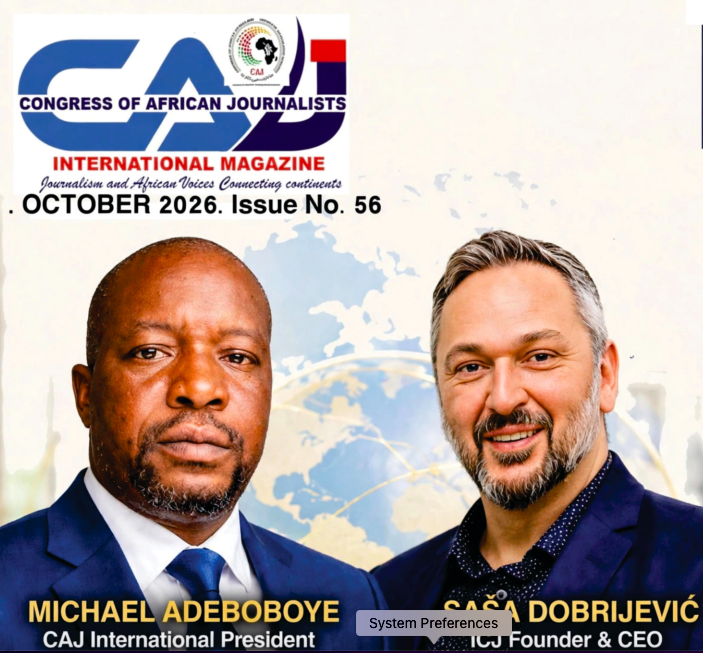
By Dr. Ashraf Aboul-Yazid
Secretary-General, Congress of African Journalists
October arrives with a simple question for African journalism: can we continue reporting the changing world with yesterday’s tools, structures and assumptions?
At the Congress of African Journalists, our answer is clear: we must build beyond borders.
African journalists have never lacked courage. They have reported elections during internet shutdowns, investigated corruption with limited resources, kept community radio alive and carried the voices of communities ignored by larger media systems. Yet courage alone cannot protect a profession facing economic hardship, safety threats, shrinking newsrooms and AI-driven disinformation.
This is why CAJ is pursuing global partnerships rather than isolation. Under International President Michael Adeboboye, we are working to strengthen the infrastructure surrounding African journalism: professional identification, credible publishing platforms and opportunities for journalists to place original reporting in international markets.
Our partnership with ICJ Global Media Group LLC, founded by Saša Dobrijević, is part of this wider effort. The objective is practical: to create infrastructure for journalists who may have lost jobs, credentials or traditional platforms, while opening channels through which African reporting can reach wider audiences.
These are our Musketeers of Truth—journalists who understand that solidarity is no longer optional.
This month’s magazine also looks outward, to a changing international order. Coverage of the 81st United Nations General Assembly shows why African journalism must follow diplomacy not as spectacle, but as policy. The UN80 reform process is examining how mandates are created, implemented and reviewed, while the General Assembly’s current session has again placed Africa’s representation on the Security Council at the centre of discussion. The President of the 81st General Assembly has explicitly called for Africa to have a rightful place at the table.
For CAJ, this is more than diplomatic language. It is a journalism story: who decides, who pays, who represents whom, and whose voice is heard?
Our pages therefore examine the economics behind Africa’s development, including the debate over the cost of borrowing and the emerging importance of carbon finance. With COP31 scheduled for Antalya in November, climate finance will remain a critical arena for African reporting and accountability.
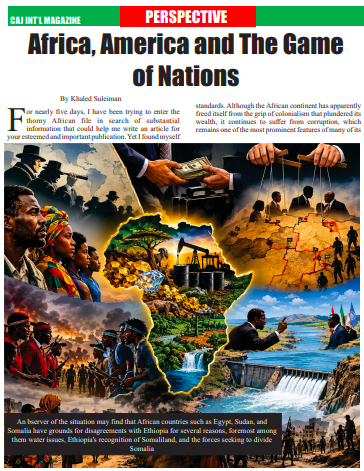
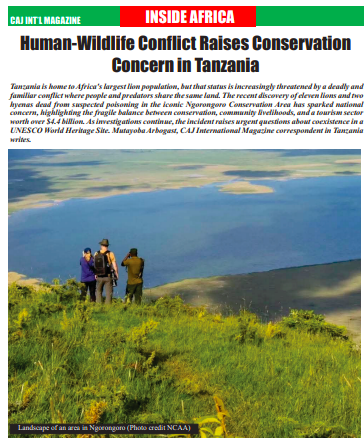
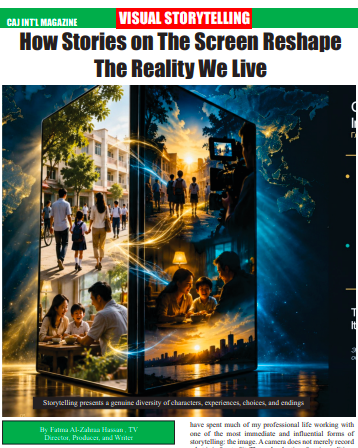

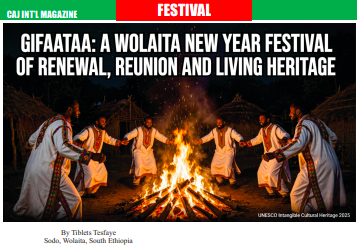
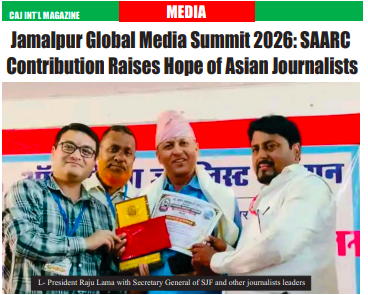
We also enter difficult territories: the legacy of Nuremberg and international justice; corruption and the unfinished business of colonialism; tensions between South Africa and the United States; conservation and human-wildlife conflict in Tanzania; and the power of visual storytelling to shape public understanding. Recent U.S. visa restrictions affecting certain South African nationals demonstrate how quickly diplomatic disagreements can acquire economic and political consequences.
Yet journalism must not become trapped inside crises.
Our cultural pages remind us that Africa is also festivals, plants, cities, memories, journeys and living heritage—from Wolaita Gifaataa to Moscow’s Seven Sisters. These stories matter because journalism is not merely the recording of conflict. It is the preservation of humanity.
The October edition therefore carries one conviction: African journalism must connect, collaborate and cross borders without surrendering its independence.
Truth needs witnesses.
And witnesses need one another.