 thesilkroadtoday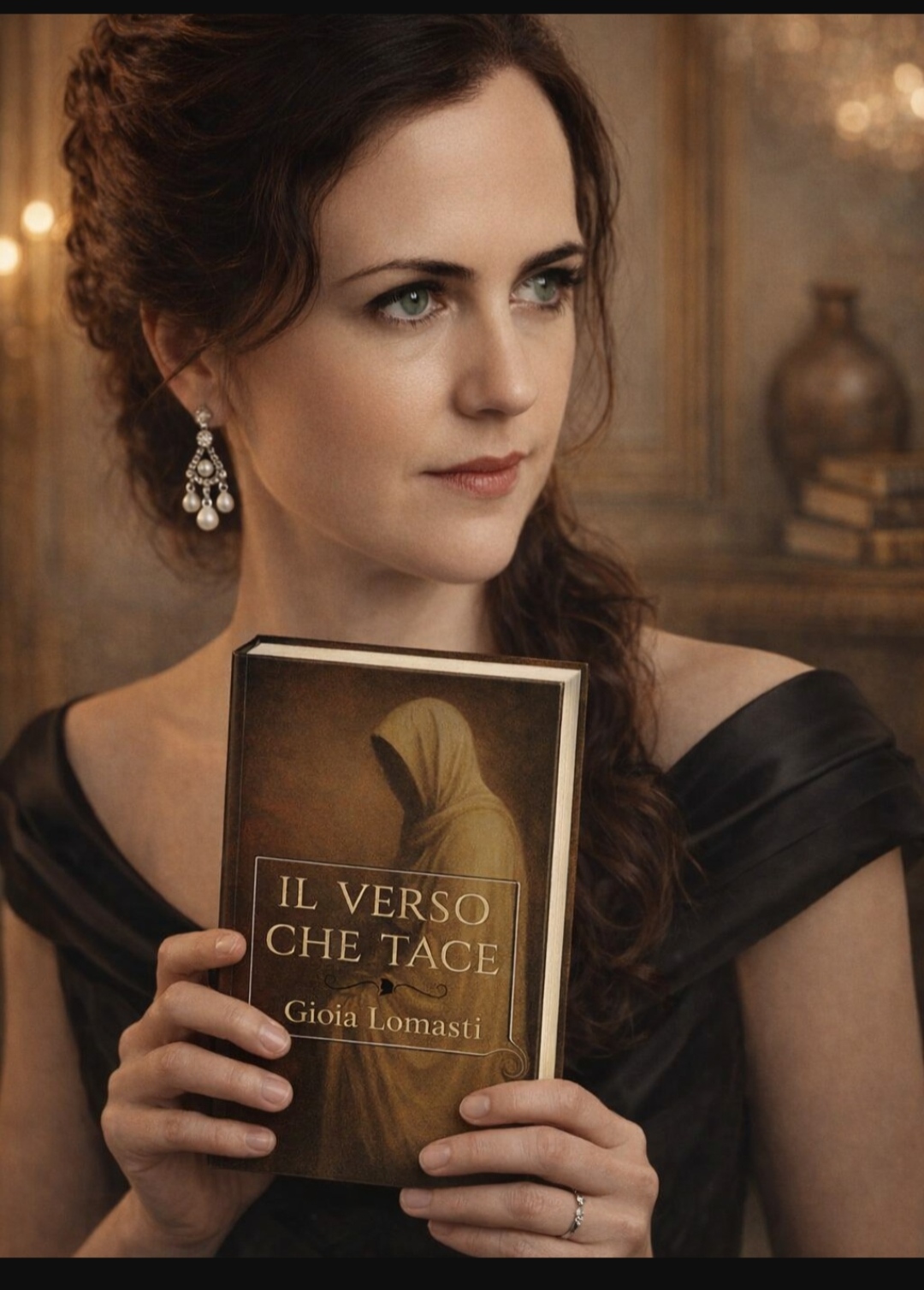
Vetrina delle Emozioni
This blog was born from the encounter between Authors and Artists. A place where music, writing, and above all poetry find a showcase capable of giving voice to the emotions you know how to transform into art. An invitation to share and allow your words and your notes to reach those who know how to listen to them.
For suggestions or collaborations:
https://www.facebook.com/vetrinadelleemozionifanpage

Tuesday, September 29, 2026
The Silent Verse by Gioia Lomasti, an Unrepeatable Unicum in the Contemporary Poetry Scene — A Review by Luciano Domenighini
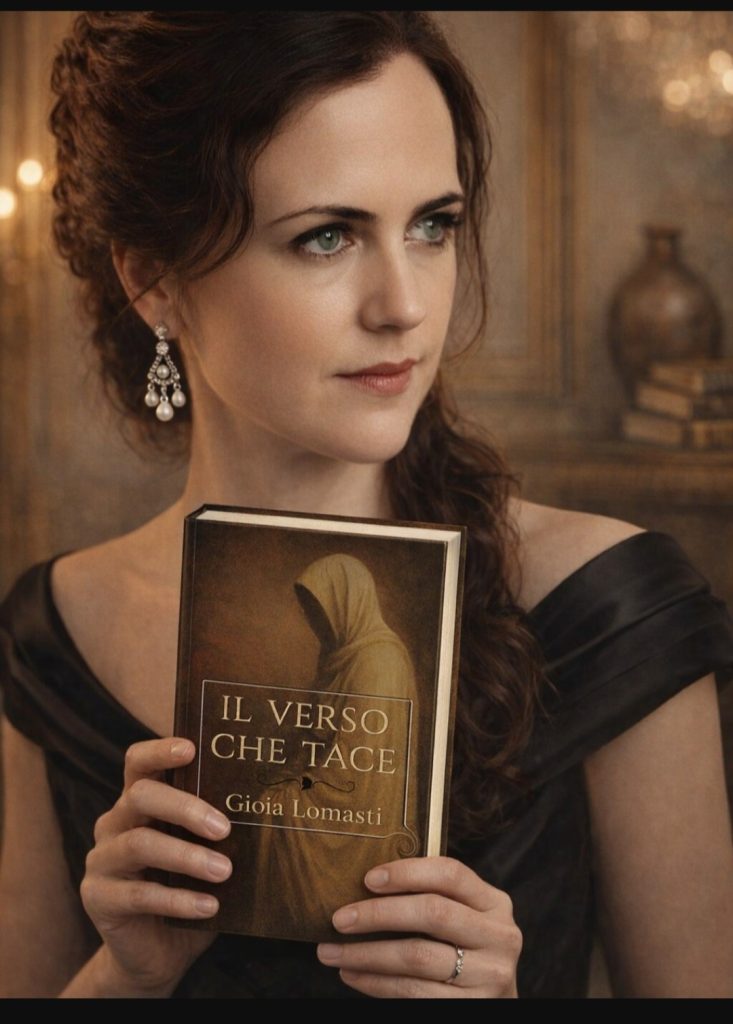
The Silent Verse (Il verso che tace) by Gioia Lomasti is a short poetic work composed in terza rima of hendecasyllables, inspired by Dante’s Divine Comedy. It consists of ten Cantos, comprising a total of seventy-eight tercets, preceded by a prose introduction, with an explanatory commentary at the end of each canto.
As mentioned, the source of inspiration is Dante’s Divine Comedy, whose verse form and metrical structure the Romagna poet reproduces through interlocking tercets of hendecasyllables, also recreating the fourteenth-century style.
This is, however, a free approach to the Comedy, since the interconnection of the stanzas is not always strictly maintained, nor are the rhythmic conventions and syllabic measures. Furthermore, her adherence to the Dantean model has led the author to engage in syntactic acrobatics which, as in Alighieri, make interpretation particularly challenging.
On the other hand, the entire poetic discourse of The Silent Verse is steeped in a mysterious aura, and its cryptic writing is well suited to an initiatory language. Nevertheless, far from wishing to imitate the source text slavishly, the author chooses to approach it by echoing its modes of expression. Thus, the Dantean style is revived not merely—or even primarily—through the generous use of traditional metrical devices such as elisions, apocopations, and enclitic word fusion, but also through the remarkable recreation of both the concise density of certain verbal formulations and the commanding eloquence of a pervasive rhetorical impulse.
What remains in the memory is the vividness of several memorable tercets:
“And I saw the tremor become a joyful garment,
no longer a tyrant, but a silent guardian,
who gave the heart its secret virtue.”(IV, 16–18)
“There where the soil becomes a secret truth
and the humble root ascends toward heaven
and its body dissolves into mystery.”(VI, 22–24)
“There sits Odina, in a luminous realm,
with a gentle step and a consoling gaze,
far wiser than the whole human spirit.”(VIII, 13–15)
The Silent Verse is a singular artistic journey, an intimate voyage into the realms of thought and feeling, a visionary epiphany drawing upon the depths of the author’s mind and sensitivity.
In theme, style, and content, Gioia Lomasti’s poem represents an “unicum” — an unrepeatable work in the contemporary poetry scene.
Reviewed by LUCIANO DOMENIGHINI
September 2026
About Luciano Domenighini
Luciano Domenighini (Malegno, Brescia, 1952) obtained his classical high-school diploma, graduated in Medicine, and worked as a general practitioner until 2022; he is currently retired.
As a literary critic, in addition to numerous articles, he has published La lampada di Aladino. Annotazioni critiche su poeti contemporanei (Aladdin’s Lamp: Critical Notes on Contemporary Poets, 2014). He has also written commentaries on works by contemporary poets including Emanuele Marcuccio, Maurizio Donte, Maria Felicetti, Daniela Ferraro, Lidia Guerrieri, Lido Pacciardi, and Carla Baroni.
As a translator from Latin, he has published Poemi didascalici latini (Latin Didactic Poems, 2017) and Poemi satirici latini (Latin Satirical Poems, 2019), and from French, Petite anthologie (2015) and Saggio di traduzione (2016).
As a poet, he has published five works: Liriche esemplari (2004), Le belle lettere (2014), Il giardino dei semplici (2019), Esercizi di rima (2021), and Abbecedario di rime (2026).