 thesilkroadtoday
Cairo – 27 September 2026
In a special episode of the television programme “Bridges” (Jusur), prepared by editor Reham Ragab and presented by broadcaster Hassan El-Shazly live at 5:00 p.m. on the Nile Culture Channel, the programme hosted Dr. Ashraf Aboul-Yazid, writer, poet, novelist, journalist, translator and traveller, for an extended conversation about his experiences in creative translation, his relationships with the authors whose works he translates into Arabic, and his broader project of building literary and cultural bridges between the Arab world and the cultures of Russia, China, Mongolia and beyond.
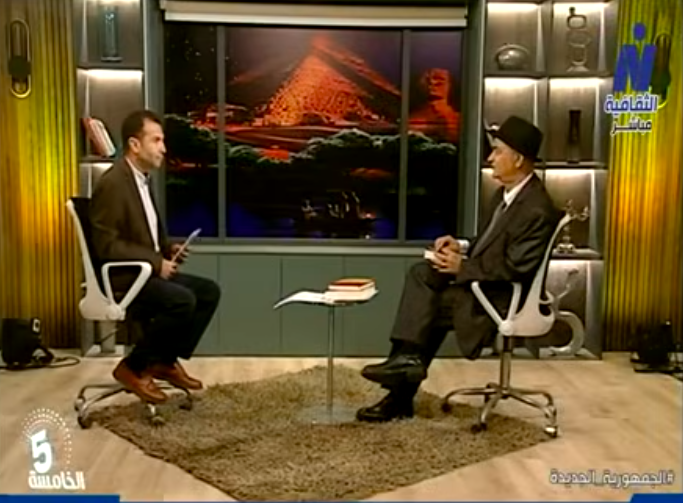
The conversation was not merely a presentation of three books or three examples of world literature. Rather, it offered a map of a cultural project based on a central idea: translation is not simply the transfer of a text from one language into another; it is a meeting between cultures, a dialogue between creative minds, and a living human act that requires an understanding of the text, its author and the environment in which it was born.
“Russian Cosmism” — Memory from the Individual to the Collective

The conversation began with Russia and “Memory”, a book by Russian poet and scholar Alexandra Ochirova, which became the starting point for Aboul-Yazid’s “Russian Cosmism” series.
He explained that the concept of “Russian Cosmism” is not limited to literature in the narrow sense. Rather, it is connected with a broad Russian vision of the universe, existence and humanity, shaped by Russian thinkers, scientists and intellectuals into a philosophical outlook that goes beyond words toward a comprehensive understanding of the world (5:26 – 6:06).
Within this context, the title “Memory” becomes a central key to the book. It is the thread connecting Ochirova’s ideas and words, and a bridge linking tradition and modernity, as well as the past and the present (6:55 – 7:11).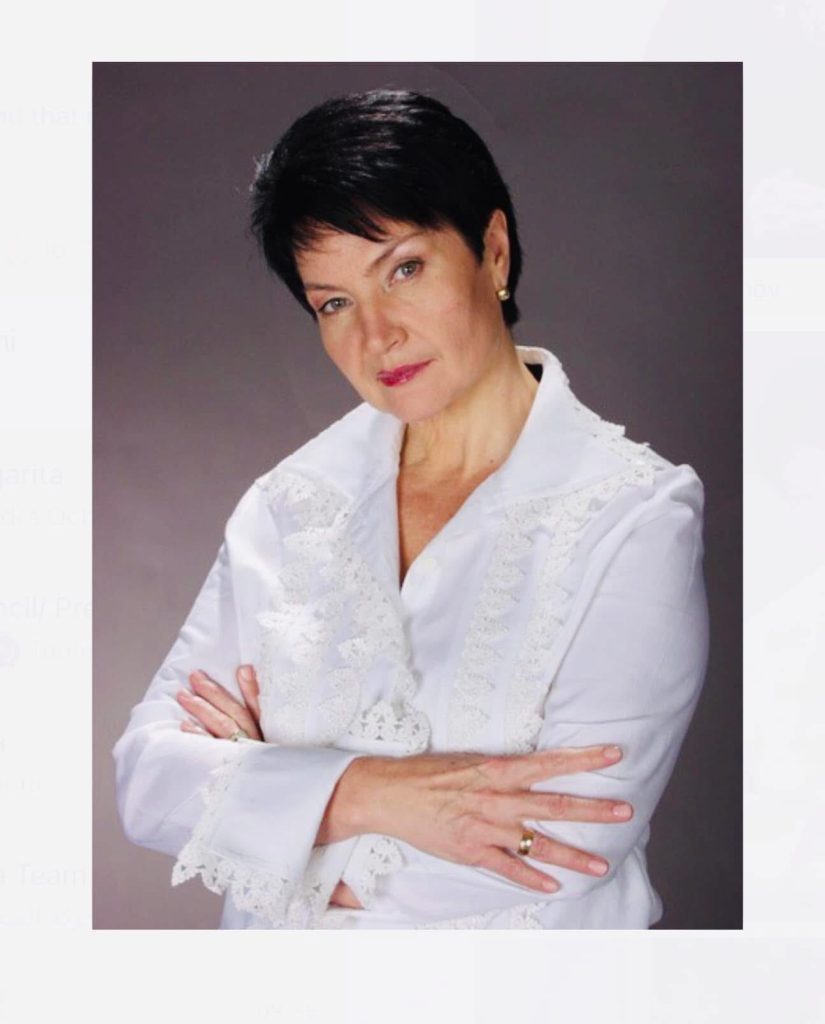
Aboul-Yazid noted that Ochirova is not only a poet but also an academic and UNESCO Ambassador, and that her poetry carries a human dimension that extends beyond personal biography. When she writes about martyrs or about her pilot husband, the experience does not remain confined to an individual person; it develops into a reflection on sacrifice, homeland and humanity (5:40 – 7:53).
Aboul-Yazid also spoke about the celebration of his Arabic translation of the book in Moscow, stressing that, for him, “Memory” is not simply a recovery of the past, but the essence of love and a talisman protecting the human being against the fluctuations of time (6:43 – 11:25). He also revealed that he had promised Ochirova to translate the second part of her literary work, which she is now approaching completion (44:30 – 44:41).
The programme went beyond critical discussion of the book. Aboul-Yazid read a passage linking memory with the image of the mother, the warmth of childhood and her continuing presence in a person’s life after her departure (10:48 – 11:30). In the passage, the mother’s legacy transforms from a personal memory into the essence of love and a source of spiritual protection.
The conversation also recalled the place of Tatar literature in Aboul-Yazid’s journey, particularly the poet Abdulla Tukay, with whom he began working nearly twenty years ago (09:33, 45:16), reflecting his longstanding interest in Russian and Tatar literature and in literary cultures that he believes deserve a greater presence in Arabic.
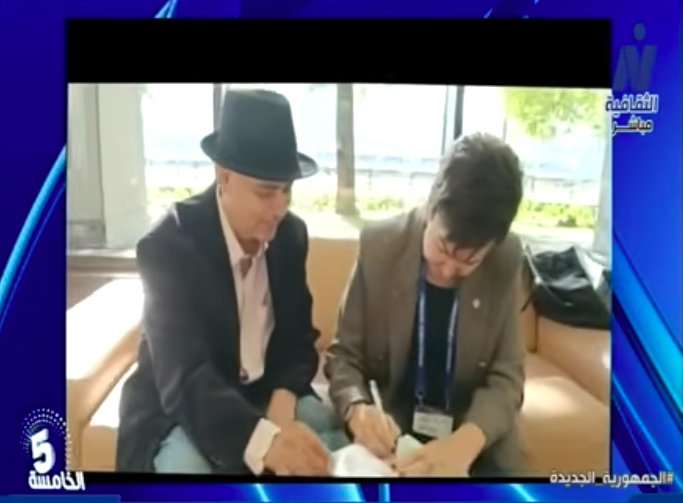
The programme also broadcast a video featuring the poet and translator in Moscow, with Ochirova signing two copies for him of her poetry collection, published in the Silk Road Literature Series, in English and Arabic. Commenting on the scene, Aboul-Yazid observed that after the signing, the two books became “two documents.”
“Eurasia” — A New Epic for the Silk Road
The conversation then moved to China and “Epic of Eurasia” by Chinese poet Cao Shui, which Aboul-Yazid translated into Arabic, presenting it as an example of an attempt to reshape the concept of epic poetry for the modern age.
As he explained, the work extends across history, mythology and geography, but does not treat Eurasia merely as a geographical space. Rather, it presents it as a human text that recalls the idea of humanity’s common origin and calls for belief in a shared destiny (13:31 – 14:12; 19:07 – 19:59, 23:02 – 23:36).
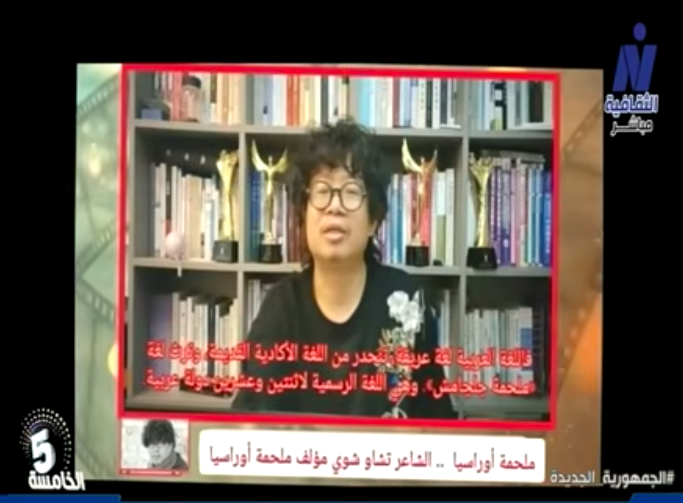
At the beginning of this section, the programme broadcast a video message by Chinese poet Cao Shui, specially recorded for the programme about his epic.
In Cao Shui’s vision, the modern age requires new epics. “Eurasia” therefore does not simply revive the ancient model; it reconstructs it for our own time, making the Silk Road a pathway for encounters between peoples and cultures.

One of the notable structural features of the epic, according to Aboul-Yazid, is its “gate” structure, which allows readers to enter the work through different chapters and read each section as a relatively independent text. This gives the work a flexibility suited to contemporary reading, away from the rigidity of traditional epic narratives (22:07 – 22:56).
The epic also approaches mythology from a modern perspective. Human beings are not portrayed merely as creatures subject to the will of the gods; rather, they possess the ability to shape their own destiny (24:43 – 25:12).

Aboul-Yazid referred to the contribution of American poet George Wallace in editing the English version of “Epic of Eurasia” (18:07), and to his meeting with Cao Shui in Central Asia (20:45). Such encounters reveal a fundamental aspect of his philosophy of translation: approaching the author, listening to him, and asking questions that no dictionary alone can answer.
During the episode, Aboul-Yazid read a passage from the epic evoking images of the river, the Ural Mountains, the North and winter, in a scene that brings together nature, history and epic imagination (25:20 – 26:16).
Natsagdorj — When the Land Becomes a Poem
The third literary destination was Mongolia, represented by poet Dashdorjin Natsagdorj, whom Aboul-Yazid described as one of the icons of Mongolian literature, despite the fact that his life lasted only 31 years (31:09 – 31:23).
During his short life, Natsagdorj contributed to the renewal of Mongolian literature and preserved aspects of popular narratives and heritage through his work in poetry, theatre and journalism.
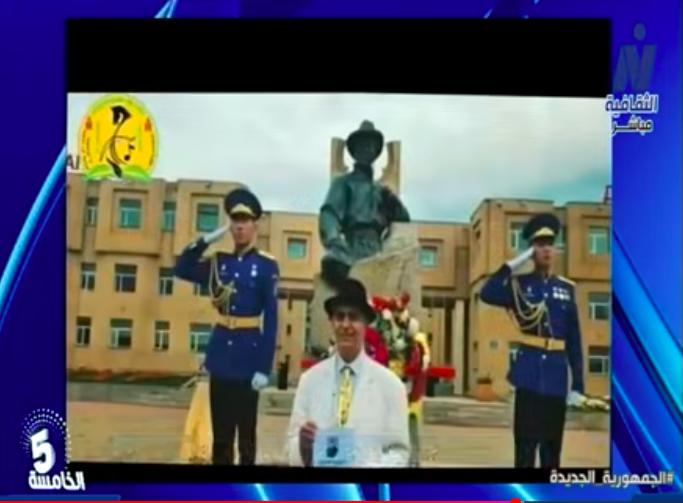
Particular attention was given to his poem “My Homeland”, which Aboul-Yazid described as occupying a place in Mongolian consciousness comparable to that of a national anthem, as generations preserve it and mothers pass it down to their children (32:46 – 32:51).
Aboul-Yazid sees Natsagdorj in this poem almost as an anthropological researcher. He does not speak of the homeland merely in abstract terms; instead, he records its mountains, plains, rivers and geographical landmarks, giving the landscape a human and spiritual life (33:19 – 33:31).
Mongolian nature consequently emerges as a central element of the poem, with its open nomadic spaces, spiritual and shamanic traditions, and direct relationship between human beings and the land.
Aboul-Yazid explained that, according to what was presented in the programme, his translation of the poem represents the first time that this poem has been rendered into Arabic (33:05 – 33:12). He stressed that Mongolian literature, despite the country’s relatively small population, possesses a wealth of works deserving to survive and reach readers around the world (34:11 – 34:21).
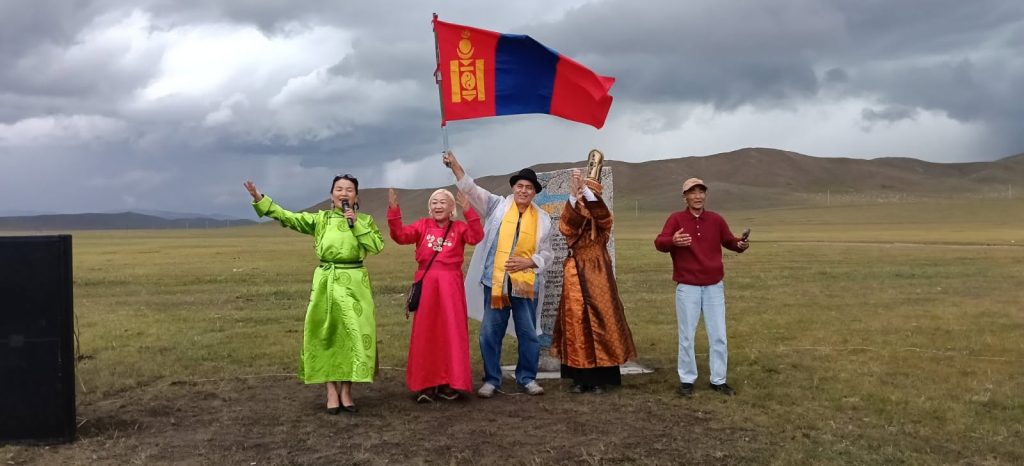
He also spoke about his impressions of the Mongolian people during his travels, describing them as joyful and life-loving, deeply connected to nature and possessing a free nomadic spirit marked by humour and a sense of fun (38:45 – 39:23).
He then read a passage from the poem celebrating the homeland and the land known to human beings from birth, while calling for the construction of a new world through the strength and will of the people (39:27 – 39:46).
The Translator Is Not an Employee Working Between Two Dictionaries
While the three books represent different destinations on the literary map, the idea connecting them is Aboul-Yazid’s philosophy of translation.
He rejects reducing the translator to the role of an intermediary who simply searches dictionaries for linguistic equivalents. In his view, creative translation is a living process that begins with understanding the text and its culture and becomes deeper when the translator meets the author himself.
For this reason, he places great importance on direct encounters and continuing dialogue with the writers whose works he translates. He met Alexandra Ochirova in Moscow (04:36, 43:36), and Cao Shui in Central Asia (20:45), and spoke about the importance of such encounters in obtaining precise explanations and correcting meanings during the translation process (18:22).
He believes that meeting the author does not end when the translation is completed. The publication of the translated book becomes an occasion for shared celebration and for documenting the bridge that has emerged between writer and translator. He has followed this approach during visits to different countries, including Taiwan, Moscow and Uzbekistan (28:47).
Even when circumstances prevent direct travel, he turns to technology to establish virtual conversations with authors, maintaining that communication with the creator remains an important part of the translation process (30:57).
Through repeated journeys and encounters, he says, he has become part of a number of “literary families” in different parts of the world, exchanging books and experiences and developing friendships that extend beyond a temporary professional relationship into enduring human and cultural connections (42:18).
How Does Aboul-Yazid Choose What to Translate?
The episode also revealed the criteria guiding Aboul-Yazid’s choices of books and literary works for translation into Arabic.
At the forefront are personal taste and passion. He stresses that he does not work as a “professional employee-translator”; rather, he chooses texts he loves and with which he feels a personal connection (48:32 – 48:48).
Next comes the search for the distinctive and the different. Whenever possible, he avoids works that have already been translated repeatedly and instead seeks texts that have not received sufficient attention in Arabic (49:20 – 49:52).
He also places particular importance on reviving living literary cultures that need to be introduced to new audiences, including Tatar, Mongolian and contemporary African literature (50:09 – 50:21).
This is closely connected to the idea of building human bridges. His choice of “Russian Cosmism,” “Epic of Eurasia” and other works is inseparable from his belief in translation as a means of creating civilizational dialogue and affirming humanity’s shared destiny (21:14 – 21:27, 23:32 – 23:41).
Communication with the author remains another essential criterion. He prefers works through which he can establish a direct dialogue with the writer in order to understand precise meanings and cultural references, transforming translation from an activity conducted between dictionaries into a “living work” (28:07 – 28:27).
From Africa to New Projects
The Russian, Chinese and Mongolian projects are not the end of the journey. During the programme, Aboul-Yazid revealed that he is currently working on the translation of “Mortal Life” by Kenyan poet Christopher Okemwa, with the project scheduled to be presented in October (51:16 – 51:38).
The conversation also mentioned Nigerian writer Esther Adelana, author of the novel “The Broken Pot” (52:07), as well as Russian writer Inna Tatcharova, associated with Anna Cleopatra, who translated Adelana’s play into Russian (52:31). This opens another window onto literary exchange between Africa and Russia and reflects the expanding network of relationships within Aboul-Yazid’s cultural project.
His engagement with world literature, therefore, does not move in only one direction. He is not simply bringing Russian, Chinese and Mongolian literature into Arabic; he is also interested in enabling African literature to travel through other languages and cultures.
The Names Behind the Translation Journey
The conversation recalled a number of creative and literary figures connected with Aboul-Yazid’s literary and translation experience. Among them is Alexandra Ochirova, whose “Memory” he translated as part of the “Russian Cosmism” series (04:36, 06:12); Cao Shui, author of “Epic of Eurasia” (13:16, 14:00); and Dashdorjin Natsagdorj, whose poem “My Homeland” he translated and presented (31:08, 32:46).
He also returned to his longstanding relationship with Tatar poet Abdulla Tukay, which began around twenty years ago (09:33, 45:16), and to George Wallace, editor of the English version of the epic (18:07).
The conversation also evoked major Russian and international literary names, including Tolstoy, Gorky and Anton Chekhov (09:02, 12:05), alongside Yusuf Idris, who was described by the programme’s presenter as the “Arab Chekhov” (09:05).
Translation… A Meeting, Not a Transfer
At the conclusion of the episode, the conversation returned to the broader question: What does translation mean to the translator?
Aboul-Yazid answers from the perspective of practice rather than theory alone. For him, translation is neither a mechanical substitution of one set of words for another nor an office-bound activity detached from the life of a text. It is a living dialogue that begins with passion for the text, deepens through research into its culture, and reaches completion through meeting its author whenever possible.
In this context, his journeys to Russia, China, Mongolia and elsewhere appear as a natural extension of his translation project rather than as a parallel activity. Travel enables him to see the place from which a text emerged, meet the person who wrote it, and experience the culture whose meanings and symbols are carried by its words.
Thus, literature, translation, travel and cultural friendship converge in a single path. The translator does not merely carry a text from one language to another; he also carries something of the memory of the place, the voice of its author and the spirit of the culture that produced it.
For this reason, Aboul-Yazid chose the bridge as a central metaphor for his mission: a bridge between languages, a bridge between writers, and a bridge between peoples. In an episode bearing the name “Bridges,” the concept became more than the title of a television programme; it emerged as a description of a complete cultural project based on the belief that literature, when carried across languages with awareness, affection and knowledge, can transform geographical distance into human closeness.
From Russia to China, from Mongolia to Africa, Ashraf Aboul-Yazid’s experience demonstrates how translation can become a means of discovering literatures that have not yet reached Arab readers, reviving voices from the past, opening windows onto contemporary cultures, and, above all, creating human relationships that continue long after the pages of a book have been closed.
The episode ultimately distilled its central message into one conviction: good translation does not carry words alone; it builds a bridge from one human being to another.